SÄCHSISCHE SCHWEIZ
-
Location: Saxony, eastern Germany, near Czech border
Name: Means “Saxon Switzerland,” coined by Swiss artists in the 18th century
Known For: Elbe Sandstone Mountains – surreal rock towers, gorges, plateaus
Top Spots: Hohe Liebe, Schrammsteine, Bastei Bridge, Painter’s Way
Highest Peak: Großer Winterberg (556 m)
Activities: Hiking, climbing, photography
Closest City: Dresden (~1 hour by train/car)
Best Time to Visit: May–October
National Park Since: 1990
UNESCO Status: Part of the cross-border Elbe Sandstone Biosphere (with Bohemian Switzerland, CZ)
-
Day trip from Berlin
🚗 By Car:
Distance: ~225 km
Duration: ~2.5 - 3.0 hs
🚆 By Train:
Direct trains from Berlin Hbf to Bad Schandau
RE → S‑Bahn → local
free with Deutschlandticket
~2.5 hours
-
This hike combines classic Schrammsteine routes with a scenic section of the Malerweg.
Malerweg
- Total length: ~116 km
- Structure: divided into 8 stages
- Total hiking time: ~46 hours
- Elevation gain: ~3600 mSchrammsteine
- Typical loop length: ~10 to 12 km
- Hiking time: ~5 to 7 hours
- Highest viewpoint: Schrammsteinaussicht at 417m
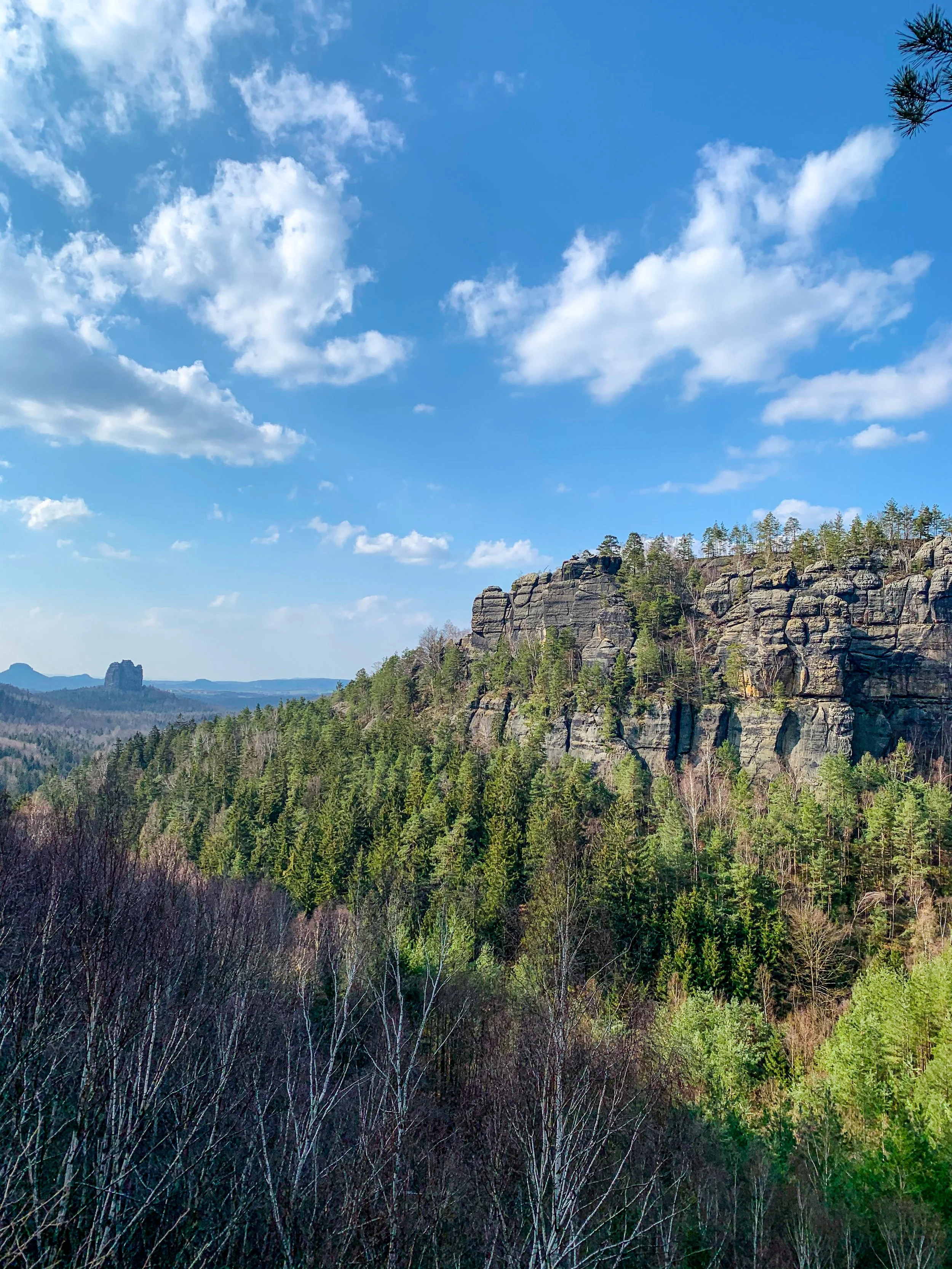
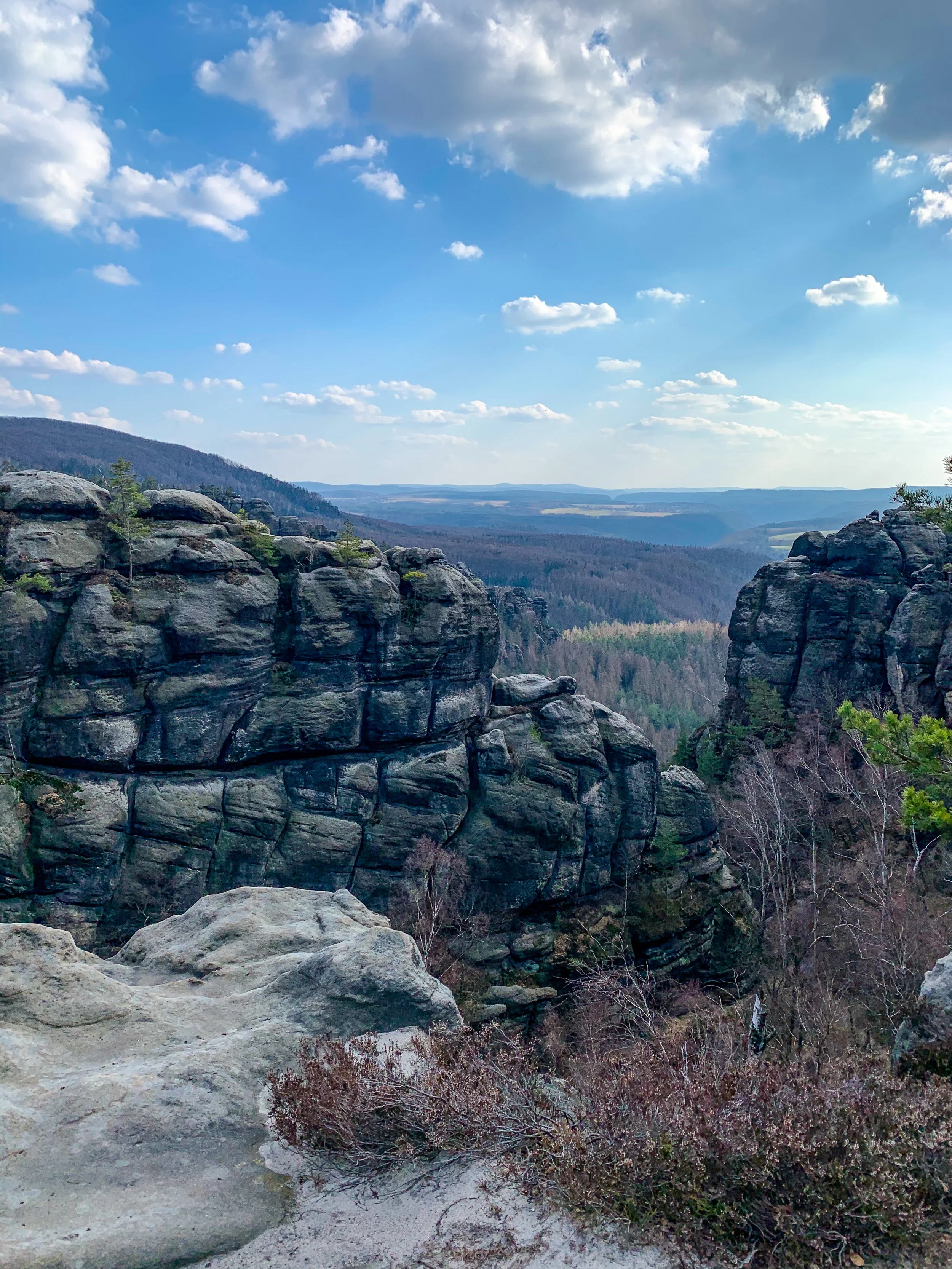
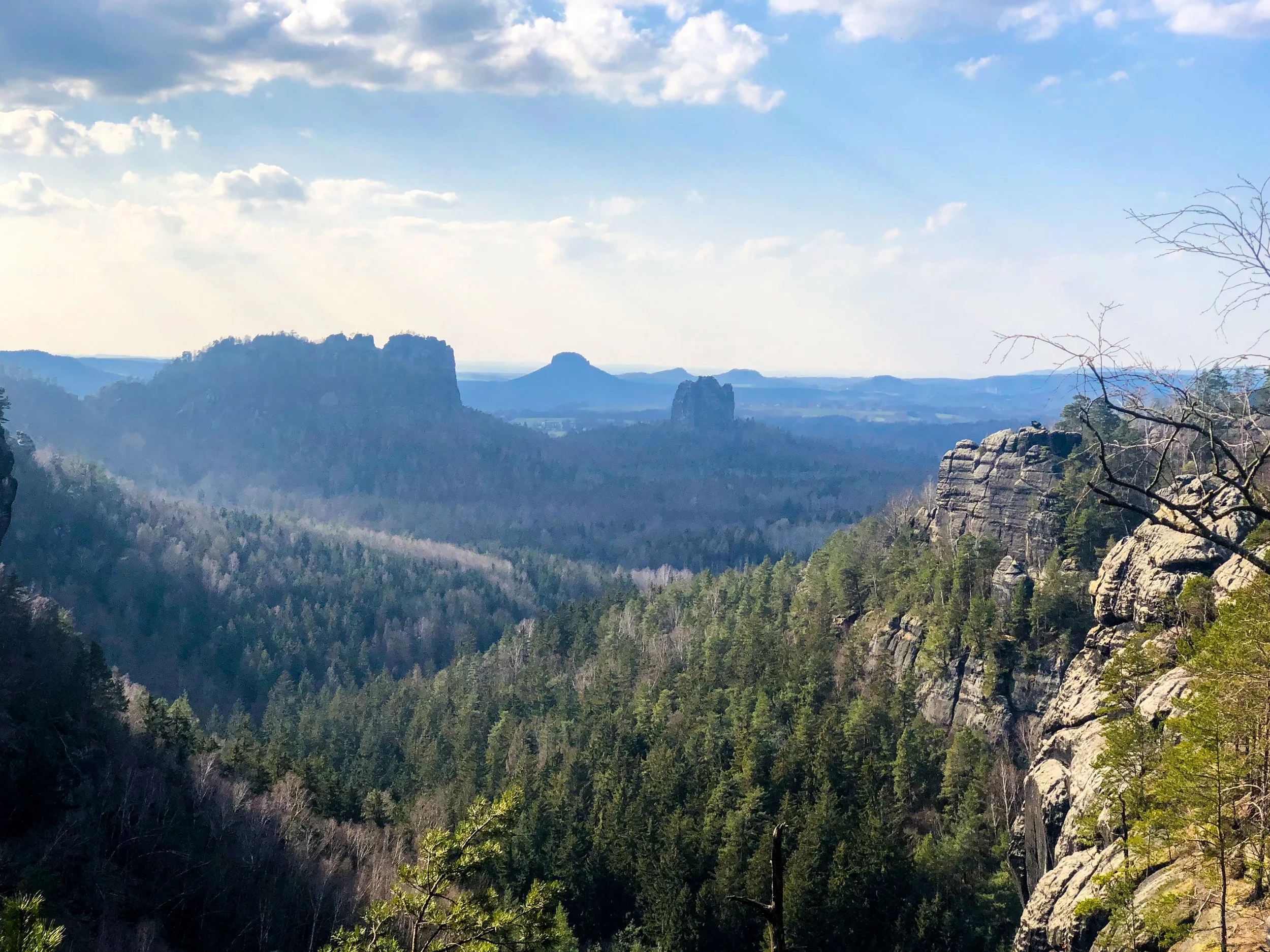
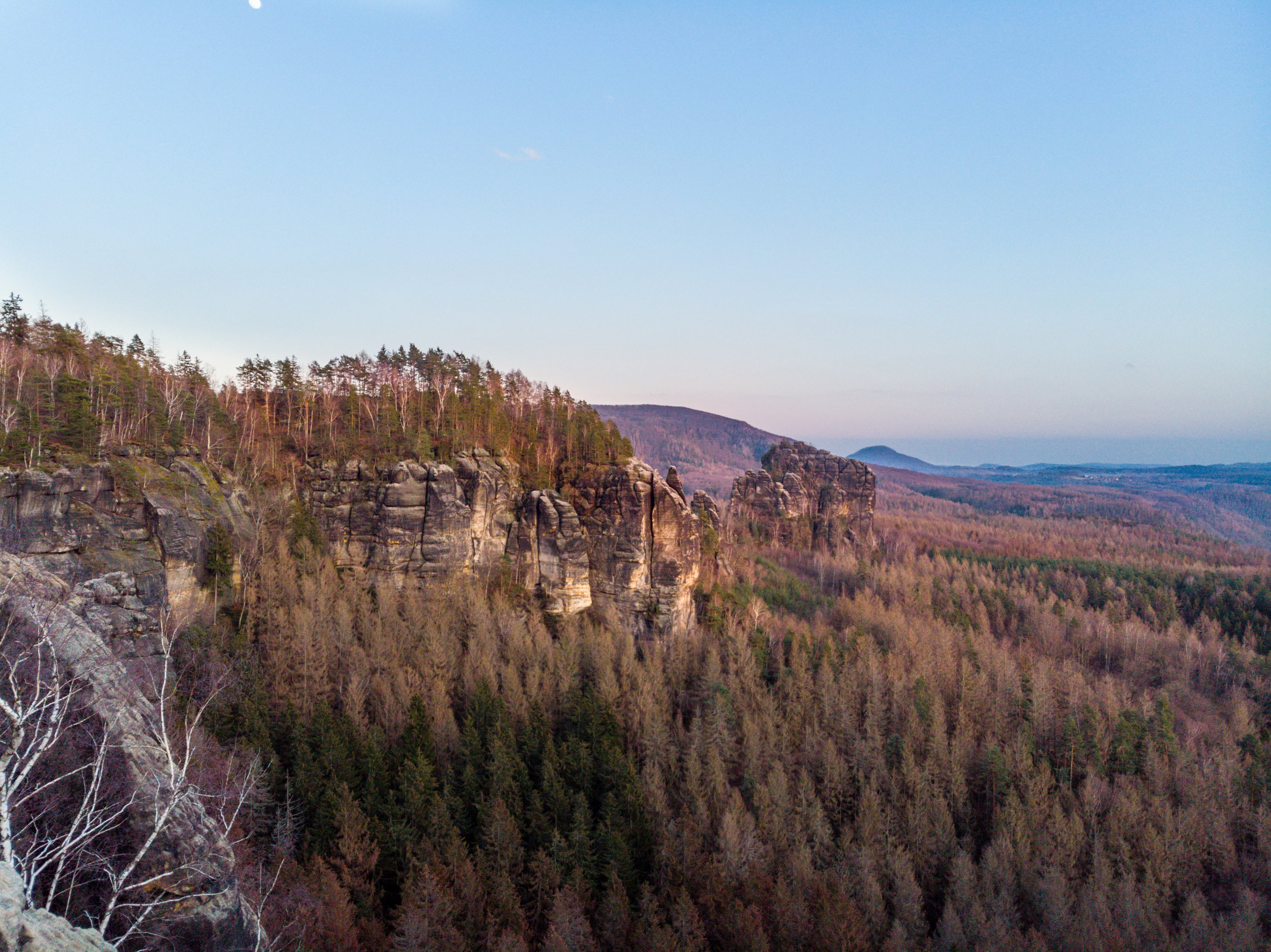
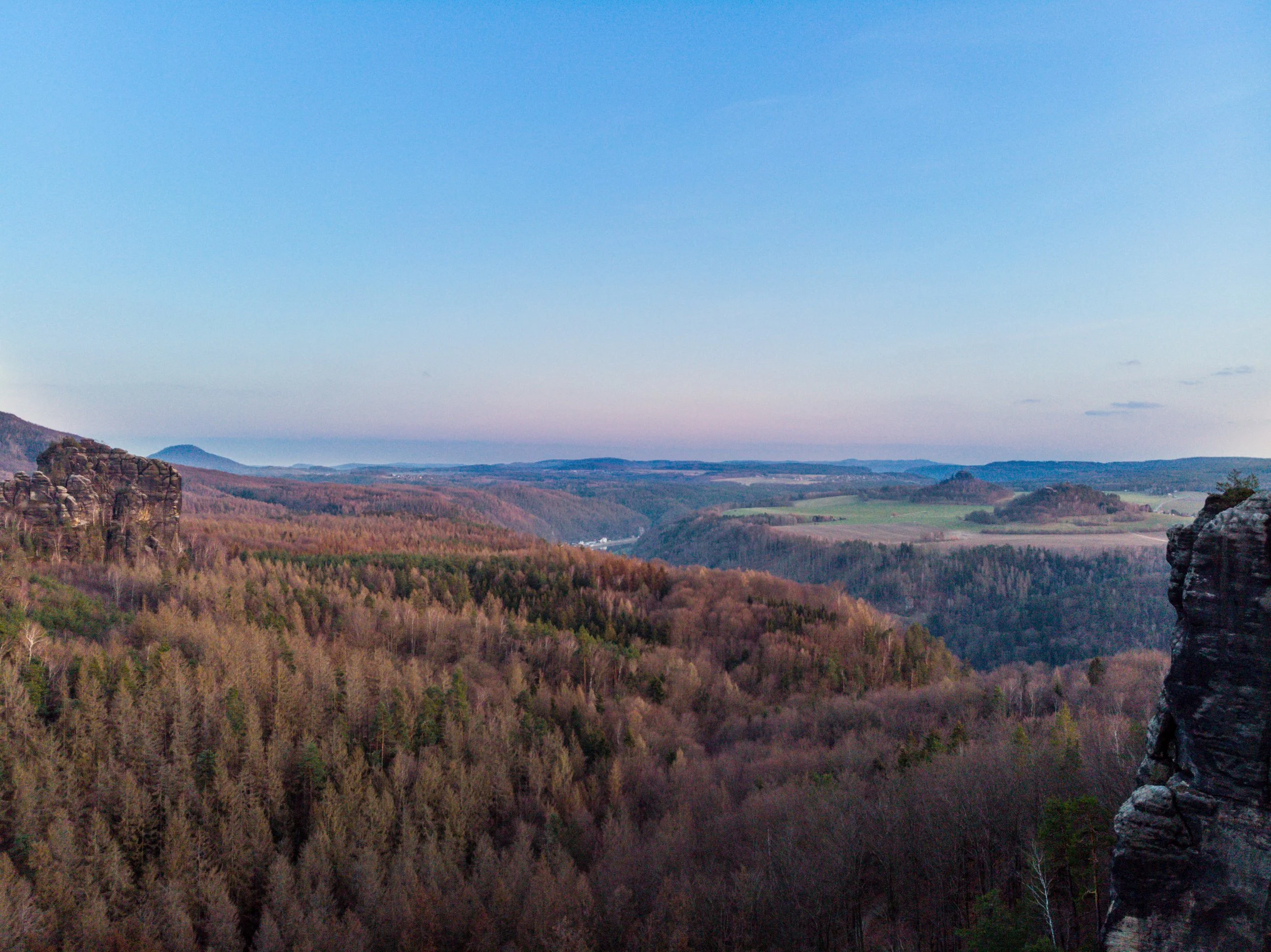
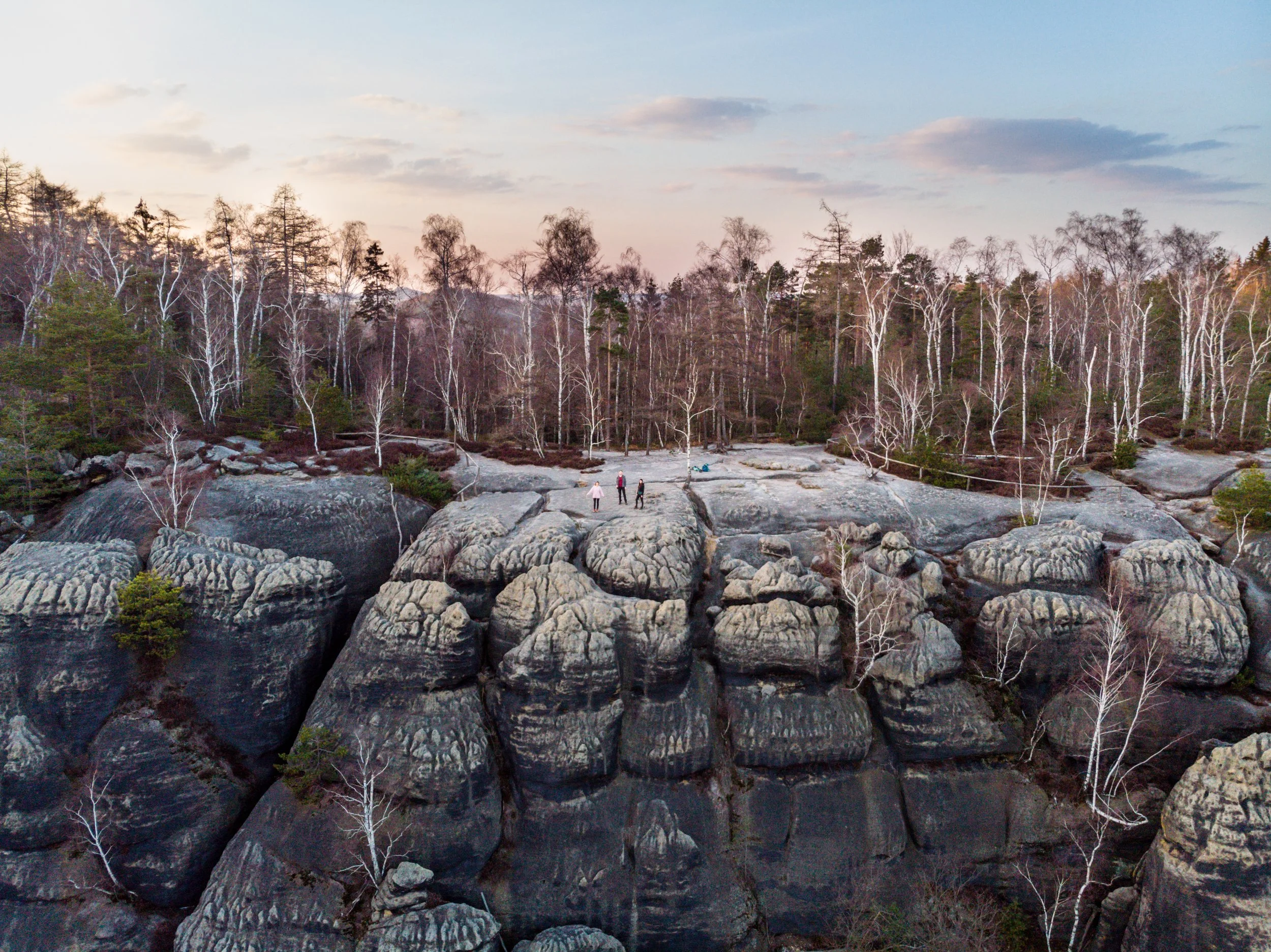
Tucked into eastern Germany near the Czech border, the Elbe Sandstone Mountains are a landscape unlike any other. Towering stone spires, narrow slot canyons, sheer cliffs, and flat rock plateaus rise dramatically from pine forests, forming a stone labyrinth that feels both ancient and otherworldly. These formations were shaped over millions of years, when an ancient sea deposited layers of sand that later hardened into sandstone. Tectonic forces lifted the landscape, and erosion from wind, water, and frost sculpted the rock into the surreal shapes we see today. This combination of geological history and erosion is extremely rare, found in only a few places on Earth, and has created a dreamlike world of vertical cliffs, freestanding towers, and natural rock bridges that seem to defy gravity.
Where else can you see this kind of geology?
This type of sandstone erosion is extremely rare. Similar formations can only be found in a few places around the world:
Bryce Canyon, Utah, USA – known for its “hoodoos,” thin rock spires formed by frost and rain
Wulingyuan, China – famous for its towering quartz-sandstone pillars that inspired the film Avatar
Tepui plateaus, Venezuela – massive flat-topped mountains rising above jungle
Drakensberg, South Africa – dramatic sandstone cliffs and natural amphitheaters
What sets the Elbe Sandstone Mountains apart is how accessible they are and how deeply they are woven into cultural history. For centuries, they have inspired painters, writers, and climbers… and continue to be one of Europe’s most magical outdoor playgrounds.
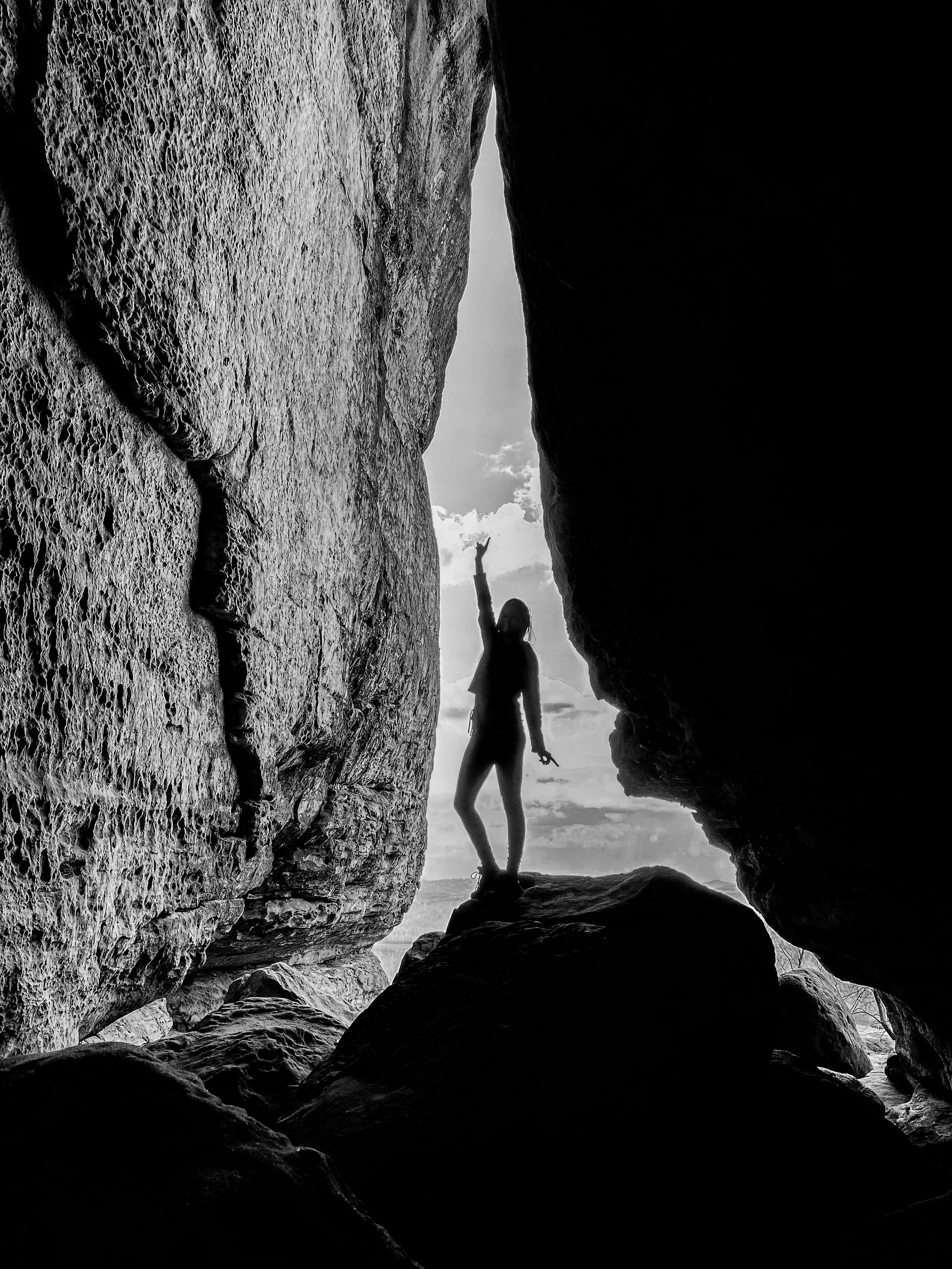
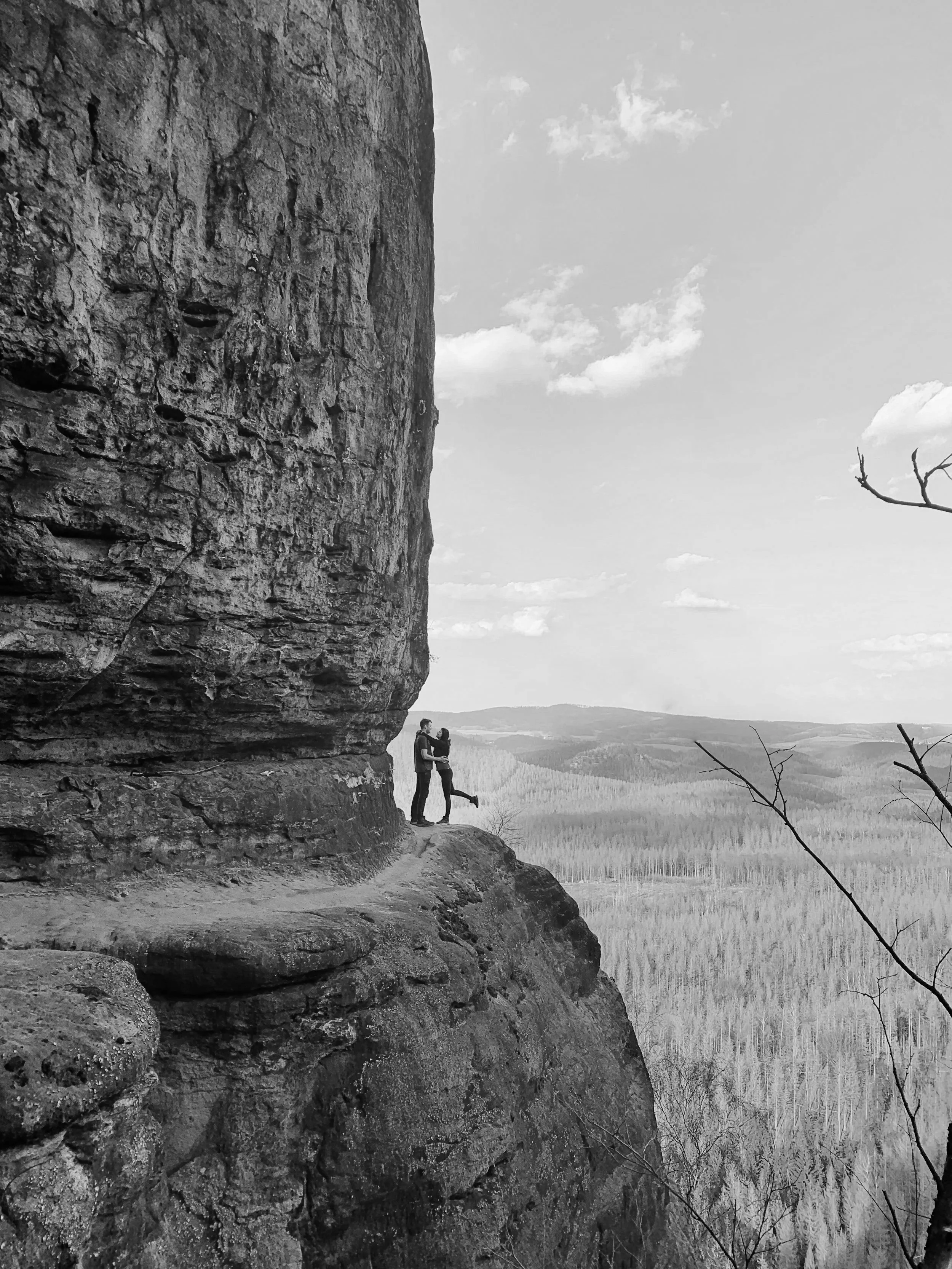
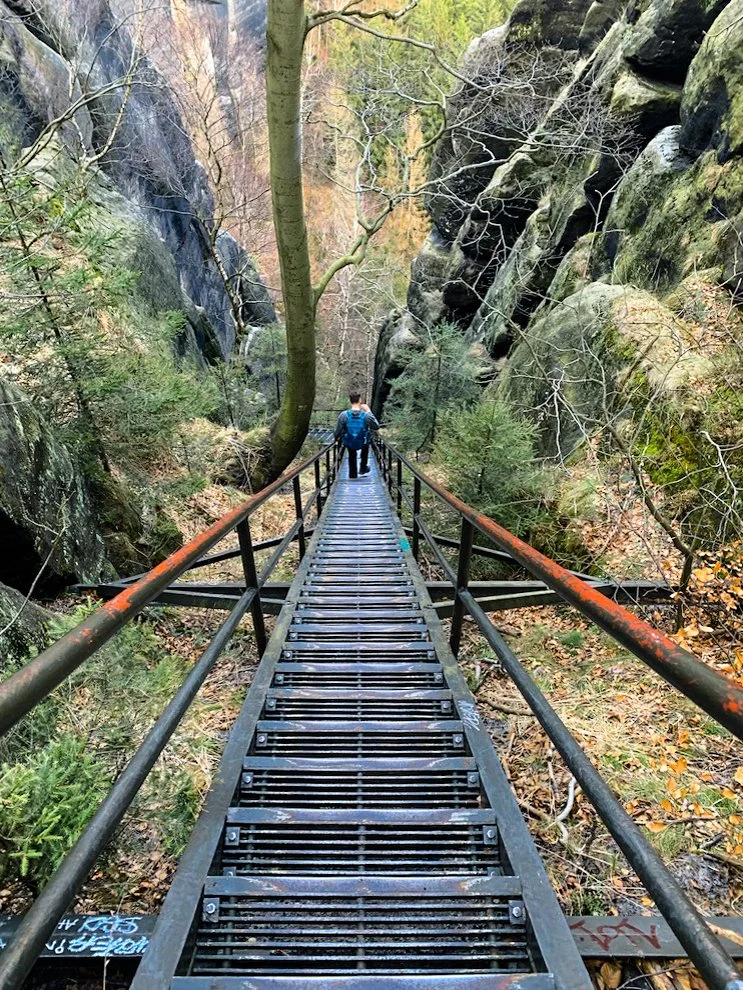
Cliffs, ladders, foggy forests and stone cathedrals.
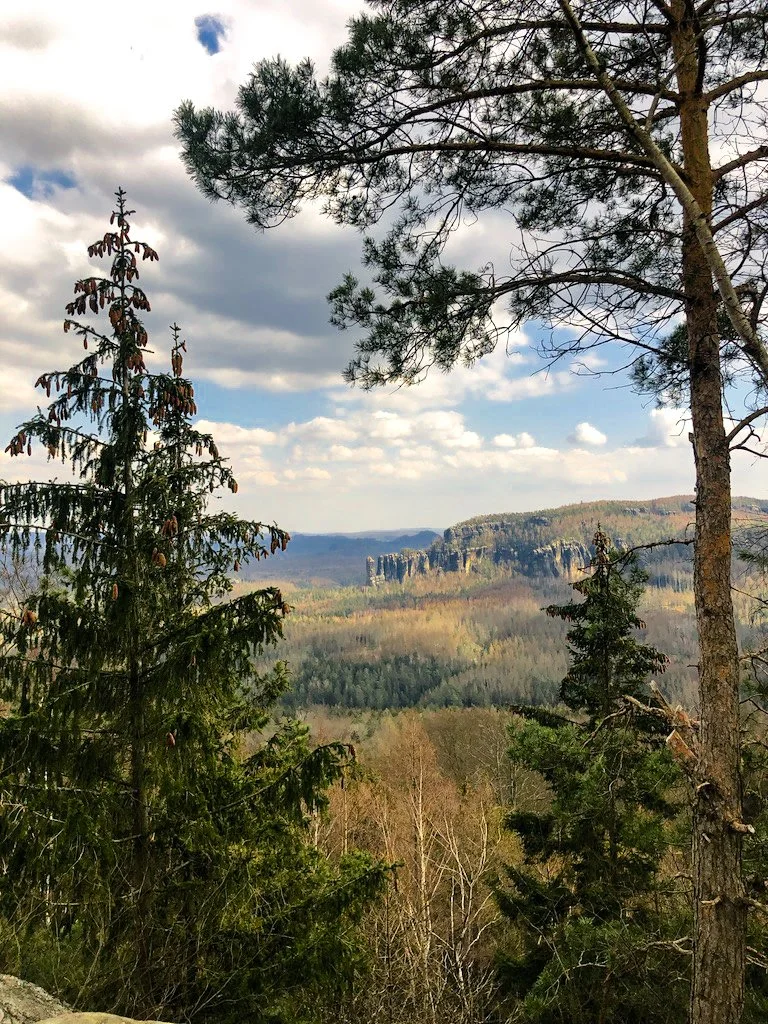
Sächsische Schweiz gave us hidden trails, dramatic climbs, panoramic highs, and that wild feeling of being somewhere ancient and alive.
We’ve explored many trails across the Elbe Sandstone Mountains, but this hike stood out. In just one day, we combined two iconic routes through forest paths, sandstone towers, panoramic viewpoints, and one unforgettable climb to the top of the Schrammsteine. Here’s how it went.
🅿️ Start at Schmilka or Ostrau (130–150 m)
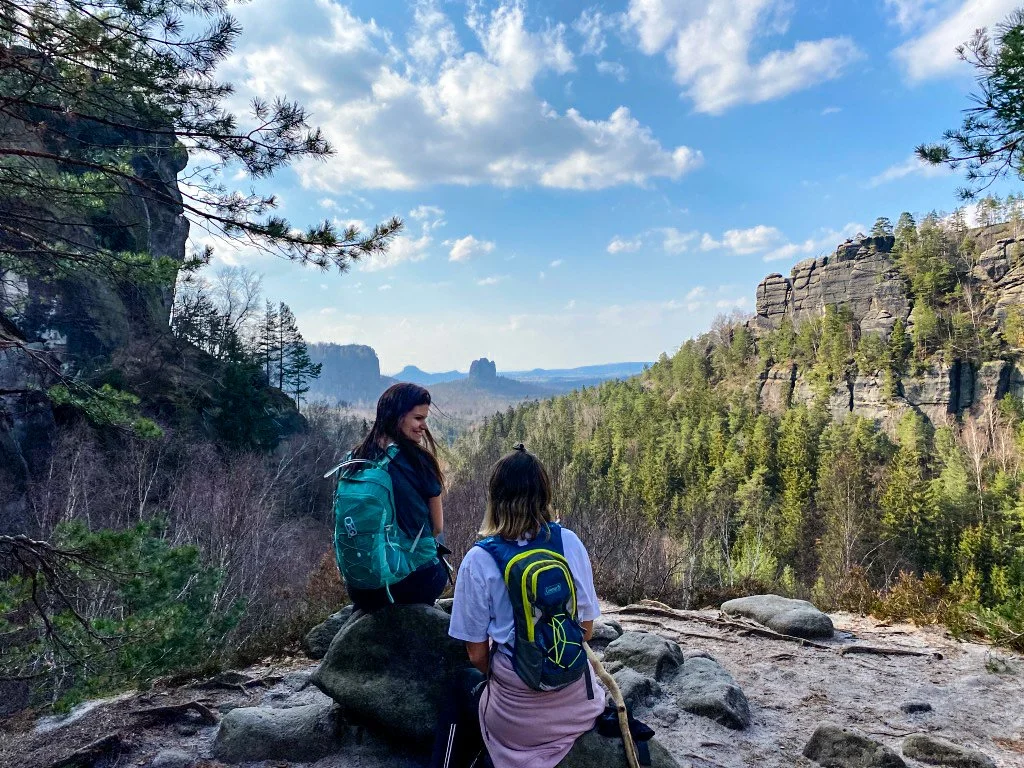
🪨 Hohe Liebe (401 m)
Scenic summit with views toward the Affensteine and Bloßstock. Includes the Bergsteiger-Ehrenmal memorial.🌲 Teufelsmauer trail (approx. 350–400 m)
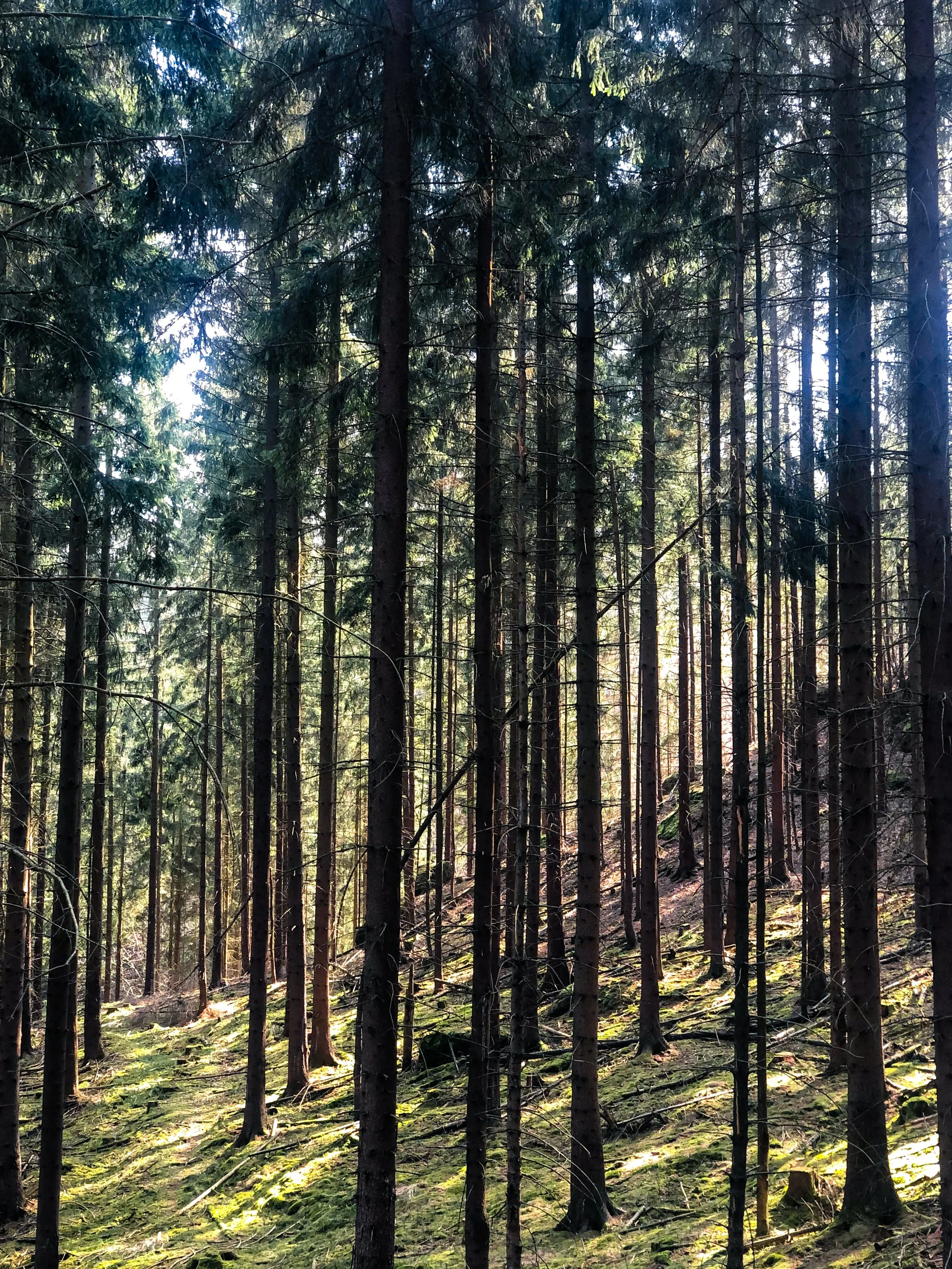
Quiet forest path along a striking sandstone wall.🔄 Trail junction near Schrammtor (approx. 330–350 m)
This is where the hike transitions from the Hohe Liebe/Teufelsmauer route to the second section—toward the Schrammsteine massif. The path connects you to the entrance of the Wildschützensteig.🎨 Malerweg / Painter’s Way (approx. 300–400 m)
Shared section that runs beneath dramatic rock formations, blending forest and stone.🍴 Lunch plateau (approx. 420 m)
Peaceful resting spot with open views and surrounding sandstone towers.🧗 Wildschützensteig ascent (300–450 m)
Steep, narrow climb with ladders and stairs into the Schrammsteine.👁️ Schrammsteinaussicht (417 m)
Iconic 360° viewpoint over cliffs, forest, and the Elbe valley.🔁 Return to Schmilka or Ostrau (130–150 m)
Descend through forest paths back to the starting point.
Approx. total time: 5.5 to 7 hours (depending on pace, breaks, and weekend crowds)