JULY 2019
NORWAY
-
Language: Norwegian (Bokmål & Nynorsk)
Currency: NOK – Norwegian Krone
Capital City: Oslo
Population: 5.4 Million
Driving Side: Right
Best Time to Visit: June–September
Power Outlets: Type C & F (230V)
Tipping: Not mandatory, but rounding up is appreciated
-
✅ 1 Week
✈ Direct flight
Berlin → Oslo
🎒 What to Pack: If you’re camping, winter sleeping bags
-
Trolltunga Overnight Hike
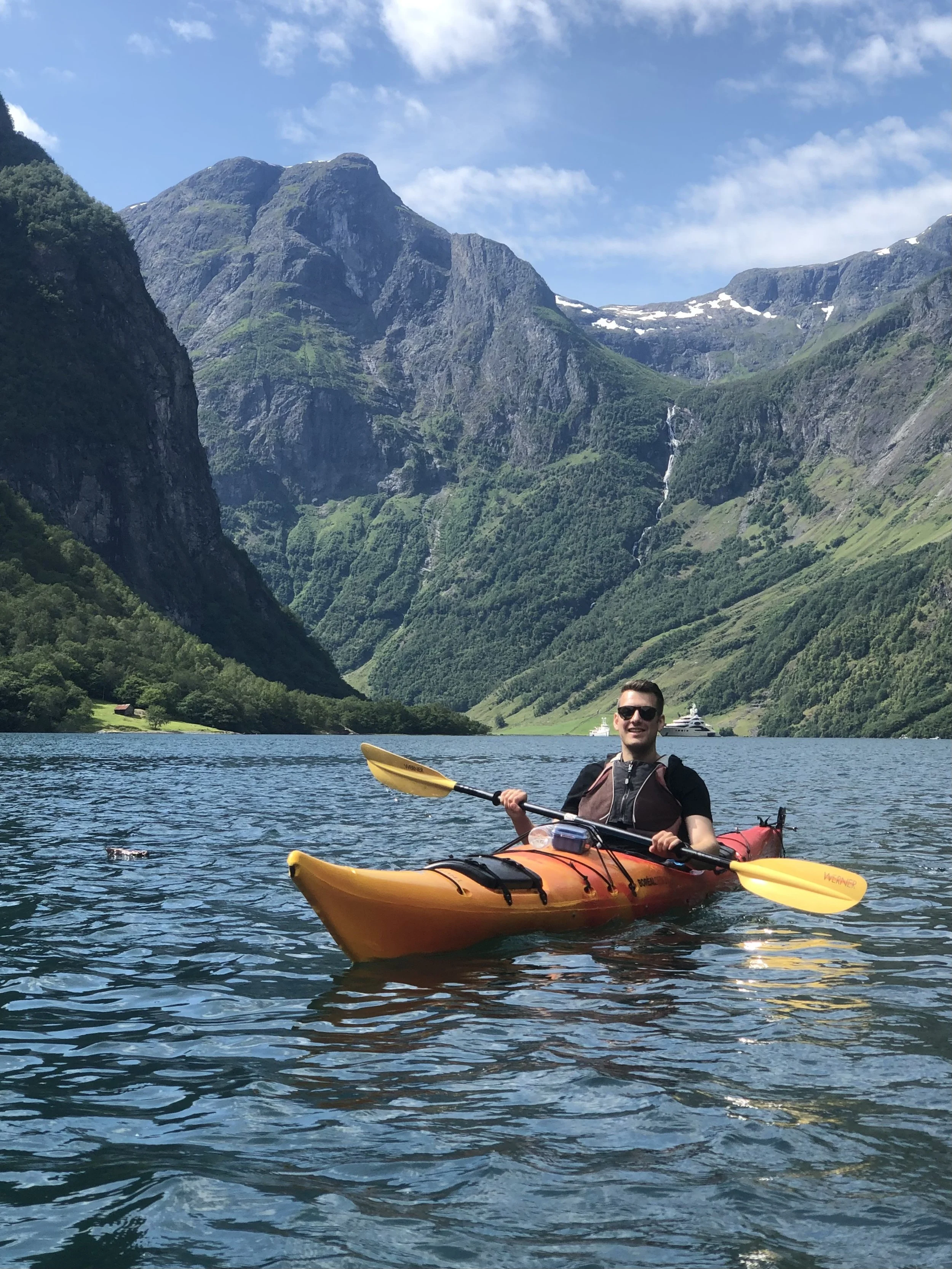
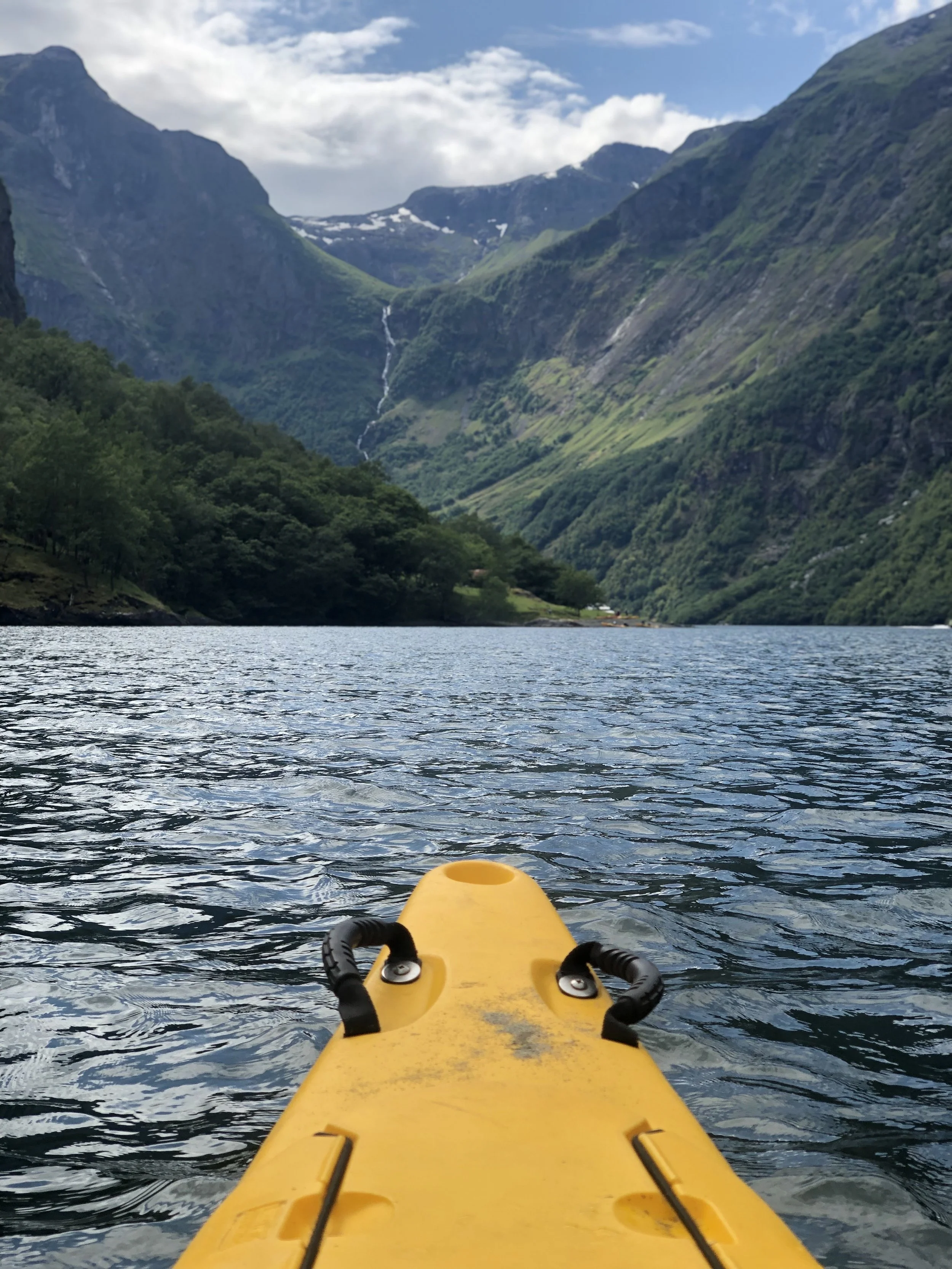
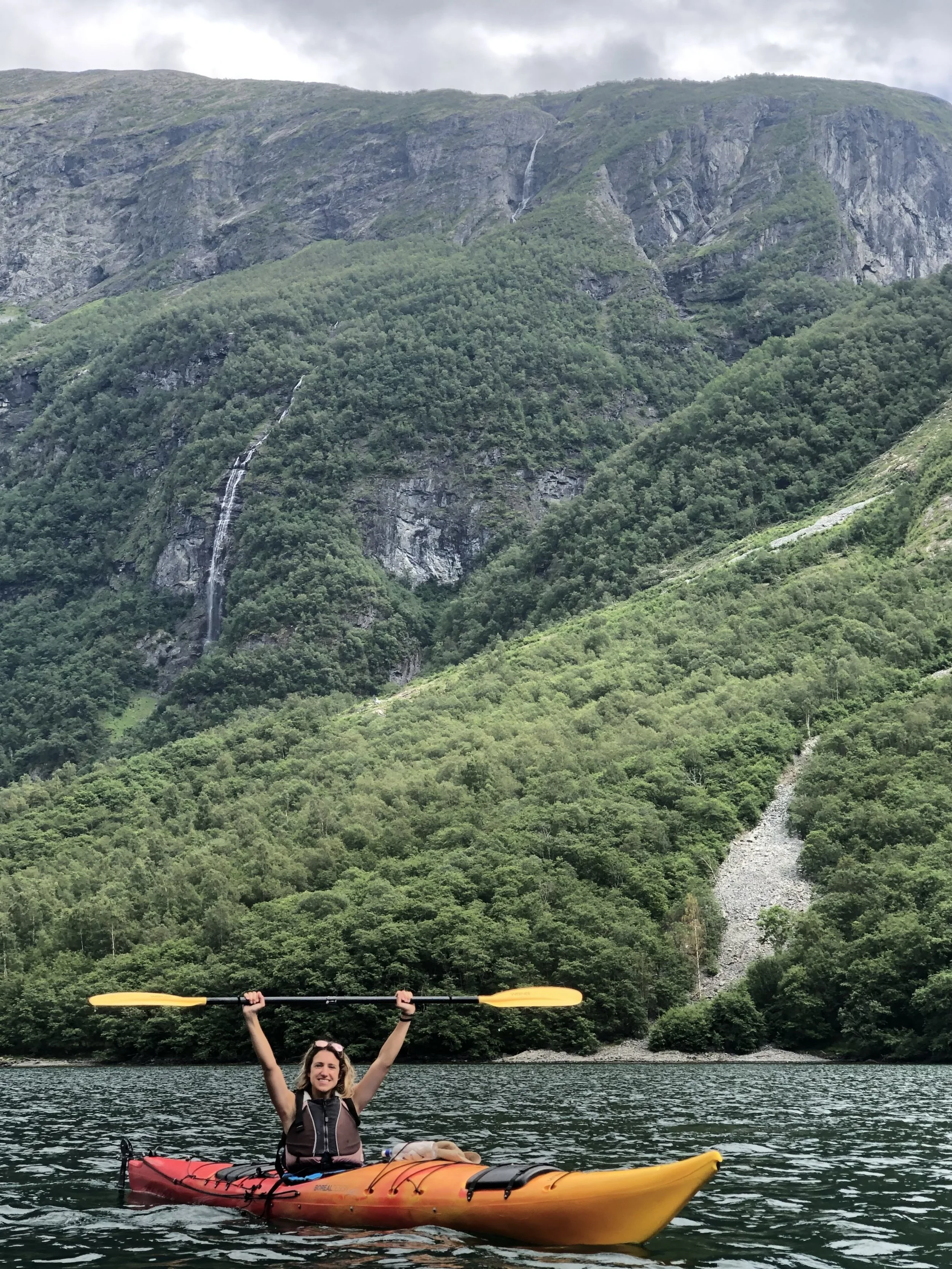
Kayaking Nærøyfjord (UNESCO)
Besseggen Ridge, Jotunheimen
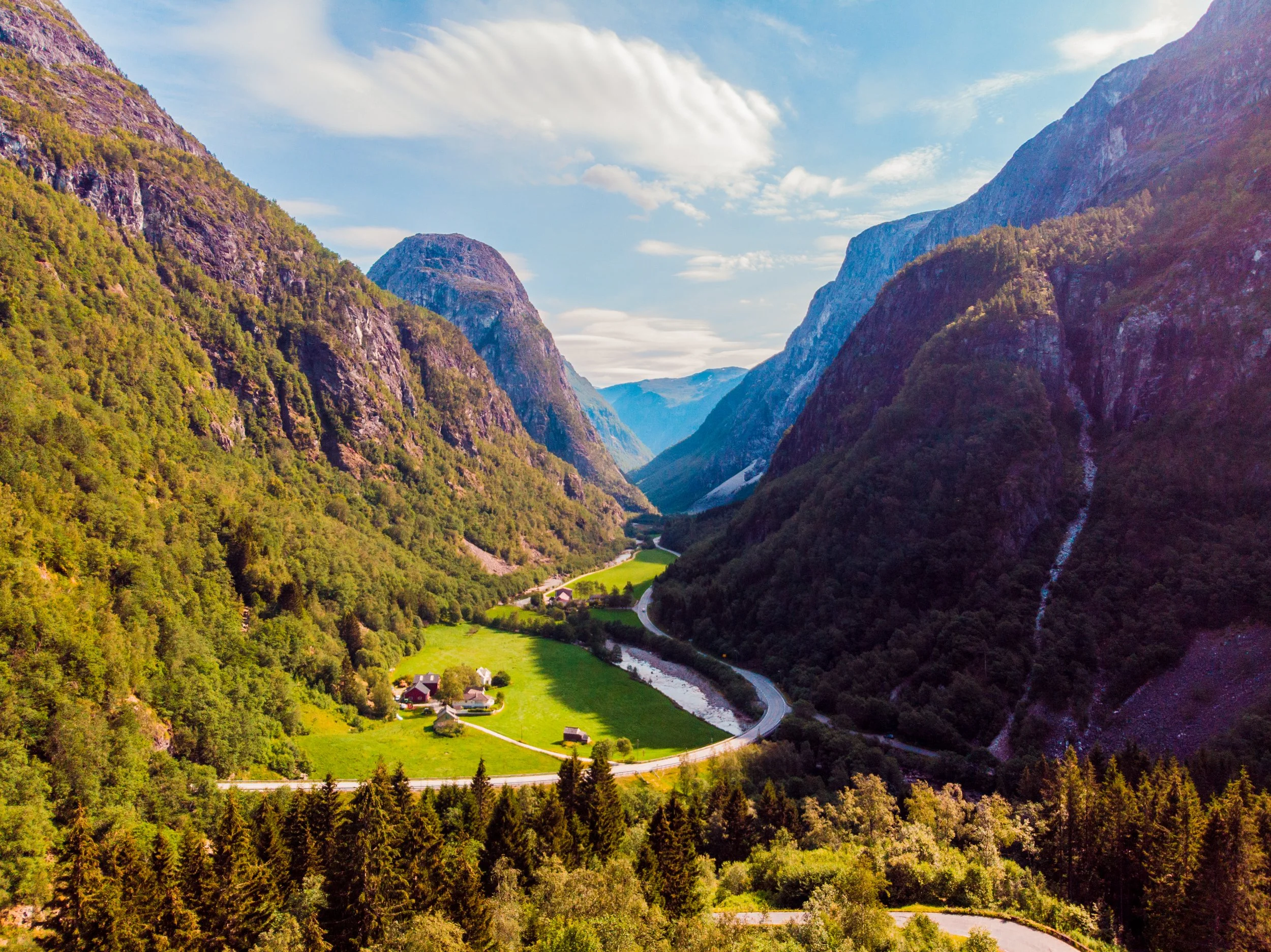
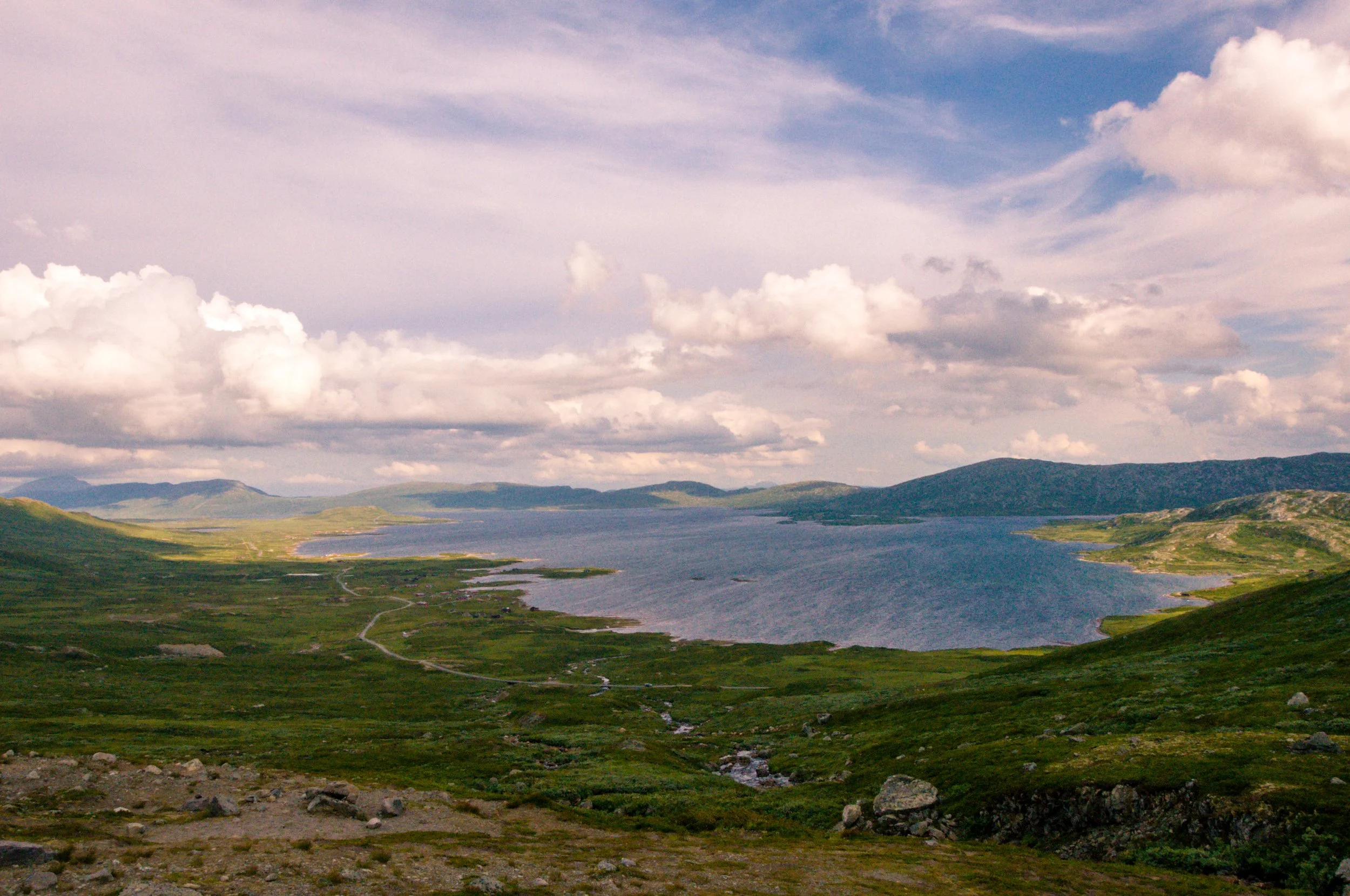
Mountains, fjords, and full on Viking vibes. Norway gave us jaw-dropping hikes, wild kayaking adventures, and cinematic landscapes straight out of a fantasy film, all packed into one epic week we’ll never forget!
Itinerary
Day 1: Oslo
Day 2–3: Trolltunga
Day 4: Nærøyfjord Kayaking + Flåm + Voss
Day 5: Borgund Stave Church + Scenic Drive + Tessanden
Day 6: Besseggen Ridge
Day 7: Road Trip Back to Oslo
Day 8: Oslo
Fjords, Freeze & Feels
One week. Three backpacks. A married couple + my sister. One pair of new hiking boots and a dream to go full Viking.
This was our Norway trip. Honestly? It was straight up magic (with a side of sore calves and pasta eaten by headlamp).
If you’re looking to bond, breathe, and break free from the algorithm, Norway’s got you.
Trolltunga: Sleeping on a Cliff
📍Skjeggedal
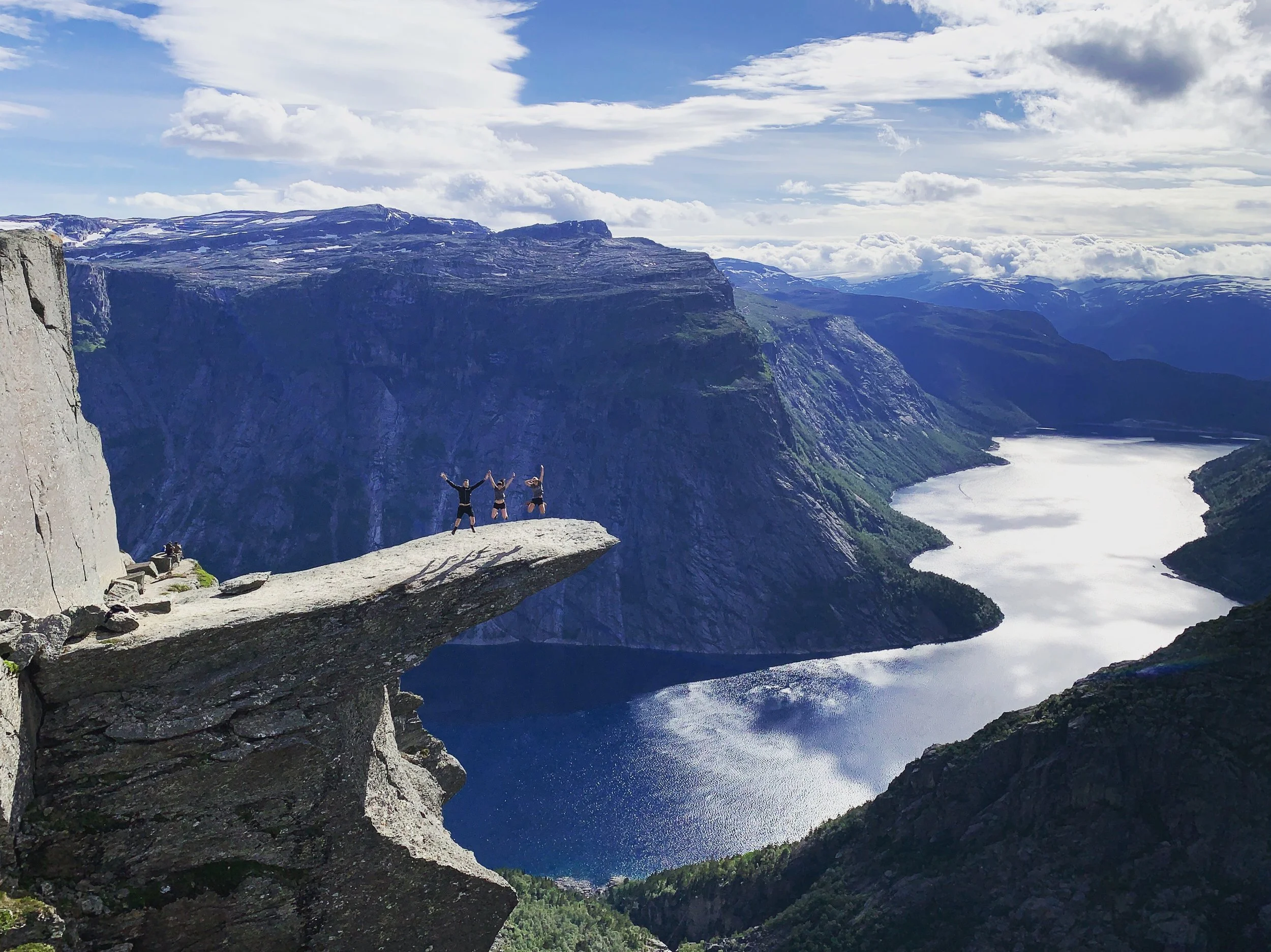
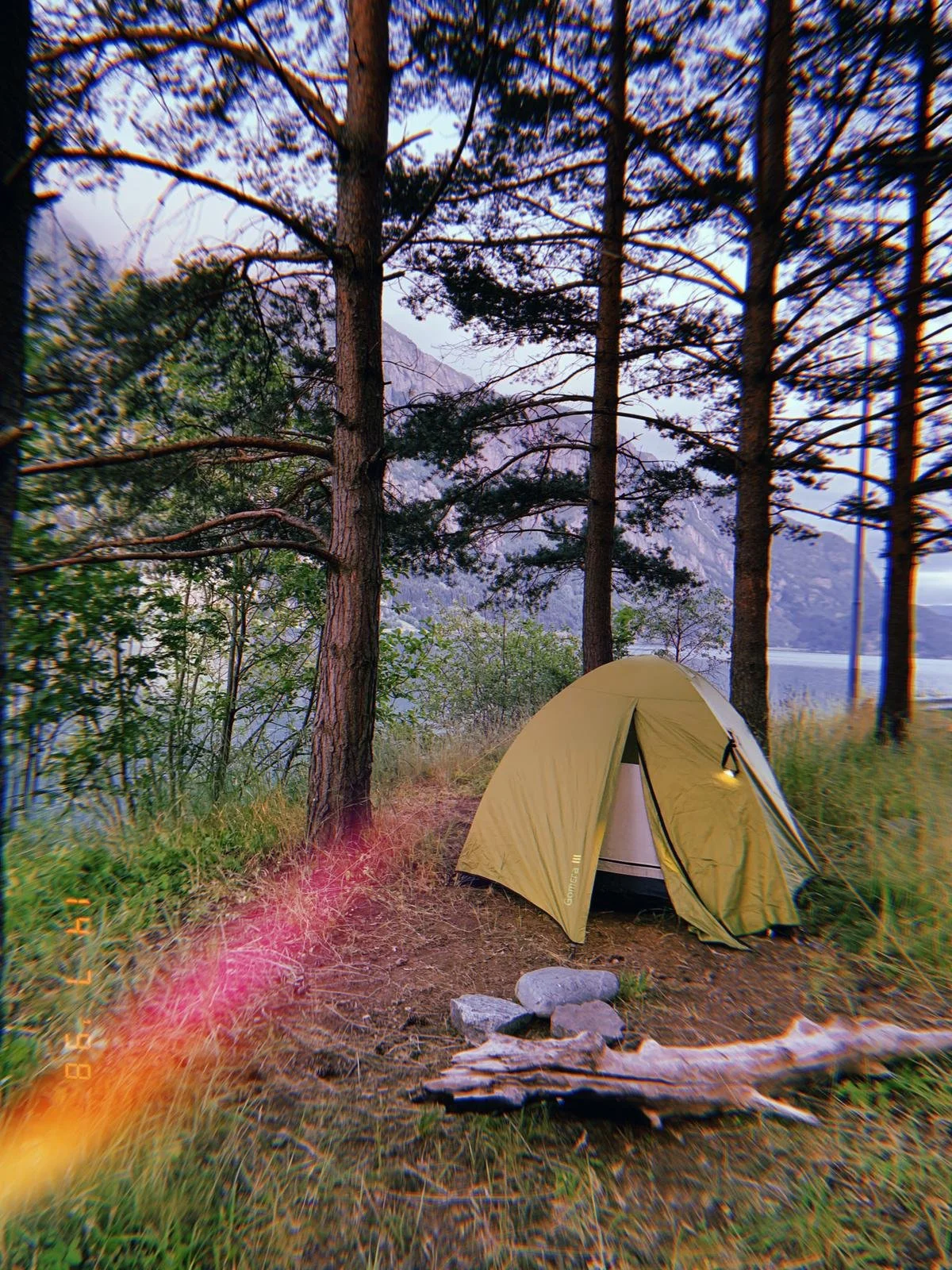
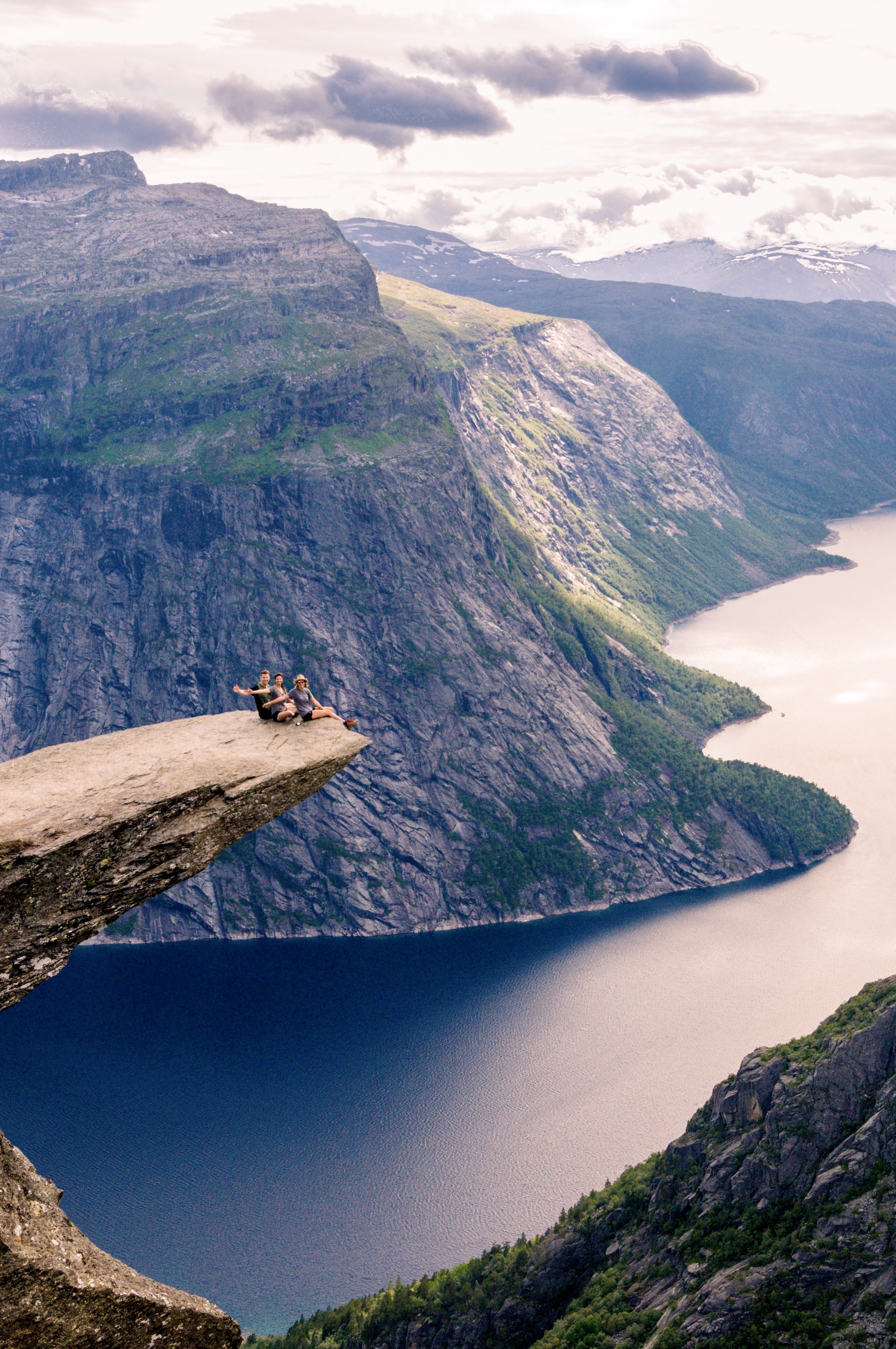
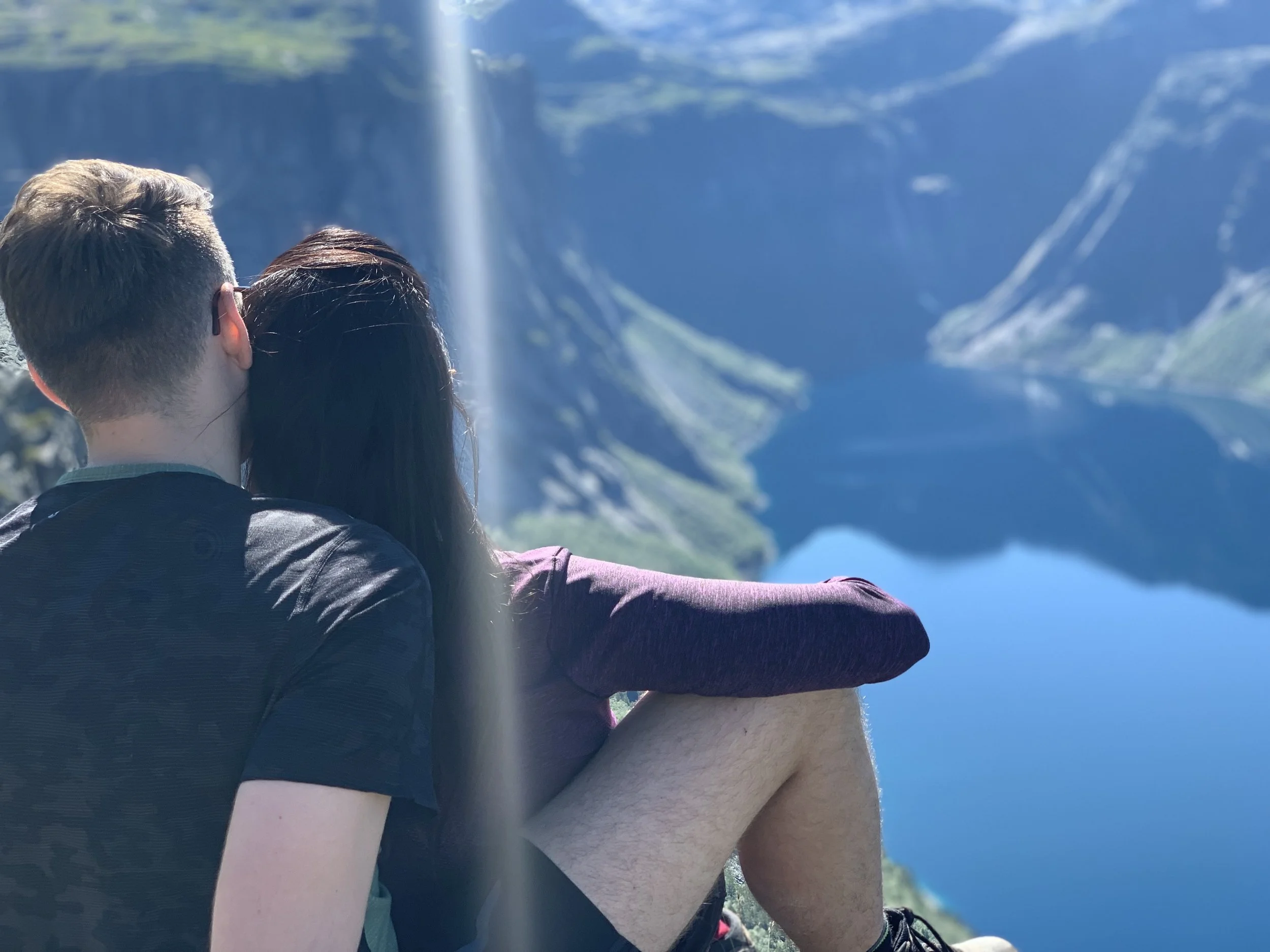
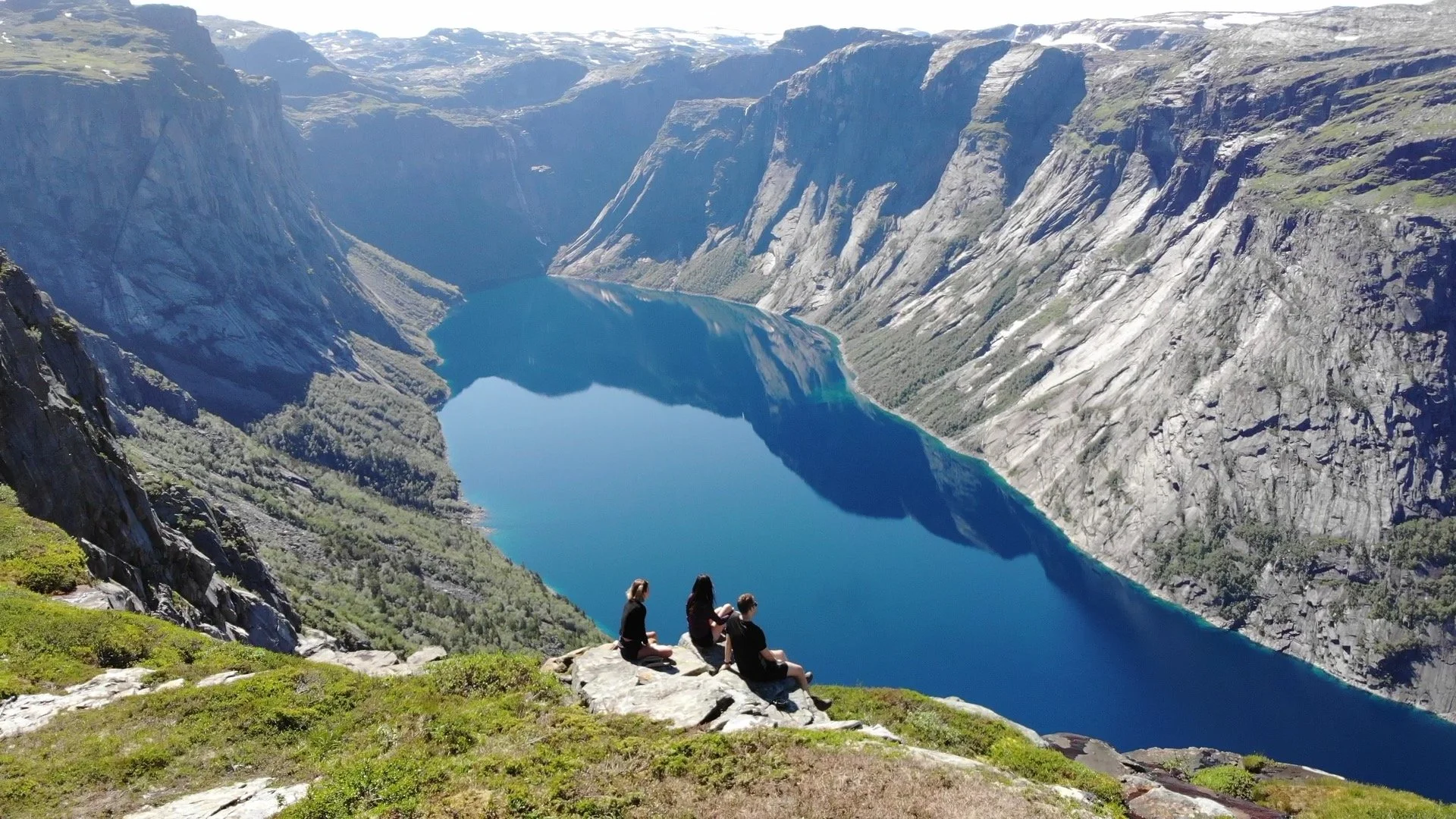
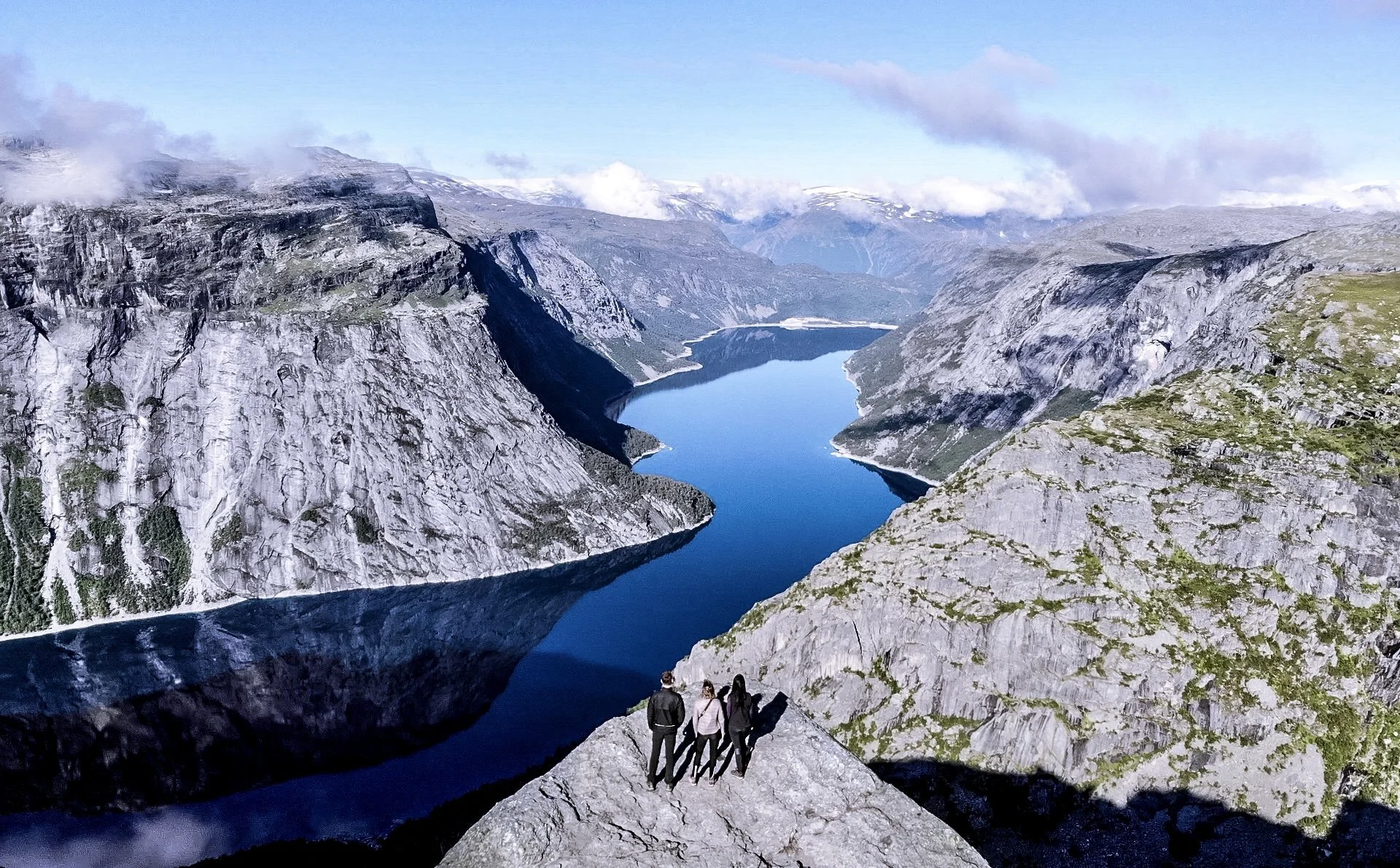
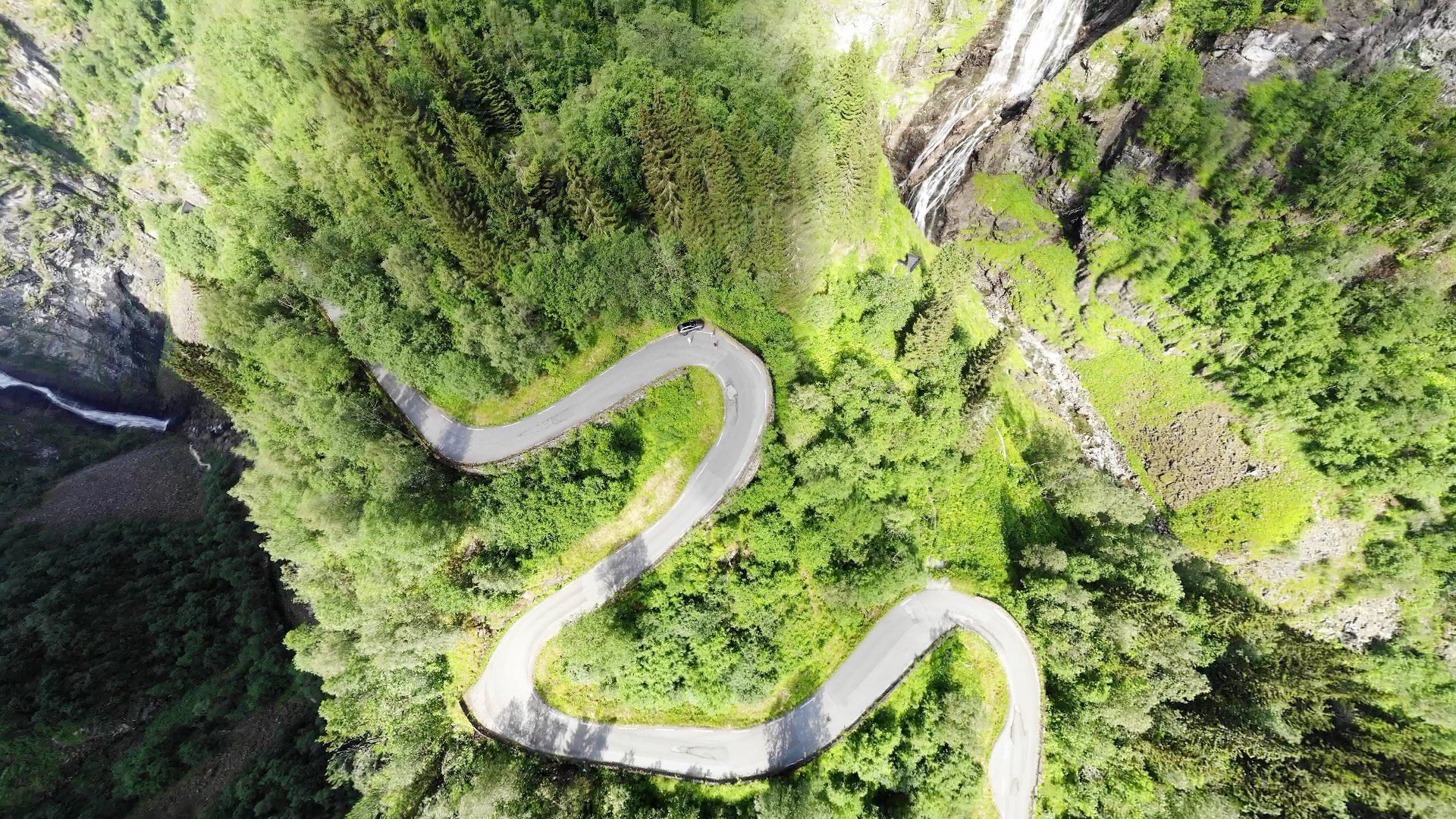
We kicked things off with the iconic Trolltunga hike. Instead of racing up and down in one day like most people, we decided to camp overnight at the top. The views? Unreal. The cold? Also unreal, even during summer. Trolltunga, Troll’s Tongue, is a horizontal rock formation jutting out about 700 meters above Ringedalsvatnet, shaped during the last Ice Age when glaciers retreated and eroded the surrounding cliffs roughly 10,000 years ago. The hike covers around 27 to 28 kilometers round trip with approximately 800 to 900 meters of elevation gain, depending on the starting point. The trail starts out brutal, think the steep zigzag road known as the Serpentine, but once past that, it turns into pure mountain magic and fjord views.
In Detail:
Book the Magelitopp parking in advance, or you’ll get stuck on the pain trail from Skjeggedal.
Pack layers and serious sleeping bags, even summer nights get glacial.
Be the first ones at the cliff in the morning = best photo of your life, no one in it but you.
💡 We took drone shots, jumping pics, and even filmed a little midnight moment under the stars. Trolltunga was a whole cinematic arc.
-
Length: 28 km round trip
Elevation gain: ca. 1,200m
Duration: 10–12 hours round trip
Season:
– June 1 to September 30. Open for self-guided hikes
– October to May. Guided hikes only, due to snow and safetyStart points:
– P1: Tyssedal – lowest, requires shuttle or long walk
– P2: Skjeggedal – standard base, adds 4 km if Mågelitopp is full
– P3: Mågelitopp – closest to the trailhead, limited spotsDifficulty: Demanding, especially if done in one day
Kayaking Nærøyfjord
We booked a full day kayak tour with Nordic Ventures through the Nærøyfjord, one of the narrowest and most dramatic fjords in the world. The fjord stretches about 17 km, with sections narrowing to roughly 250 meters wide, flanked by cliffs rising up to around 1,400 meters above sea level. UNESCO inscribed it as part of the West Norwegian Fjords World Heritage Site for its exceptional natural beauty and its classic example of a fjord landscape shaped by glacial erosion. Our guide was chill and hilarious, and honestly, the whole day felt like a wellness retreat in adventure format.
In Detail:
We paddled through still waters surrounded by vertical cliffs
Stopped for a veggie grill-up on a remote beach
Bathed under a literal waterfall (10/10 spiritual cleanse)
We were sore, soaked, and so happy.
Besseggen Ridge: Couples Therapy But Make It Norwegian
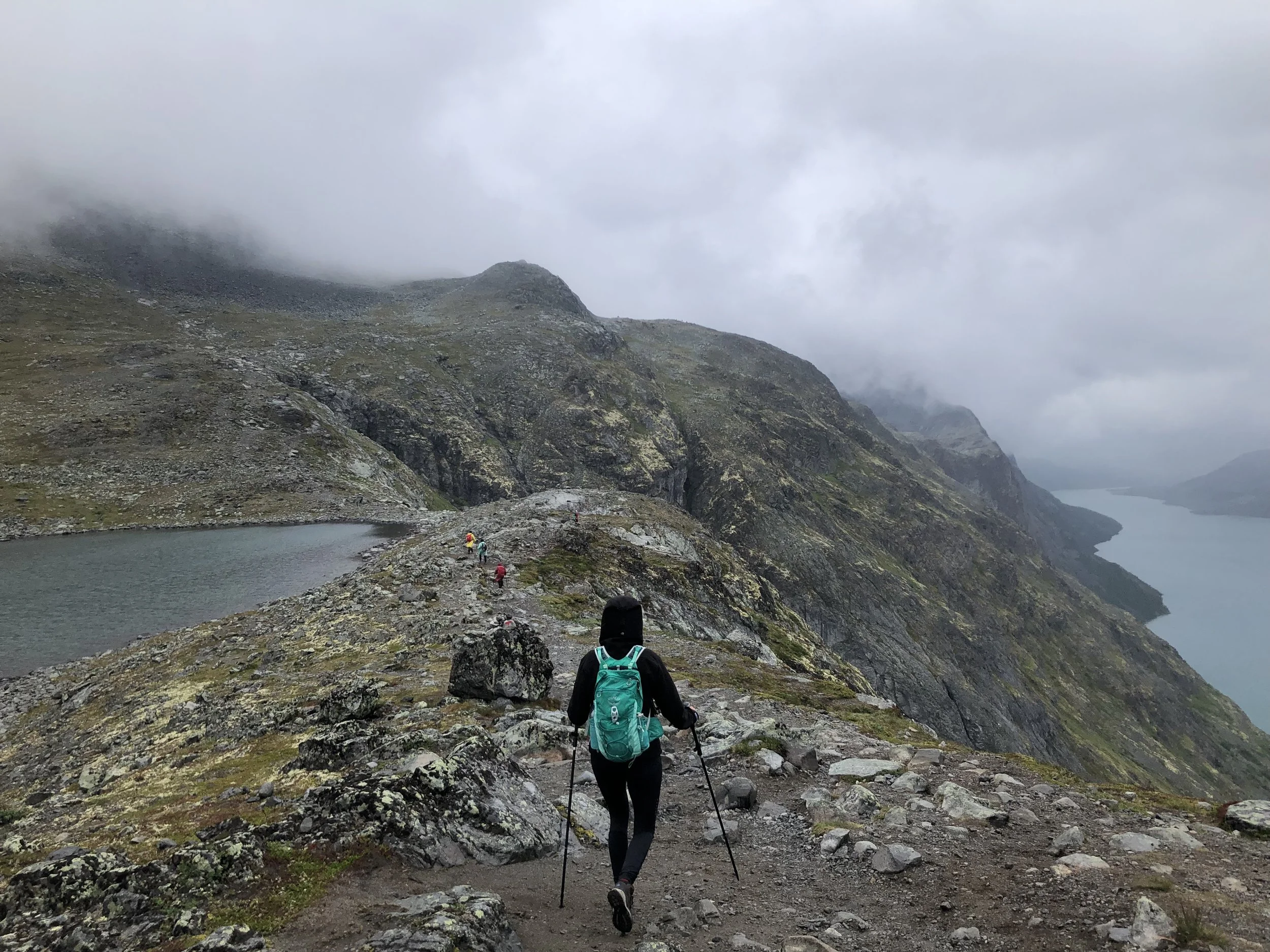
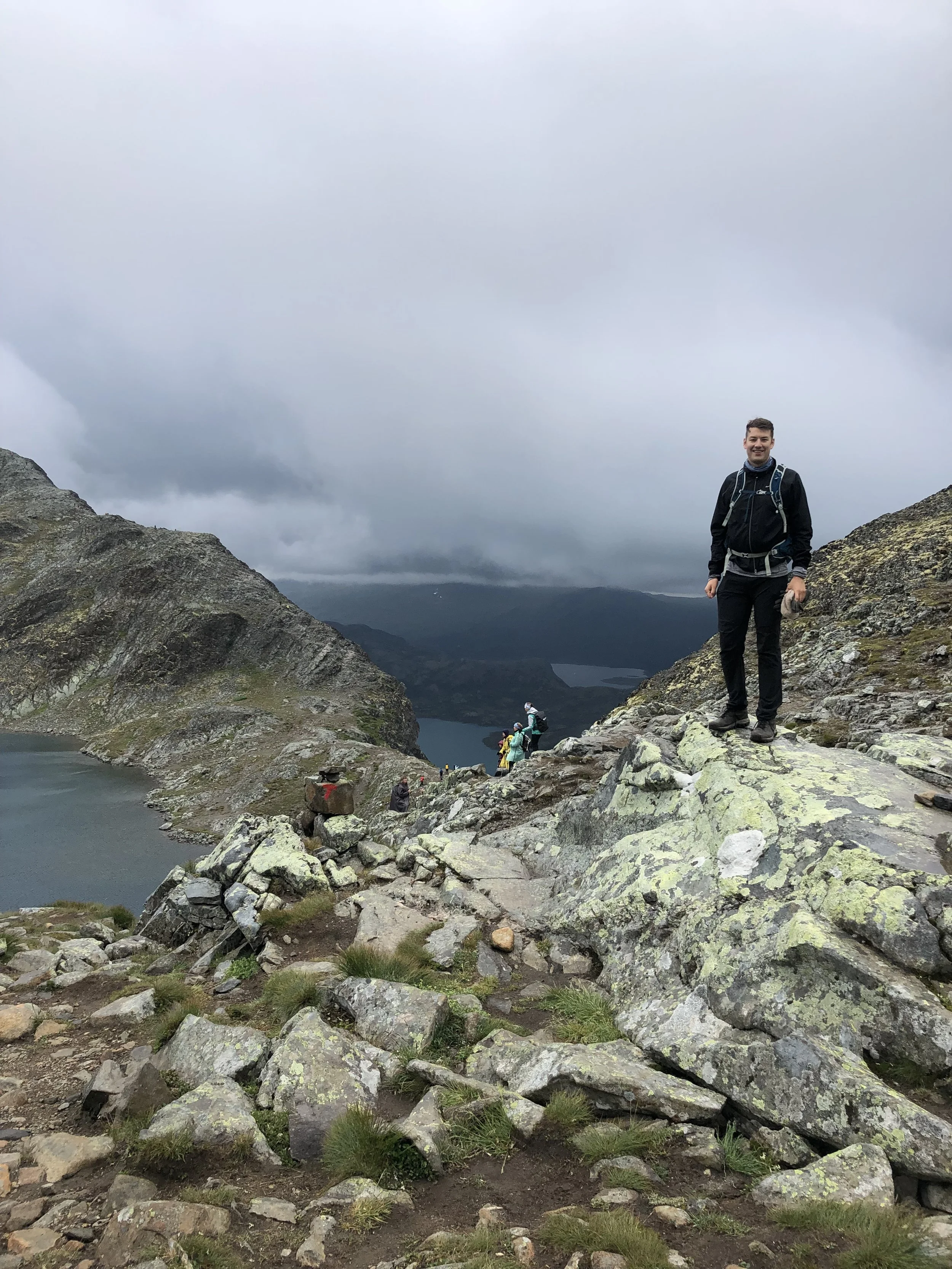
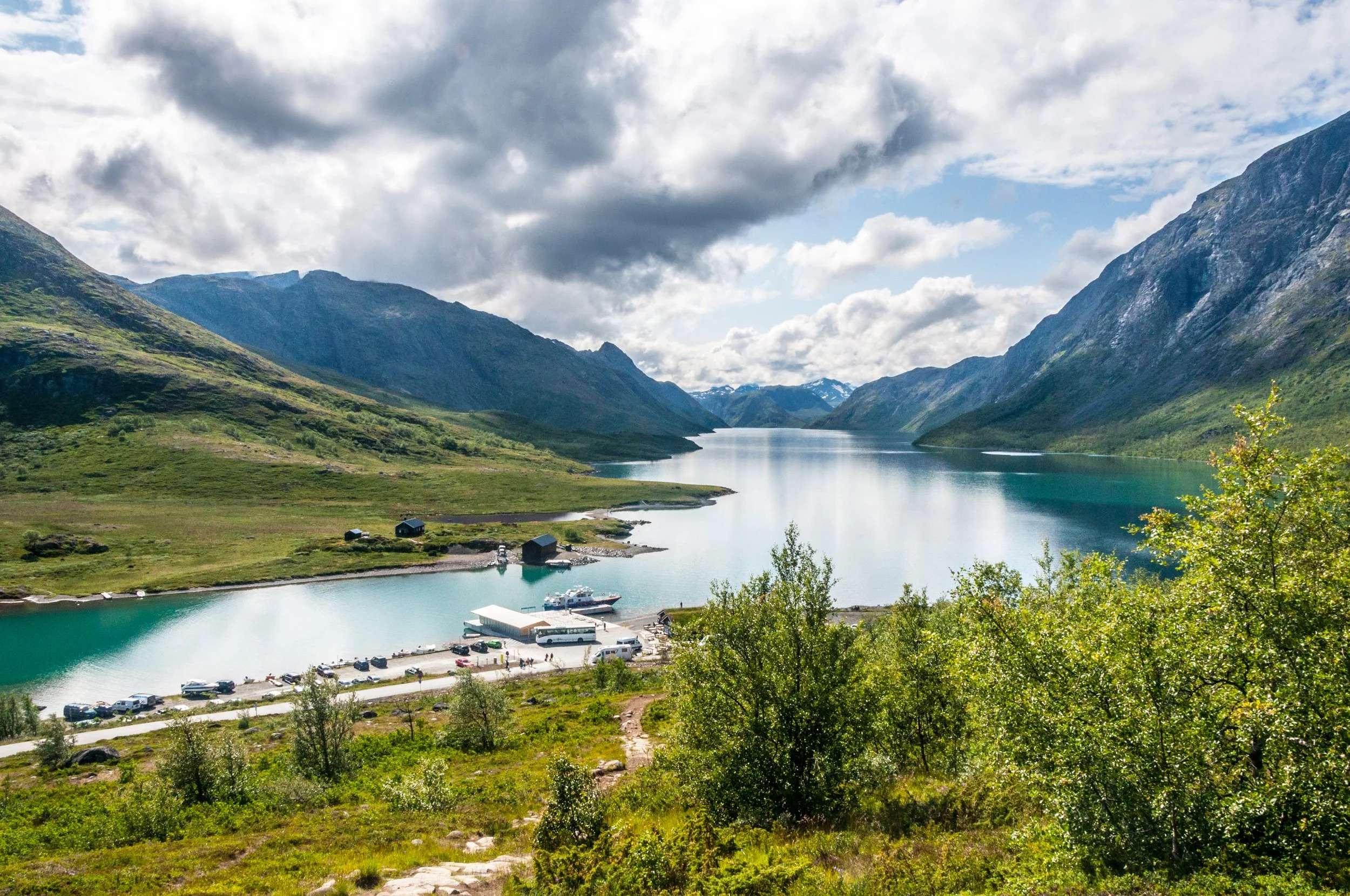
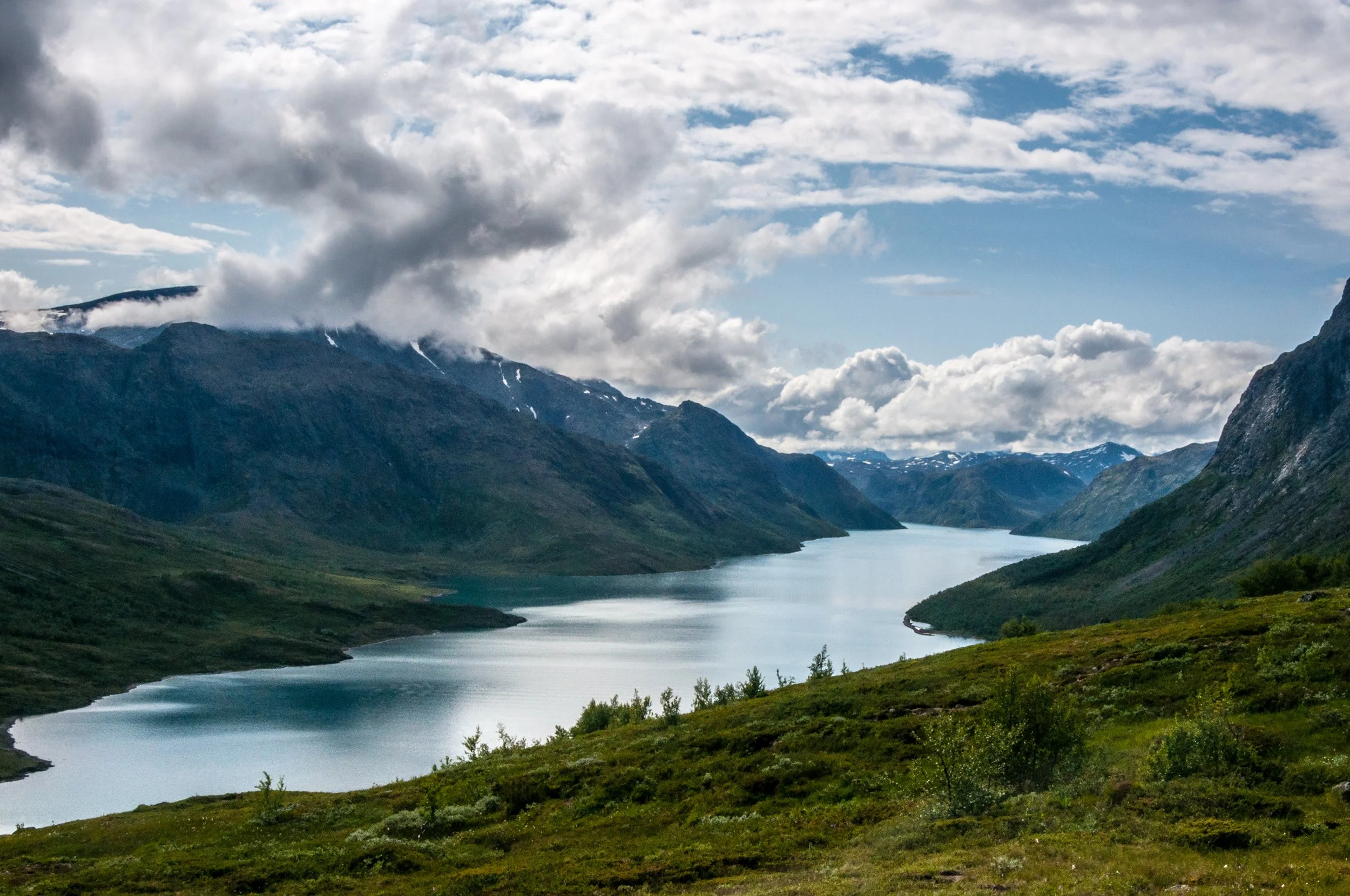
This was our big flex hike. Besseggen Ridge in Jotunheimen National Park, aka National Geographic’s "Top 20 Hikes in the World." It lived up to the hype.
We took the ferry to Memurbu and hiked back to Gjendesheim to avoid time pressure and get the ridge climb out of the way early. The trail has three hard parts, but in between? Pure magic.
Let’s just say: if you want to test your relationship, do it at 1,700 meters with fog, wind, and three surprise scrambling sections. We slipped, climbed, encouraged, mildly snapped, apologized, and laughed our way across the ridge. Honestly? Peak couples therapy. But the kind where the therapist is a glacier and your couch is a pile of boulders.
The lakes beside the ridge look edited: one is turquoise, the other deep blue. No filter needed.
Ended with a 4-course dinner at a mountain lodge because... balance.
-
Length: 14 km
Elevation gain: ca. 1,000 m
Duration: 6 to 8 hours
Season:
June to September, depending on snow conditionsStart points:
Gjendesheim or Memurubu, connected by ferry across Lake GjendeDifficulty: Demanding
Between the Peaks:
Between our Big Three adventures, we:
Got rescued by German campers when our gas ran out
Shared beers at a tiny pub in Voss, our home base for a few days
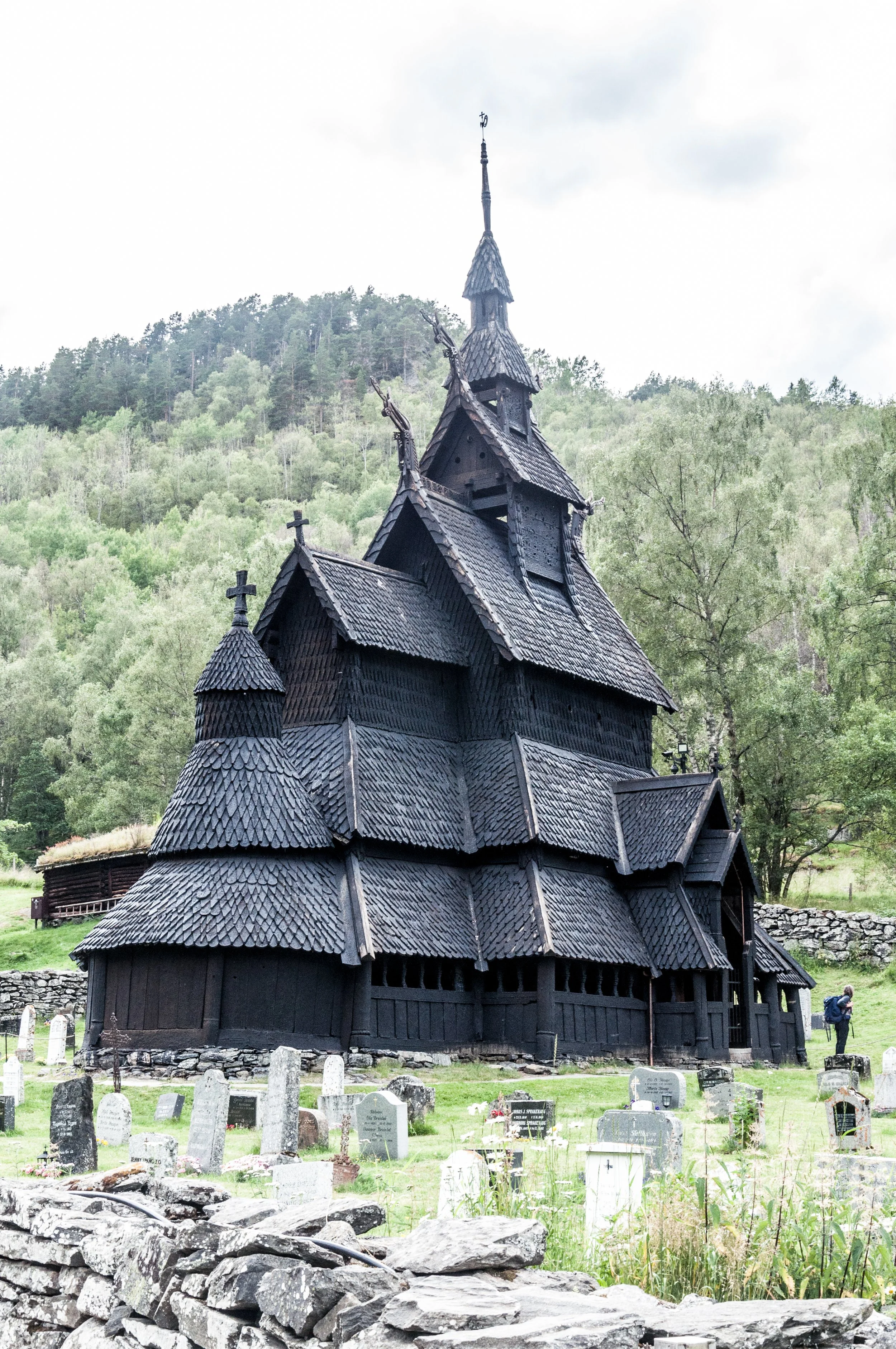
Visited Borgund Stave Church, which looks like a Game of Thrones set piece
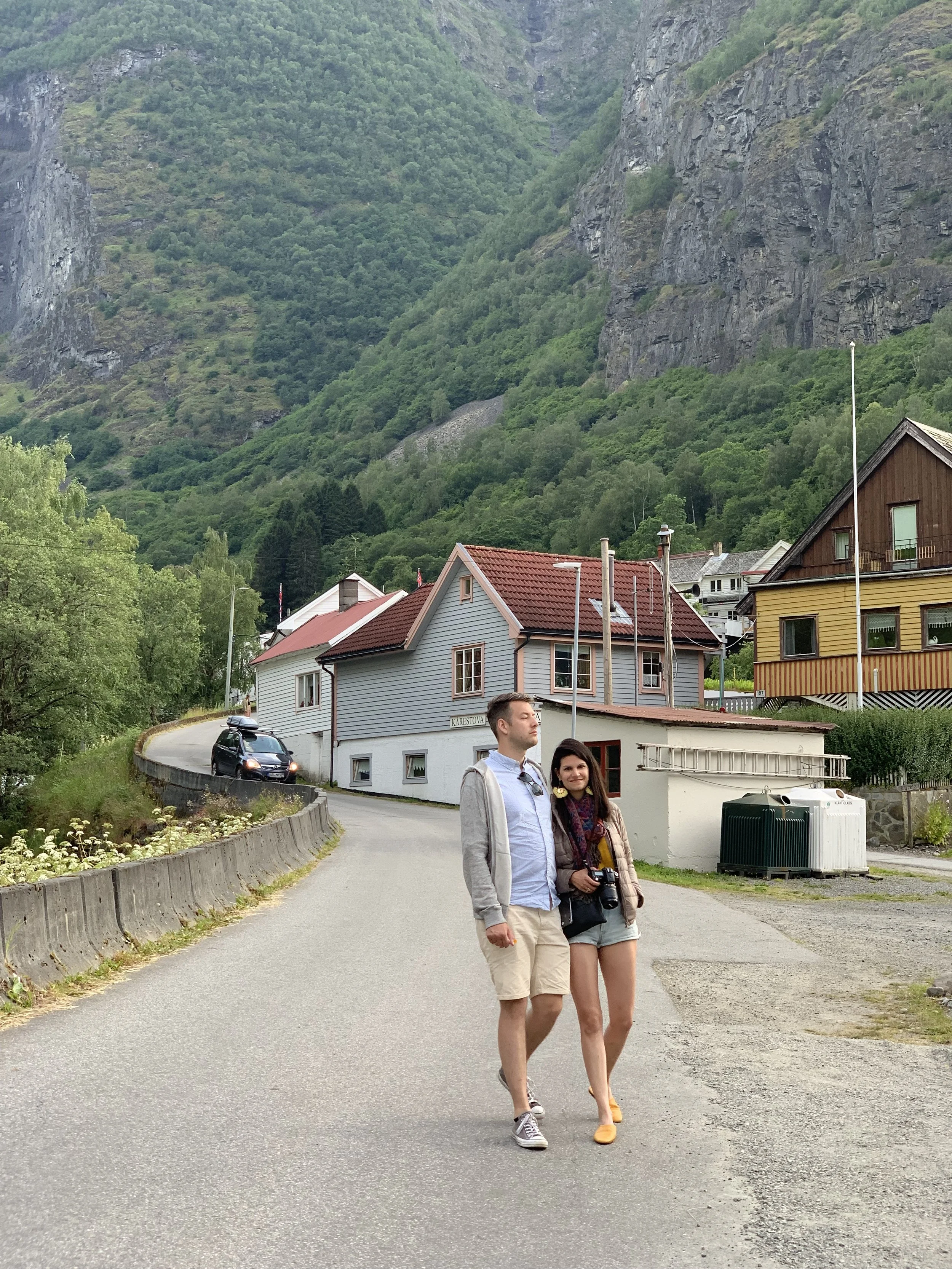
Took spontaneous stops in ridiculously charming towns that feel like Studio Ghibli meets Viking village
Honestly, every turn in the road looked like a postcard.
Oslo
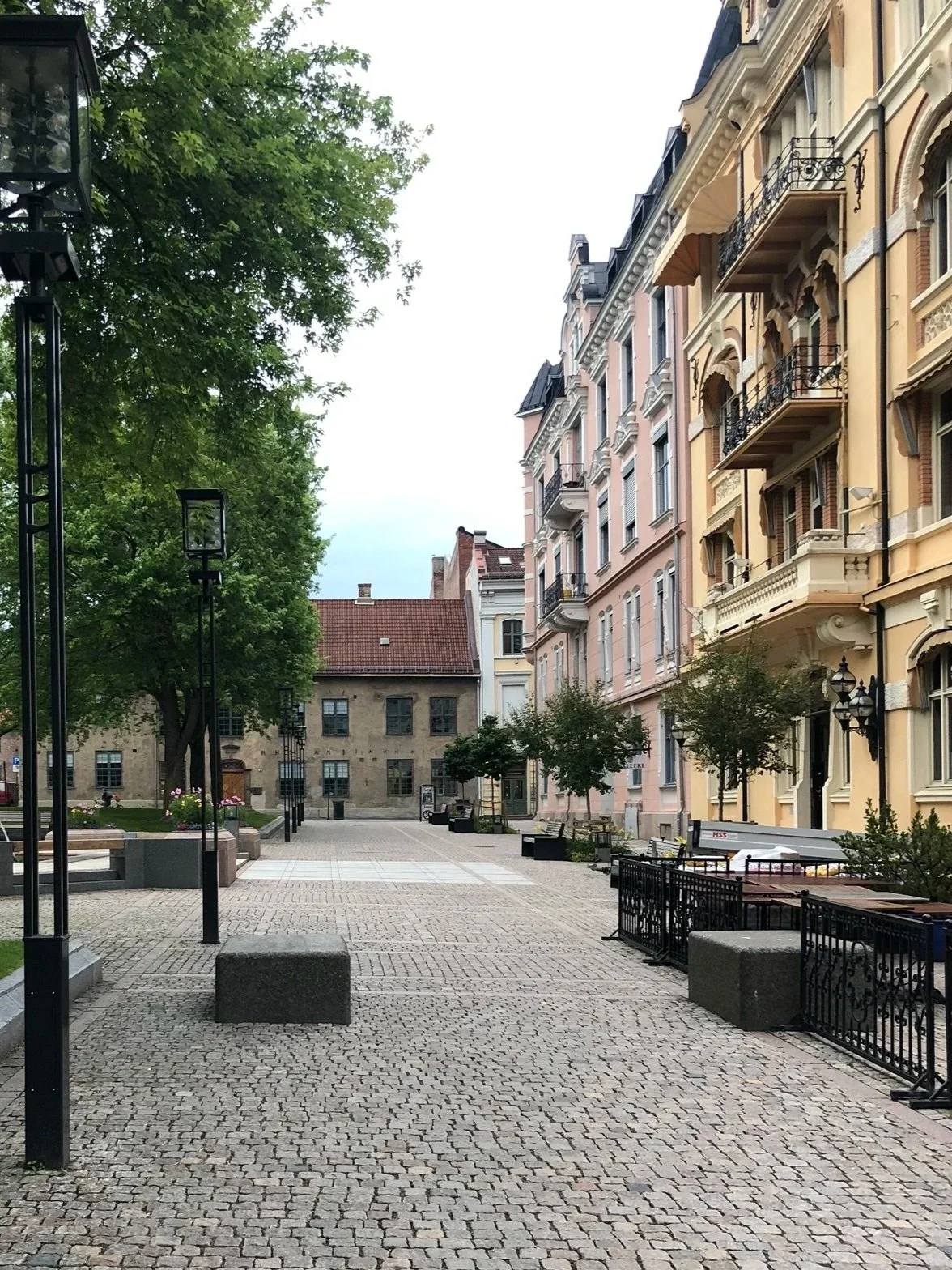
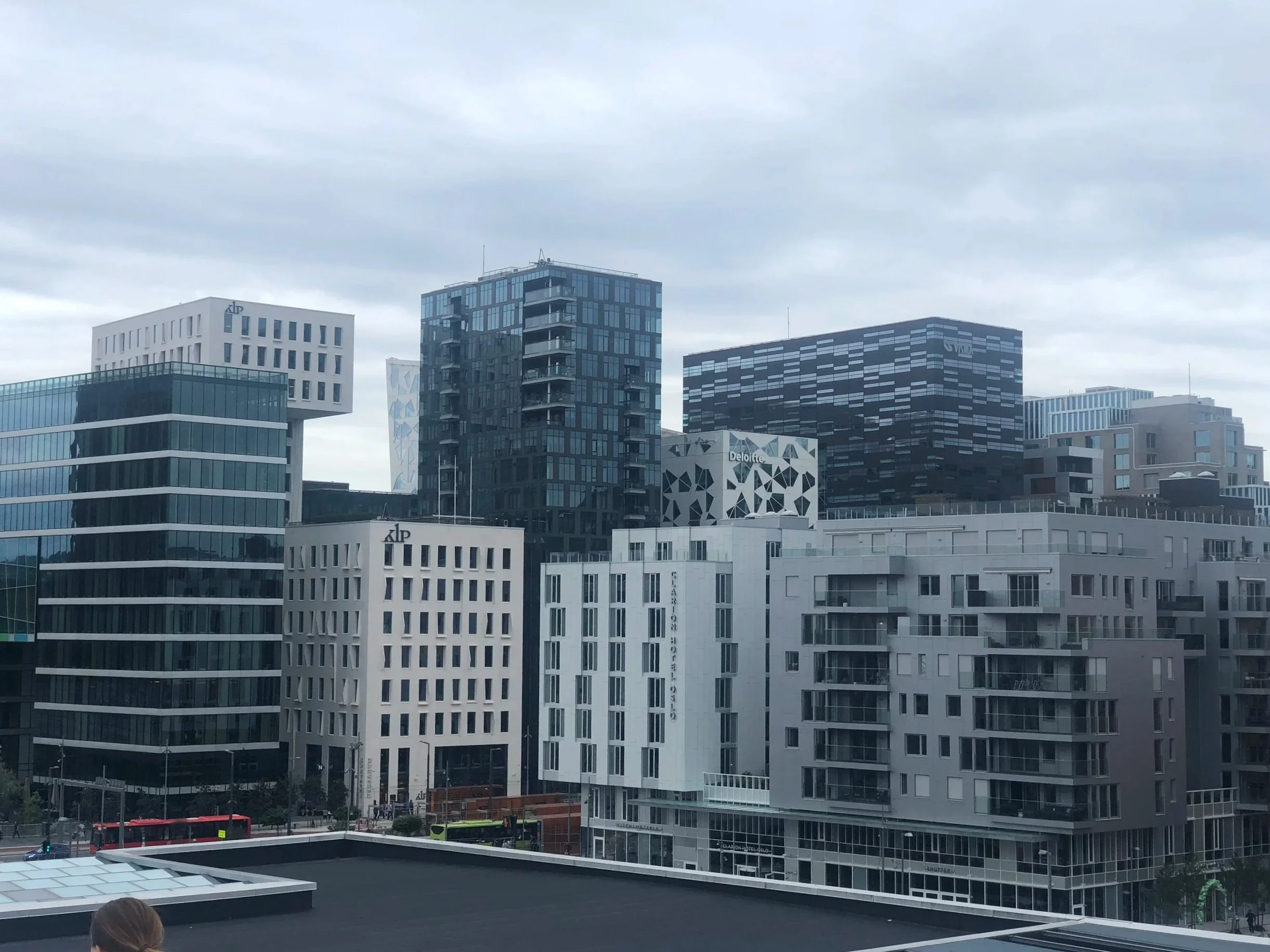
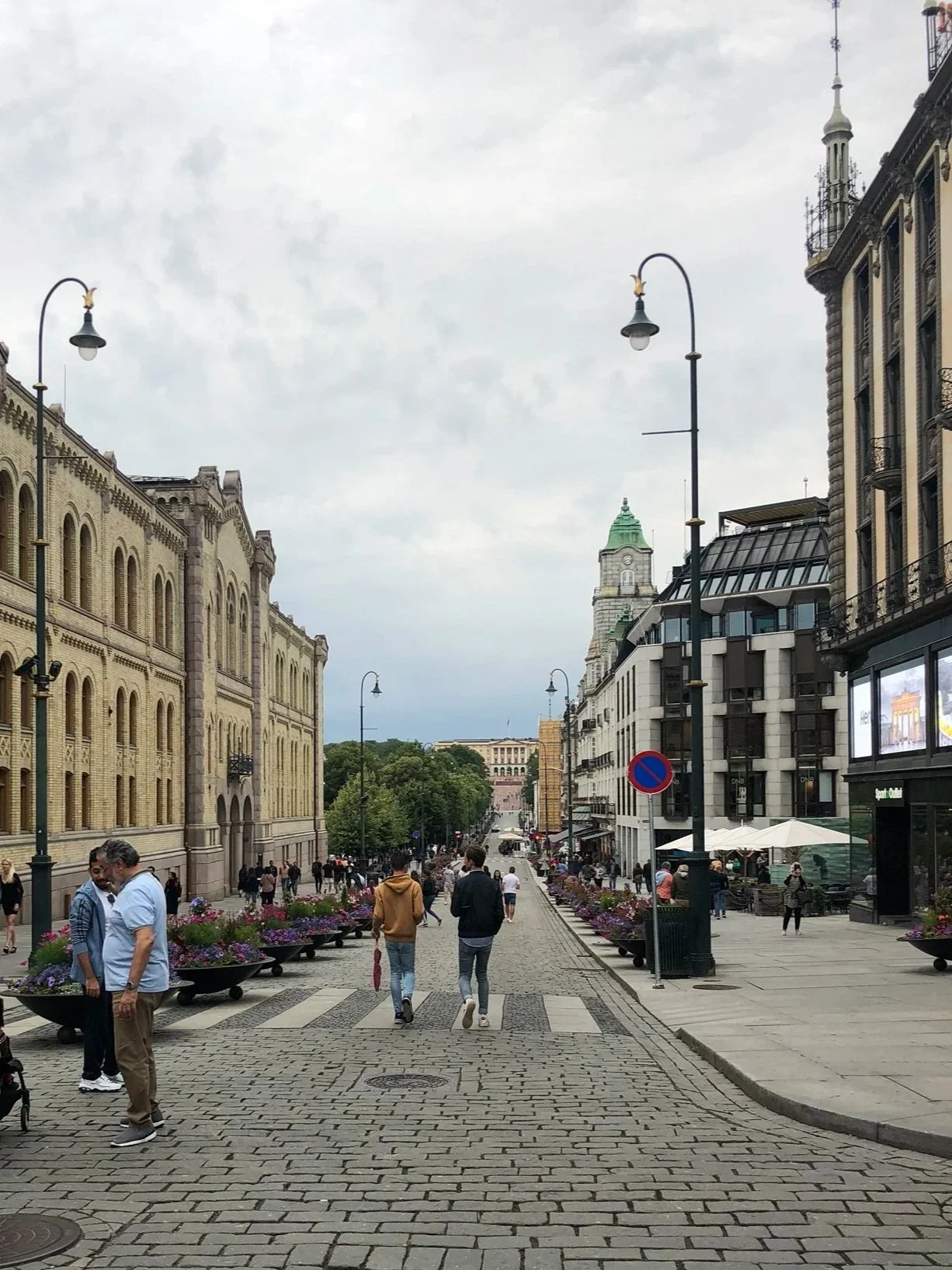
We wrapped things up in Oslo. We took a free walking tour to explore the capital and learn more about Norway’s politics, history, design, and wild obsession with nature. Along the way we passed the Royal Palace, the modern waterfront around the Oslo Opera House, and the sober elegance of Akershus Fortress. The city has a quiet confidence that doesn’t try too hard, and that’s exactly what we loved about it.
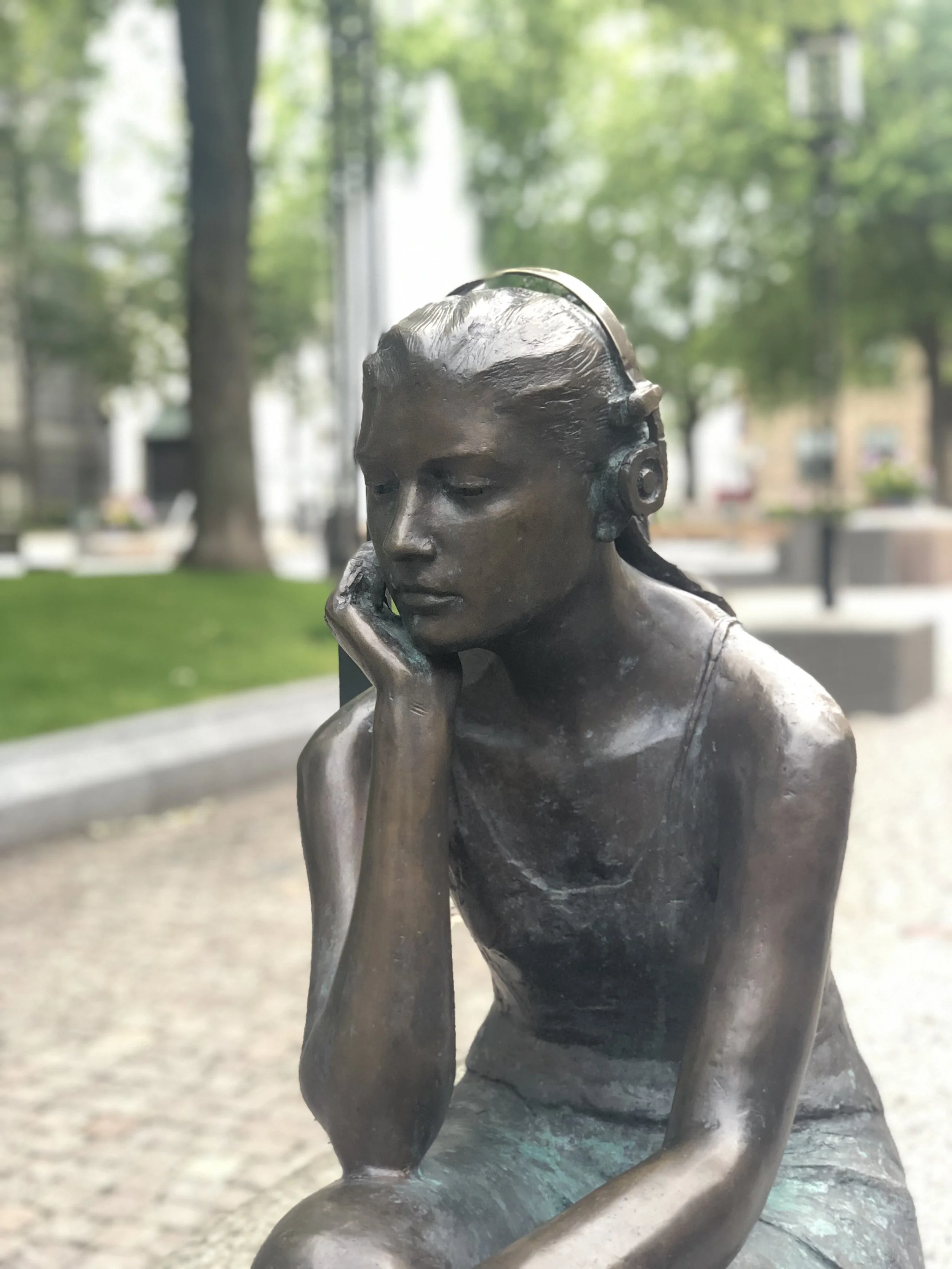
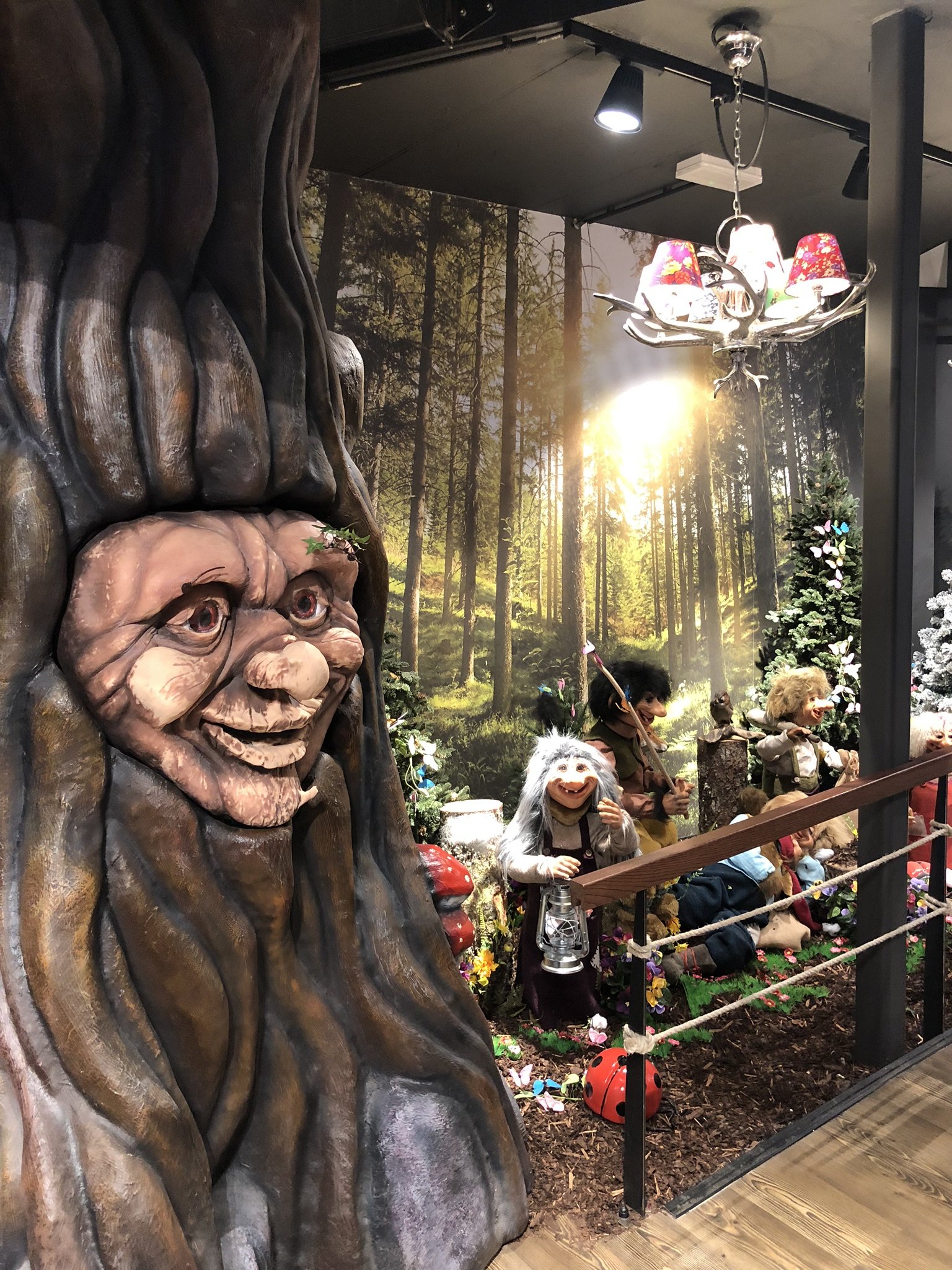
Trolls in Norway originate in Old Norse mythology and medieval folklore, where they embodied dangerous and mysterious forces of nature such as mountains, forests, and the unknown wilderness. Over time, particularly during the 19th century National Romantic movement, trolls were reframed as cultural symbols that helped shape a distinct Norwegian identity rooted in landscape, rural life, and folklore.
Design Tales
Architecture in dialogue with landscape.
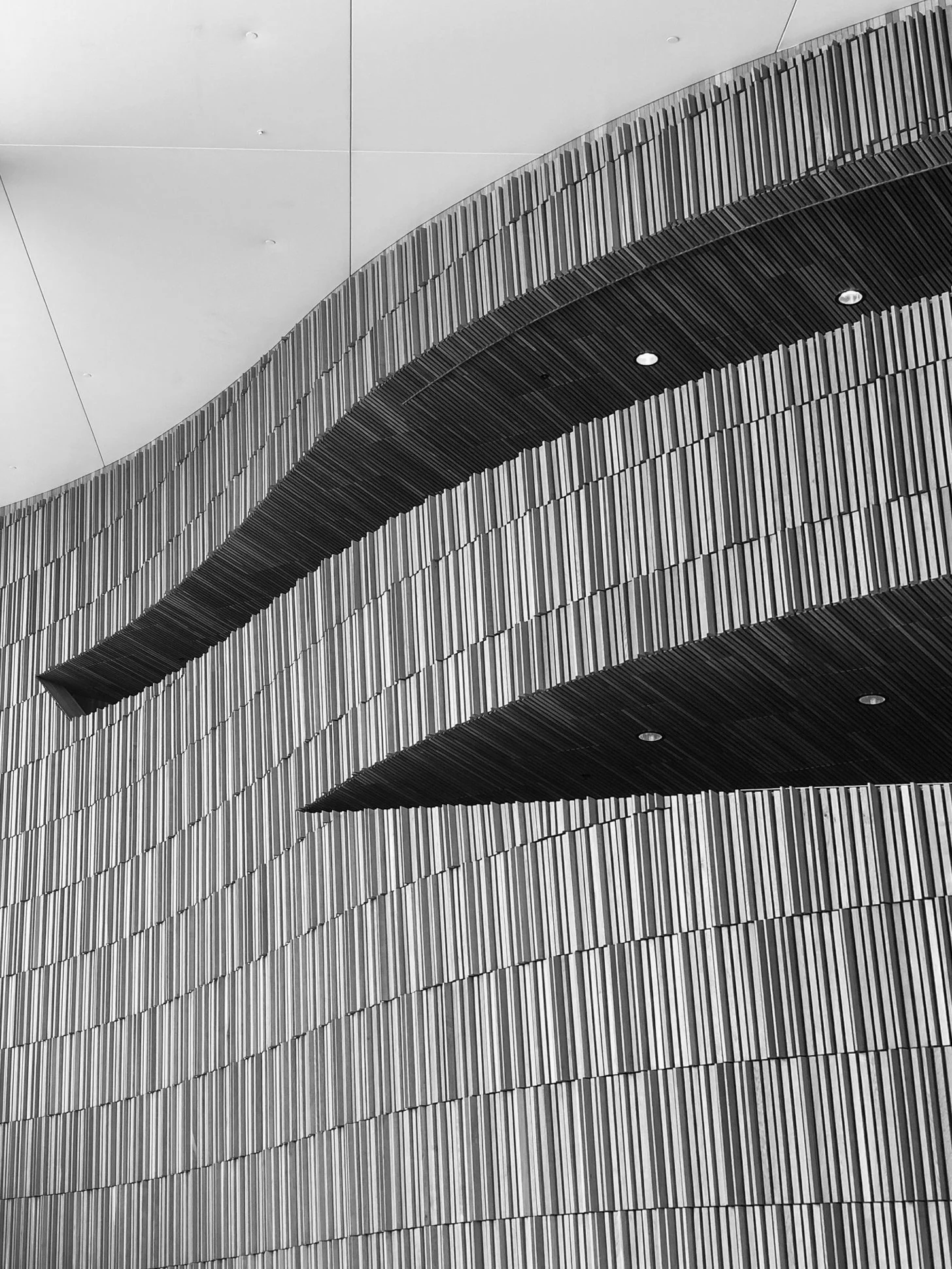
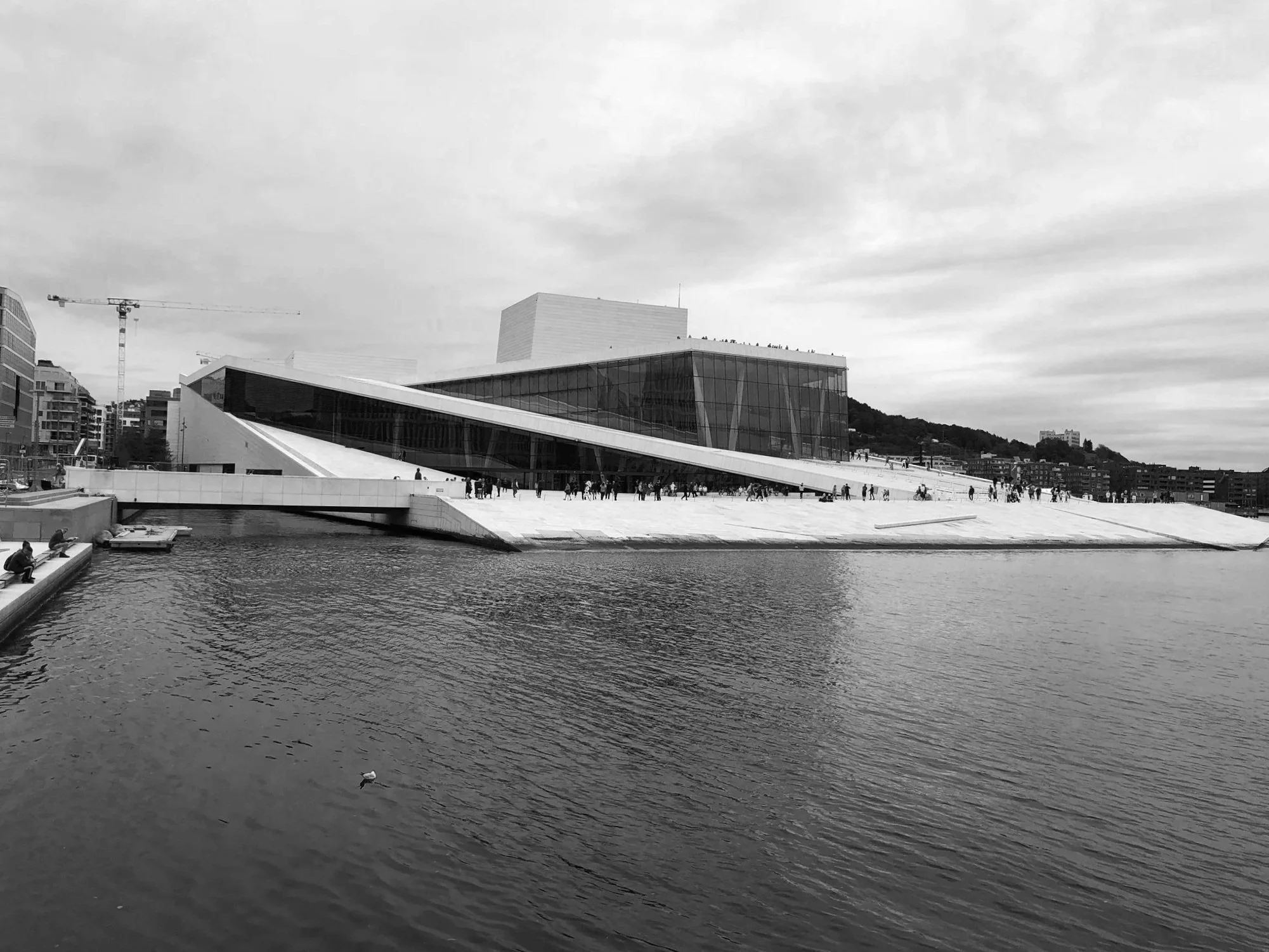
Oslo’s Opera House, designed by Snøhetta and completed in 2007, marked the first major intervention in Oslo’s Bjørvika waterfront transformation, converting a former industrial harbour into a publicly accessible urban landscape. Its sloping white roof descends seamlessly to the water, inviting people to walk up from the city and move across the building as if it were part of the ground itself. Emerging from the fjord like a glacial mass, the building recalls the presence of an iceberg, not as literal form but through its scale, brightness, and relationship to water. While the roof appears continuous from the exterior, the main auditorium volume rises independently within the line of the balustrades to achieve the necessary acoustic height, subtly altering the roof geometry and creating an elevated viewing point toward the city and the fjord.
Materiality plays a central structural and sensory role. The primary roof surfaces are clad in white La Facciata marble from the Carrara quarries, whose patterning, cuts, and lifted edges were developed in close collaboration with artists to produce a shifting play of light and shadow across the stone. Areas exposed to water and the north facade are finished in Norwegian Ice Green granite, selected for durability and tonal depth. Full scale prototypes were tested extensively to refine surface texture and colour nuance, supported by a continuous quality control process throughout production. As construction progressed, significant ground settlement around the building required adaptive responses, reinforcing the opera house as both a precise architectural object and a long term negotiation with unstable terrain. The result is a building where technical resolution, artistic collaboration, and public accessibility are inseparably woven into the architectural language.
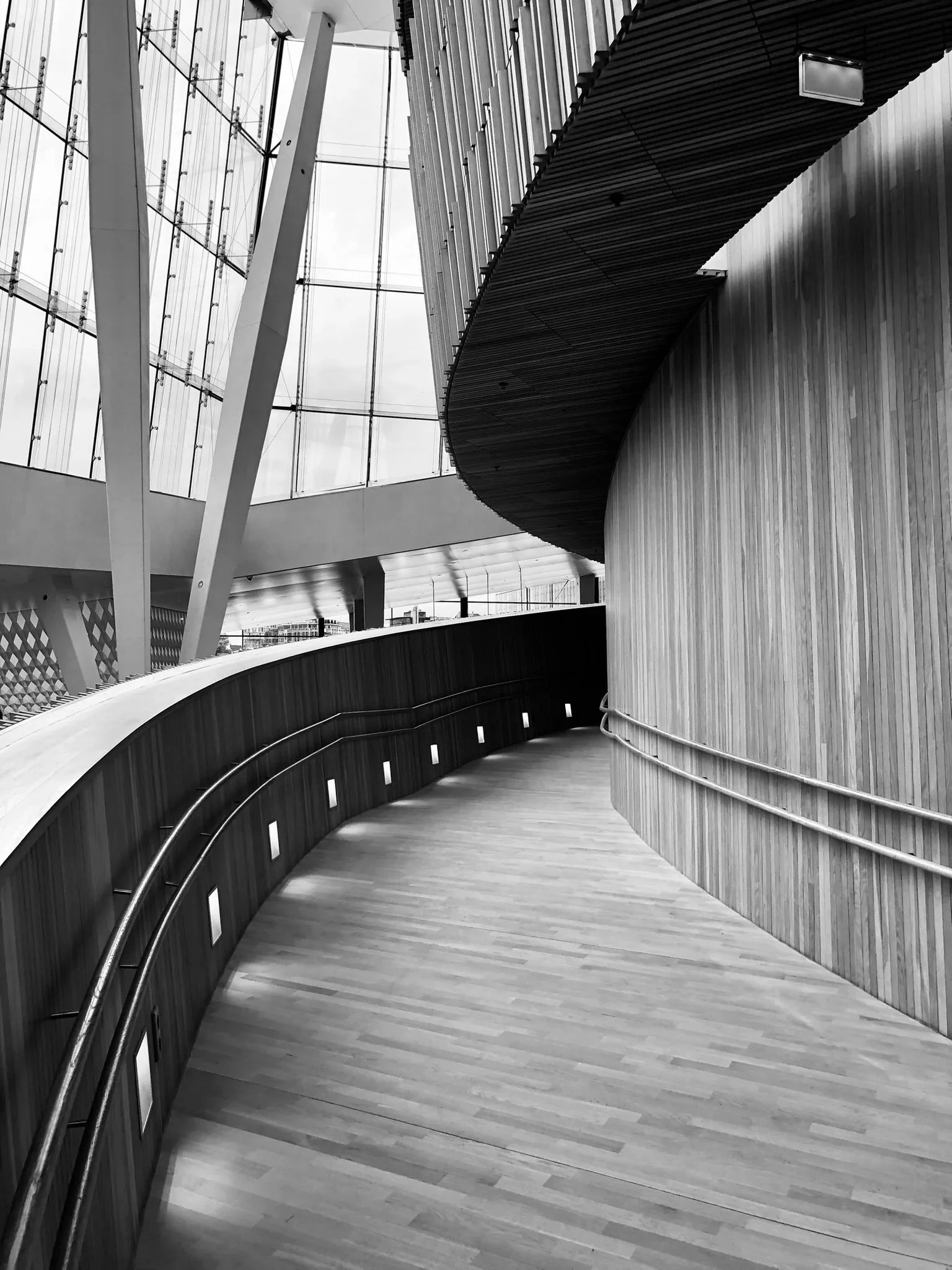
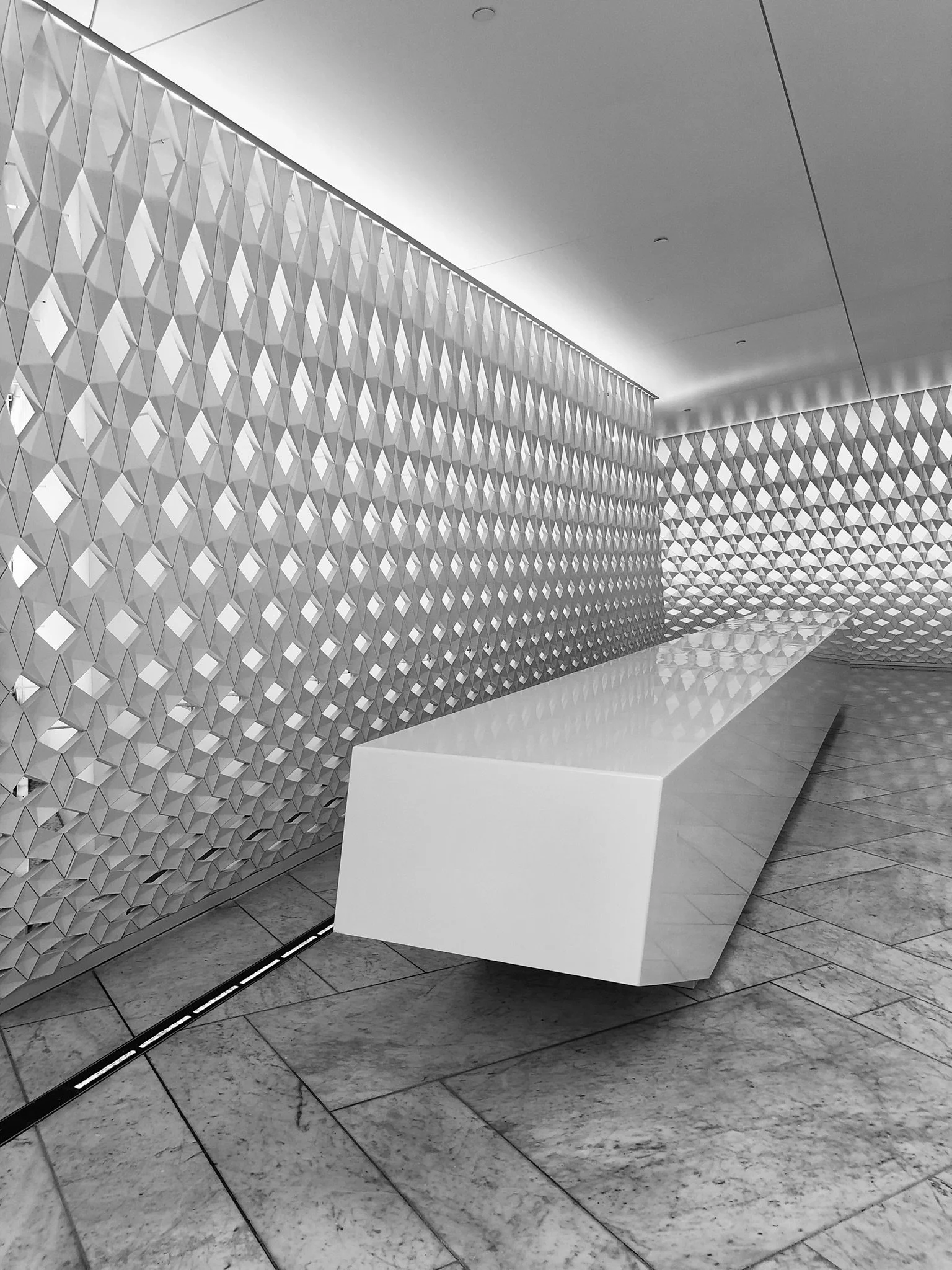
Inside, the transition from landscape to interior is articulated through material and surface. The faceted wall known as The Other Wall, an integrated installation by Olafur Eliasson developed in collaboration with Snøhetta, modulates light and perception, translating the exterior idea of carved terrain into an interior spatial condition.
Snøhetta was founded in Oslo in 1989 by Craig Dykers and Kjetil Trædal Thorsen, and has since developed as a transdisciplinary, collaborative practice that deliberately resists the notion of singular authorship. The name Snøhetta refers both to a mountain in central Norway and linguistically to snø meaning snow and hetta meaning hut, a temporary shelter shaped by climate and terrain. This dual meaning reflects the studio’s core position, architecture as something formed through dialogue with natural, cultural, and social conditions rather than imposed upon them. As articulated in their own writing, Snøhetta approaches design as a continuous negotiation between built form and living systems, where landscape, ecology, material behaviour, and human movement are inseparable. In Norway, this philosophy has reshaped expectations of public architecture, establishing buildings as extensions of the ground plane, accessible, tactile, and deeply responsive to place.
Other famous works by Snøhetta:
Within Norway
• Under, Lindesnes, 2019
• Powerhouse Brattørkaia, Trondheim, 2019
• Svalbard Global Seed Vault, Svalbard, 2008
International
• Bibliotheca Alexandrina, Alexandria, 2002
• National September 11 Memorial Pavilion, New York, 2014
• King Abdulaziz Center for World Culture, Dhahran, 2016
Editors Note
This trip was a wild combo of glacier wind, adrenaline hikes, and cozy beers in tiny towns. Here’s what stood out:
🏆 The best? Sleeping on top of Trolltunga and waking up to a crowd-free sunrise. Zero regrets, all the feels.
💡 Pro tip? Book your Trolltunga parking way in advance, or you'll end up doing the painful zigzag road hike before the real hike. Not cute.