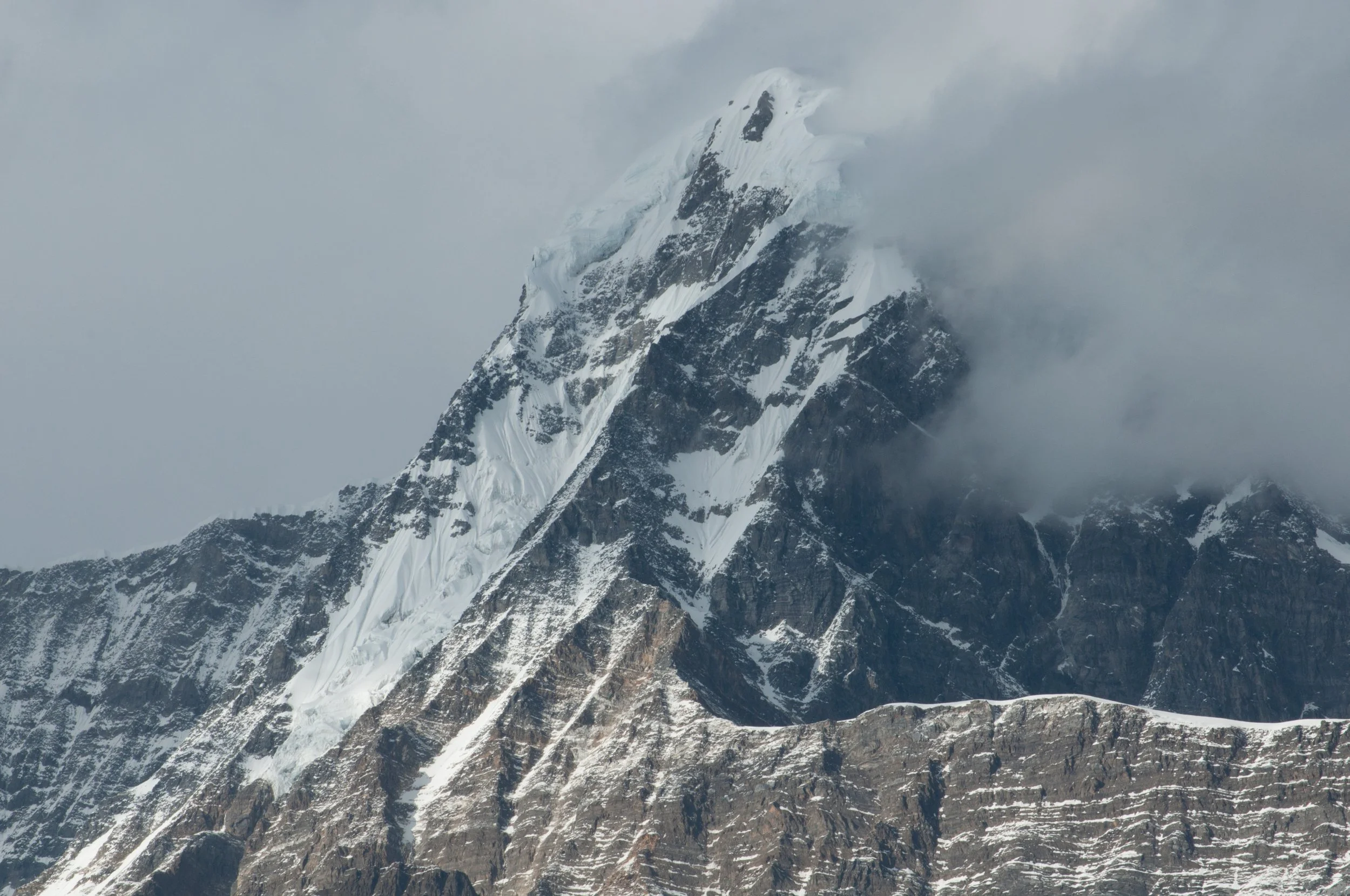
NOV 2019
NEPAL
-
Language: Nepali (official); English widely spoken in tourist areas
Currency: Nepalese Rupee (NPR)
Capital City: Kathmandu
Population: ~30 million
Driving Side: Left
Best Time to Visit:
October–November (clear skies, post-monsoon)
March–April (spring blooms, good hiking weather)
Weather: Cool and dry in autumn, warm in spring, monsoon from June to September
Power Outlets: Type C, D & M (230V) – bring a universal adapter
-
✅ 13 day trip
✈ Berlin →
🎒 Bring a water filter or purification tablets.
-
Sunrise at ABC
Mardi Himal Viewpoint
Hot springs at Jhinu Danda
Kathmandu during Dashain
Boudhanath Stupa
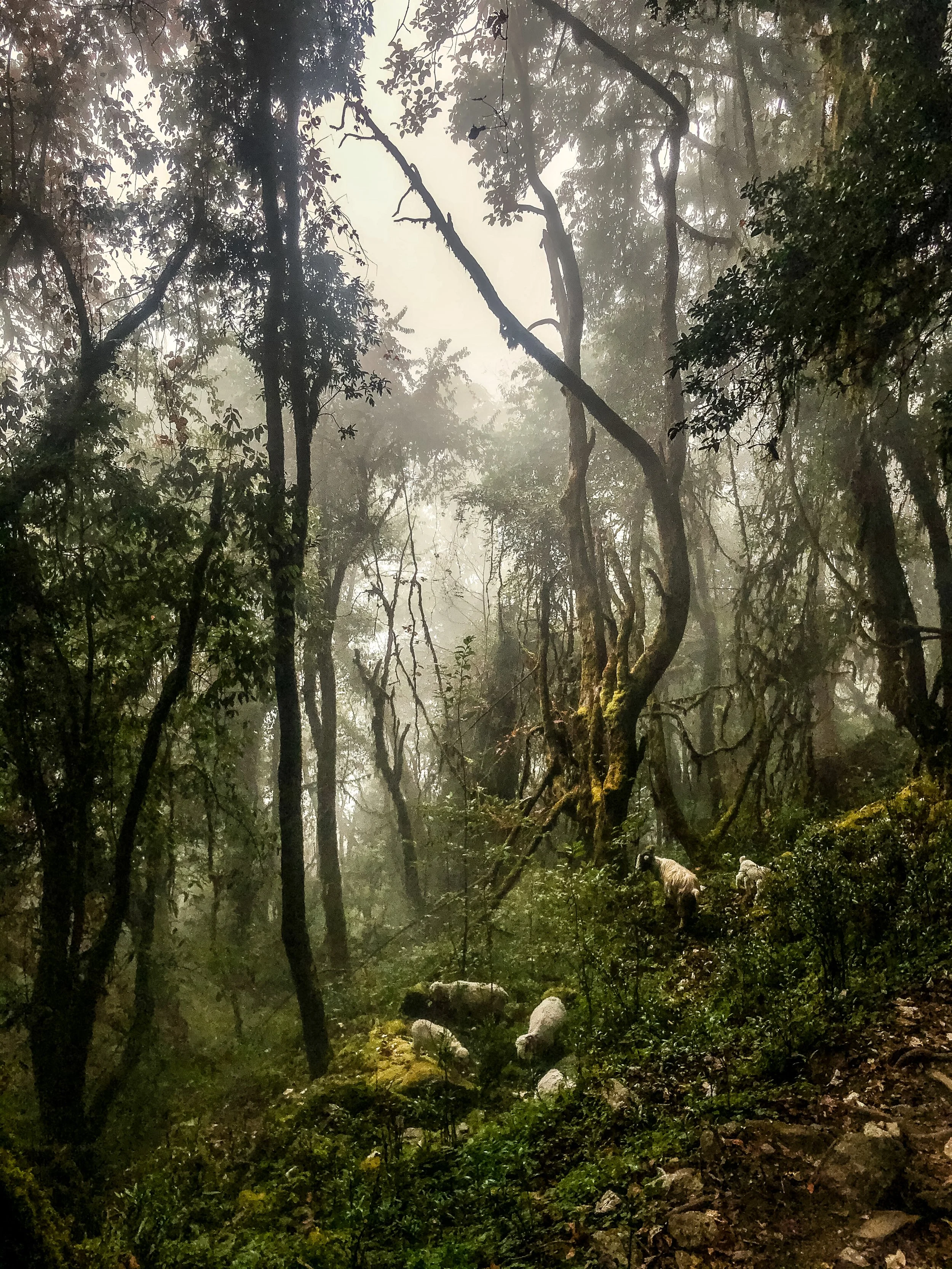
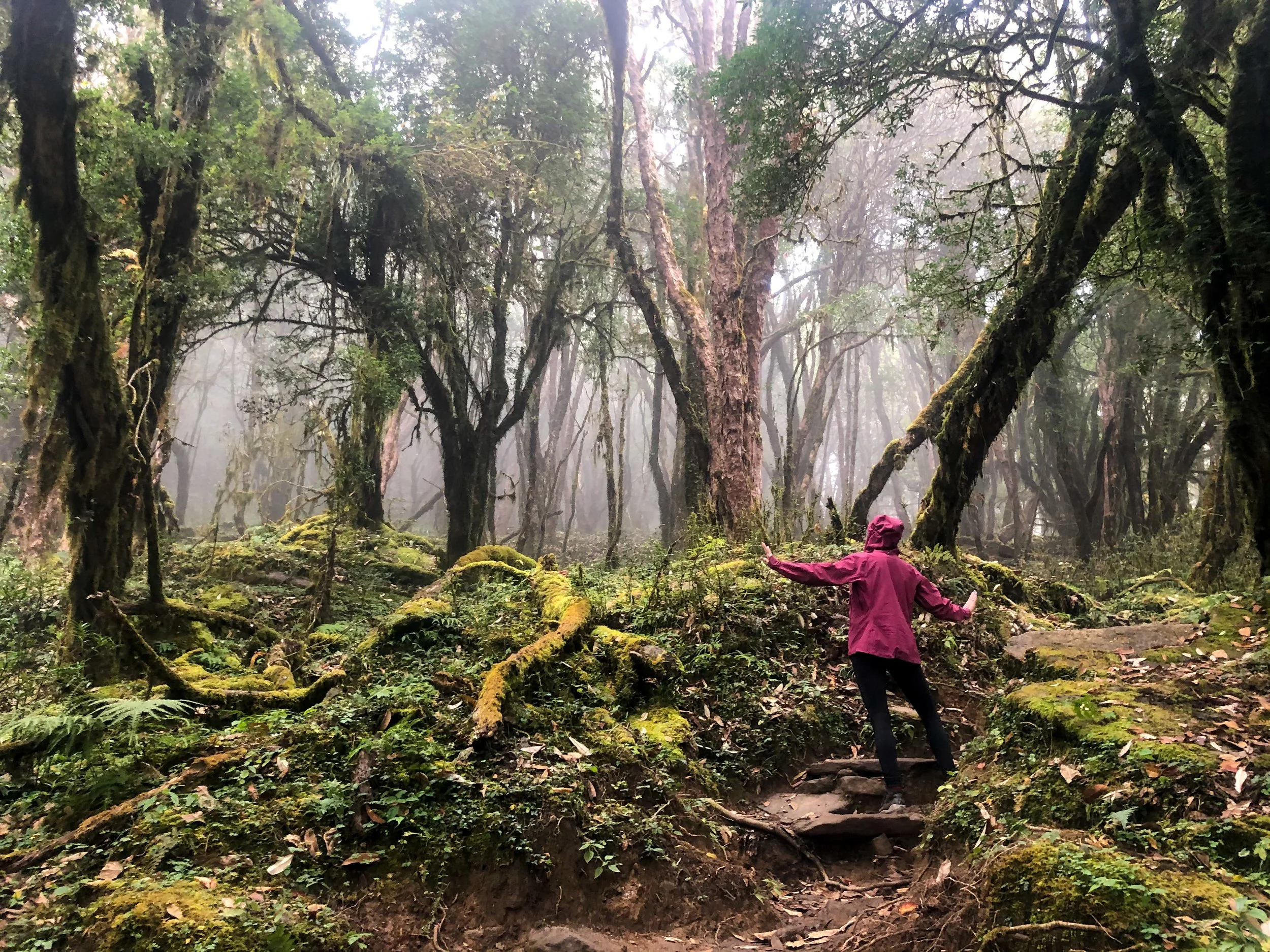
Misty rhododendron forest
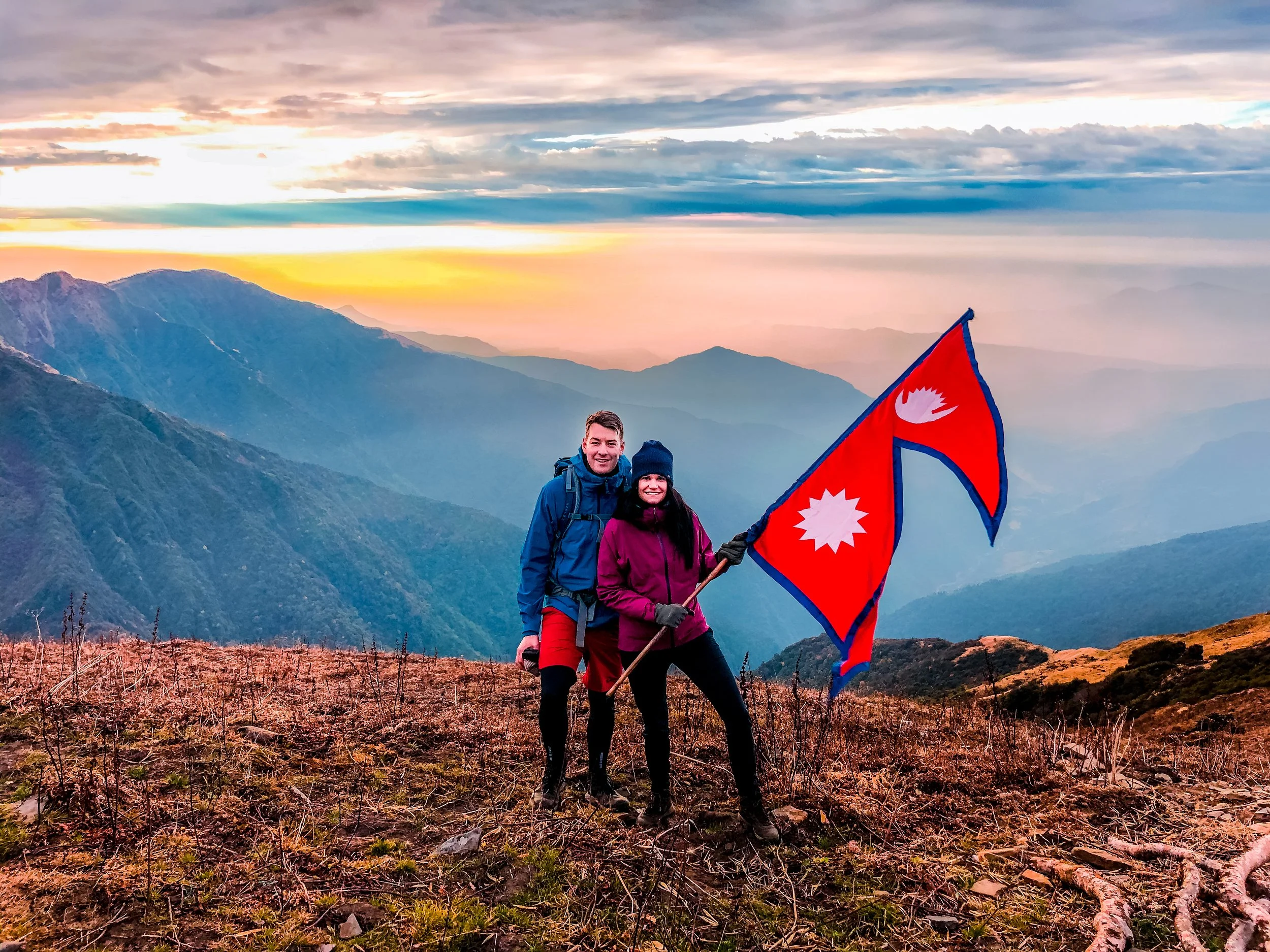
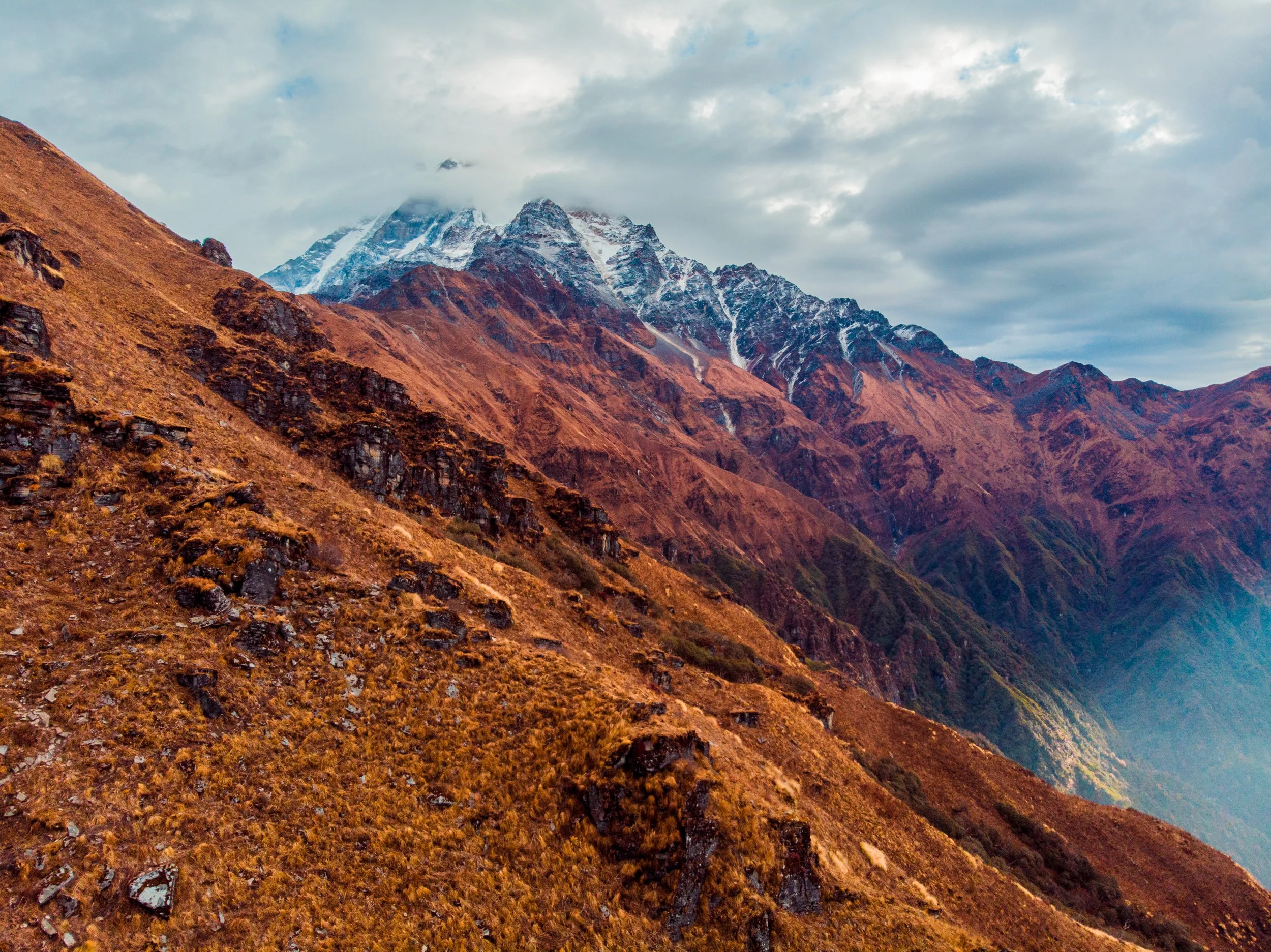
Where the roads end, the real story begins. Nepal was a slow unraveling of silence, altitude, awe, and a culture that stays with you long after the trail ends.
Itinerary
Day 1: Arrived in Kathmandu
Day 2: Flight to Pokhara
Day 3–7: Annapurna Base Camp trek
Day 8–11: Mardi Himal trek
Day 12: Return to Pokhara & flight to Kathmandu
Day 13–15: Kathmandu
Day 1: Arrival in Kathmandu during Dashain
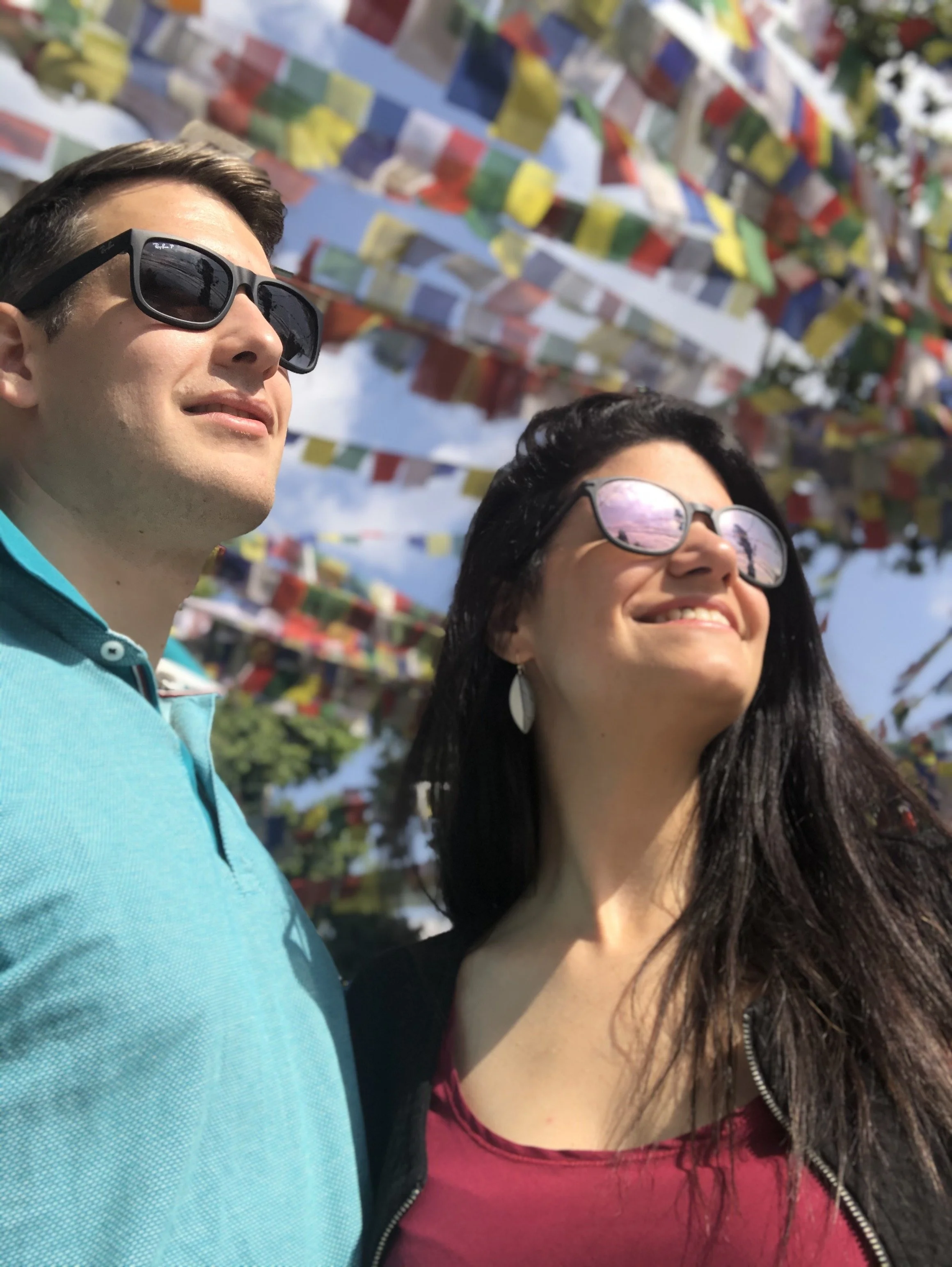
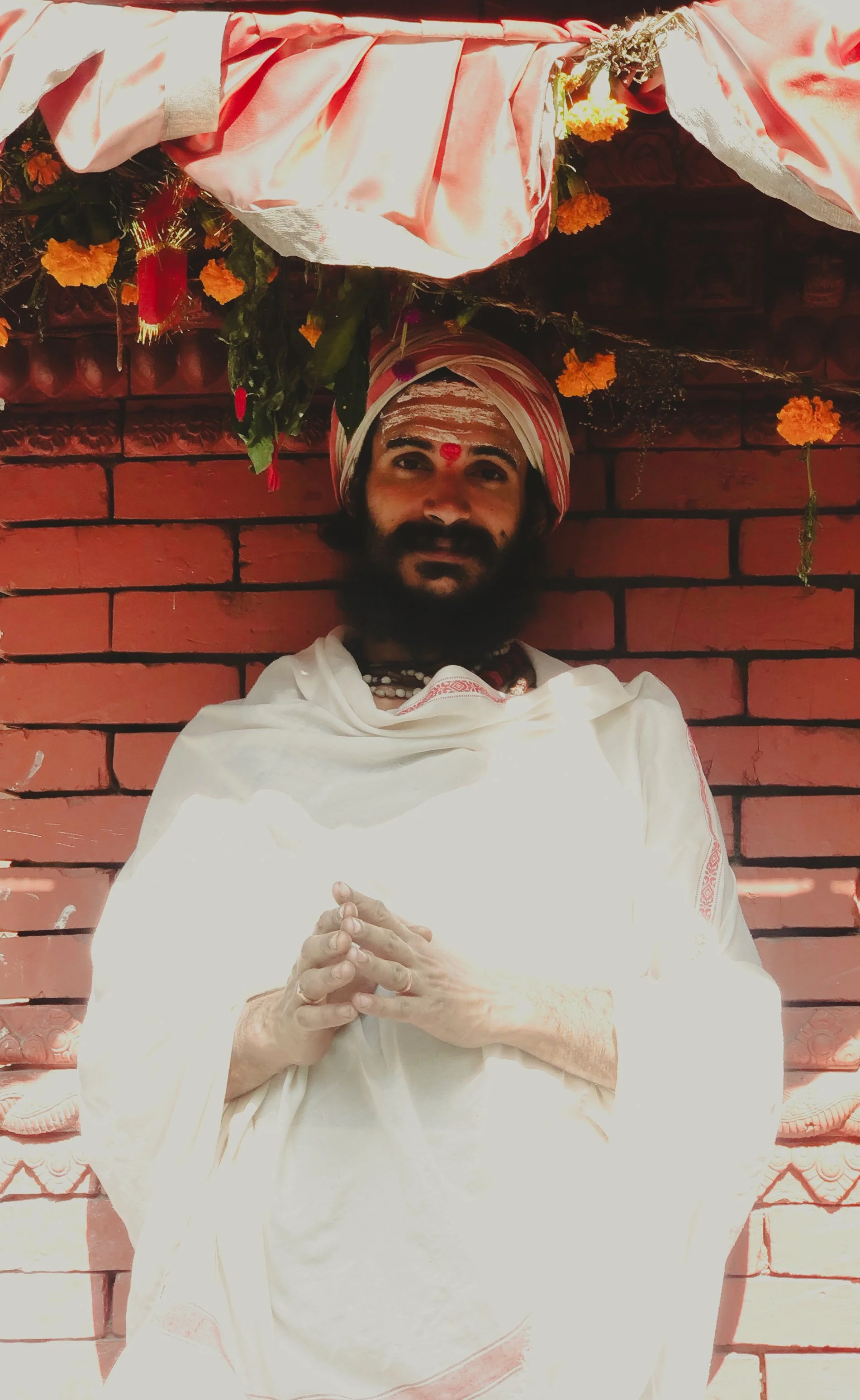
We landed in Kathmandu just as Dashain, Nepal’s biggest and longest festival, was taking over the city. For 15 days, people celebrate the goddess Durga’s victory over evil with family gatherings, packed temples, and blessings marked by red tika on the forehead. Some communities still practice animal sacrifice during the rituals. Prayer flags lined the streets, the traffic was wild, and the energy felt electric. We stayed in Thamel, the tourist hub, which is safe, walkable, and packed with trekking shops and cafés.
💡 Did you know? Elders bless the young by applying tika, a mix of yogurt, rice, and vermilion, and placing jamara (barley grass) on their foreheads. It symbolizes protection and good fortune.

Day 2. Flight to Pokhara & trek prep
A tiny propeller plane carried us to Pokhara, giving us our first shaky Himalayan views from above. Flying in Nepal can be risky. At the time of our trip, all Nepali airlines were banned in the European Union due to safety concerns. There are frequent incidents, especially at mountain airports like Lukla. We felt comfortable flying Kathmandu to Pokhara, since this route is less extreme, but it’s something to be aware of if you plan to visit.
💡 Pro tip. Try to book a hotel in which you trust leaving your non-trekking stuff behind and only bring essentials up the mountain.
Days 3–7. Annapurna Base Camp trek
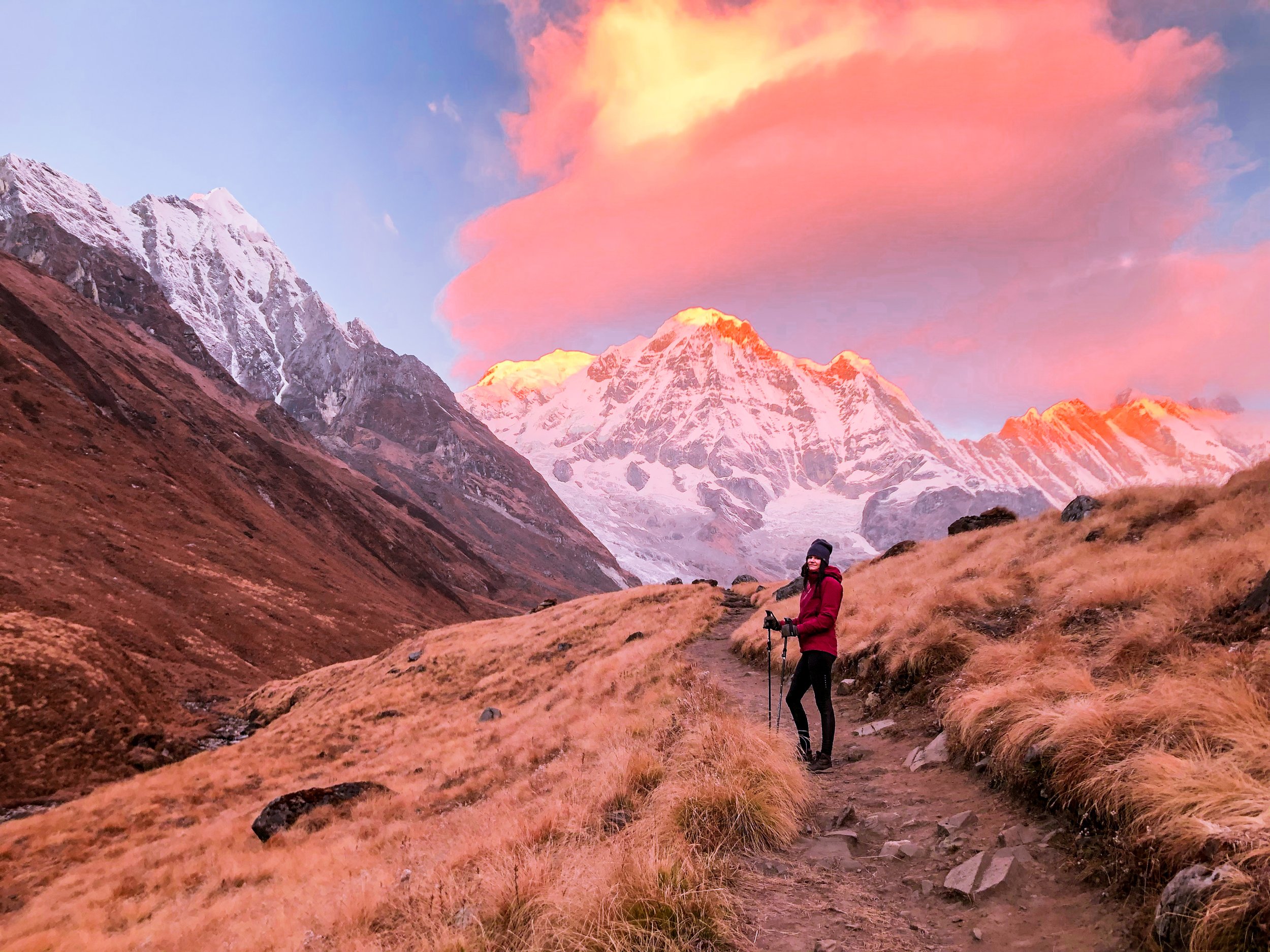
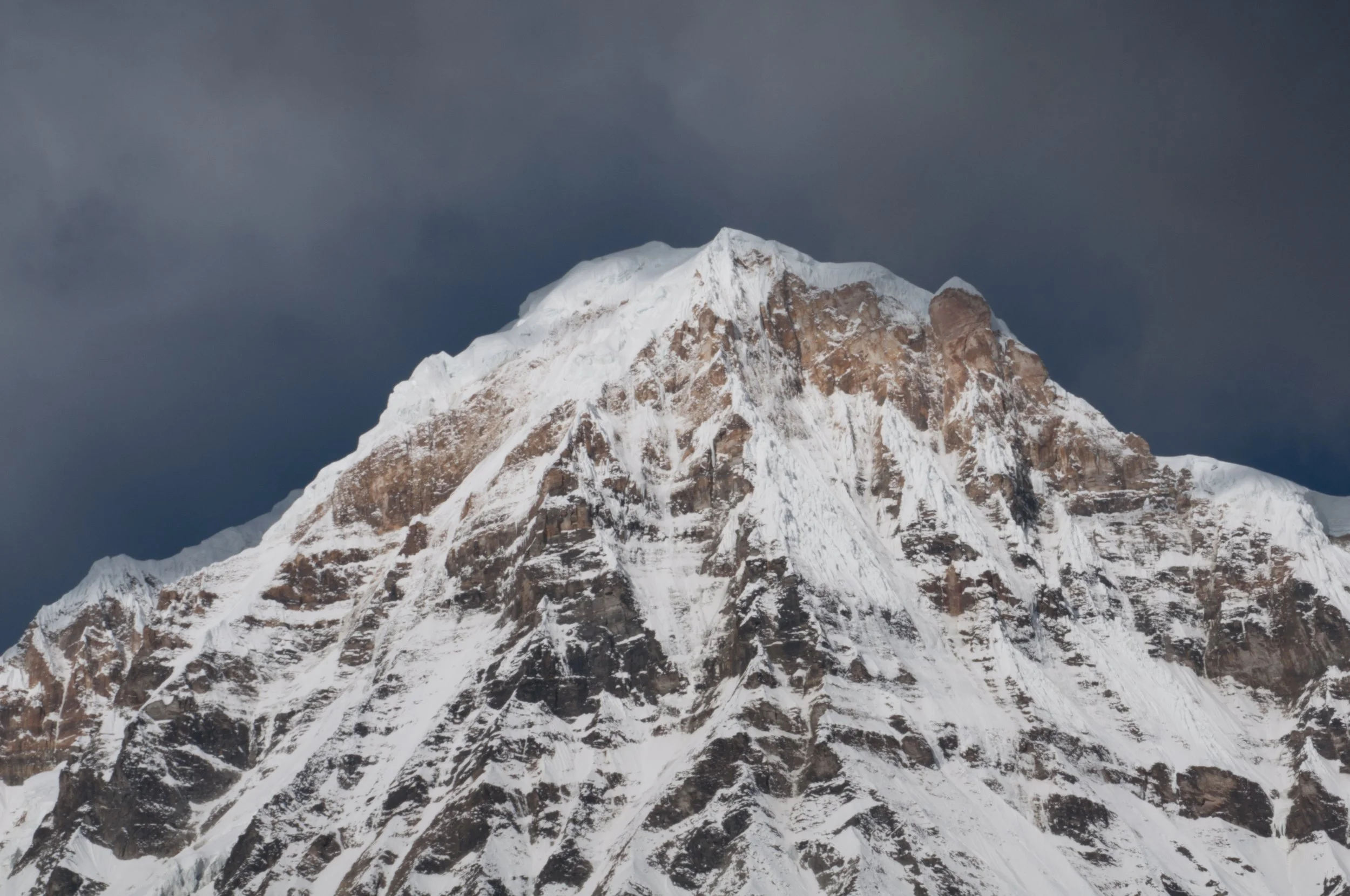
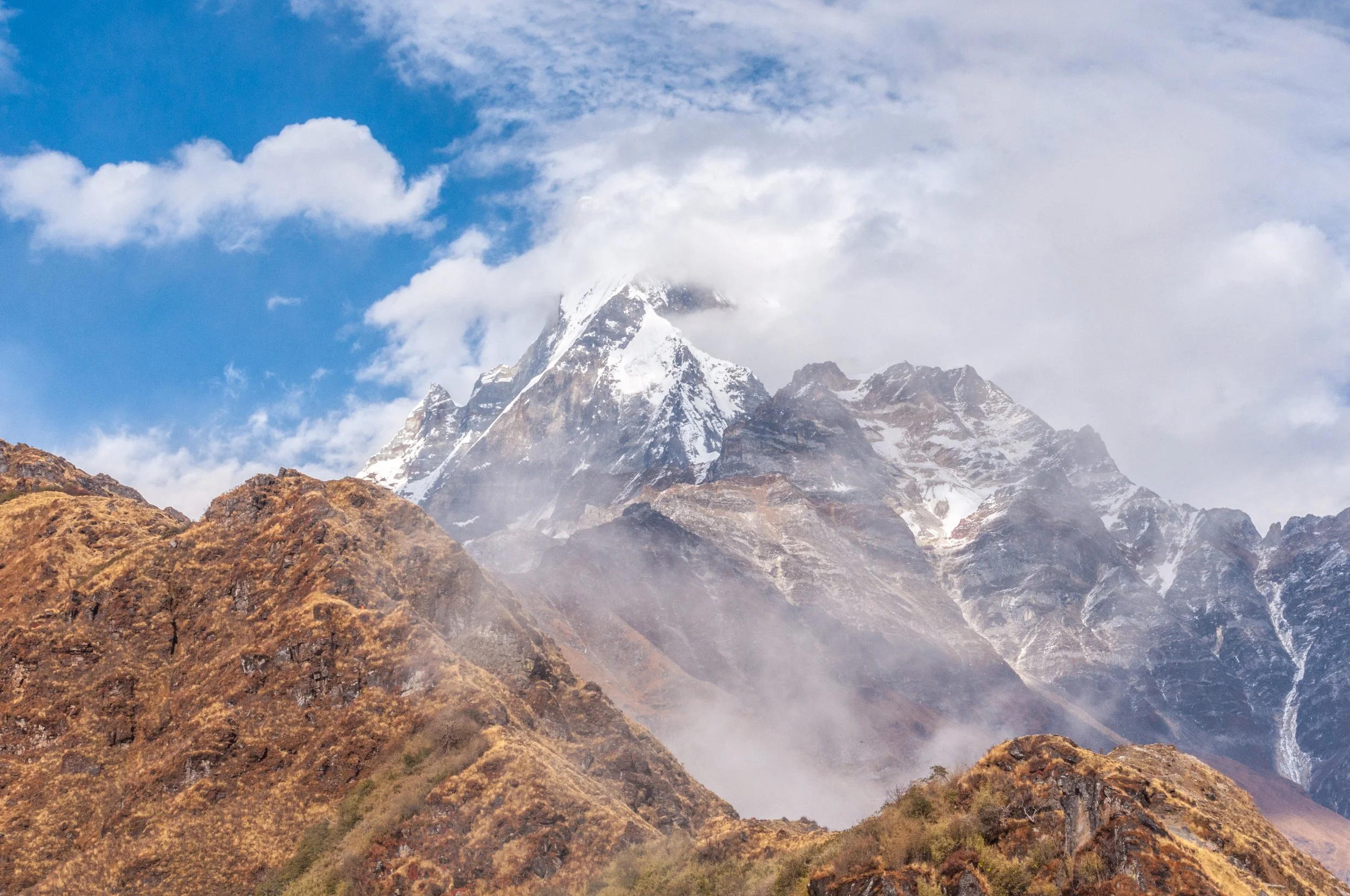
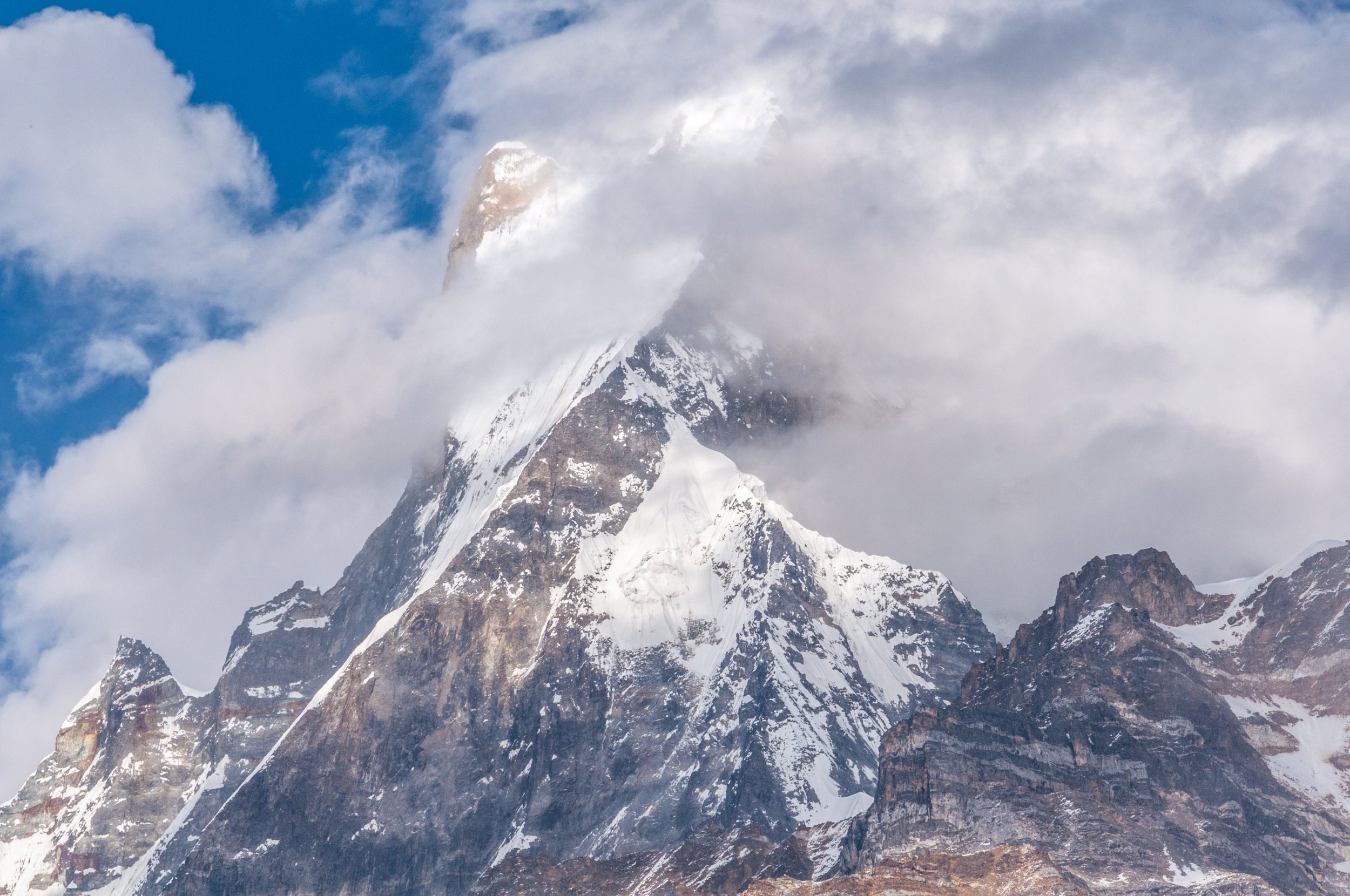
We chose Annapurna Base Camp to stand at the foot of Annapurna I (8,091 m, world's 10th highest mountain), named after the Hindu goddess of nourishment and abundance. The trek passes through traditional Gurung villages, settled by migrants from the Tibetan plateau around the 6th century CE, home to Nepal's legendary Gurkha soldiers. Mardi Himal offered a shorter, quieter alternative with the best close up views of Machapuchare, the sacred fishtail peak that's never been summited due to a climbing ban protecting its spiritual significance to the Gurung people.
Day 3. Pokhara ➝ Ghandruk ➝ Komrong ➝ Kimrong Guest House (1715 m)
The trek officially began. We took a taxi from Pokhara to Nayapul, then a bumpy Jeep ride to Ghandruk. After a quick permit check, we hit the trail. The first section to Komrong was easier than expected. We kept going and stayed overnight at Kimrong Guest House.
Day 4. Kimrong ➝ Chhomrong ➝ Dovan (2505 m)
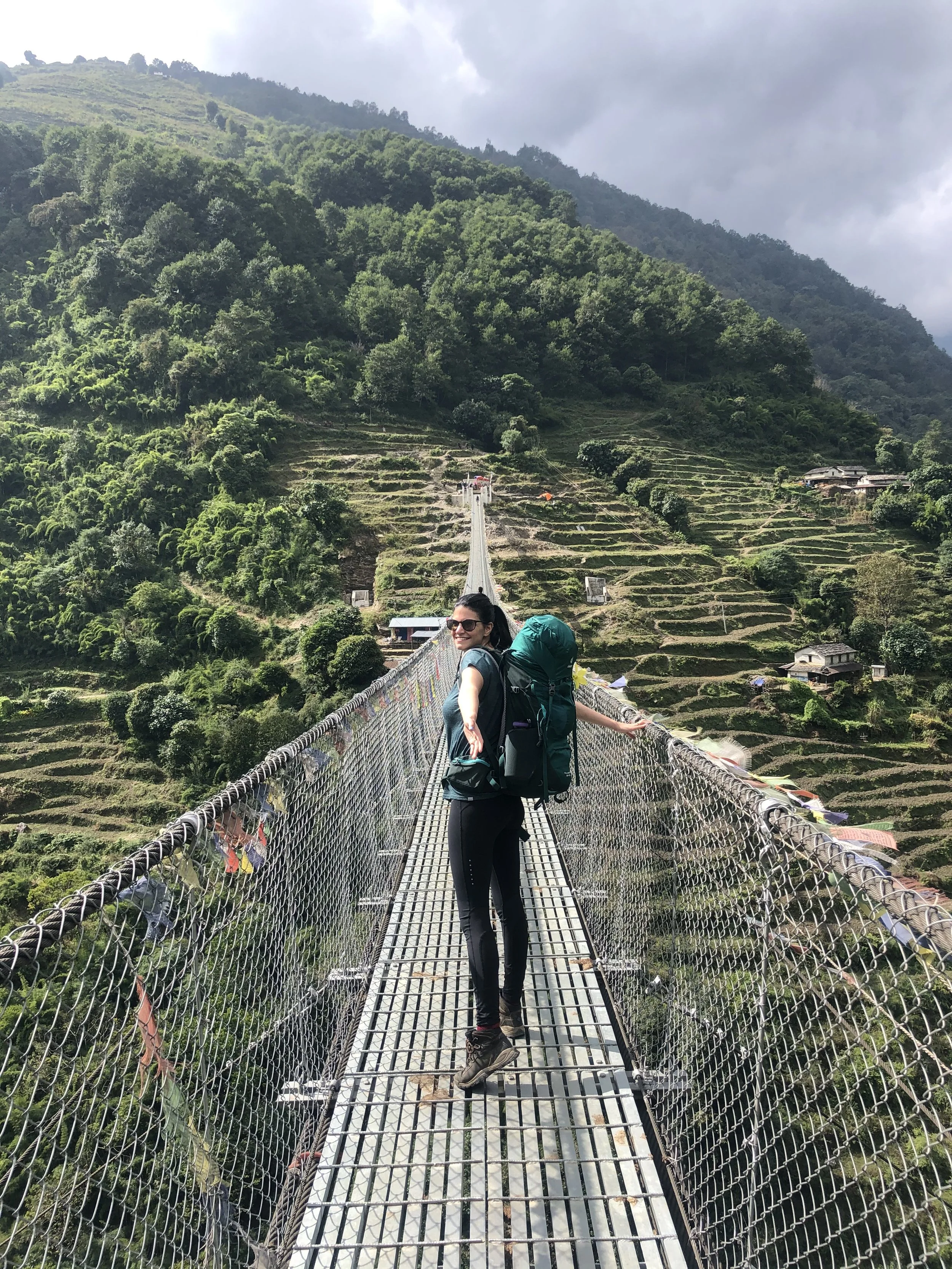
This was our intro to Nepal’s obsession with stairs. Chhomrong basically is a 2 km staircase. After gasping our way to the top, we crossed the first suspension bridge. Wobbly but fun. We passed checkpoints and reached Dovan for the night.
Day 5. Dovan ➝ Machapuchare Base Camp (3700 m)
The higher we got, the steeper and moodier the trails became. We followed the Modi Khola river up through jungle, landslides, and rockfall areas until we finally arrived at MBC, right under the towering peak of Machapuchare. Aka "Fishtail."
Day 6. MBC ➝ Annapurna Base Camp (4130 m)
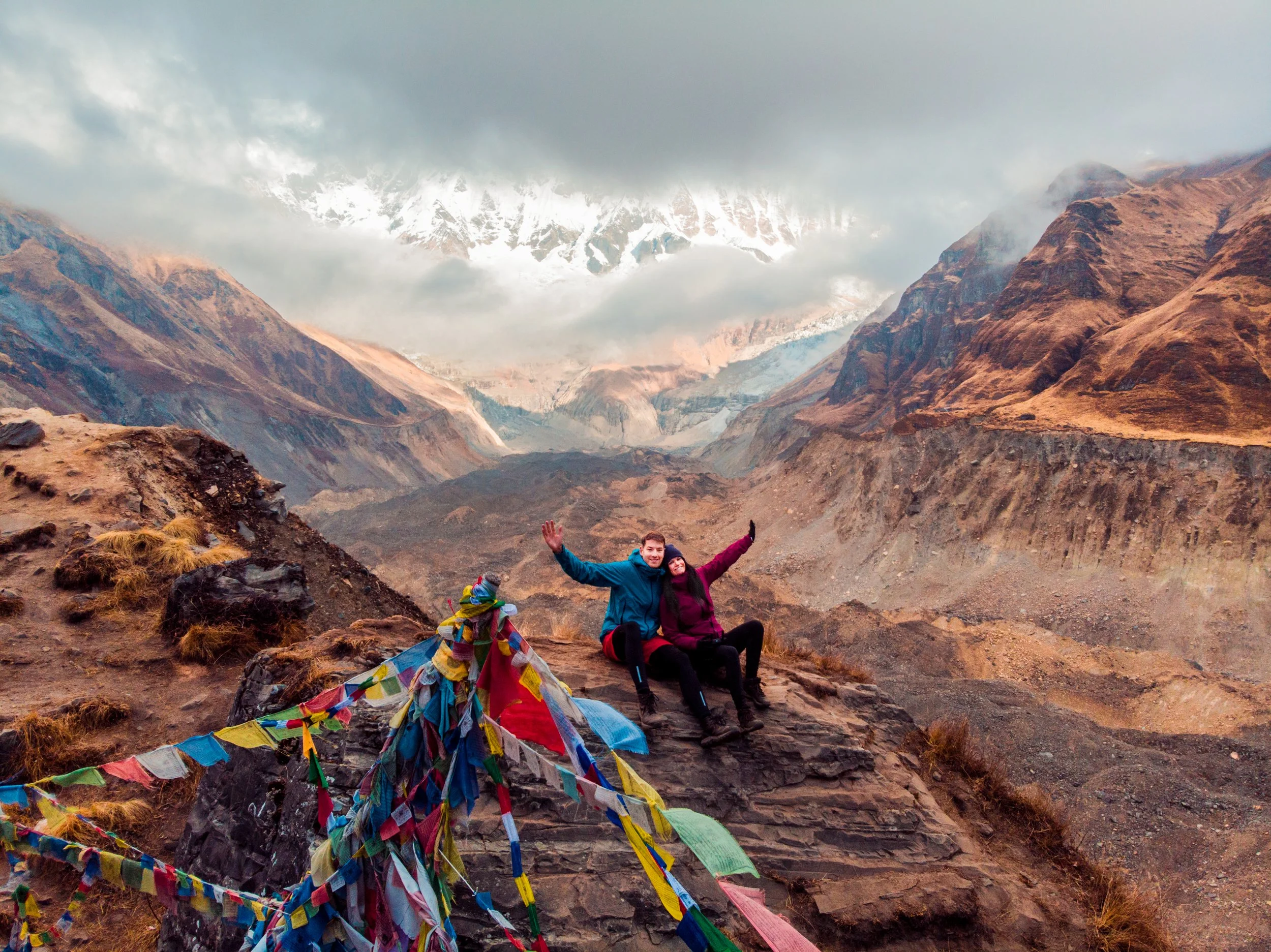
We woke up before sunrise for the final climb to ABC. Hiking in the dark and freezing cold was 100% worth it. Watching the sun hit Annapurna’s snowy peaks was pure magic. We snapped our summit pics, then made the long descent back to Dovan.
Day 7. Dovan ➝ Chhomrong ➝ Jhinu Danda (1780 m)
On the way down, the Chhomrong staircase tortured us one last time. Near Jhinu Danda, we were rewarded with a full rainbow stretching across the valley. We soaked in the natural hot springs by the river, then ended the day with a much-needed dal bhat and mountain tea.
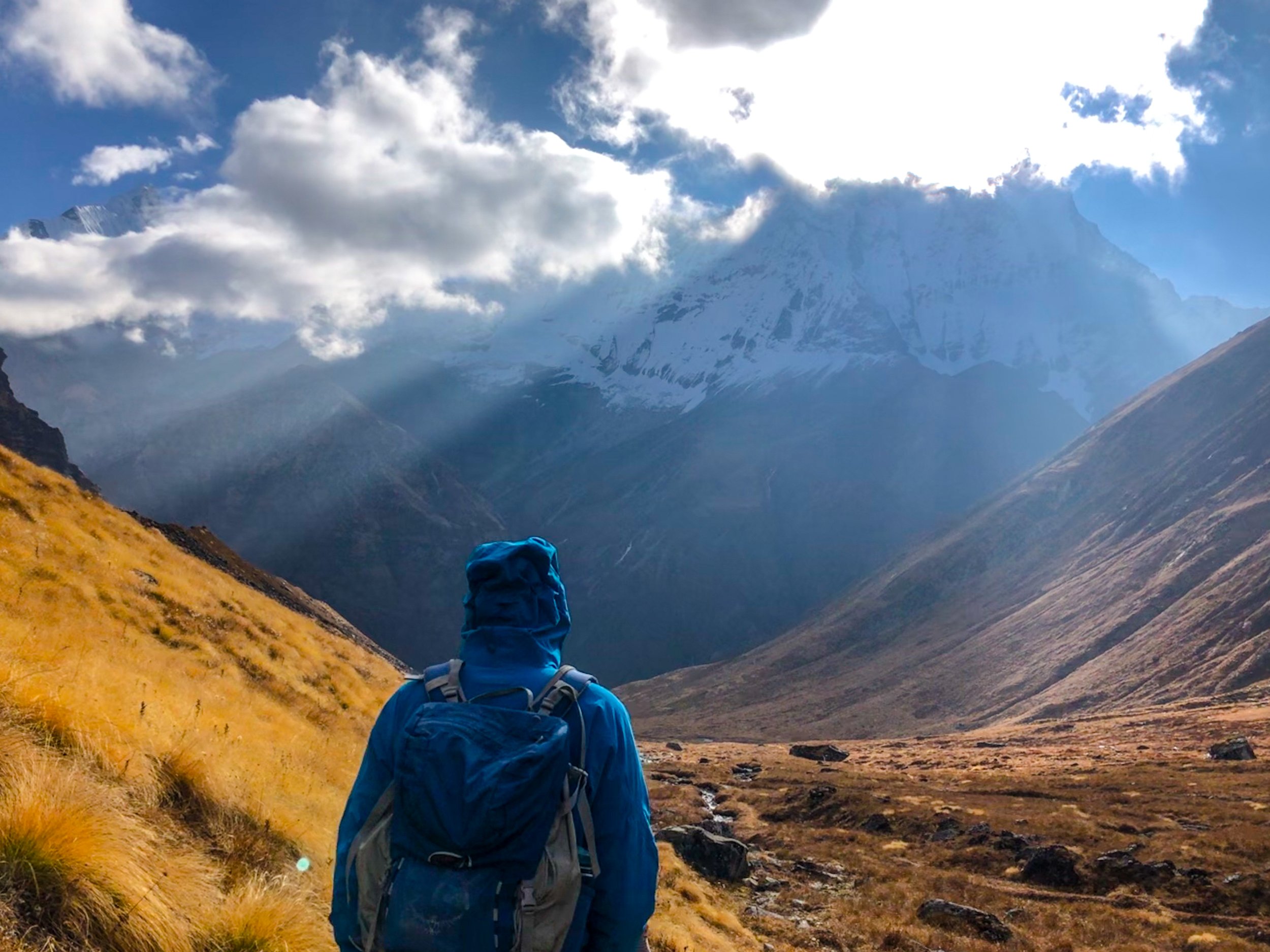
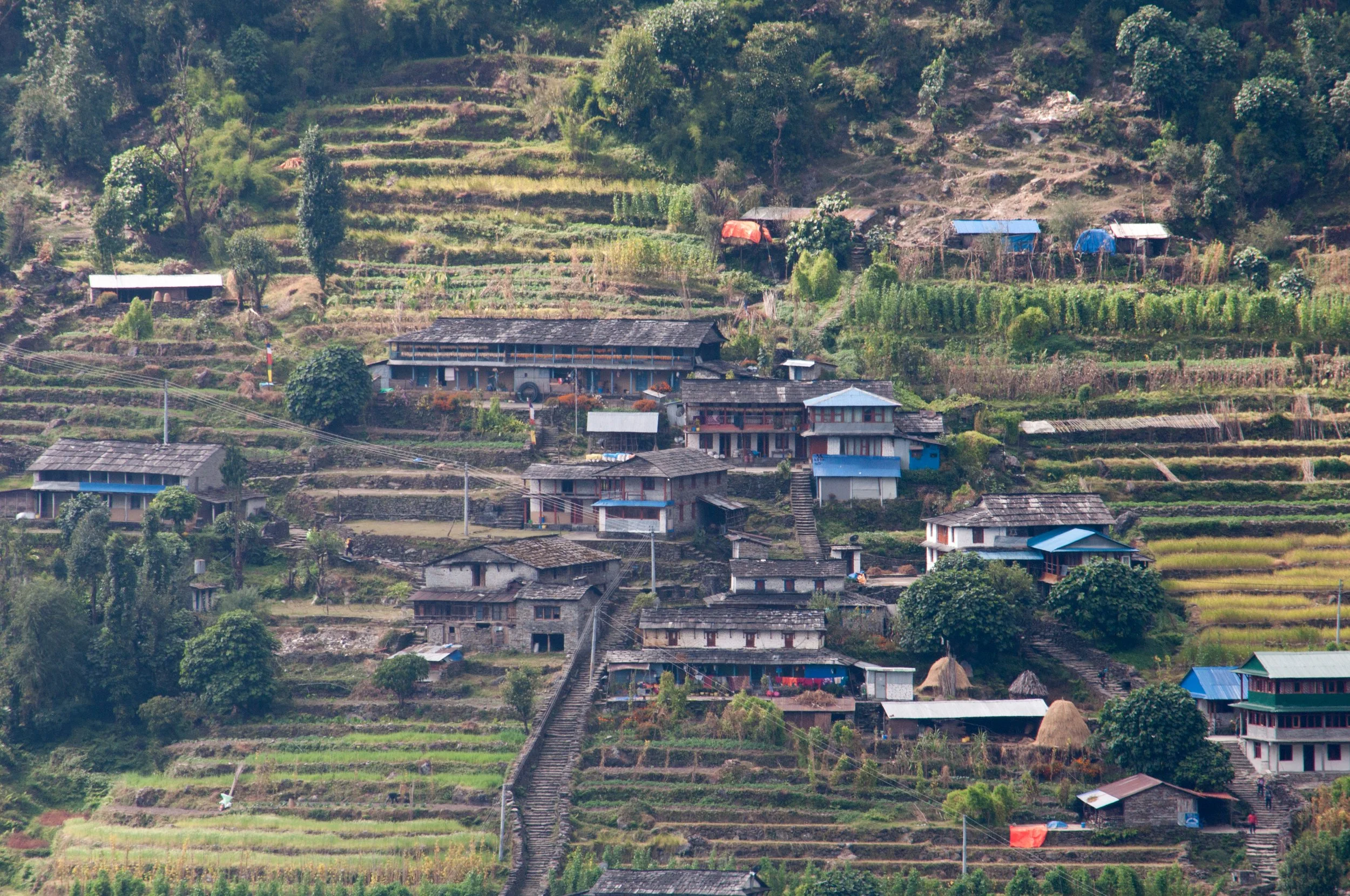
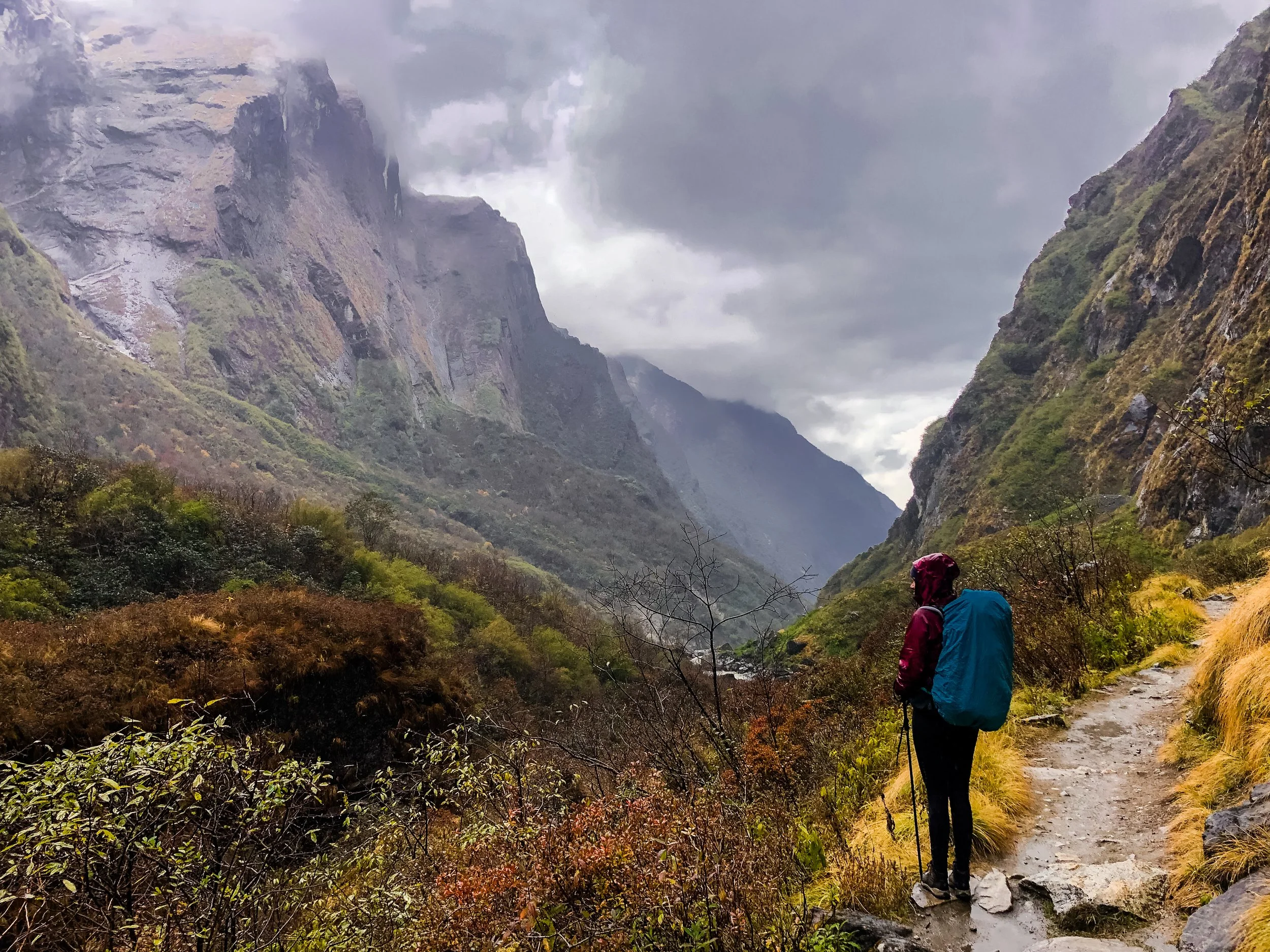
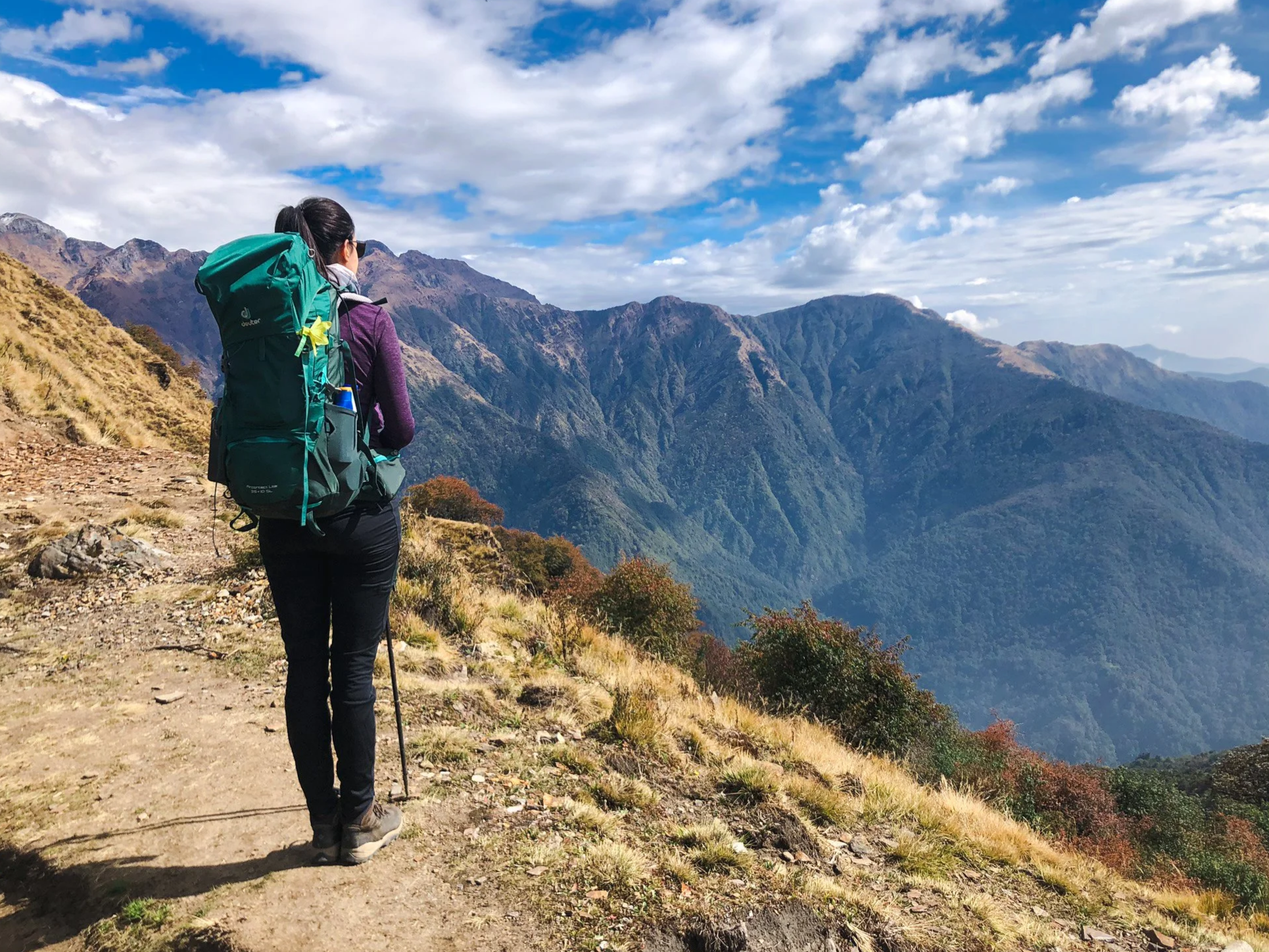
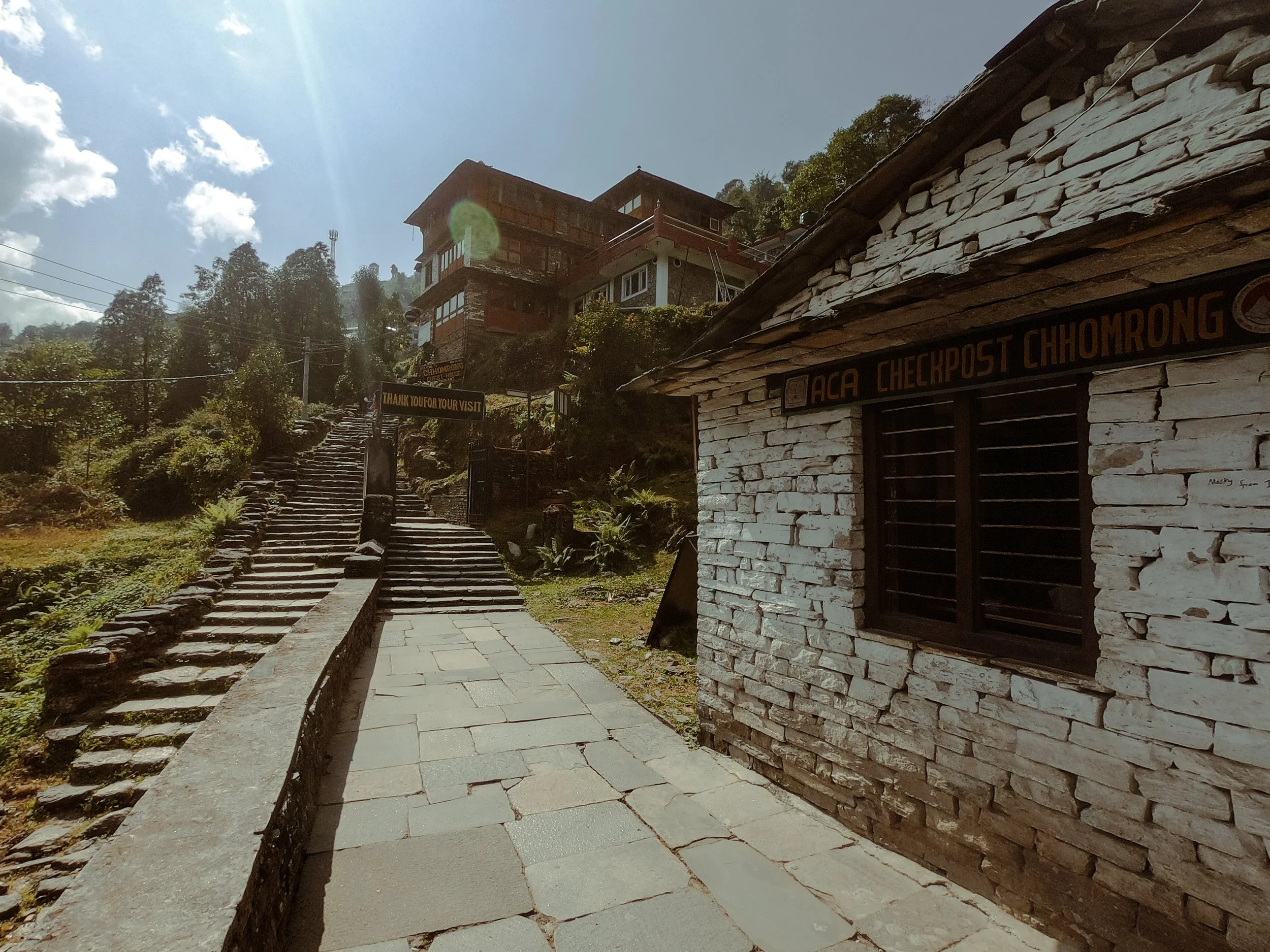
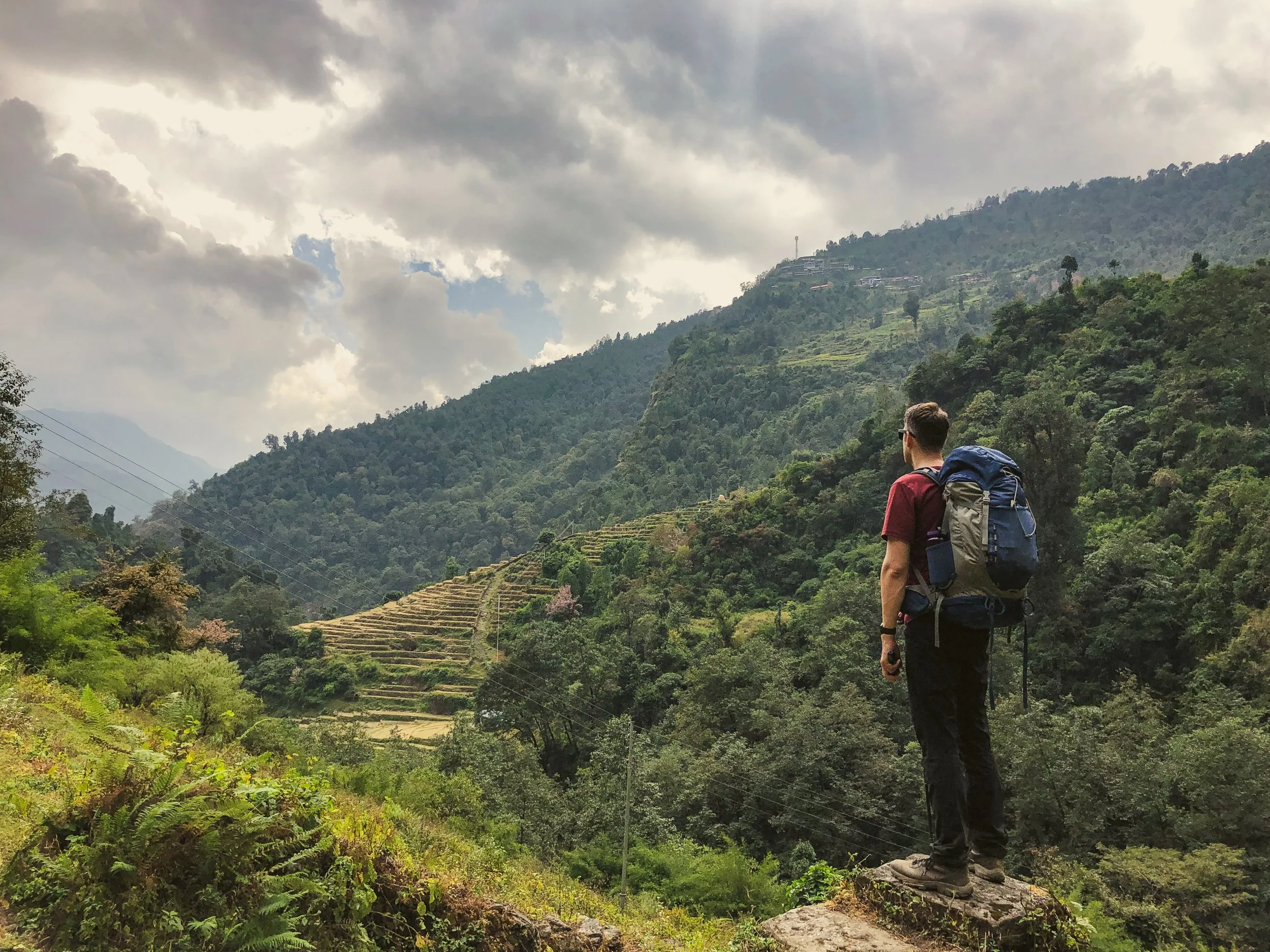
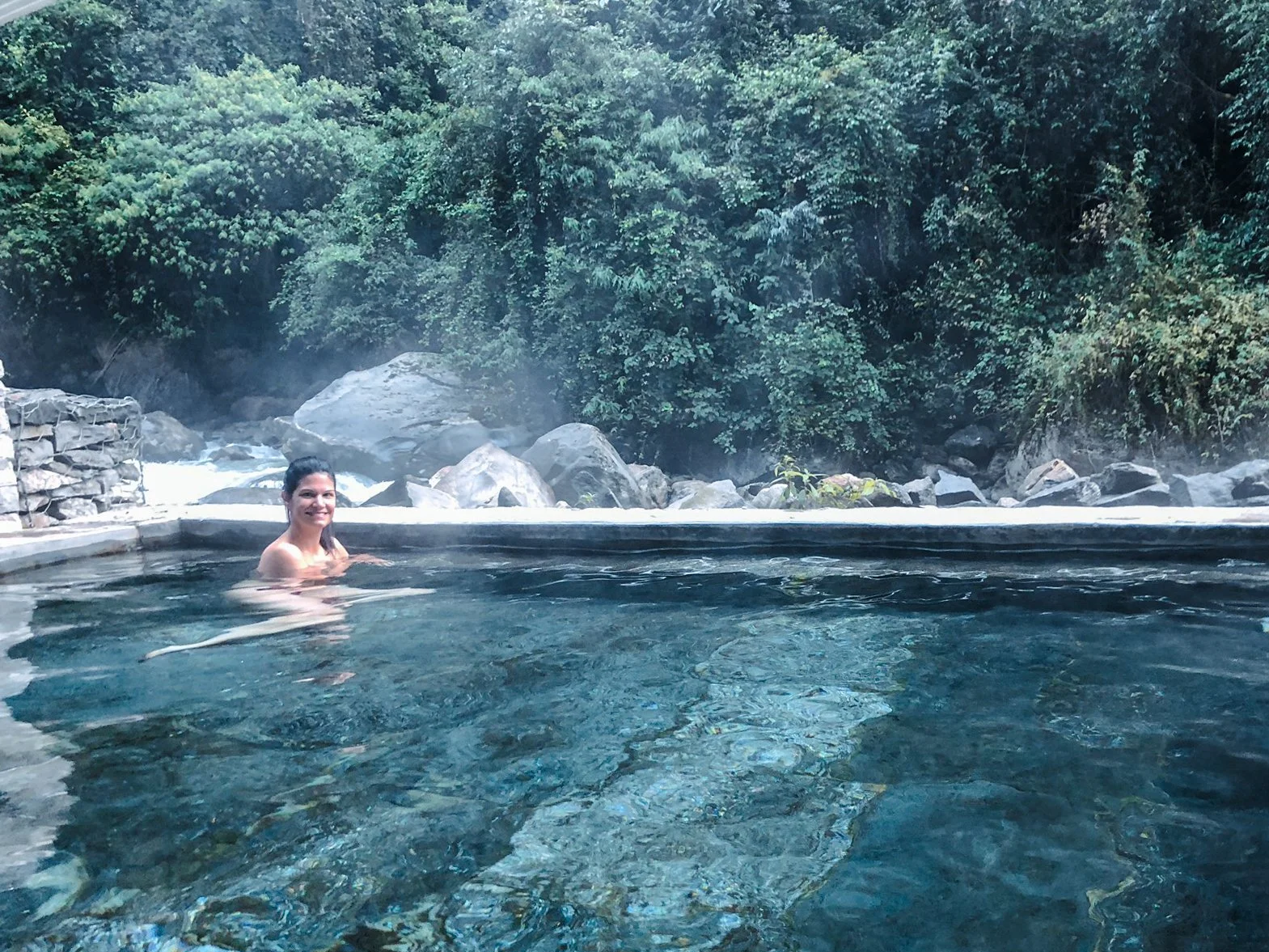
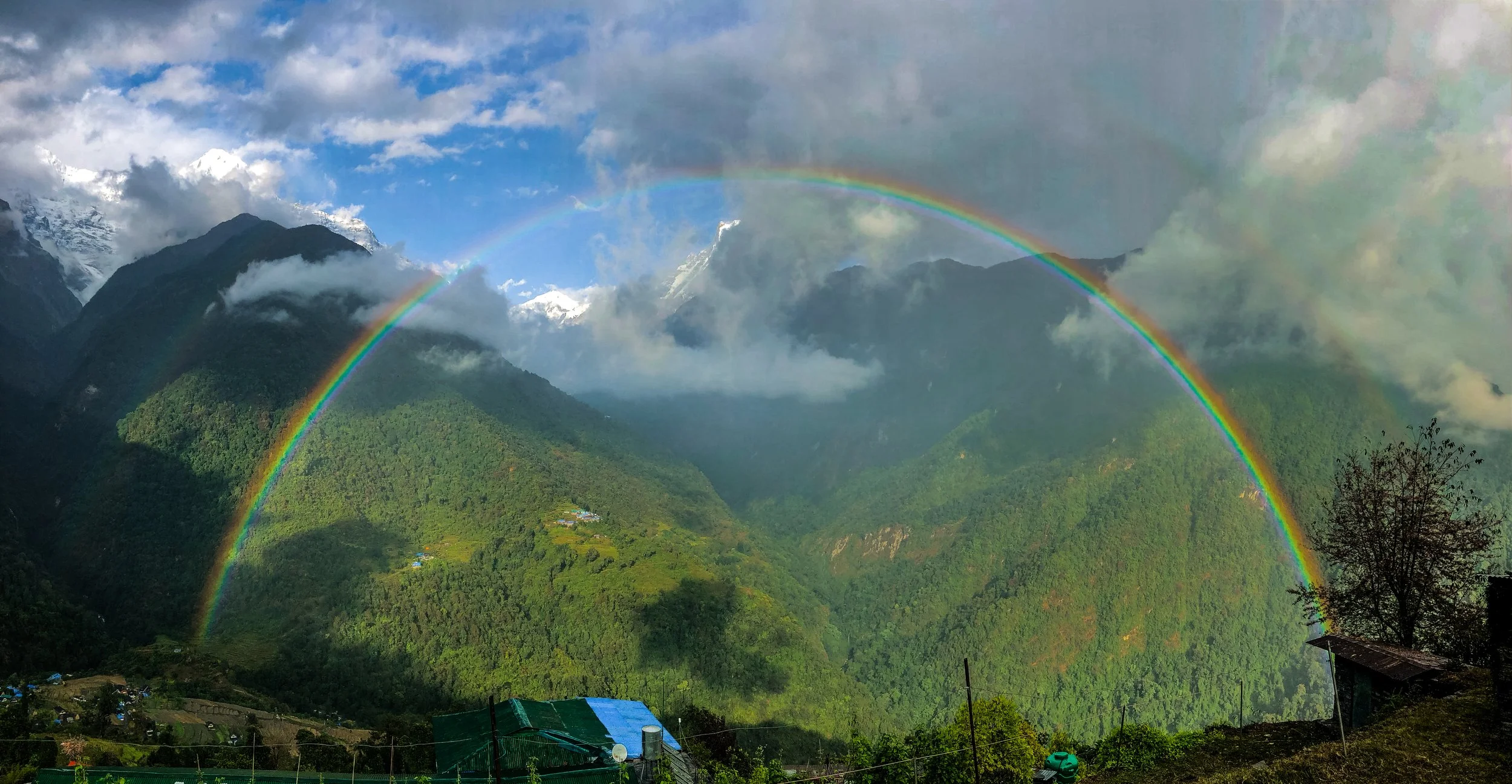
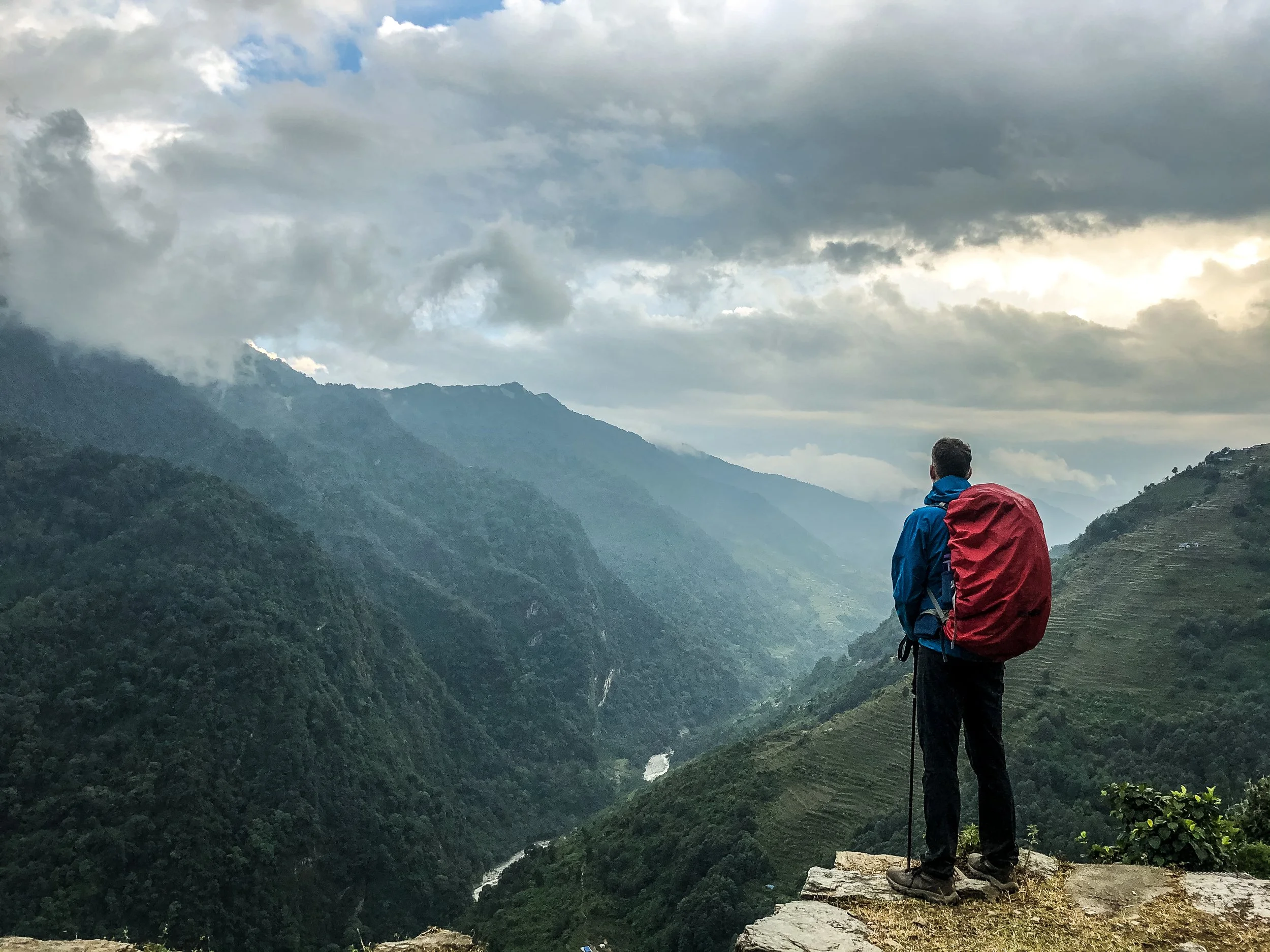
Towering peaks, misty forests, vibrant traditions, and moments of quiet awe. Nepal drew us in from the first Namasté to the final sunrise, and left us changed in the best way.
Days 8–11: Mardi Himal trek
Day 8: Jhinu Danda ➝ Landruk (1650 m)
We left the ABC route behind and crossed over to Landruk. The trail here was lush, green, and totally empty. It felt like we had the mountains to ourselves.
Day 9: Landruk ➝ Low Camp (3050 m)
This was one of the steepest days, basically straight up for hours. We gained almost 1400 meters in elevation but managed surprisingly well thanks to the acclimatization from ABC.
Day 10: Low Camp ➝ High Camp (3550 m)
Compared to the previous day, this was practically a rest day. A short hike brought us to High Camp by lunch. The clouds rolled in and out all afternoon while we played cards and carb-loaded for summit day.
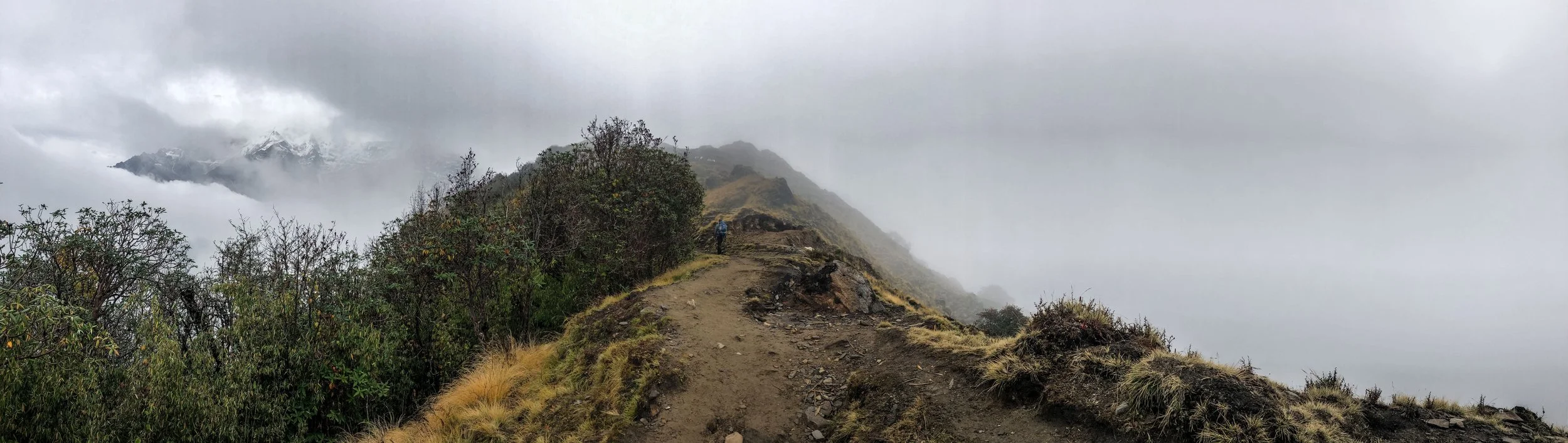
Day 11: High Camp ➝ Mardi Himal Viewpoint (4200 m) ➝ Sidhing Village (1280 m)
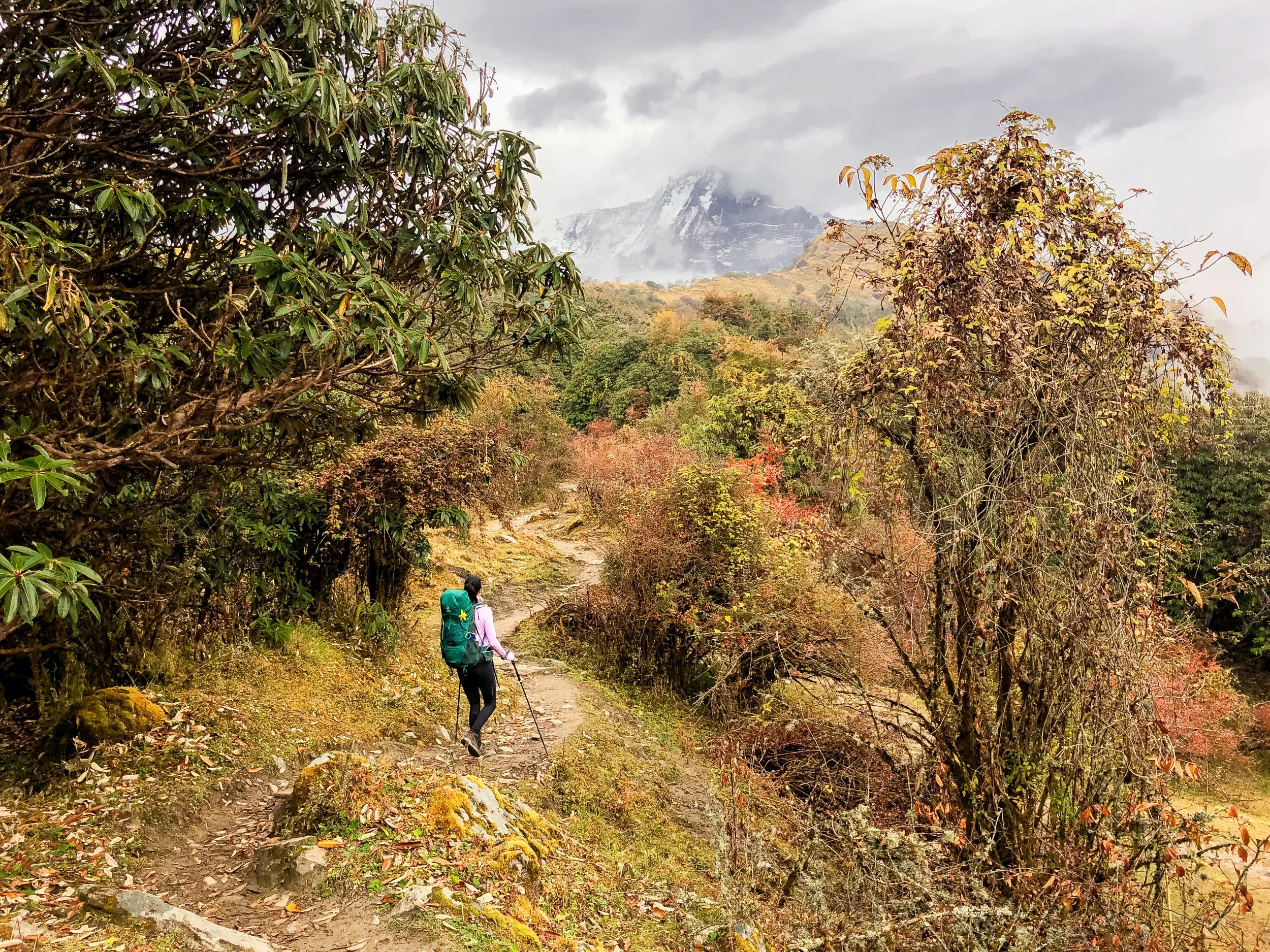
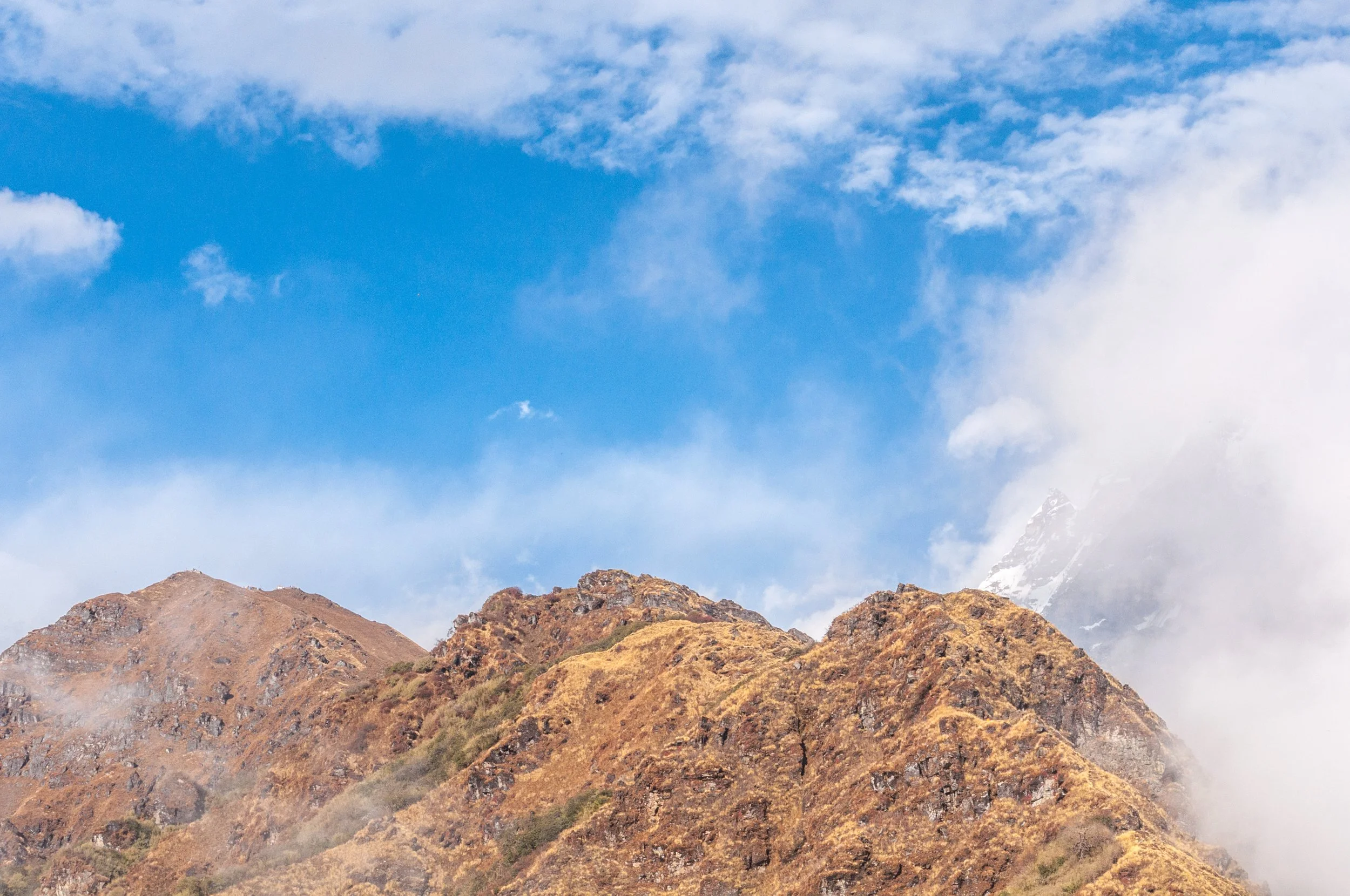
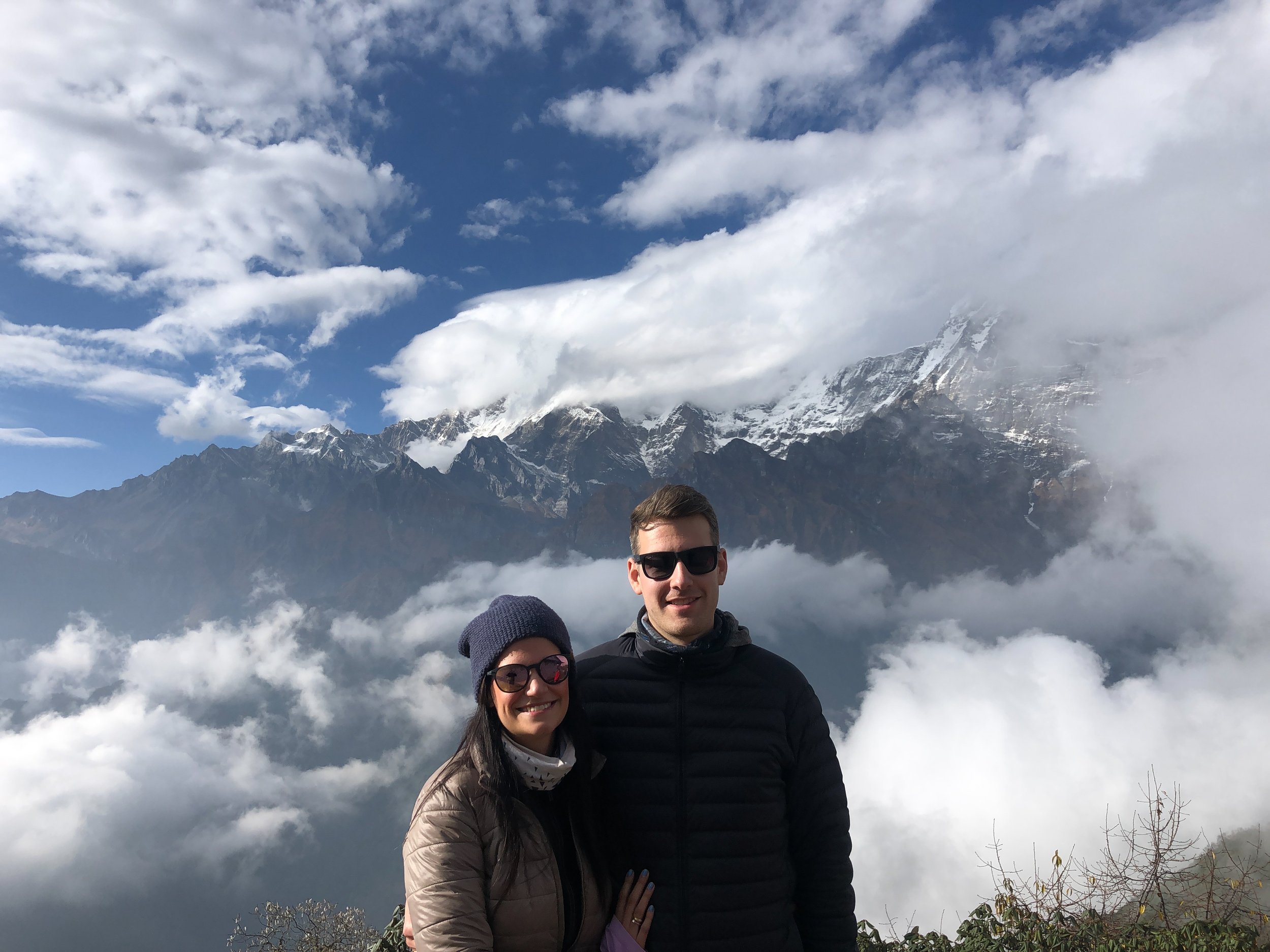
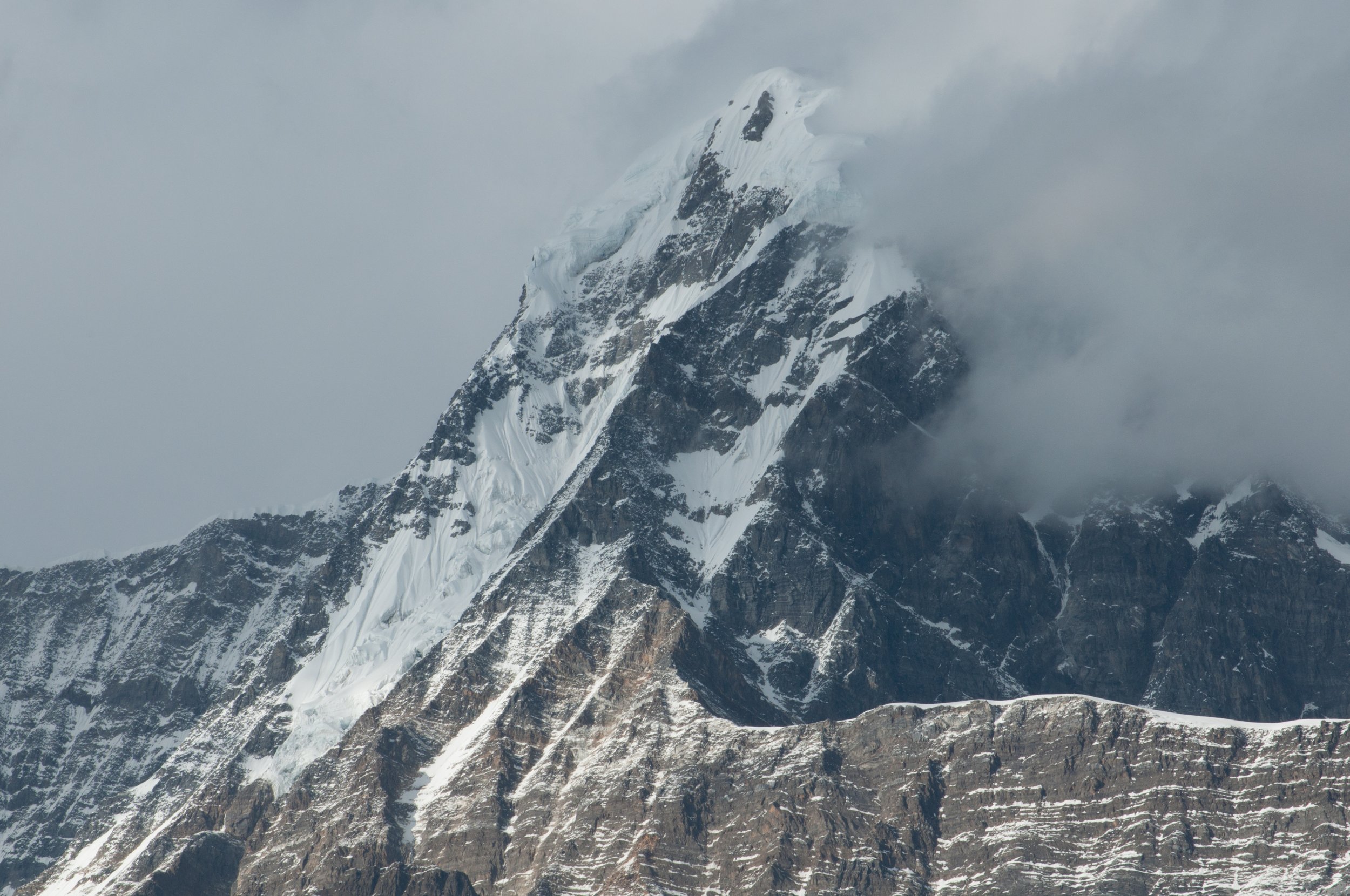
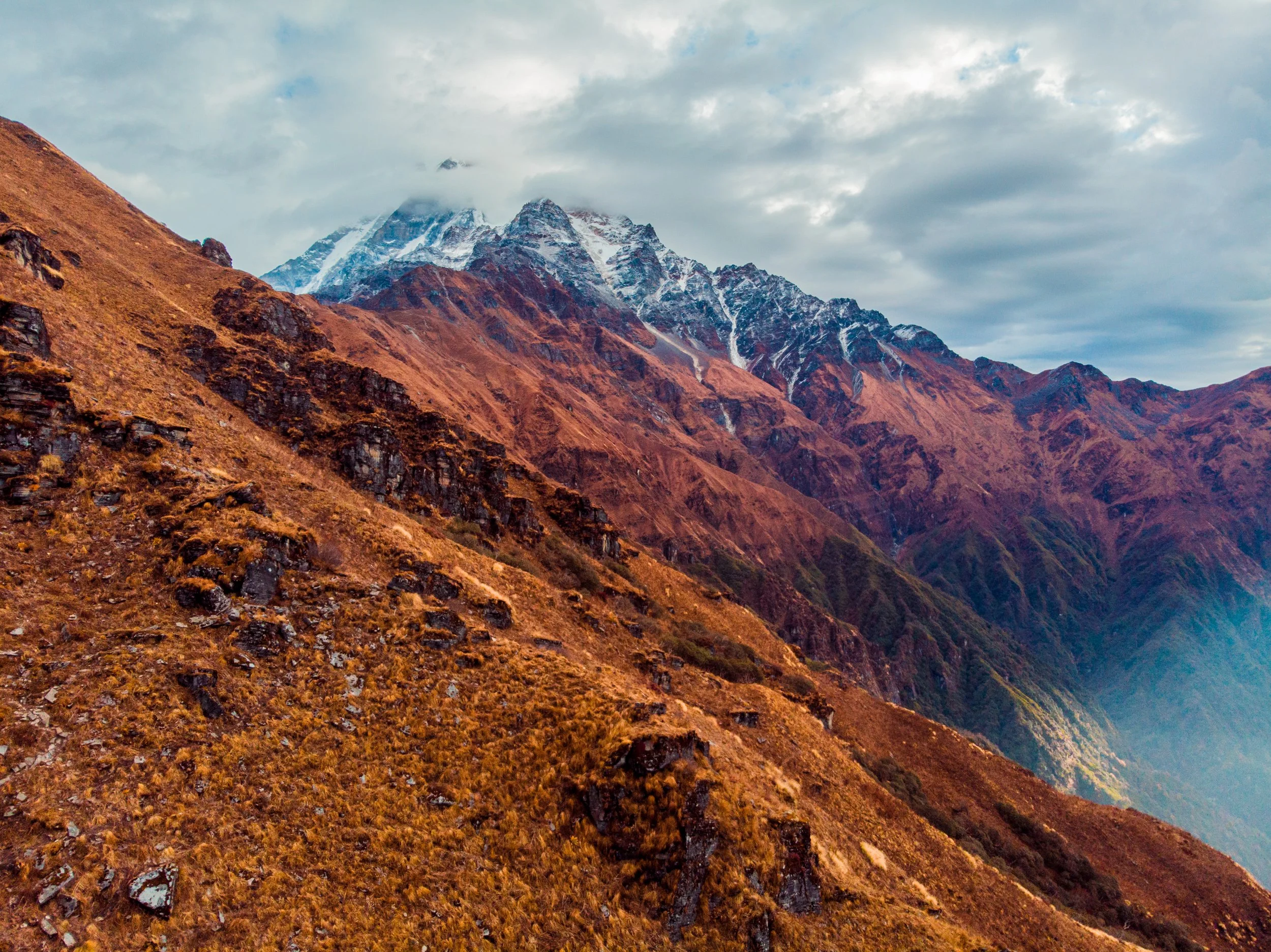
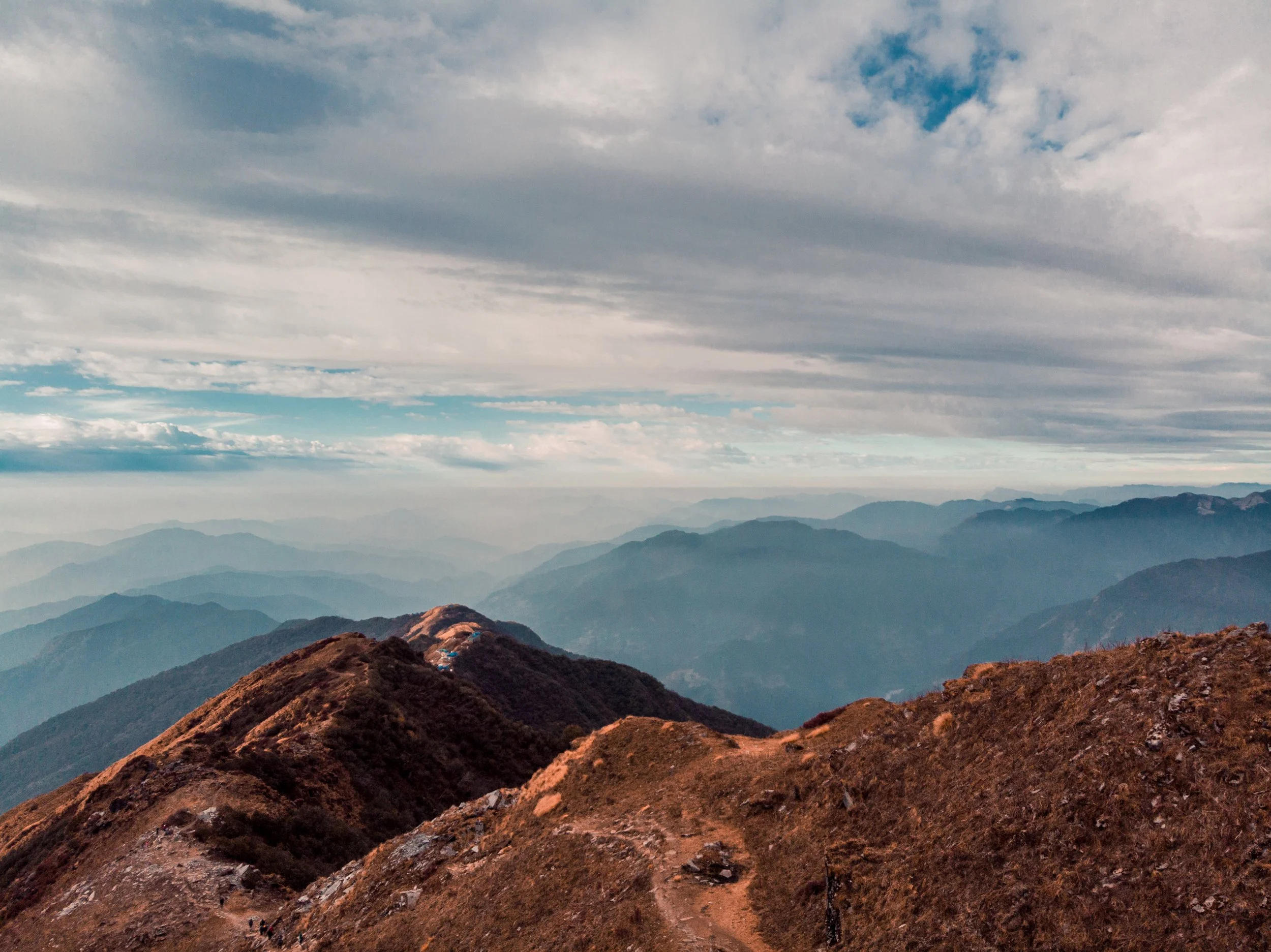
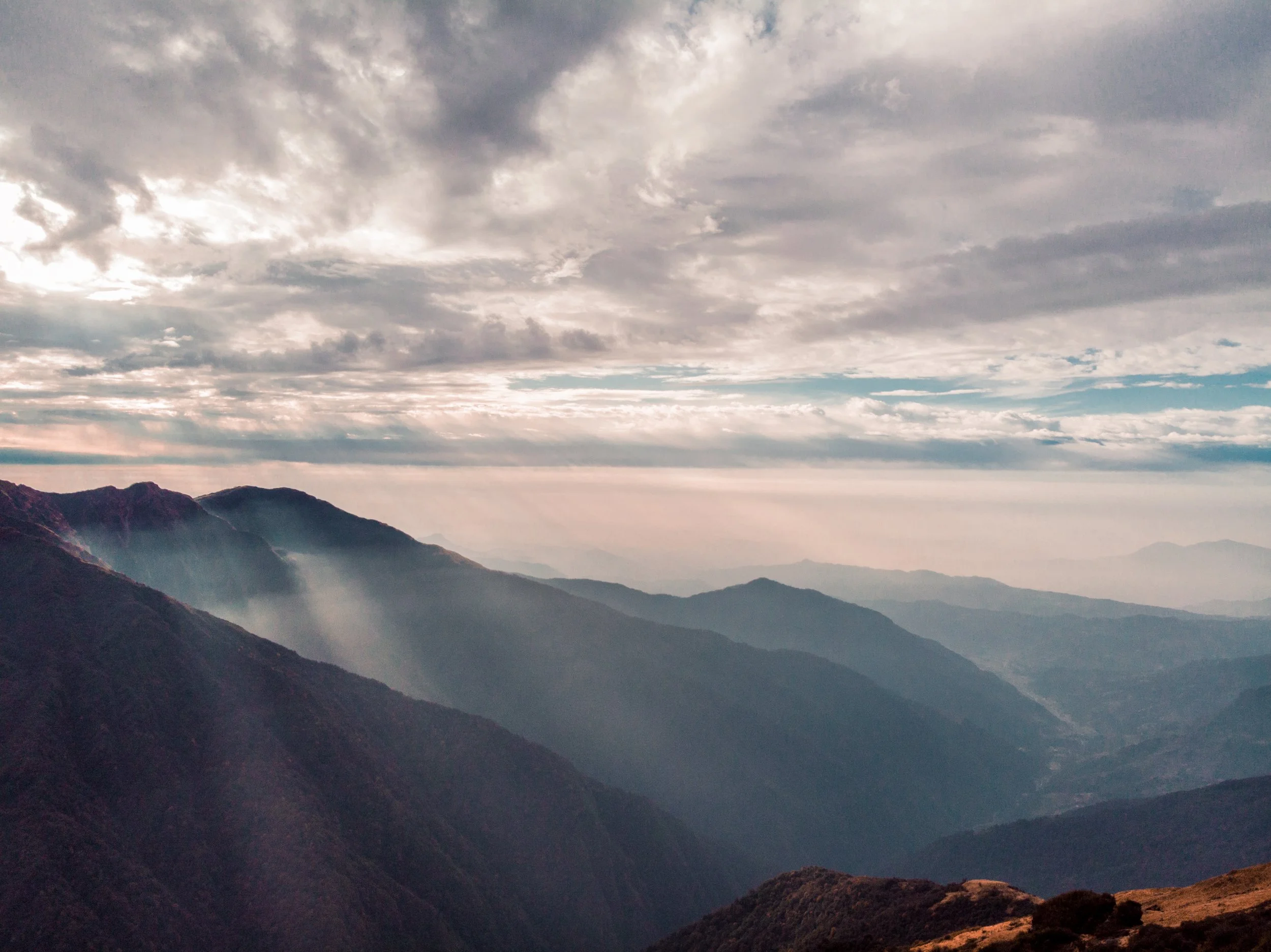
We woke up in the dark and scrambled up to Mardi Himal viewpoint for sunrise. The panoramic views of Machapuchare and Annapurna made every step worth it. Then came the brutal descent: over 2600 vertical meters down to Sidhing Village. By the time we hit the bottom, our legs were absolutely destroyed.
Day 12. Back to Pokhara & flight to Kathmandu
After a bumpy jeep ride back to Pokhara and one last walk along the lakeside, we boarded a short flight that carried us back to the capital.
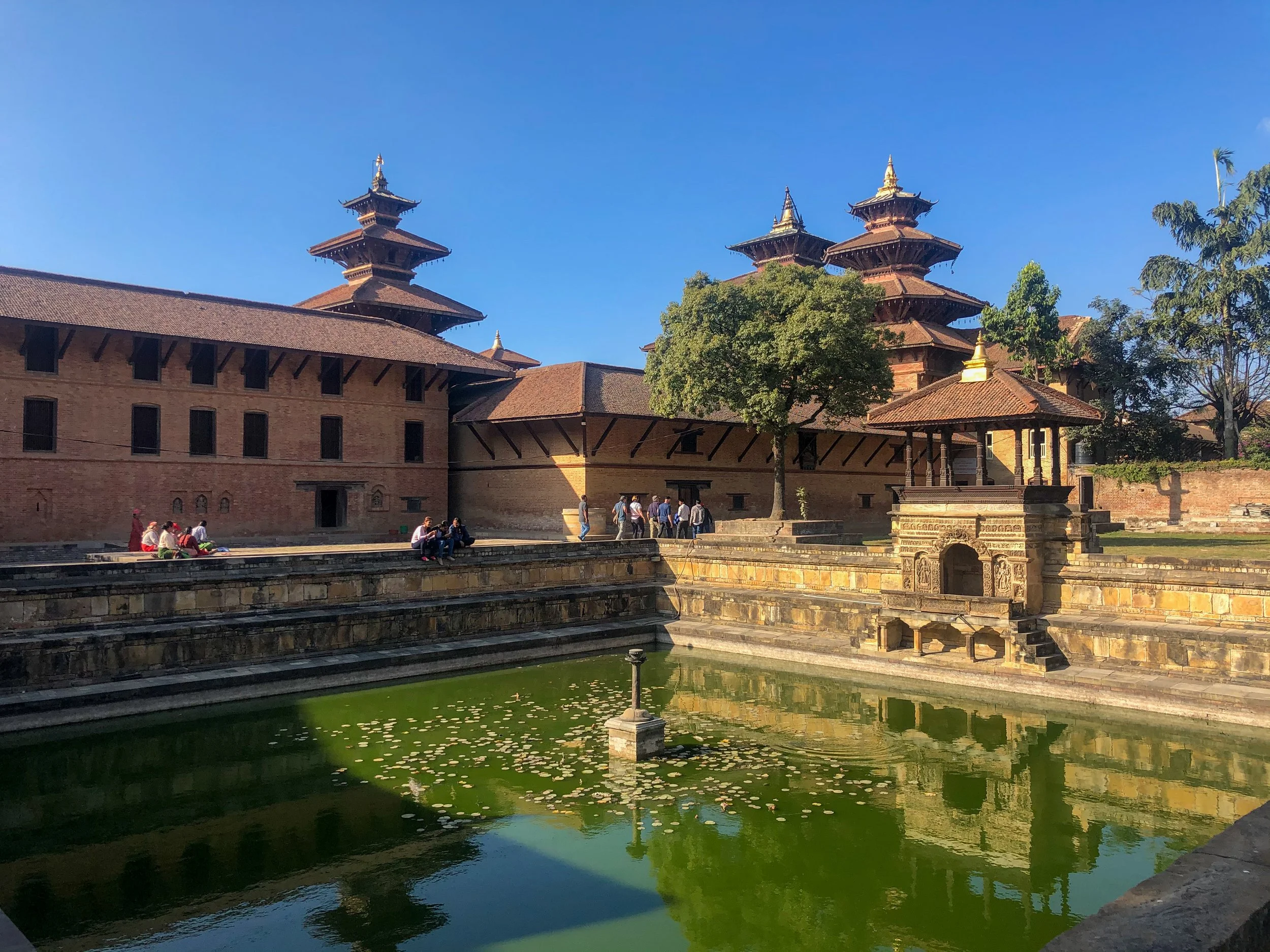
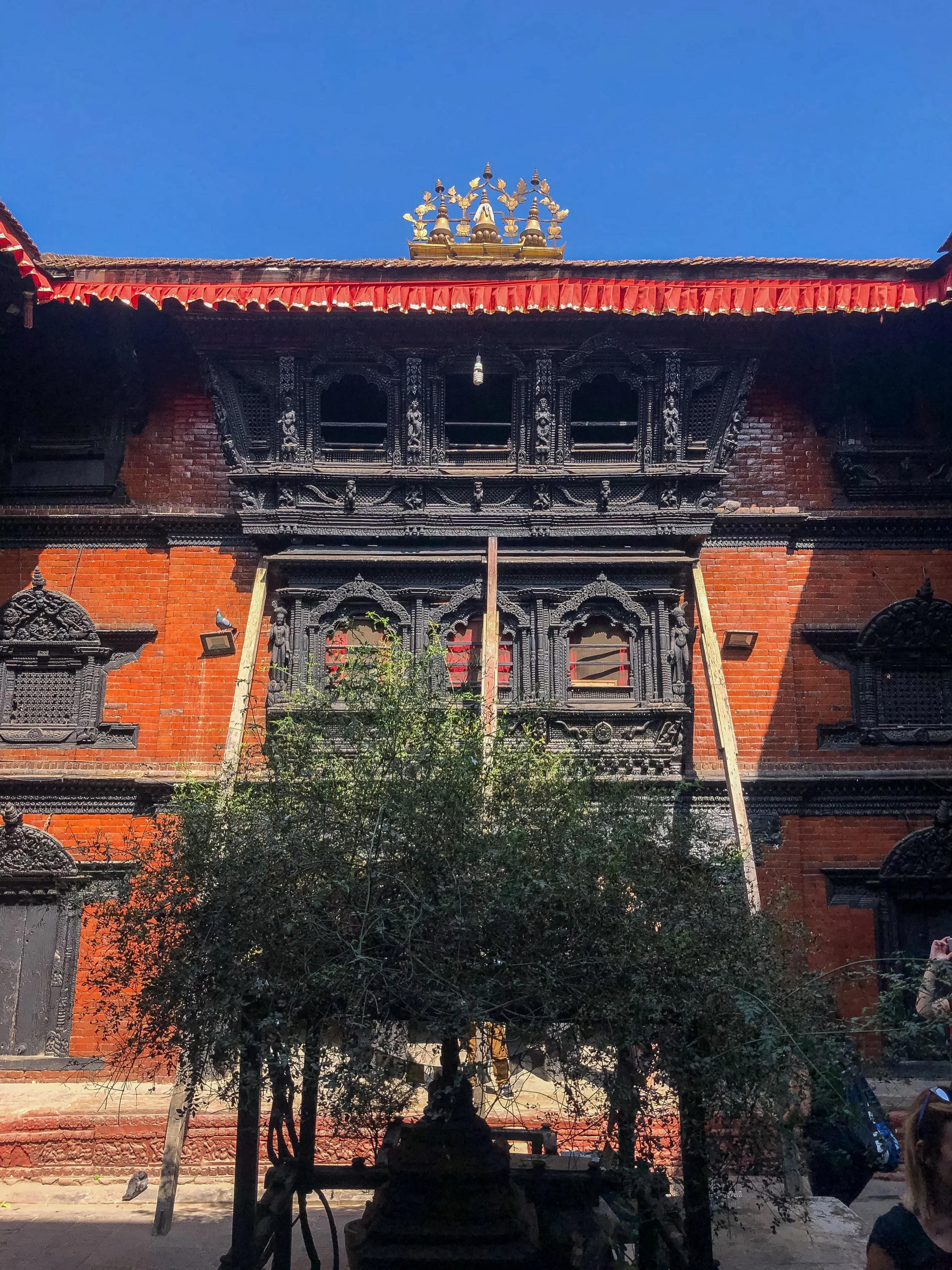
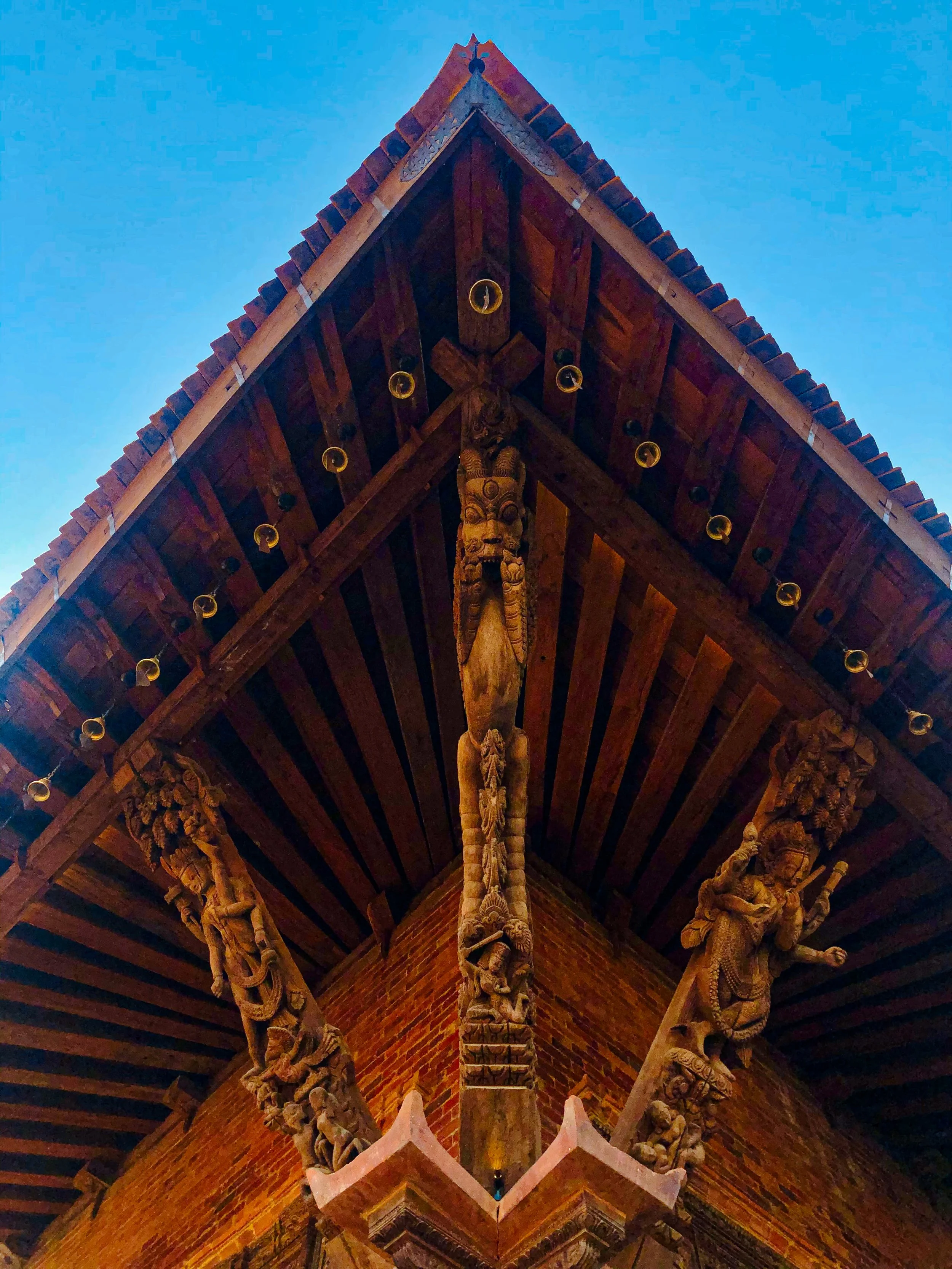
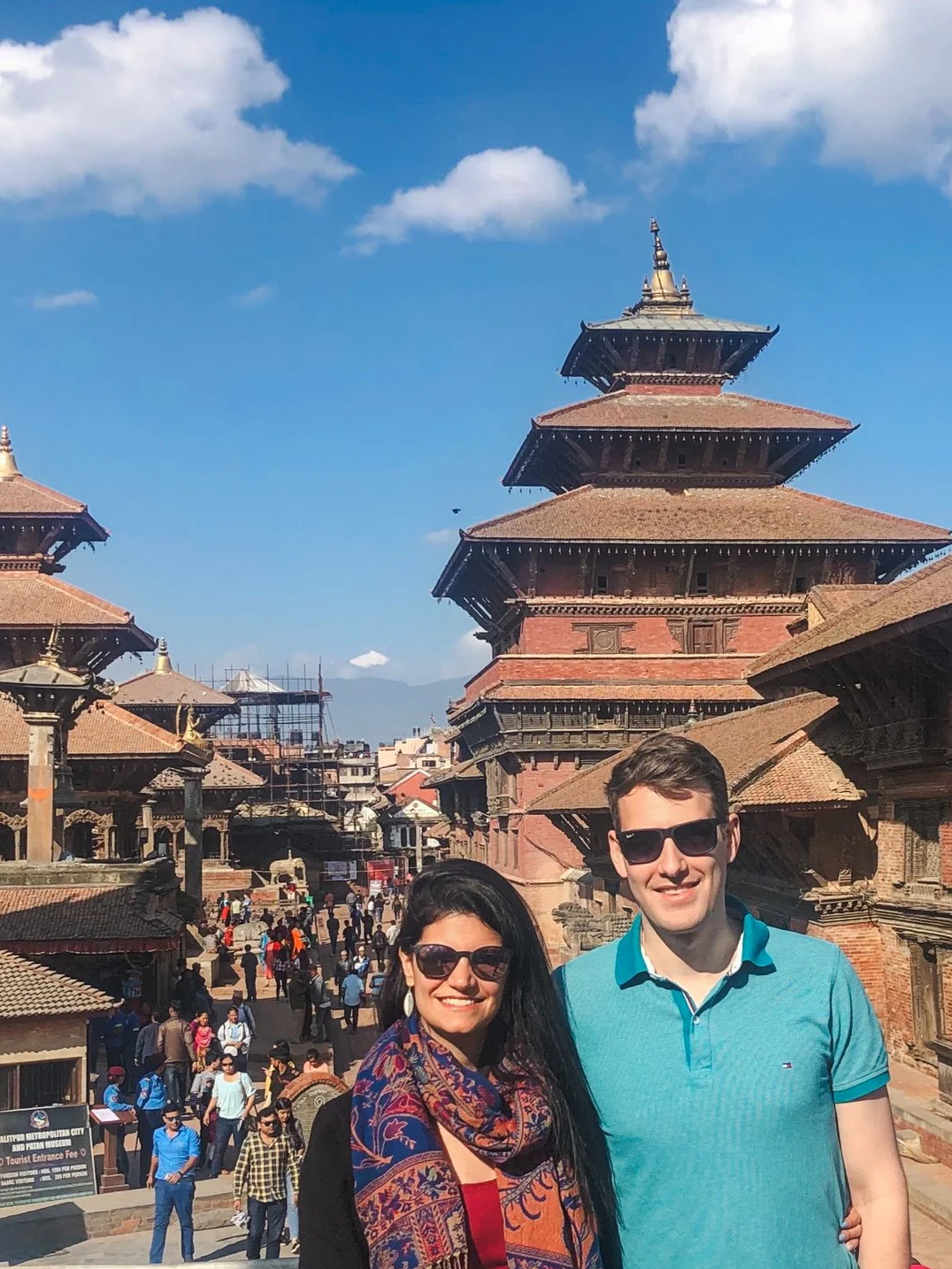
The next day we wandered through Kathmandu Durbar Square, the historic royal complex that served the Malla and Shah dynasties. A UNESCO World Heritage Site since 1979, it brings together pagoda-style temples with their distinctive multi-tiered roofs, palace courtyards, and intricately carved wooden facades from the 16th to 18th centuries, a testament to Newar craftsmanship despite damage from the 2015 earthquake.
At its southern edge stands Kumari Ghar, a red-brick palace built in 1757 as the residence of the Royal Kumari, a prepubescent girl from the Newar Buddhist Shakya caste believed to be the living incarnation of goddess Taleju Bhawani. Selected as young as three or four years old through tests of courage and physical perfection, she lives in seclusion until puberty, her feet never touching the ground, until puberty ends her reign. Though worshipped by Hindus and Buddhists alike, the tradition remains controversial. Former Kumaris often face limited education, social isolation, and few career prospects once they return to ordinary life.
Days 13–15. Kathmandu temple hopping & chill
We spent our last days in Kathmandu visiting three of its most powerful sites, designated UNESCO World Heritage Sites.
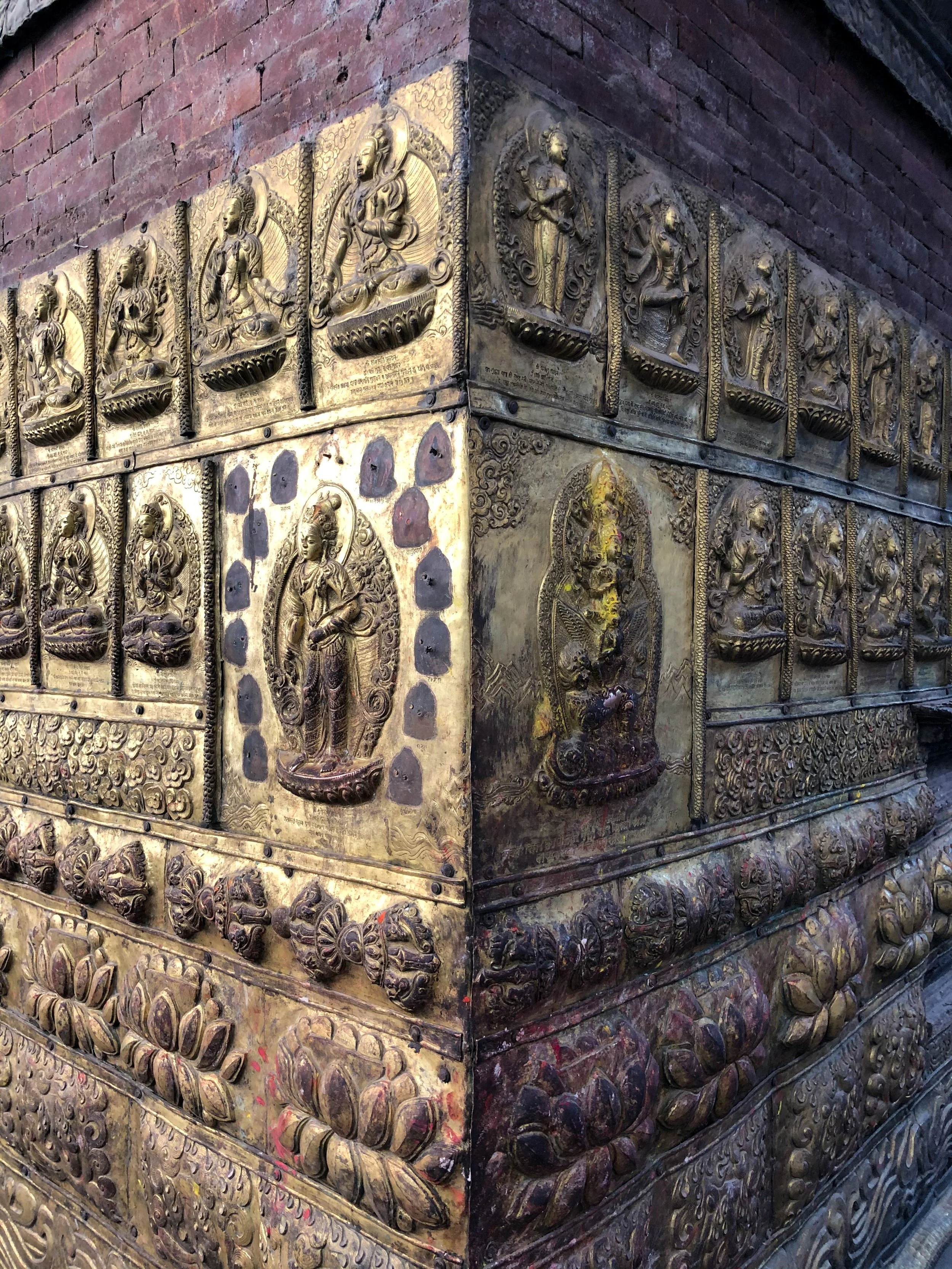
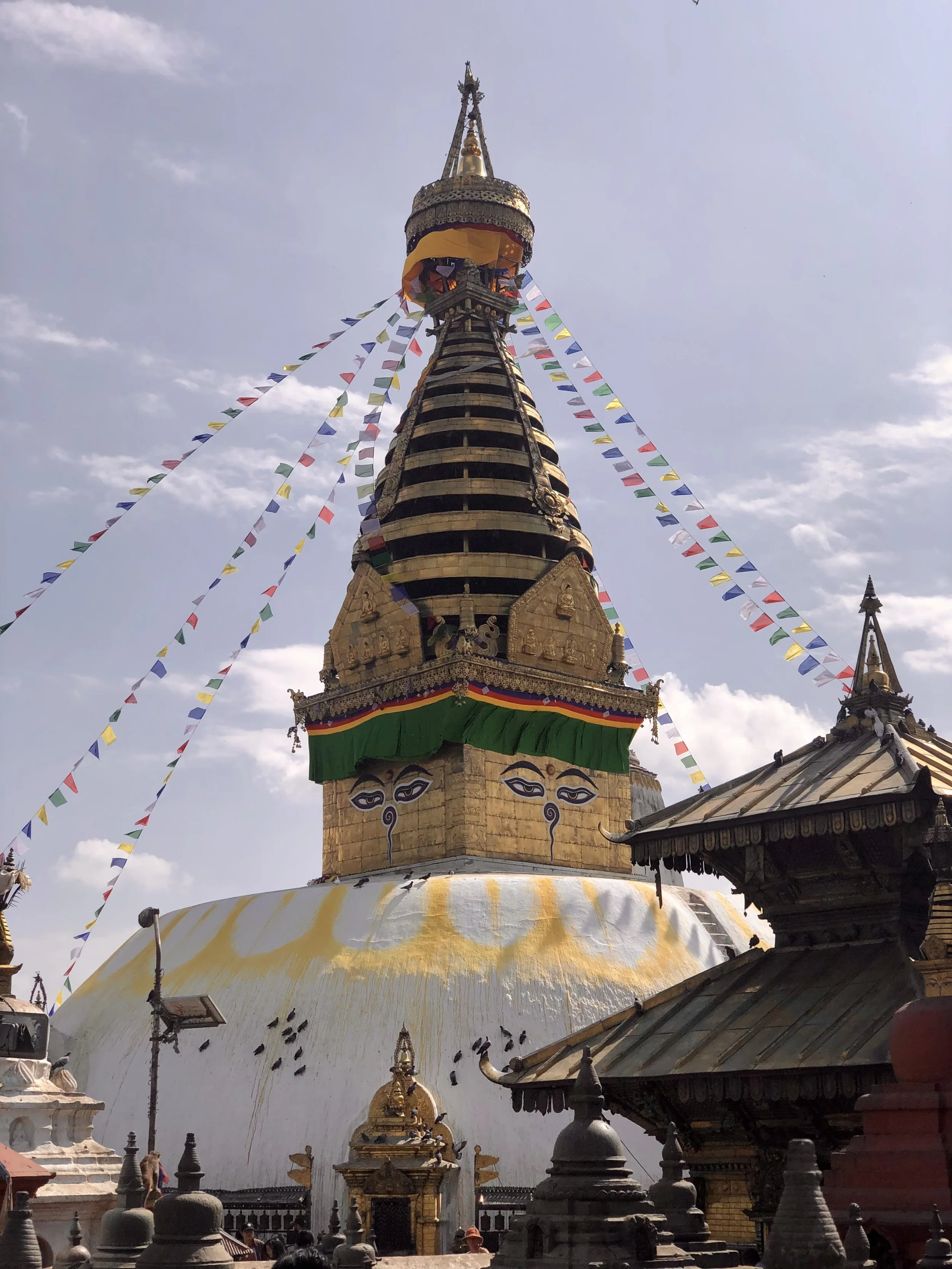
Swayambhunath, one of Nepal's oldest Buddhist stupas dating to the 5th century CE, perched 77 m above the valley floor with breathtaking views stretching across Kathmandu. The all-seeing Buddha eyes are painted on all four sides of the golden spire's harmika, watching over the valley in every direction.
Boudhanath Stupa, the largest spherical stupa in Nepal, believed to enshrine relics of Kassapa Buddha and serving as the spiritual heart of Tibetan Buddhism outside Tibet.
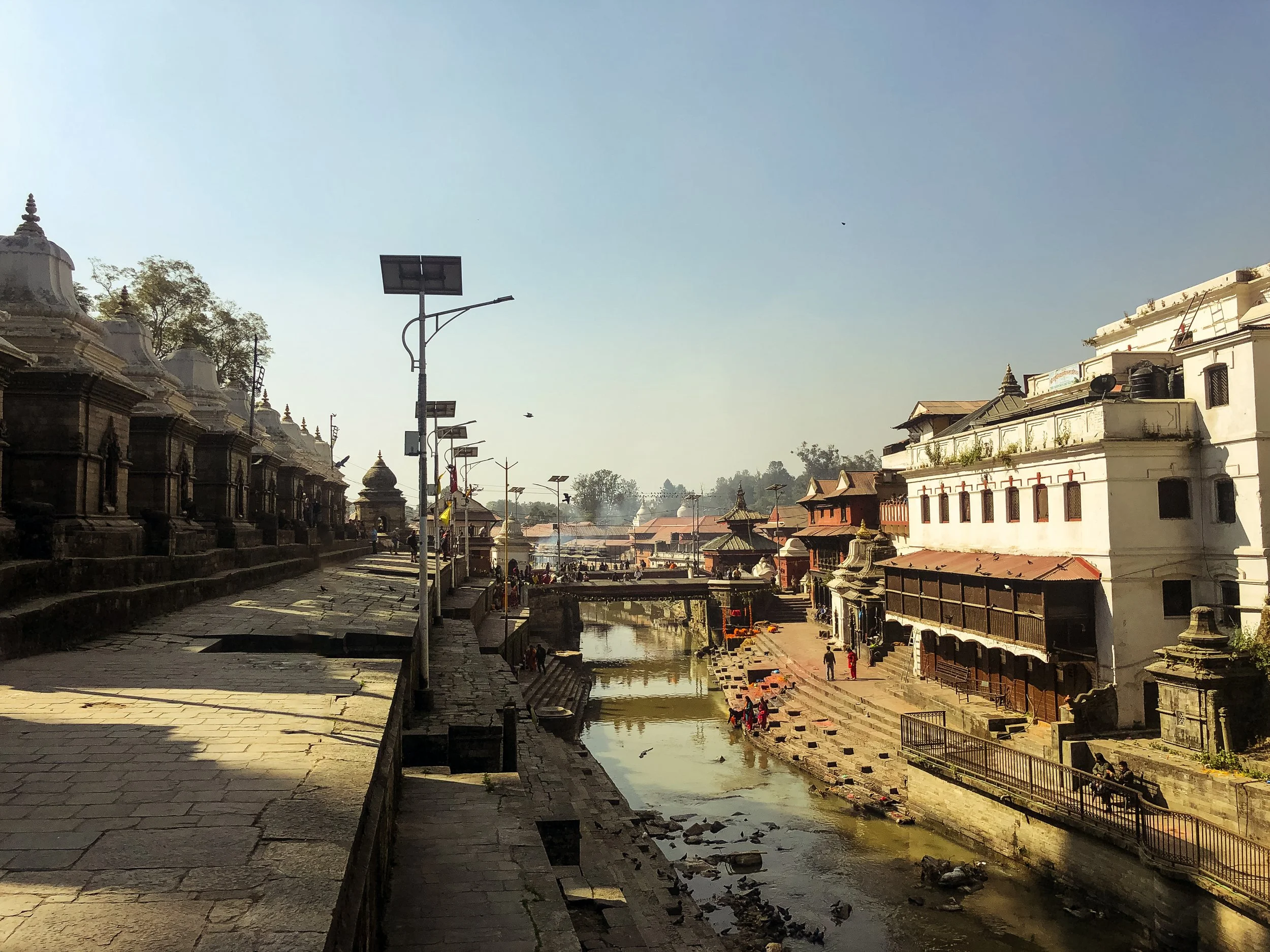
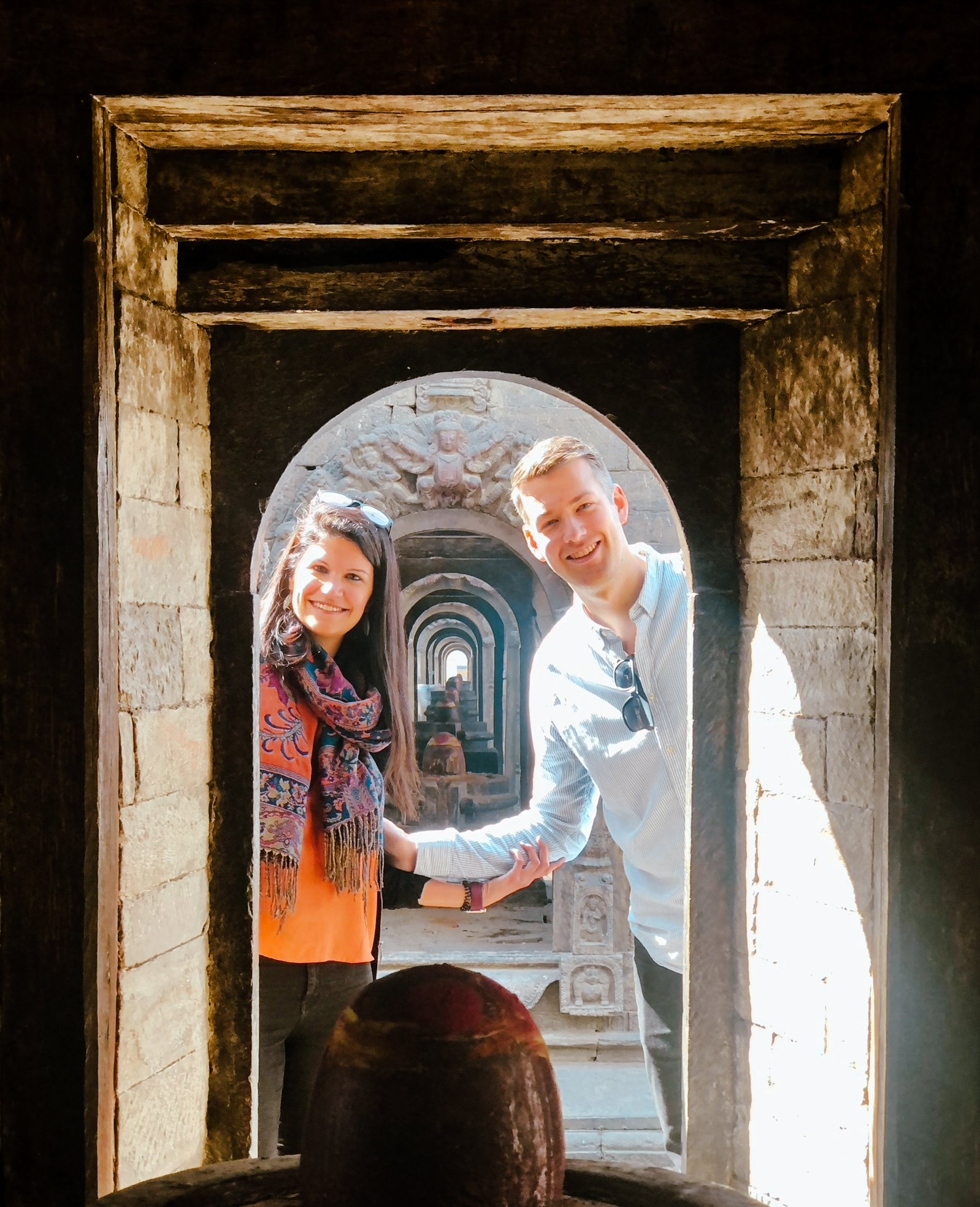
Pashupatinath Temple, Nepal's most sacred Hindu site dedicated to Shiva as Pashupati (Lord of Animals), where deceased bodies are cremated and their ashes immersed in the Bagmati River to ensure rebirth as a human in the next life, in a colorful ritual contrasting with western culture.

Architecture as Cosmological Diagram
Design Tales
The Boudhanath Stupa, originally built in the 5th century CE and standing 36 meters tall with a base diameter of 120 meters, is among the world's largest stupas and Nepal's most significant relic stupa, containing remains of Buddha Kashyapa and Shakyamuni Buddha. This is architecture that exists purely as exterior form. There is no interior to enter, no functional program beyond ritual circumambulation. The structure is entirely solid, built from brick and earth with a white limewash finish that requires constant repainting.
What makes Boudhanath architecturally profound is its geometric precision as a three-dimensional mandala. Every element represents a stage in the path to enlightenment:
3 terraced brick plinths forming the square base (earth)
The massive dome (water)
The 13-stepped pyramidal harmika (fire)
The gold-gilded copper spire with 13 rings (air)
The pinnacle (void/nirvana)
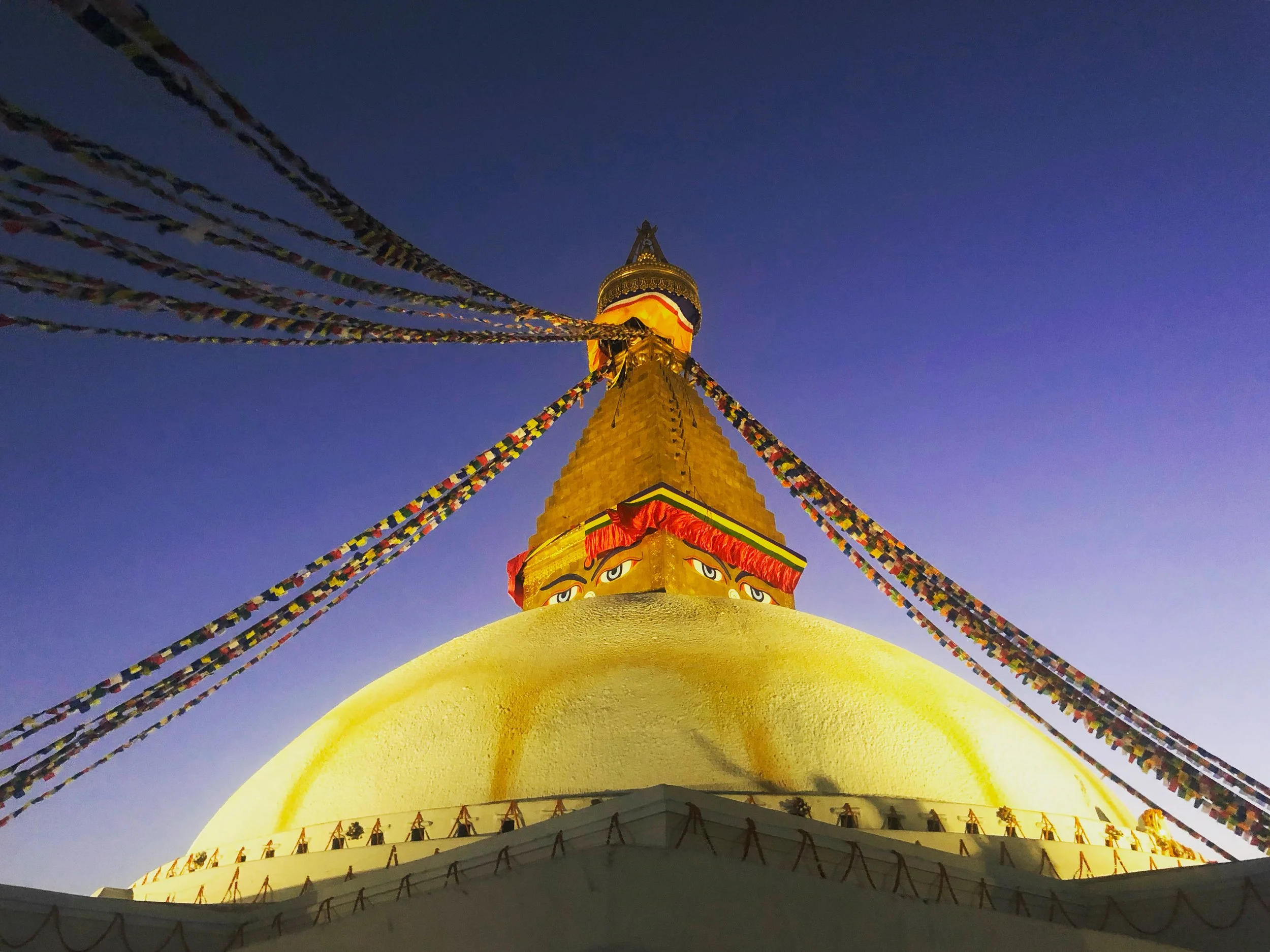
The building is a cosmological map made tangible, where spiritual ascent is expressed through pure geometry. At its center, a sacred "life-tree" pole anchors the structure, surrounded by consecrated relics in copper and gold.
The Ritual: Pilgrims walk clockwise around the base, spinning prayer wheels set within 108 niches carved into the drum, while the all-seeing eyes of Buddha painted on the harmika watch from above. The architecture creates a centered space without enclosing it. The stupa is the inverse of Western sacred architecture: rather than drawing people inside, it radiates outward, organizing space through presence rather than enclosure.
After the 2015 earthquake, Boudhanath became the first World Heritage site in Nepal fully restored, completed in November 2016 through community donations using over 30 kg of gold. The reconstruction honored traditional brick and limewash methods while incorporating modern seismic reinforcement. The stupa stands as it has for centuries: a meditation on form, impermanence, and continuity
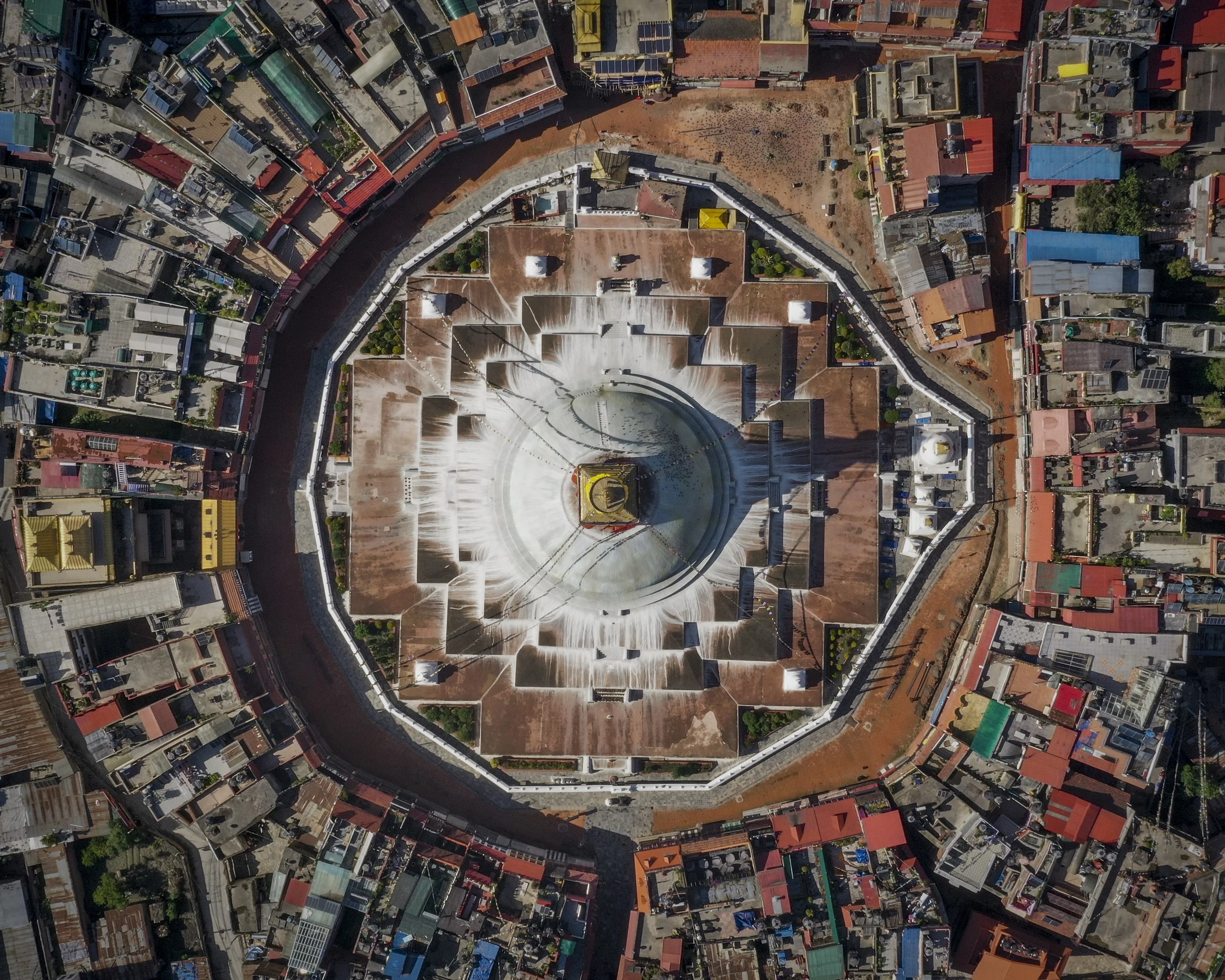
Image by Sumir Shrestha
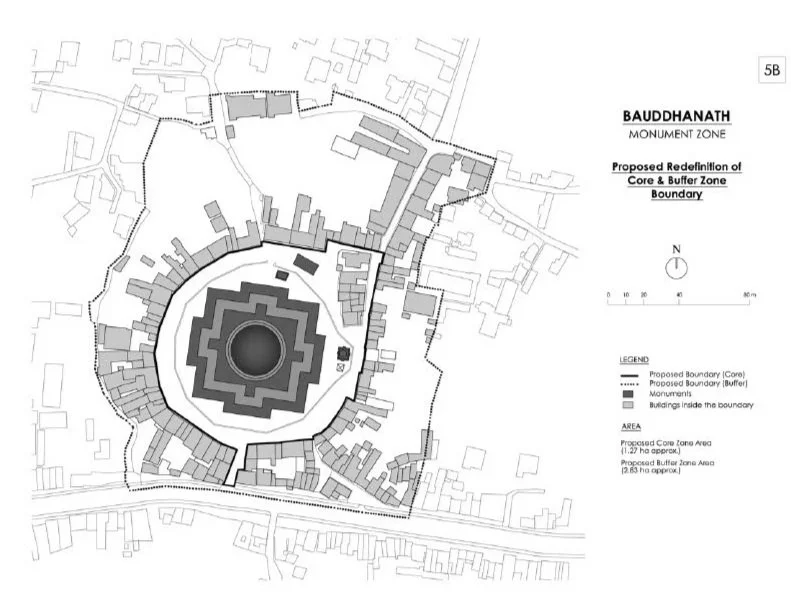
Plan by World Heritage Centre
Editors Note
Snowy peaks, endless stairs, and that magical feeling of being tiny in the Himalayas. Here’s what stood out most for each of us.
🏆 Our Fav’s. Mardi Himal Viewpoint. Standing above the clouds with Machapuchare right in front of us felt like being on another planet. Pure peace and total awe.
🚩 Tourist trap alert. Pokhara paragliding. Looks amazing on Instagram, but felt pretty underwhelming once you’re up there. And kinda overpriced.
💡 Pro tip. Book a hotel in Pokhara where you trust leaving your stuff behind. You won’t need much gear on the trek, so leave non-essentials safely stored at the hotel.
Recs:
🥐 Food Spots
OR2K (Thamel, Kathmandu). The go-to vegetarian friendly café with a chill vibe
🎒 Essentials
Permits required for all Annapurna treks: Get your ACAP and TIMS permits at the Pokhara tourism office. Bring 2 passport photos (or get them taken there).
Gear: Rent or buy hiking gear in Thamel (Kathmandu). You'll find everything from poles to puffers. Prices are a bit higher than in Europe, but super convenient for last-minute needs.
Money: Exchange cash in Thamel (Kathmandu) before hitting the trail. ATMs and card payments basically don’t exist in the mountains.
Water: Bring a filter or purification tablets. The water might look clean, but it’s not always safe.