MARCH 2022
JORDAN
-
Language: Arabic
Currency: Jordanian Dinar (JOD)
Capital city: Amman
Population: ~11 million
Driving Side: Right
Best Time to Visit: March–May or September–November
Weather: Hot and dry most of the year, cool nights in the desert
Power Outlets: Type C, D, F, G (230V, 50Hz). Bring a universal adapter
-
✅ 10-Day Trip
✈ Direct flight
Berlin → Amman
🎒 What to Pack: Sunscreen, Long skirts on pants for women.
-
Wadi Rum
Petra
Wadi Al Mujib
Desert Castles
Dead Sea
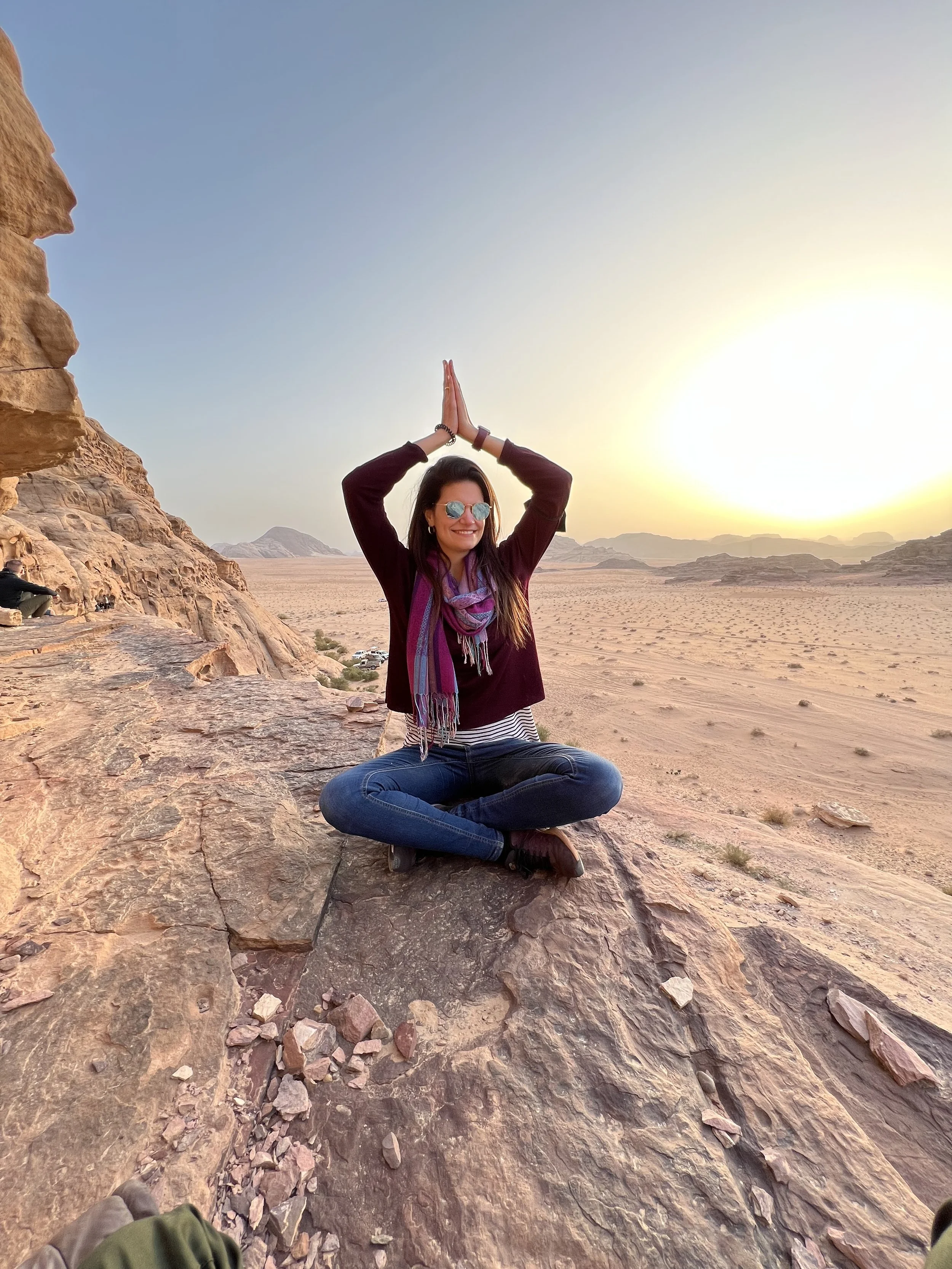
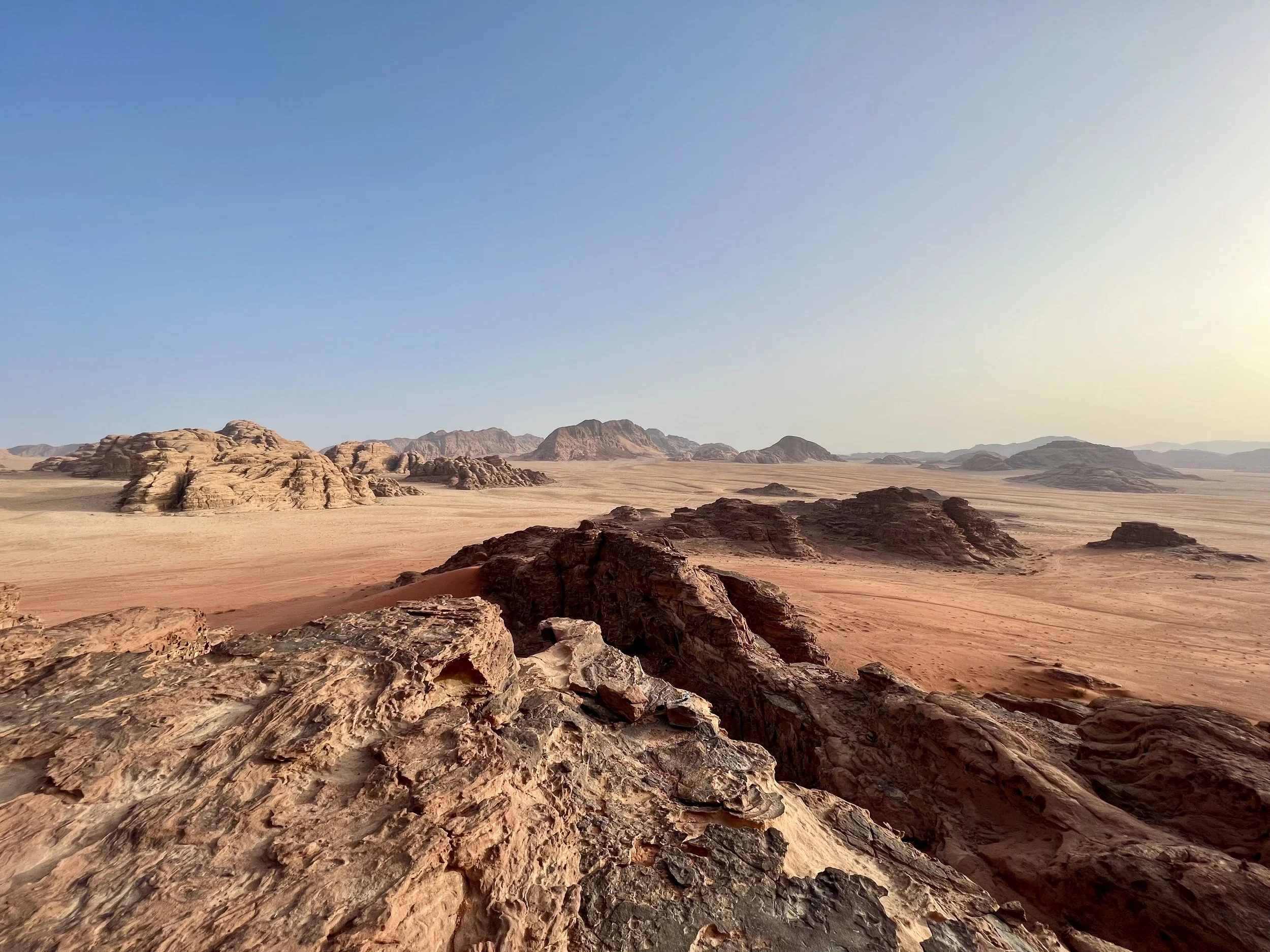
Deserts, ruins, and full on ancient wonder. Jordan dropped Martian sunsets, hidden paths, coral-filled waters, and wild canyon hikes. Every day felt like stepping into another world.
Itinerary
Day 1-2: Aqaba: Snorkeling in the Red Sea
Day 3-4: Wadi Rum + Petra by Day and Night
Day 5: Dana Biosphere Reserve
Day 6: Wadi Al Mujib water hike
Day 7-8: Walking tour in Amman
Day 9: Madaba & Desert Castles
Day 10: Float in the Dead Sea
Roadtripping Jordan: Ancient Echoes & Martian Dreams
Jordan isn’t a place you just visit. It’s a place you journey through. Every twist in the road drops you into another world: deep canyons, underwater gardens, sun-scorched castles, and sacred mountains. In 10 days, we followed the rhythm of the desert, the pulse of history, and the smell of minty lemon drinks. We started in Aqaba, rode through the heart of the country to Amman, and ended where the Earth sinks low, floating in the Dead Sea.
Day 1: Aqaba: Snorkeling in the Red Sea
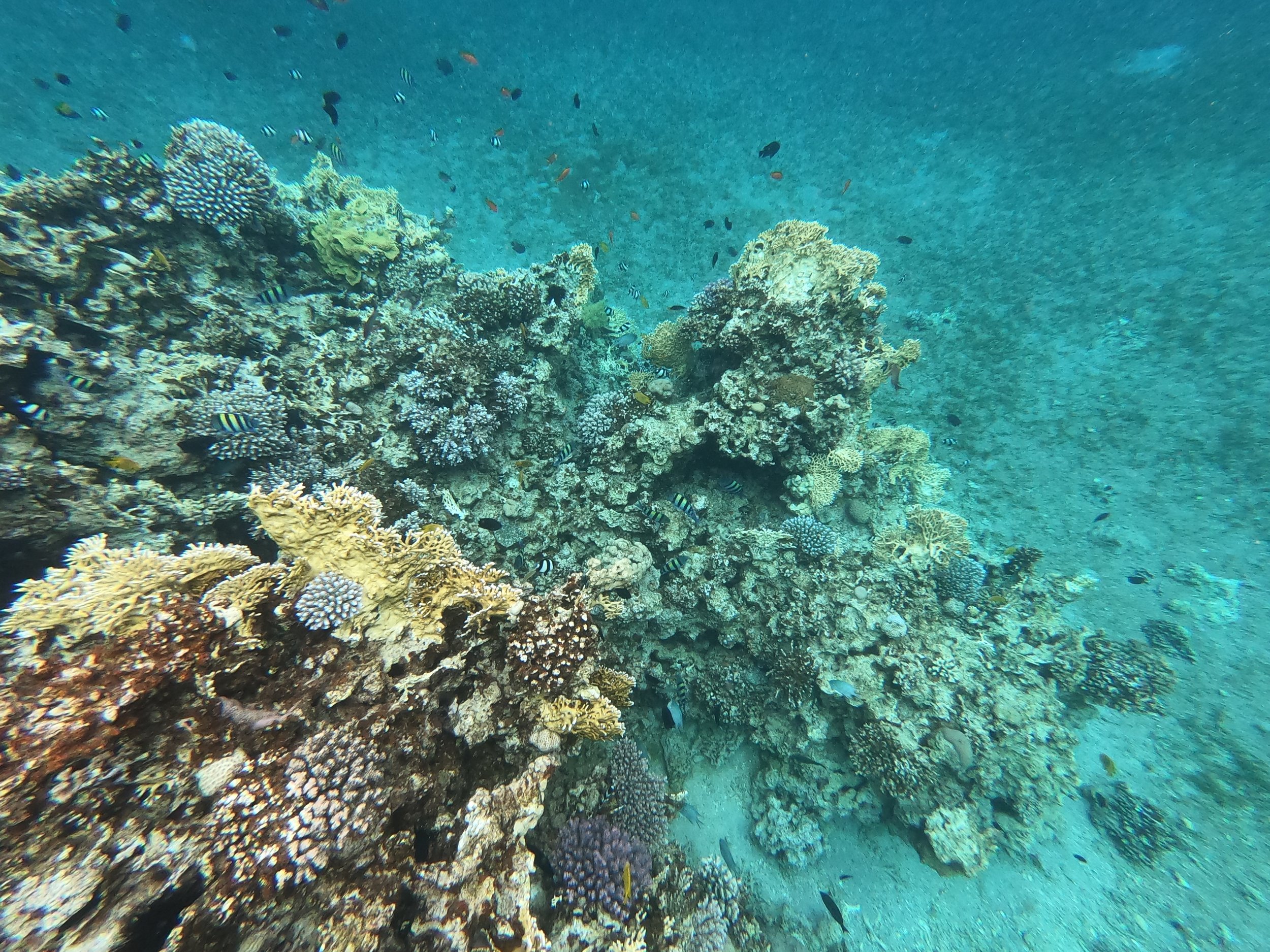
We kicked off in Aqaba where it was hot, chill, and full of good vibes. The first day was a soft launch: we wandered the city, ate ridiculously good food (vegetarians, this is your moment!), and sipped on fresh lemon mint juice. Then we went snorkeling. No guide, just us figuring it out. It was super windy, which made it tricky, but after some detours and help from friendly divers, we found the Japanese Garden coral site. The shallow reef system sits at roughly 5 to 12 meters deep. Hard and soft coral formations shelter hundreds of species of Red Sea reef fish in water temperatures that typically range between 21 and 27°C year round. The Red Sea ranks among the world’s most biodiverse marine ecosystems, hosting over 1,200 fish species, with roughly 10 percent found nowhere else on Earth.
Day 2: Wadi Rum: Martian Vibes & Sunset Goals
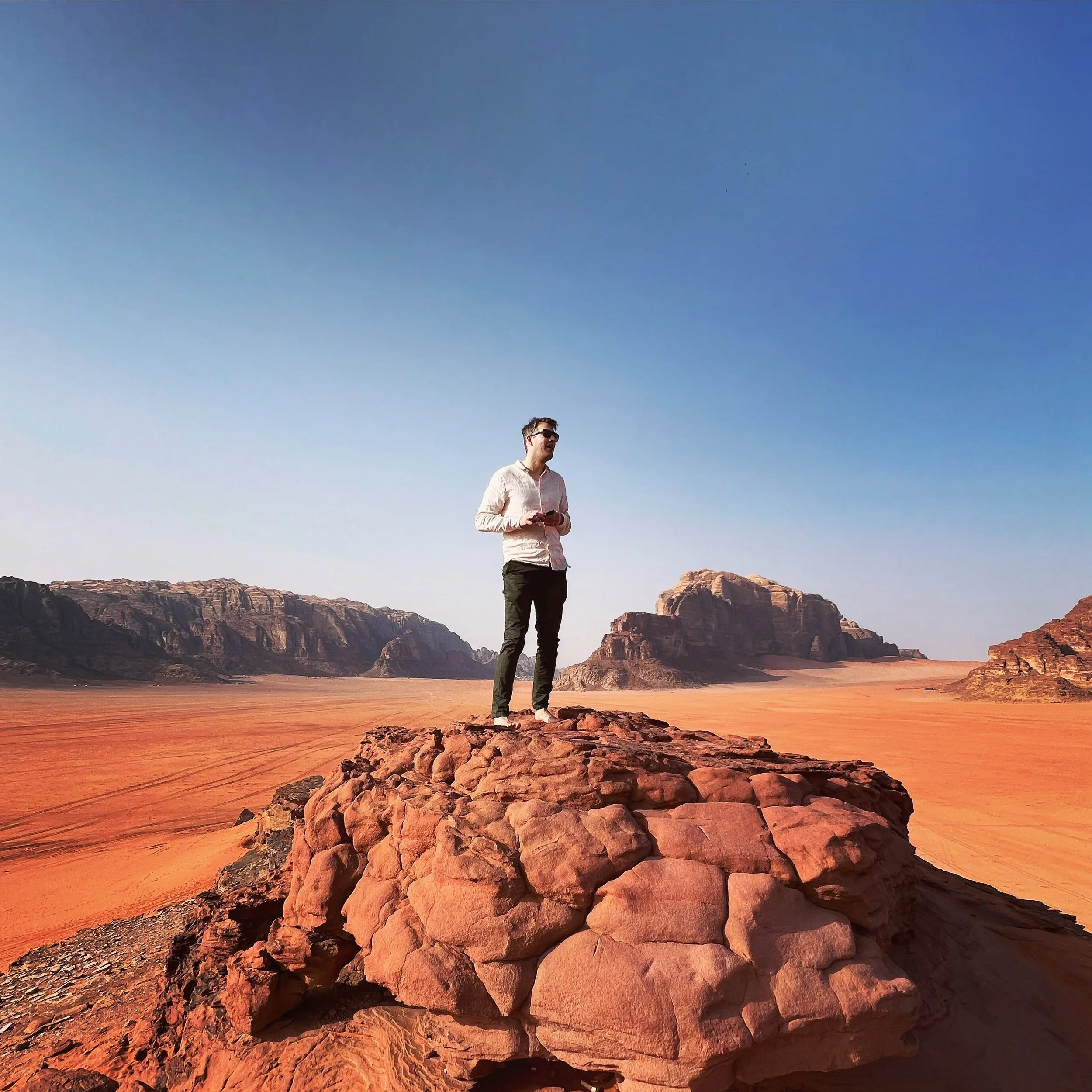
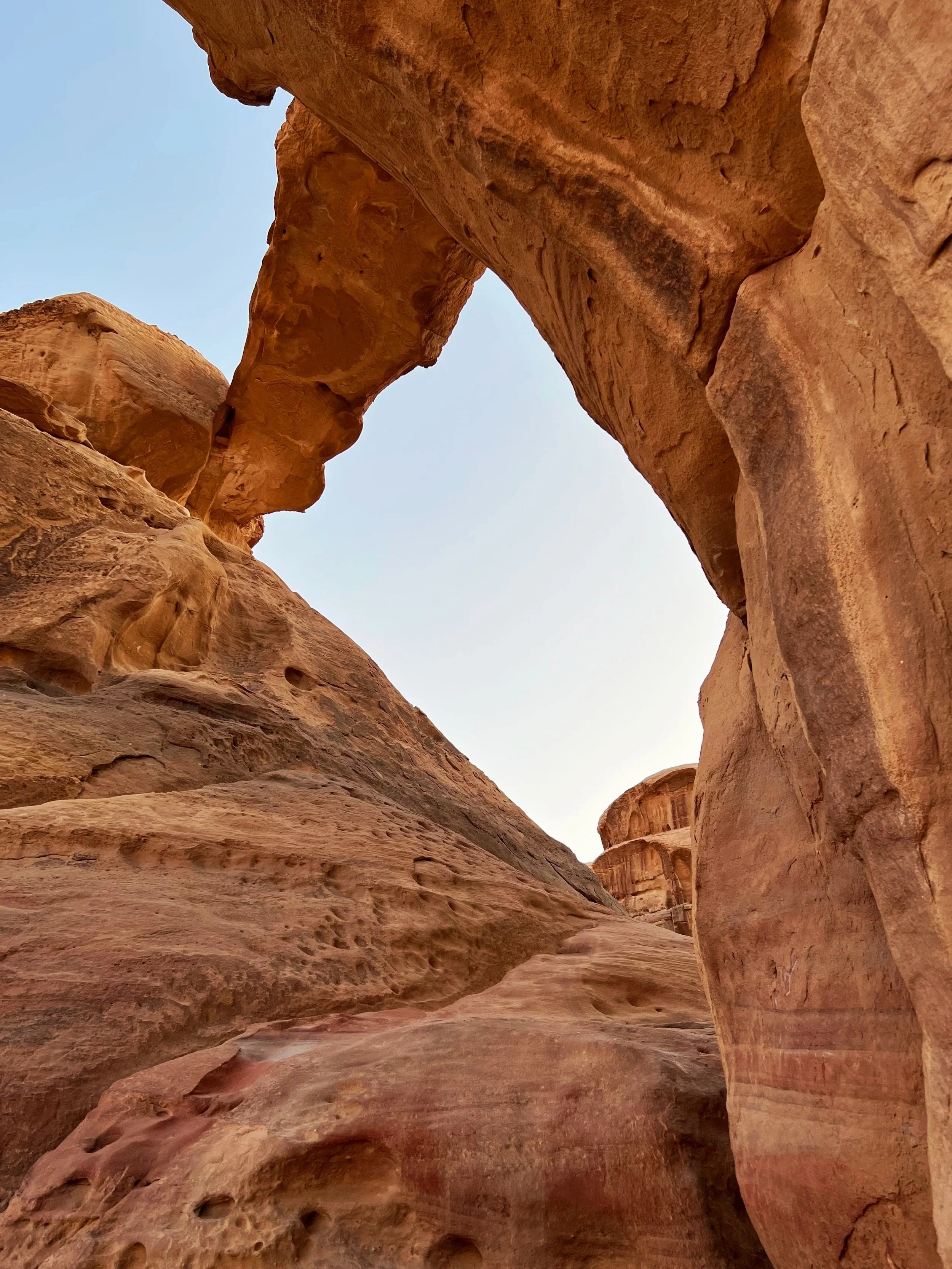
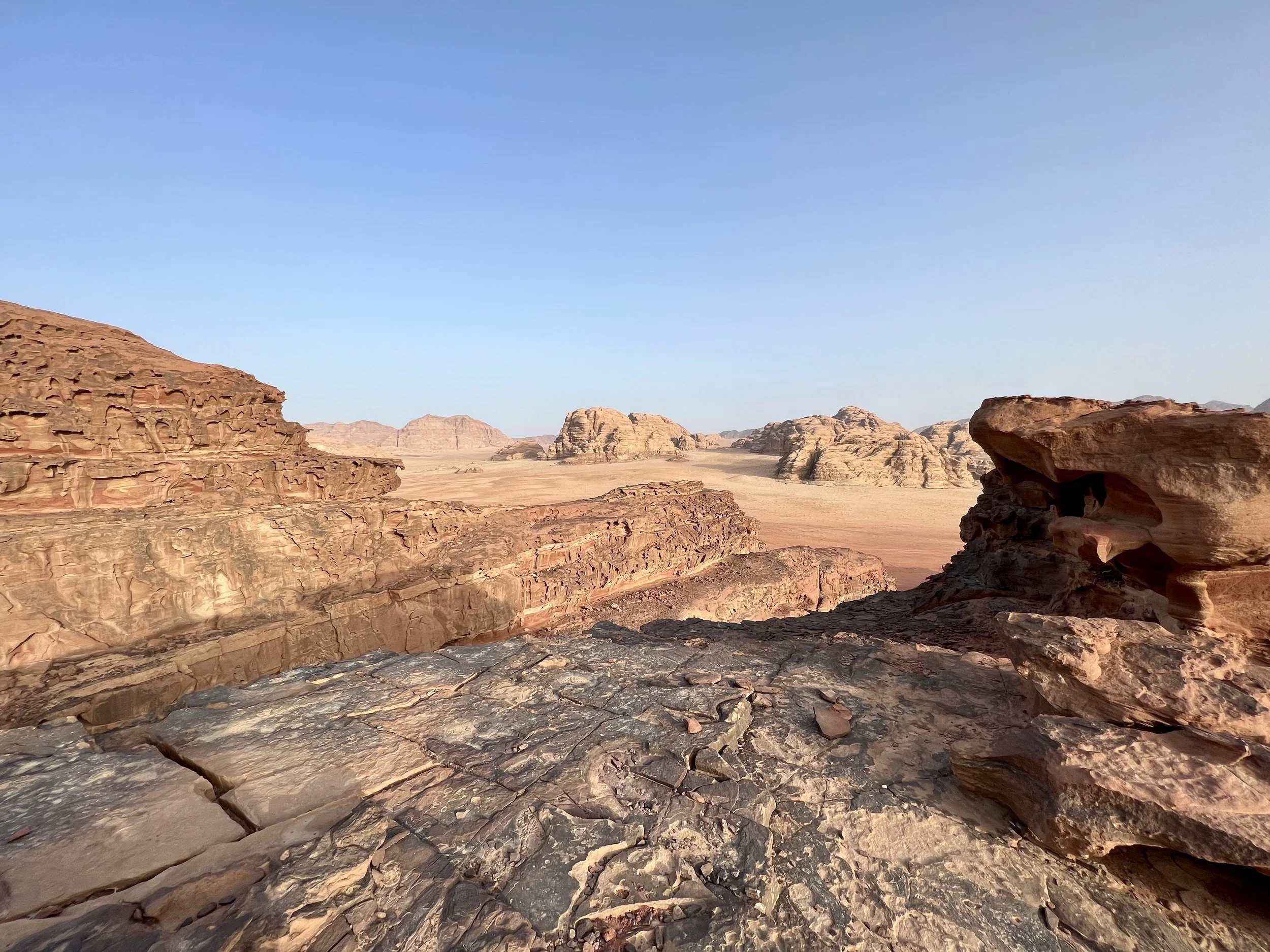
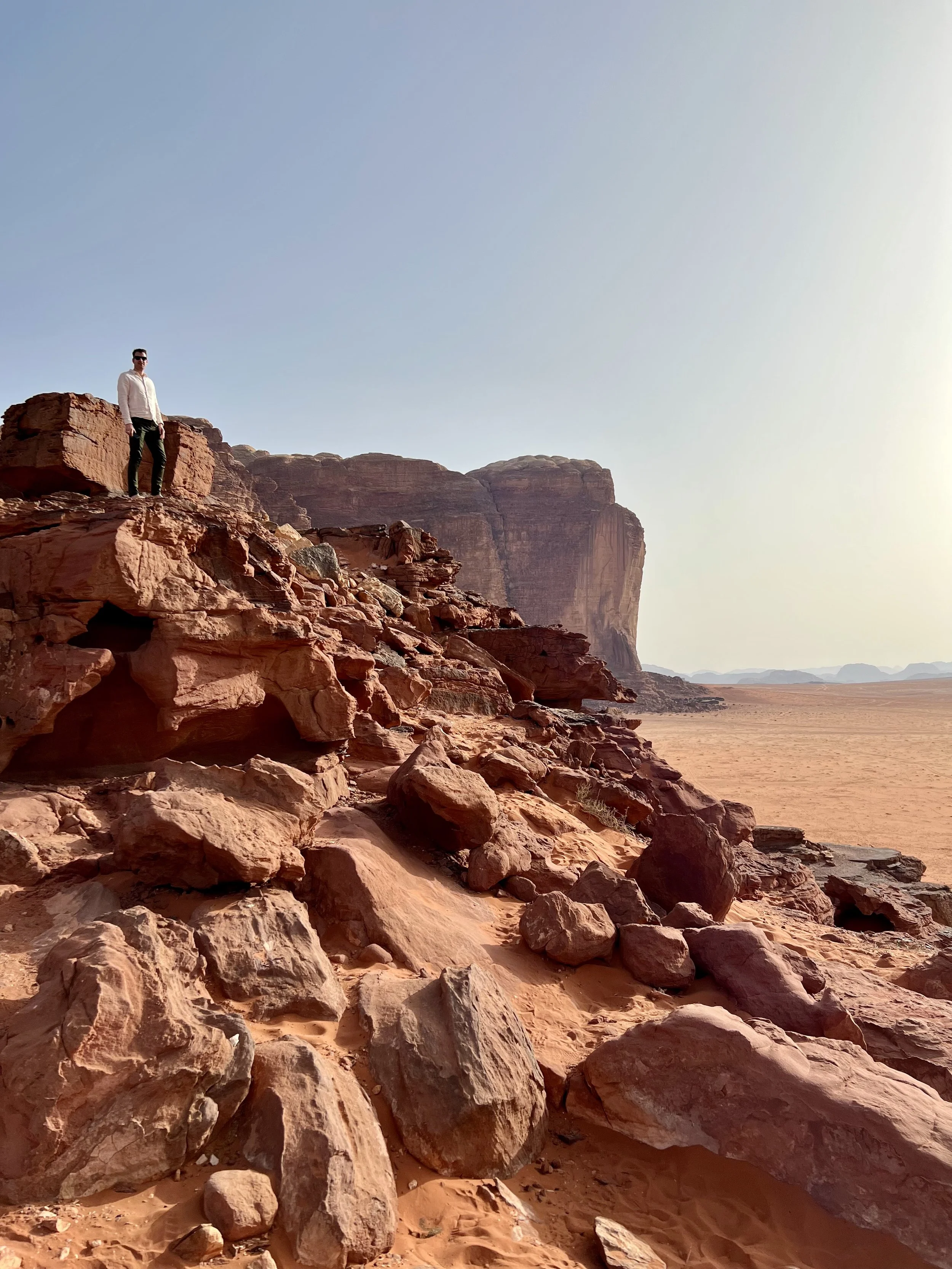
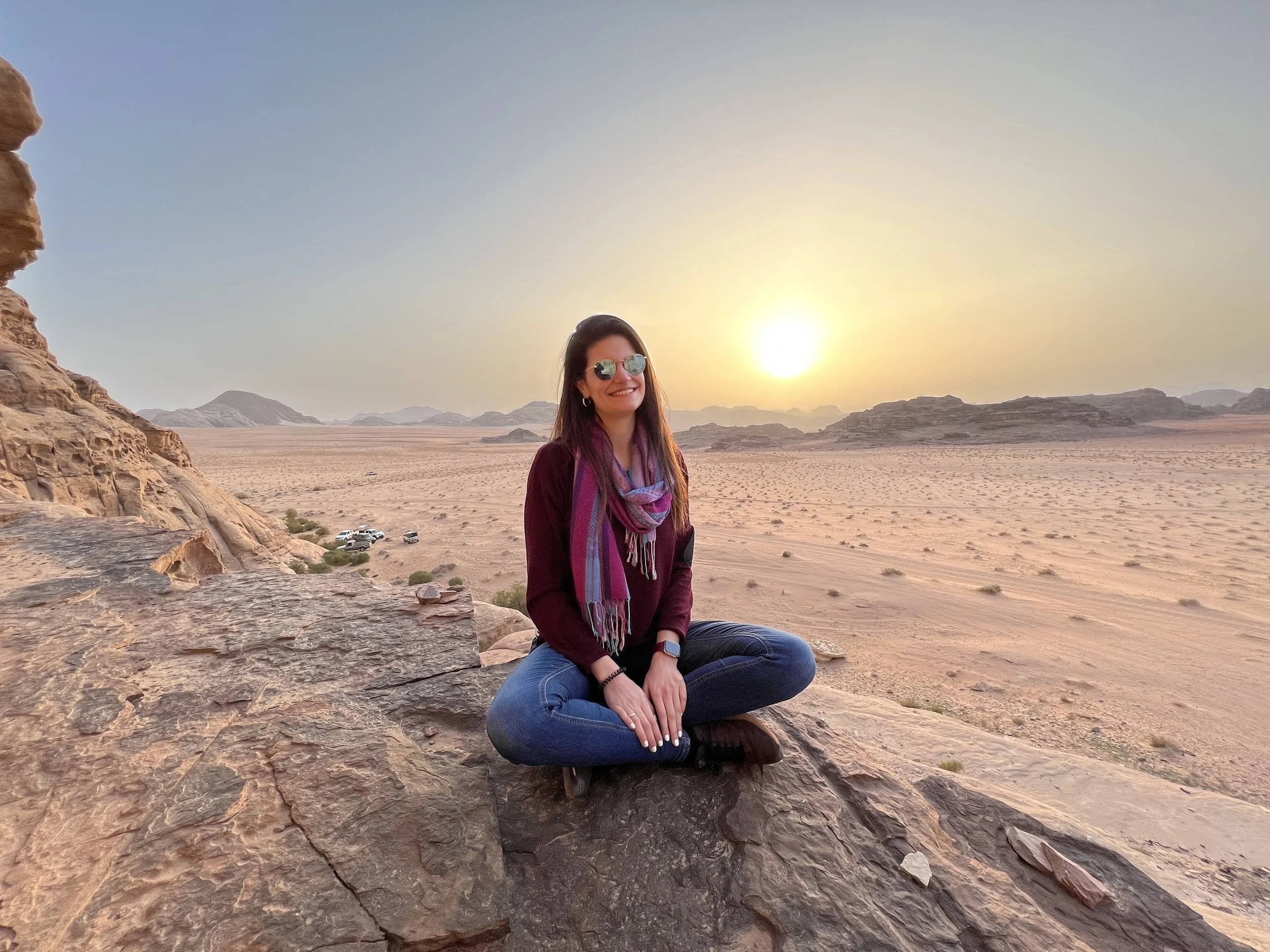
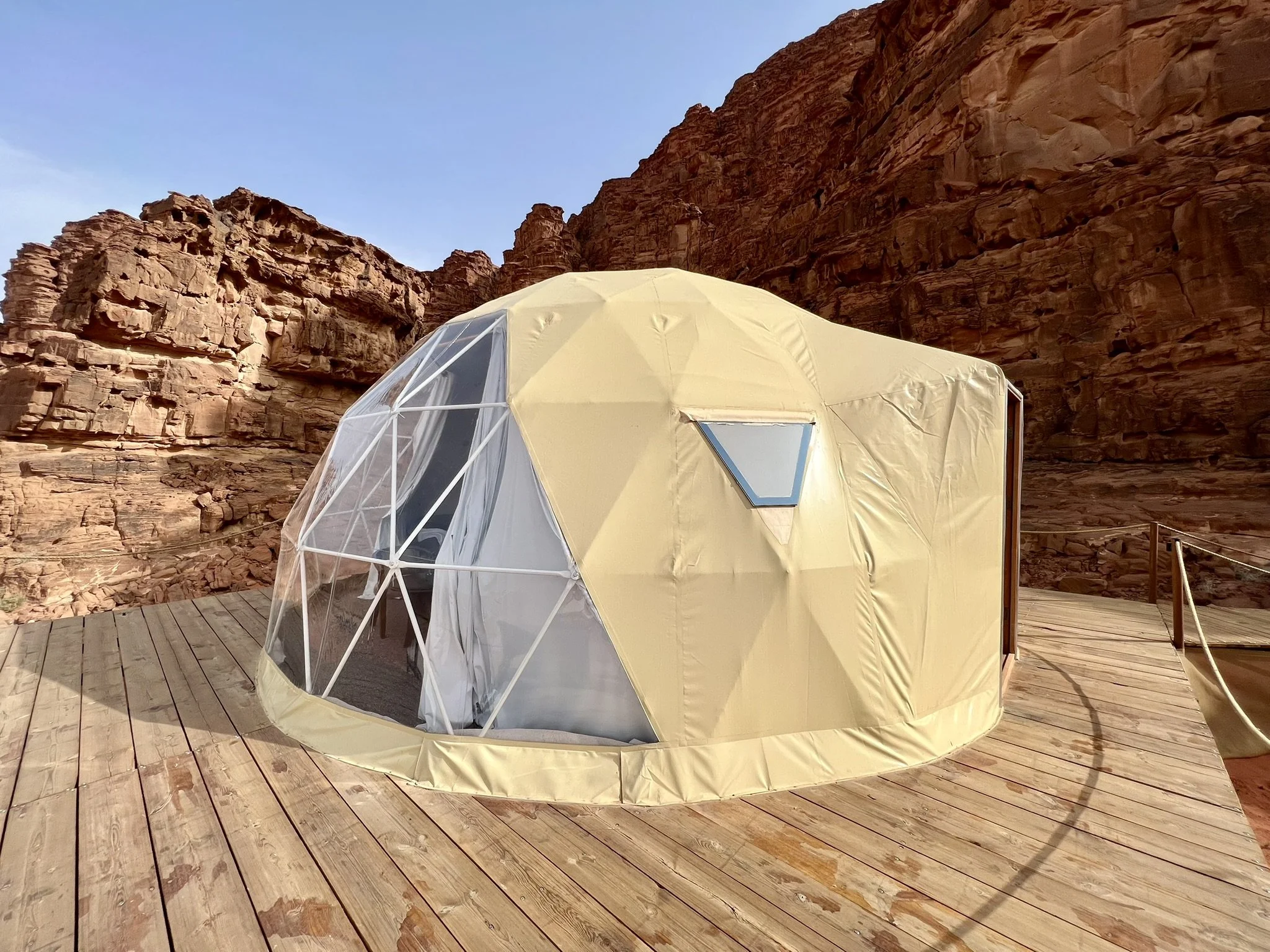
Wadi Rum felt like landing on another planet. Endless red sand, massive rock formations, and a kind of quiet you do not get anywhere else. We stayed in a Martian dome and it was actually awesome.
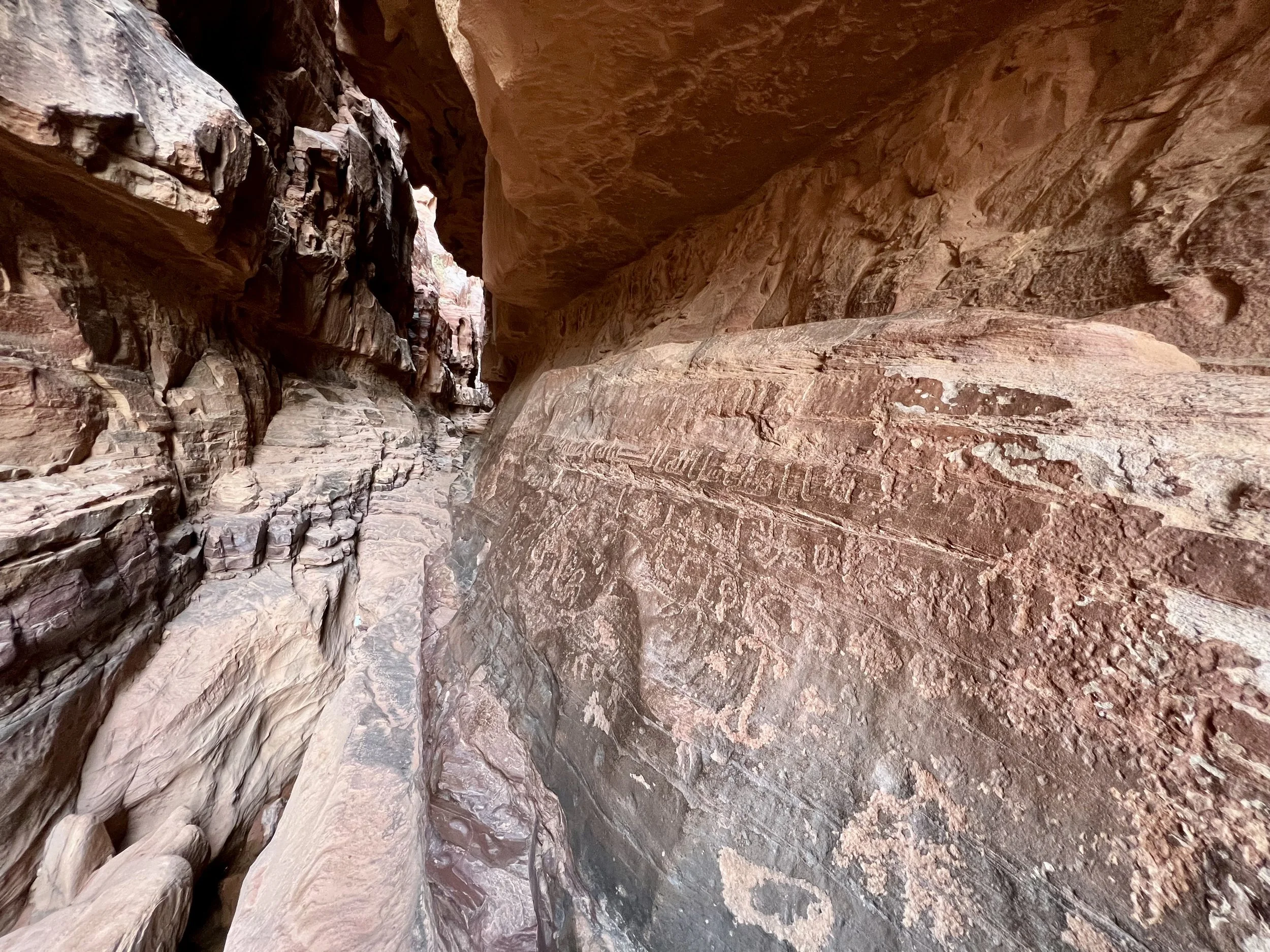
We also stopped to check out ancient rock inscriptions dating mainly from the Bronze Age through the Nabataean and early Islamic periods. These carvings were made by Nabataeans and earlier nomadic cultures, including Thamudic groups, with some dating back as far as the 8th century BCE. We saw names, animals, symbols, and everyday scenes etched directly into the stone. No glass case, just carvings naturally sheltered by the rock itself. The area contains tens of thousands of inscriptions and petroglyphs documenting around 12,000 years of human presence across roughly 720 km² of desert. It is a UNESCO World Heritage Site for both its exceptional desert landscape and its archaeological significance.
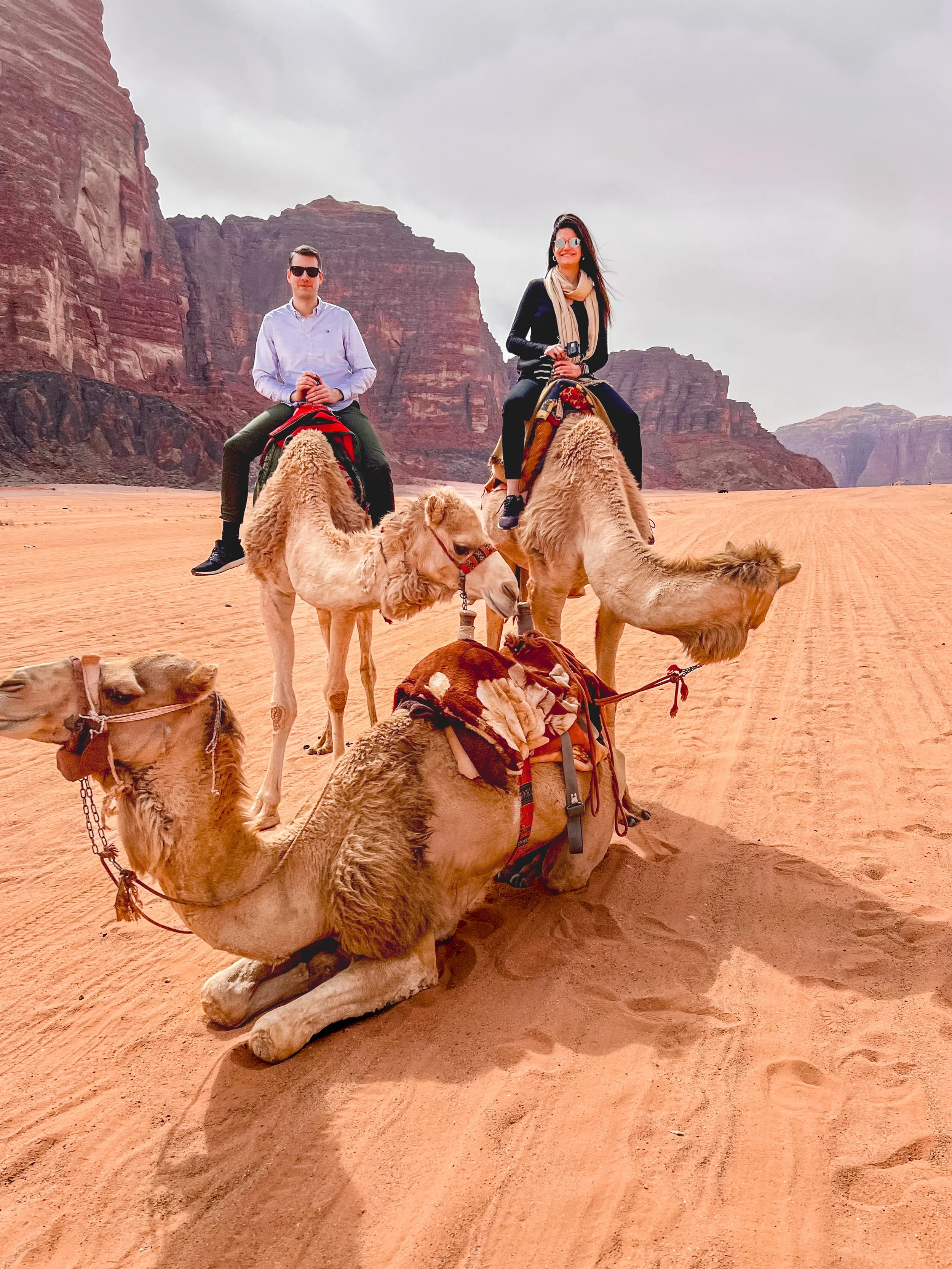
To finish the adventure, we did what might be the most iconic Wadi Rum exit ever: camel ride to the car. Absolutely no regrets. 10 out of 10 desert day. Wadi Rum really hit us with the full timeline: space vibes and ancient history. A real mix of Star Wars and National Geographic.
Day 3–4: Petra
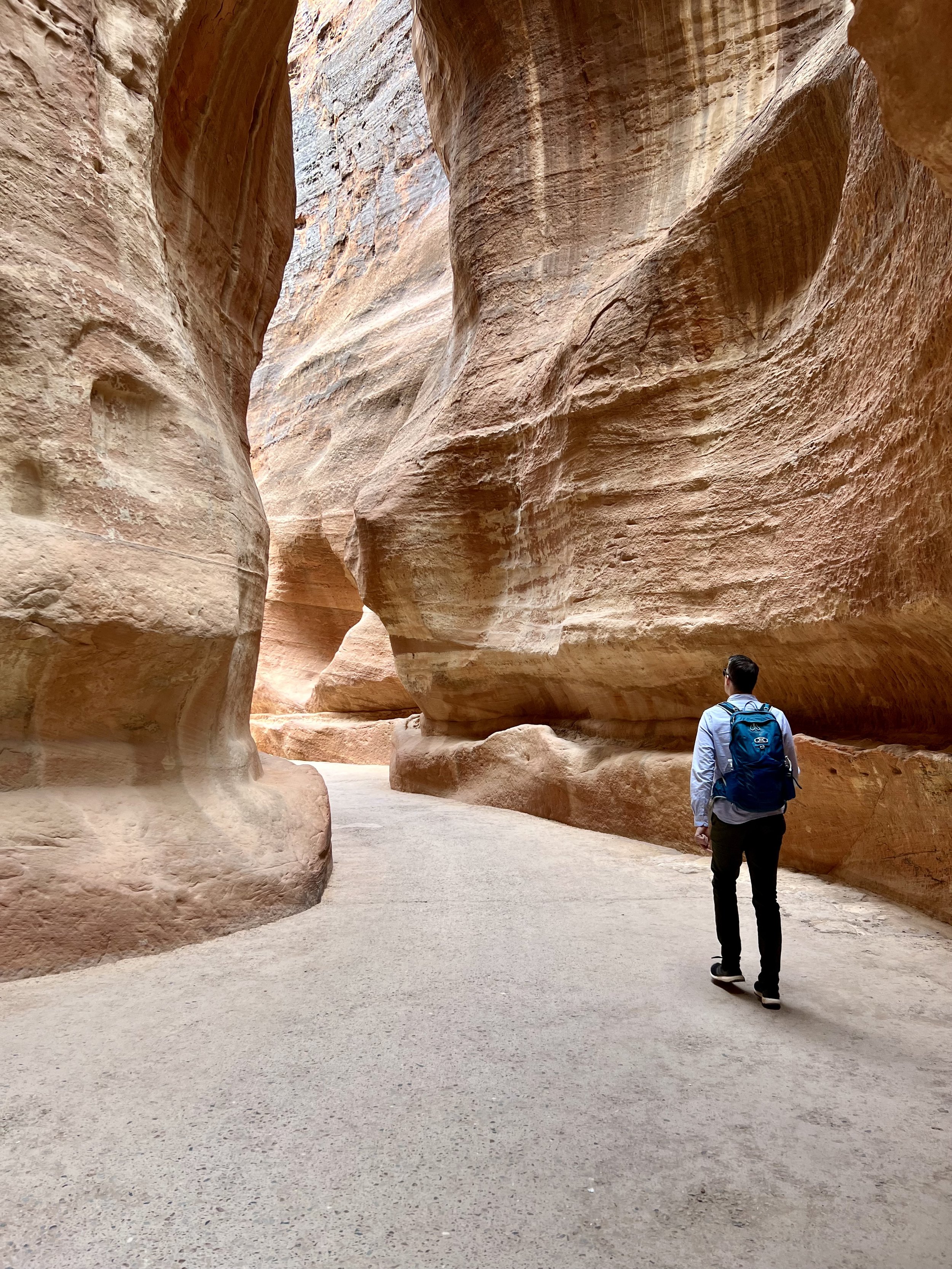
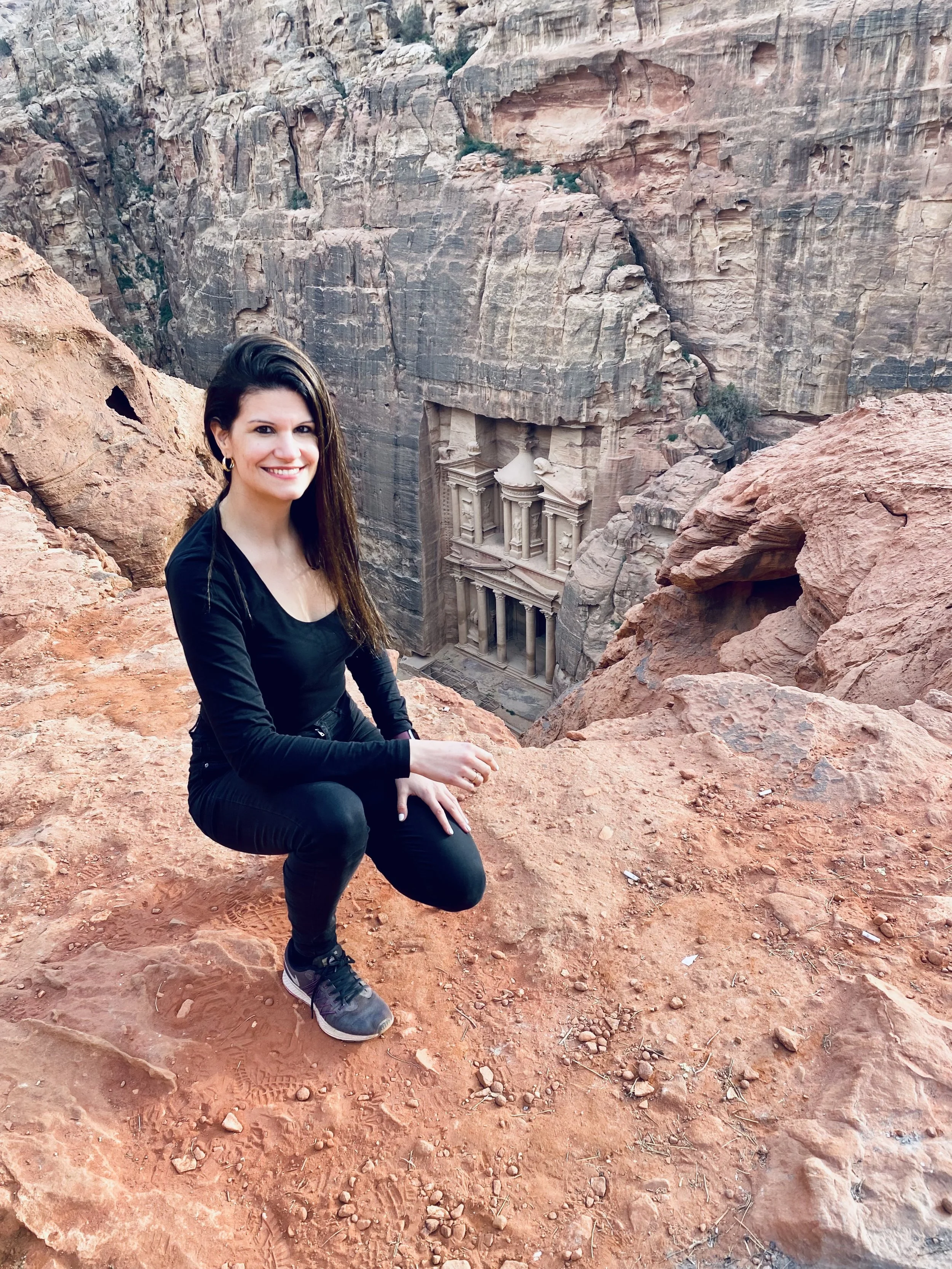
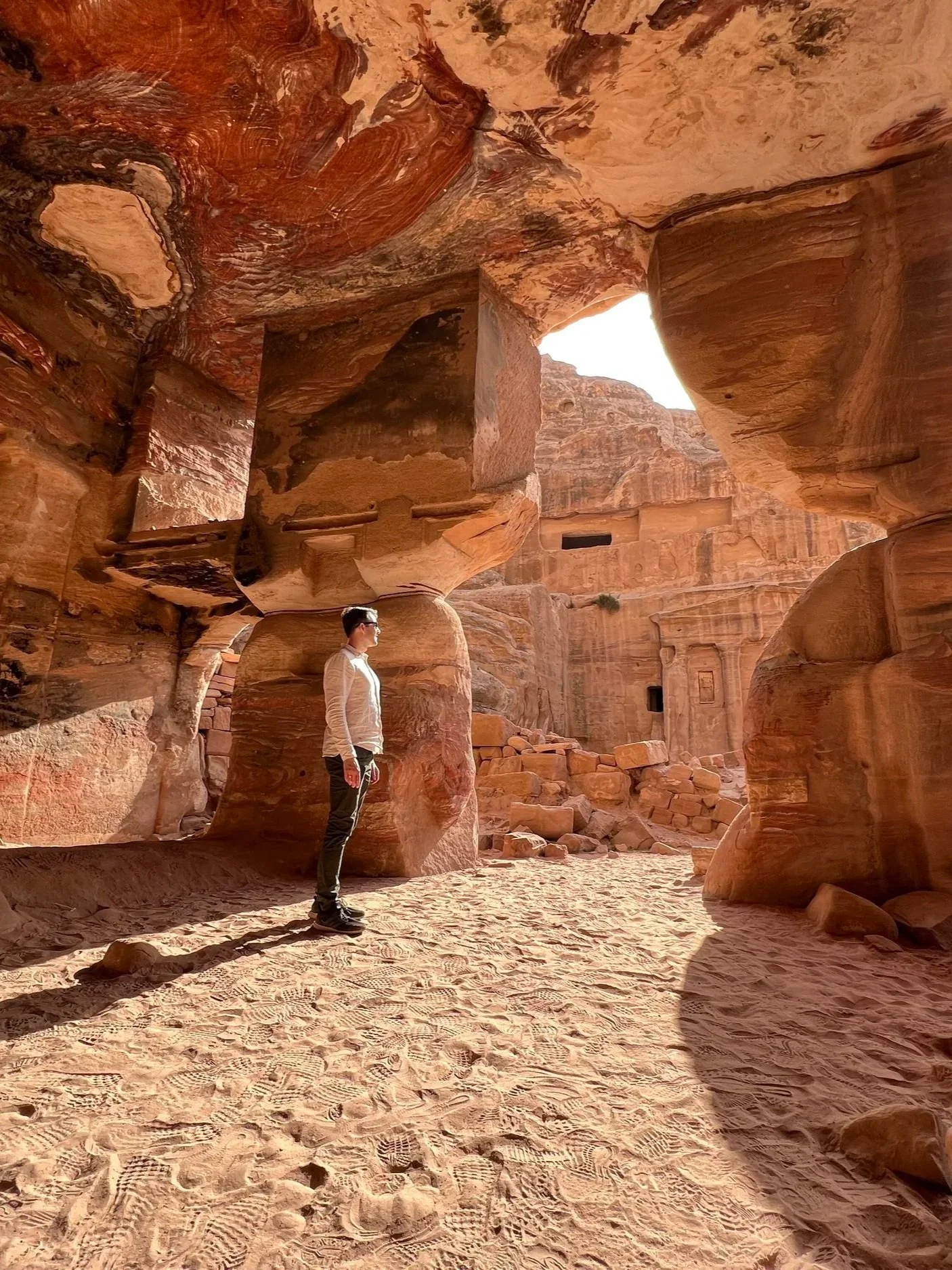
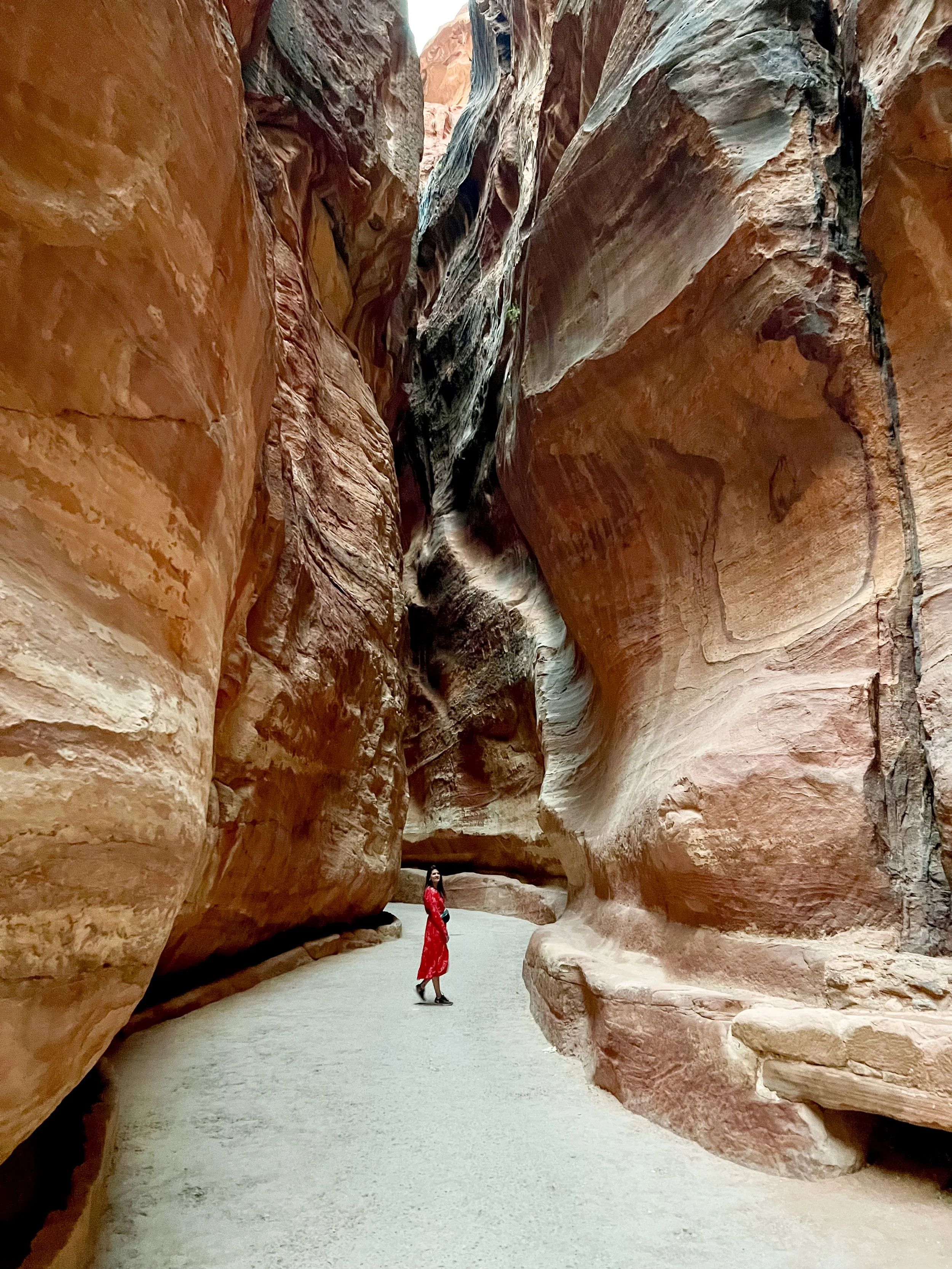
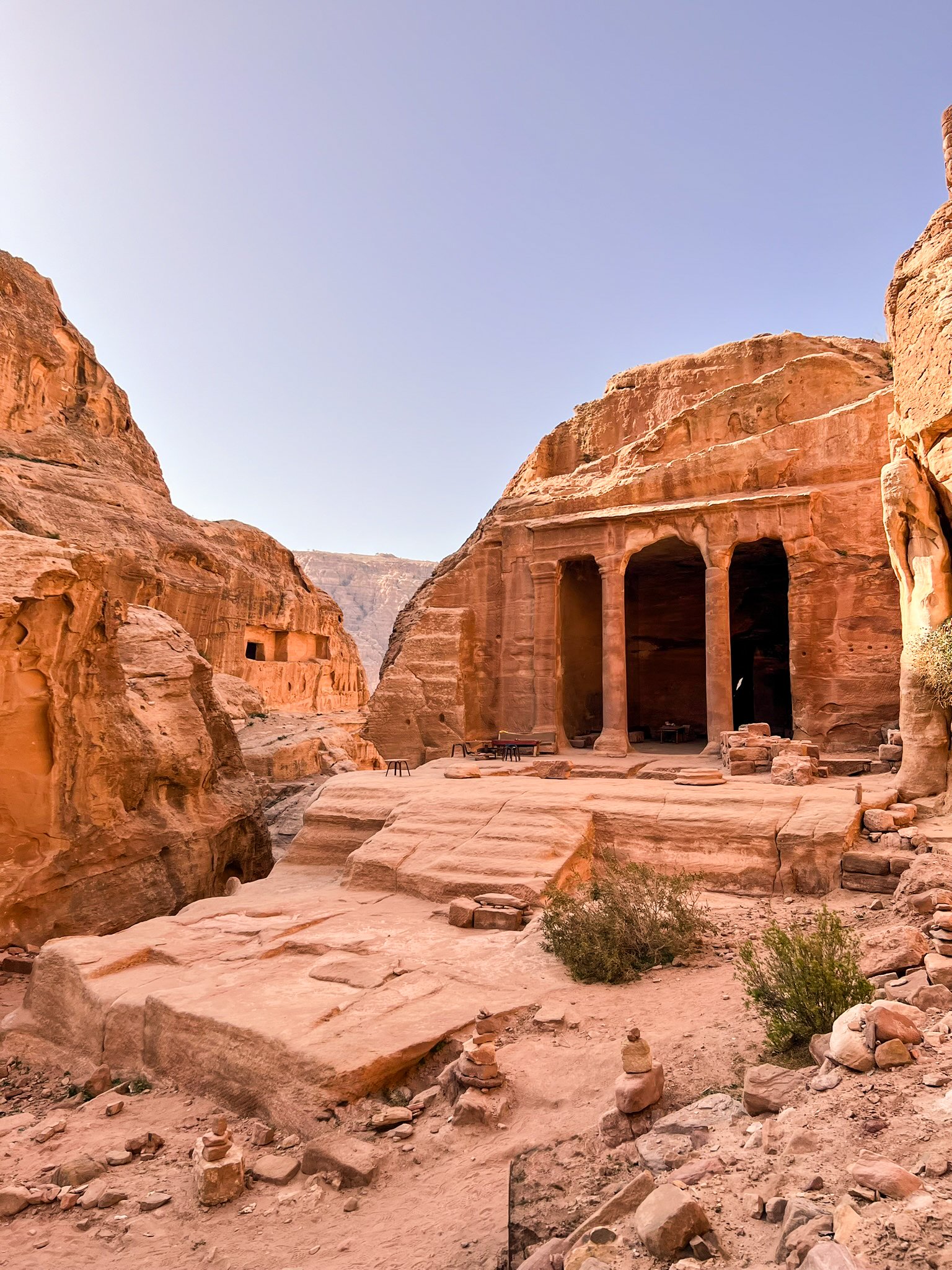
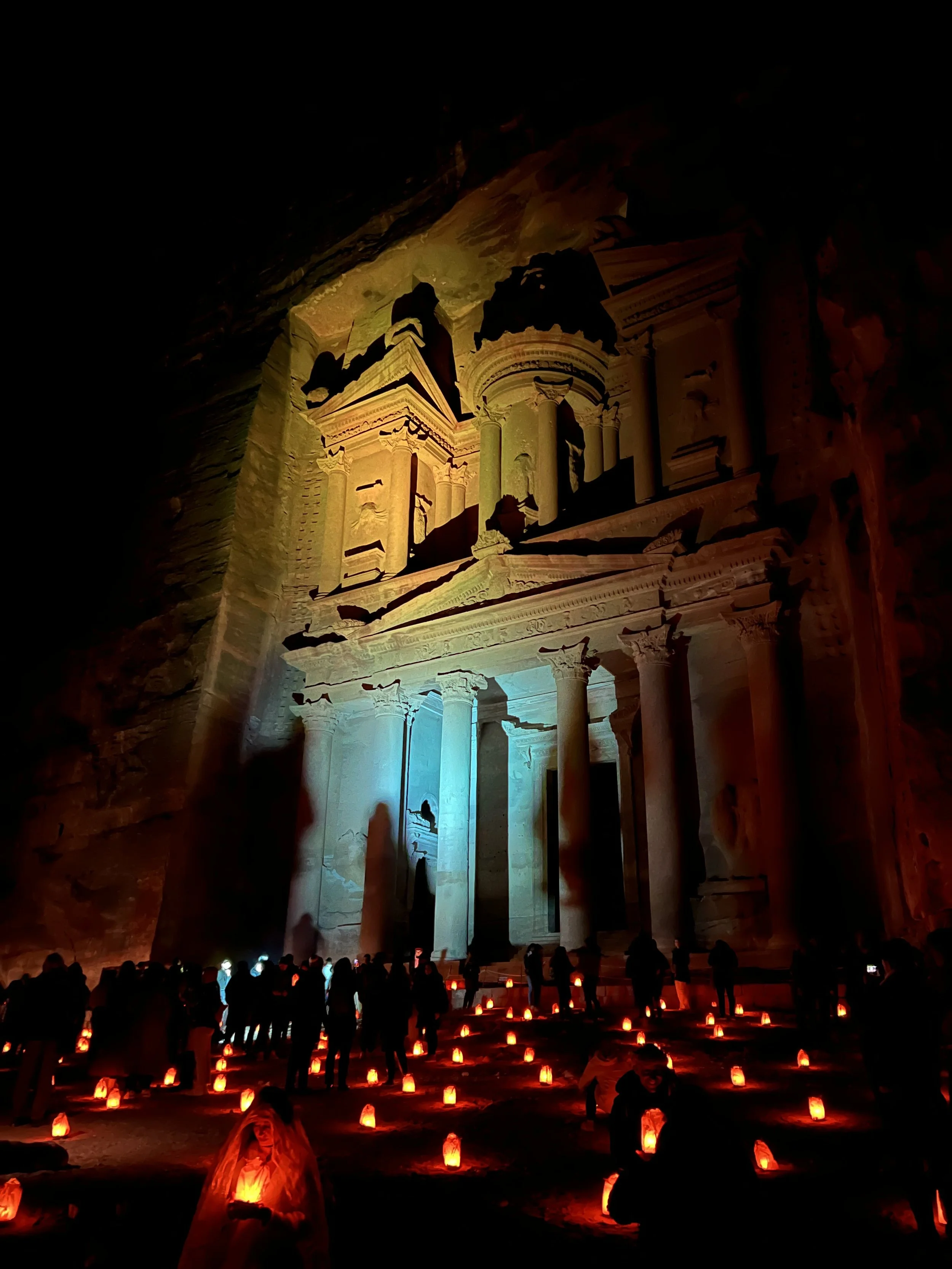
We arrived in Petra in the afternoon and joined the candlelit night walk through the Siq in complete silence until the Treasury appeared glowing in the dark. Pure magic. The next morning the Treasury felt crowded and chaotic, with people insisting we climb to the Indiana Jones viewpoint. Instead we took part of the Al Khubtha Trail, a quieter ascent behind the Royal Tombs. Its carved stairways reveal how the Nabataeans shaped circulation into the cliffs, guiding movement through terraces and natural ledges. The trail ends at a small tea house above the canyon, offering the same iconic view but with enough calm to study the façade, its scale, and its relationship to the gorge.
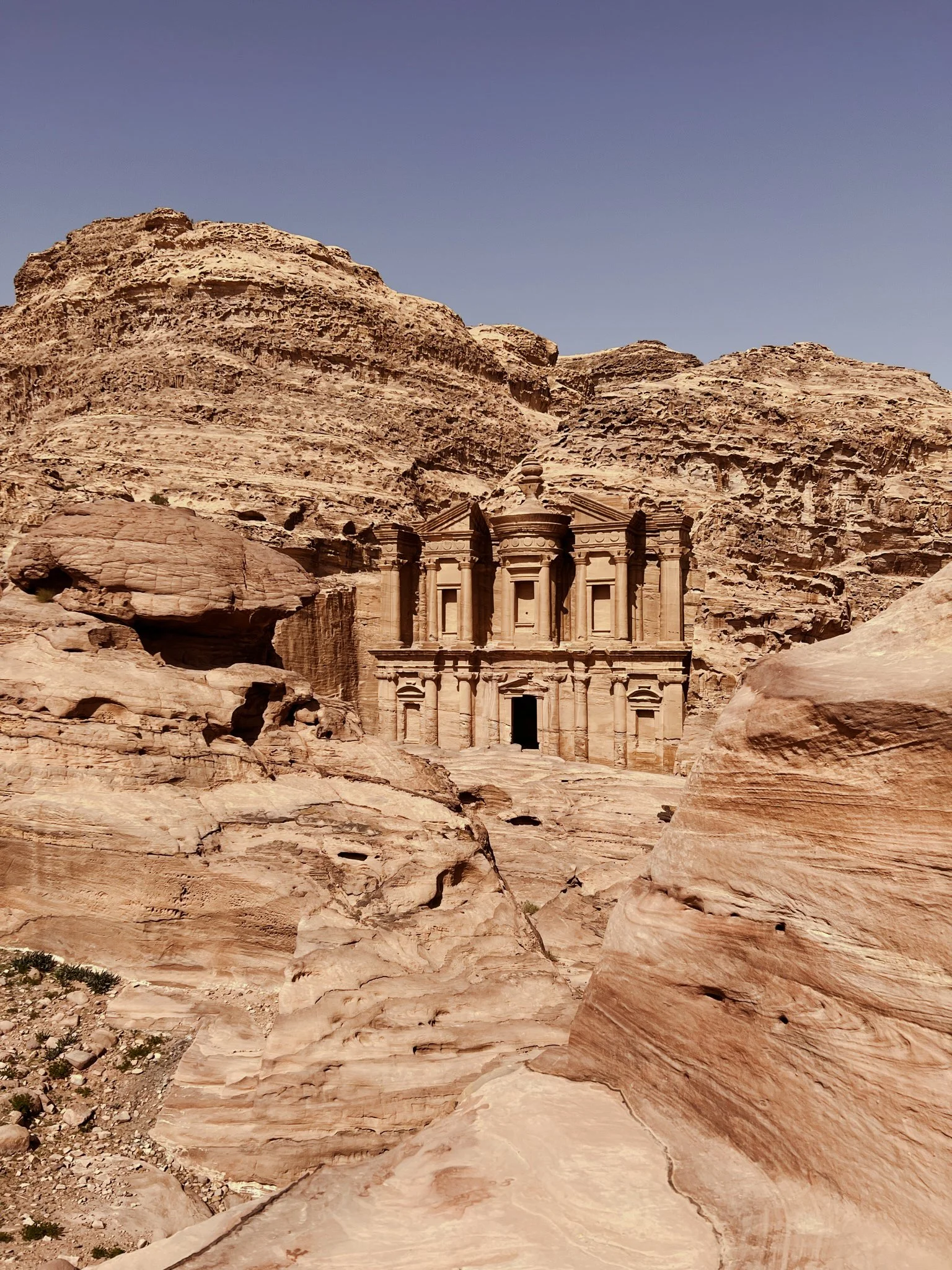
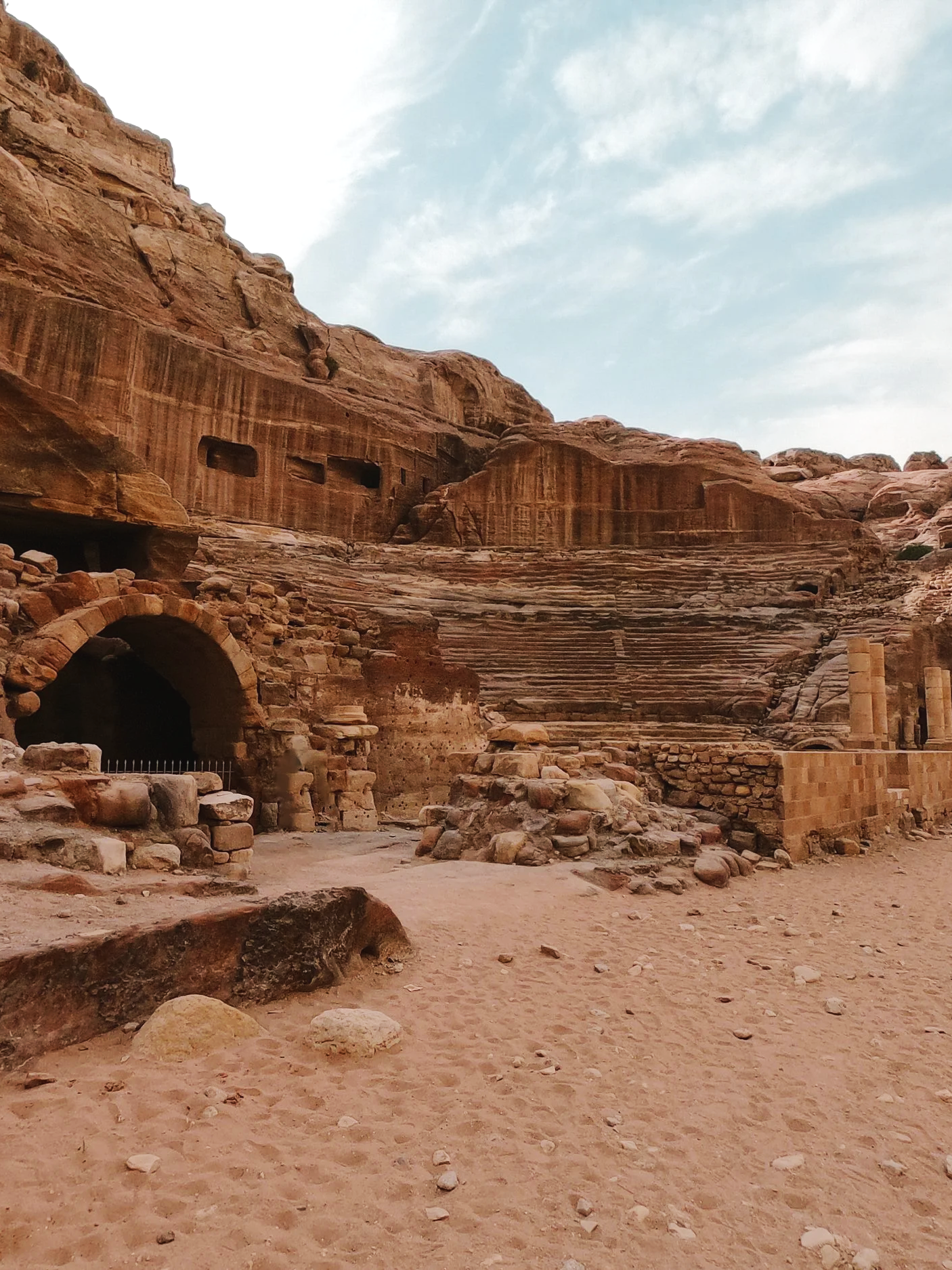
Quick backdrop before we go on. Petra reached its height between 3 BCE and 1 AD, when the Nabataeans, a wealthy Arab trading culture, carved an entire city out of sandstone, from façades to stairways to full water systems. The place merges local tradition with Greek and Roman influence. You enter through the Siq, a natural corridor created by a geological fault and shaped by ancient channels. The Treasury appears with crisp Corinthian details and a reveal that feels staged. The Street of Facades, the Theatre, the Royal Tombs, and the Colonnaded Street show the scale of the city. The Great Temple and Qasr al Bint reveal its planning and the Monastery rules its plateau. Petra is a UNESCO World Heritage Site and one of the New Seven Wonders of the World.
Sites you cannot miss: the Treasury, the Monastery, and the Great Temple.
Day 5: Dana Biosphere Reserve
We stopped at Dana hoping for a quick hike, but no. All trails require a guide and need to be booked months in advance. Even though we offered to pay on the spot, it was a hard no. Super frustrating, especially with brochures everywhere advertising hikes like you can just show up.
Views were nice, but overall? Mmm… Plan ahead or skip.
Day 6: Wadi Al Mujib Water Hike
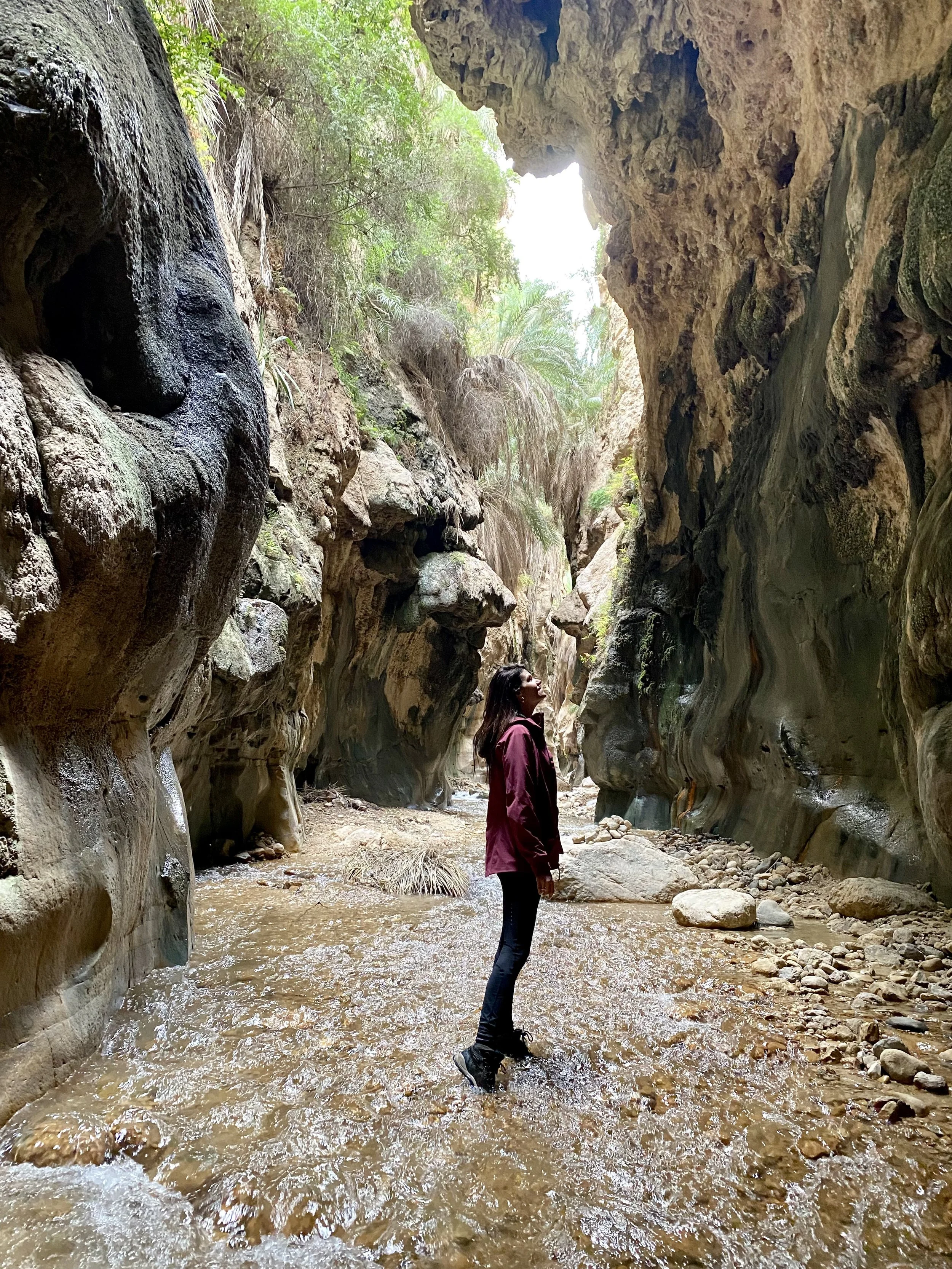
This was like nature’s version of a waterpark. You’re literally hiking in the water: climbing ropes, slipping around, falling a little (okay, a lot), and laughing the whole time. It’s messy, wet, and chaotic. However, it’s also one of the best things we did on the trip. Wadi Mujib cuts through the Mujib Biosphere Reserve, the lowest nature reserve in the world, reaching about 410 meters below sea level, where the canyon descends from the Jordanian plateau toward the Dead Sea. The reserve protects over 400 plant species and rare wildlife including the Nubian ibex and the Syrian wolf across roughly 212 km² of dramatic elevation change. Post hike we got a coffee overlooking the dramatic Mujib gorge. Chef’s kiss.
💡 Tip: Ditch the hiking shoes and rock those water shoes instead. Your feet will thank you.
-
Location: Mujib Biosphere Reserve
Length: ca. 2 km one way
Elevation change: minimal overall
Duration:
2 -3 hours round trip, depending on water level and paceSeason:
May to October only, closed in winter due to flash flood riskStart point:
Mujib Adventure Center, near the Dead Sea highwayDifficulty:
Moderate, physical due to water resistance, slippery rocks, and short scrambling sections
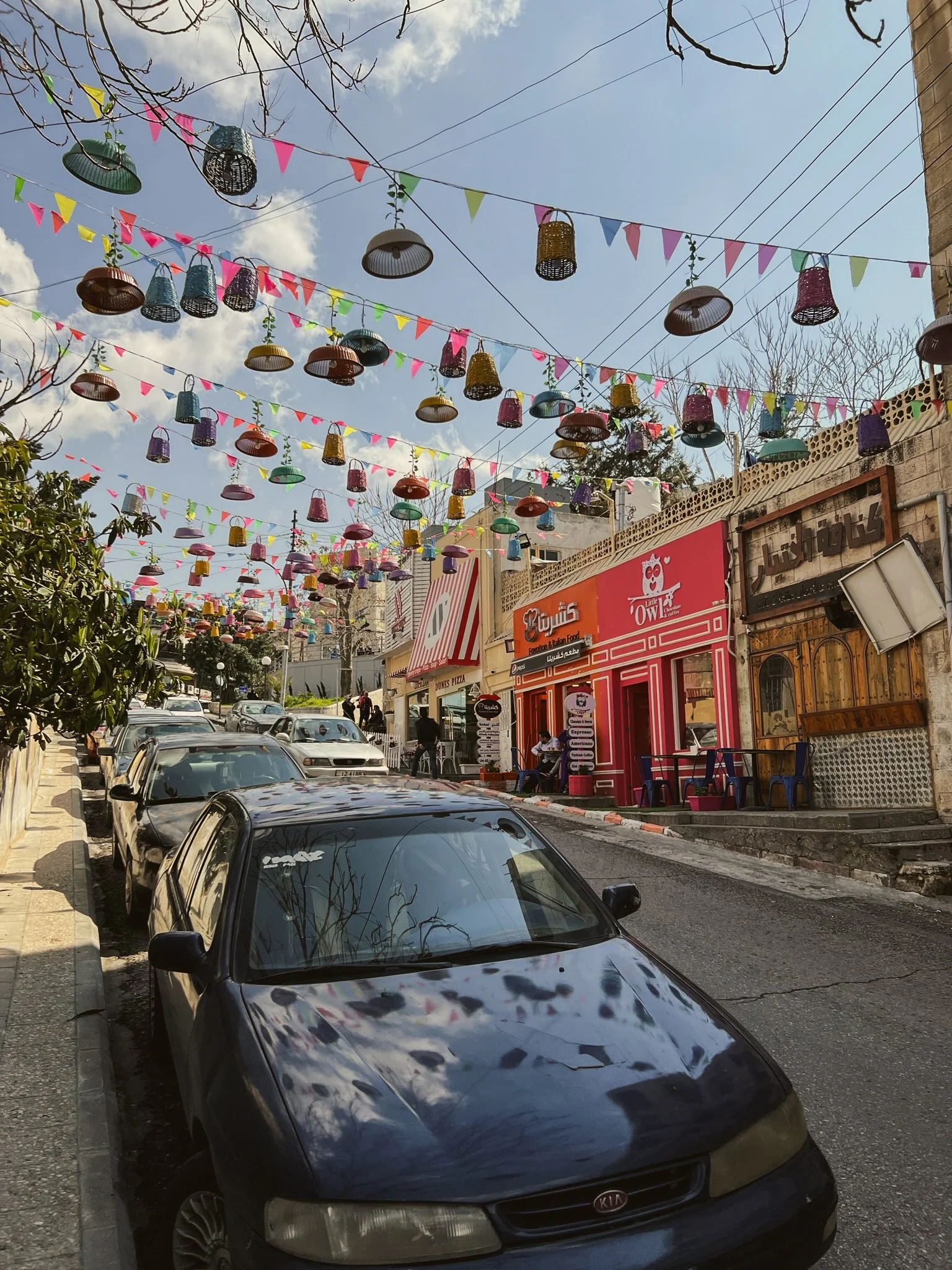
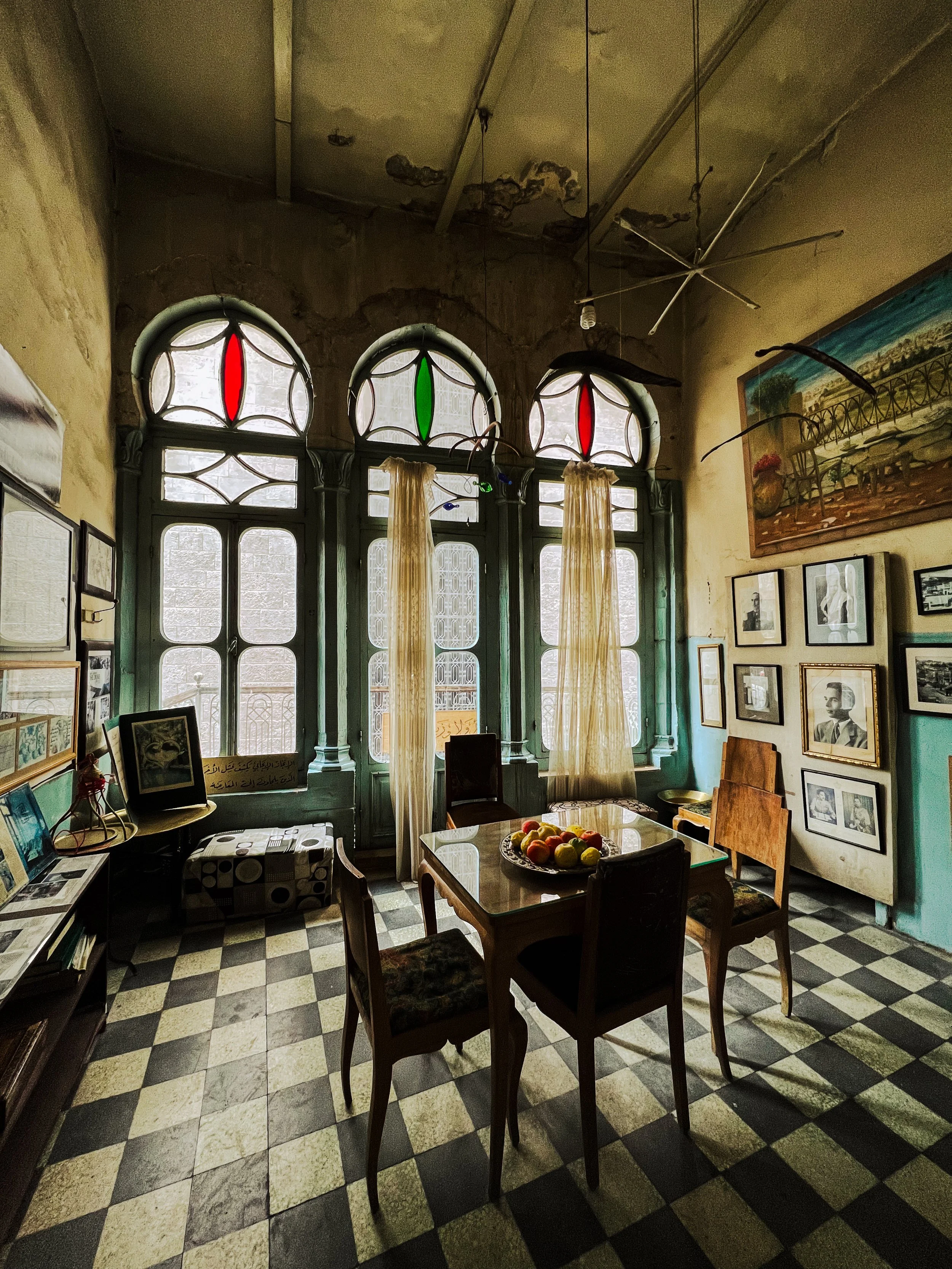
Day 7–8: Amman
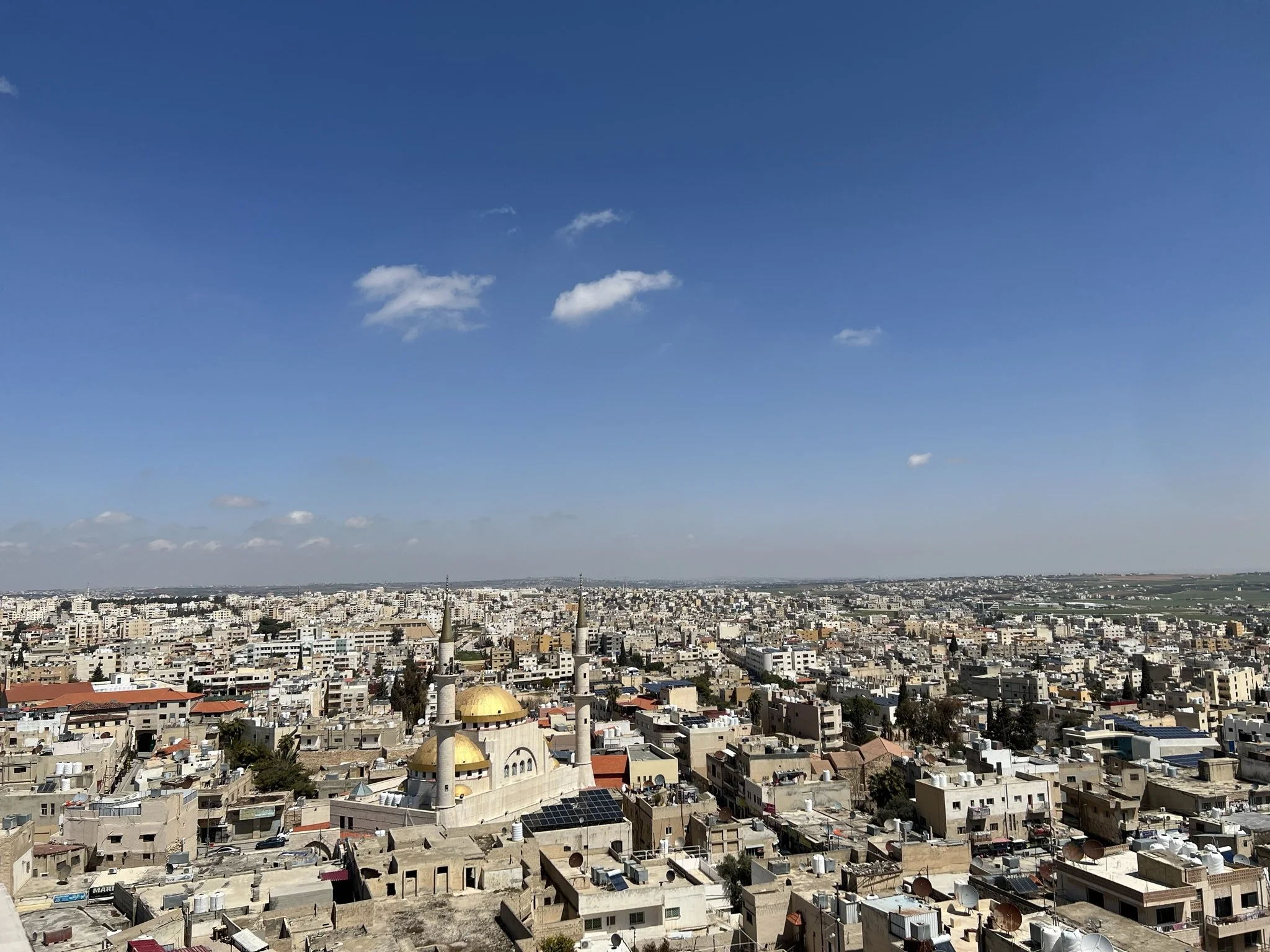
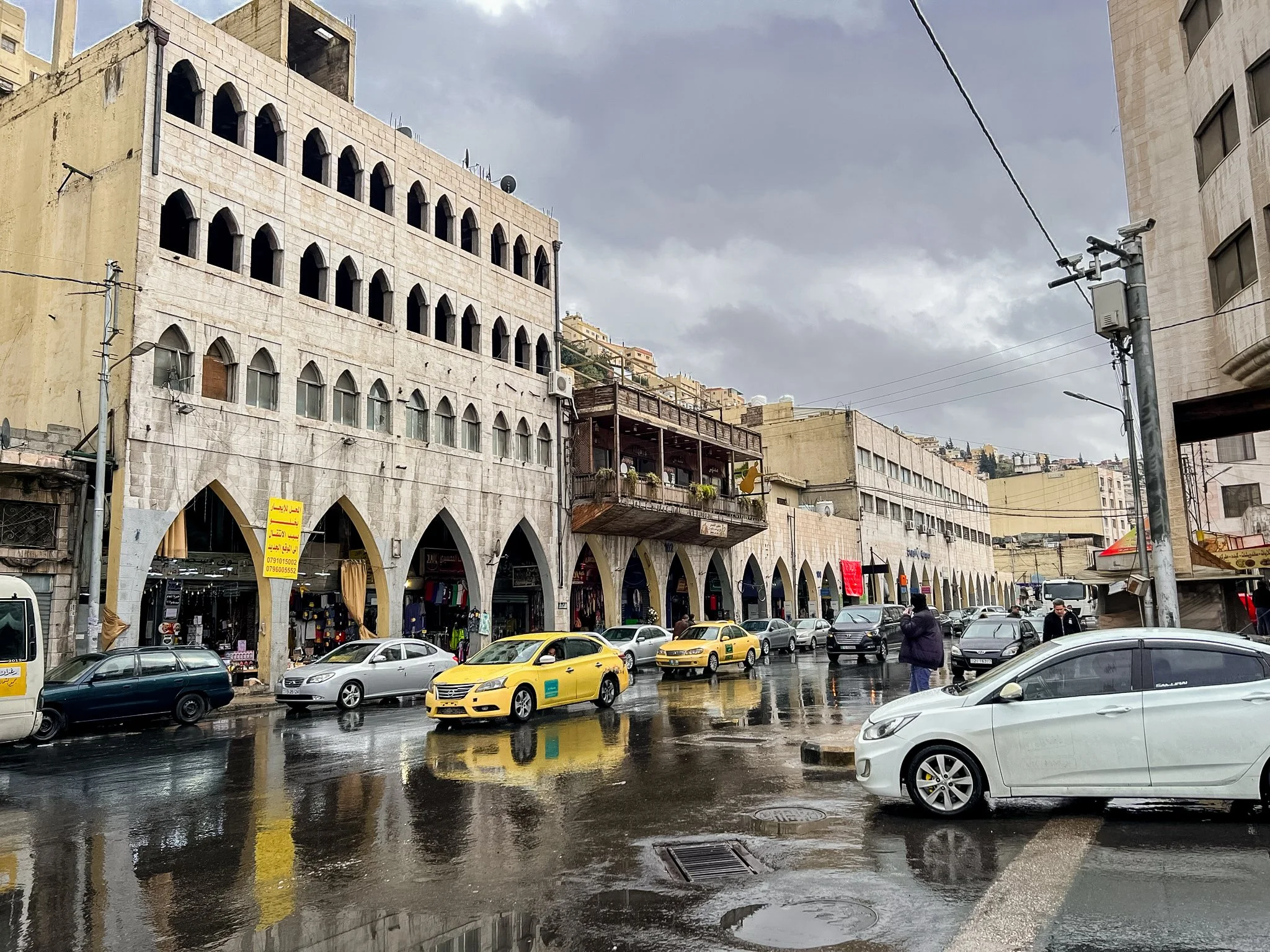
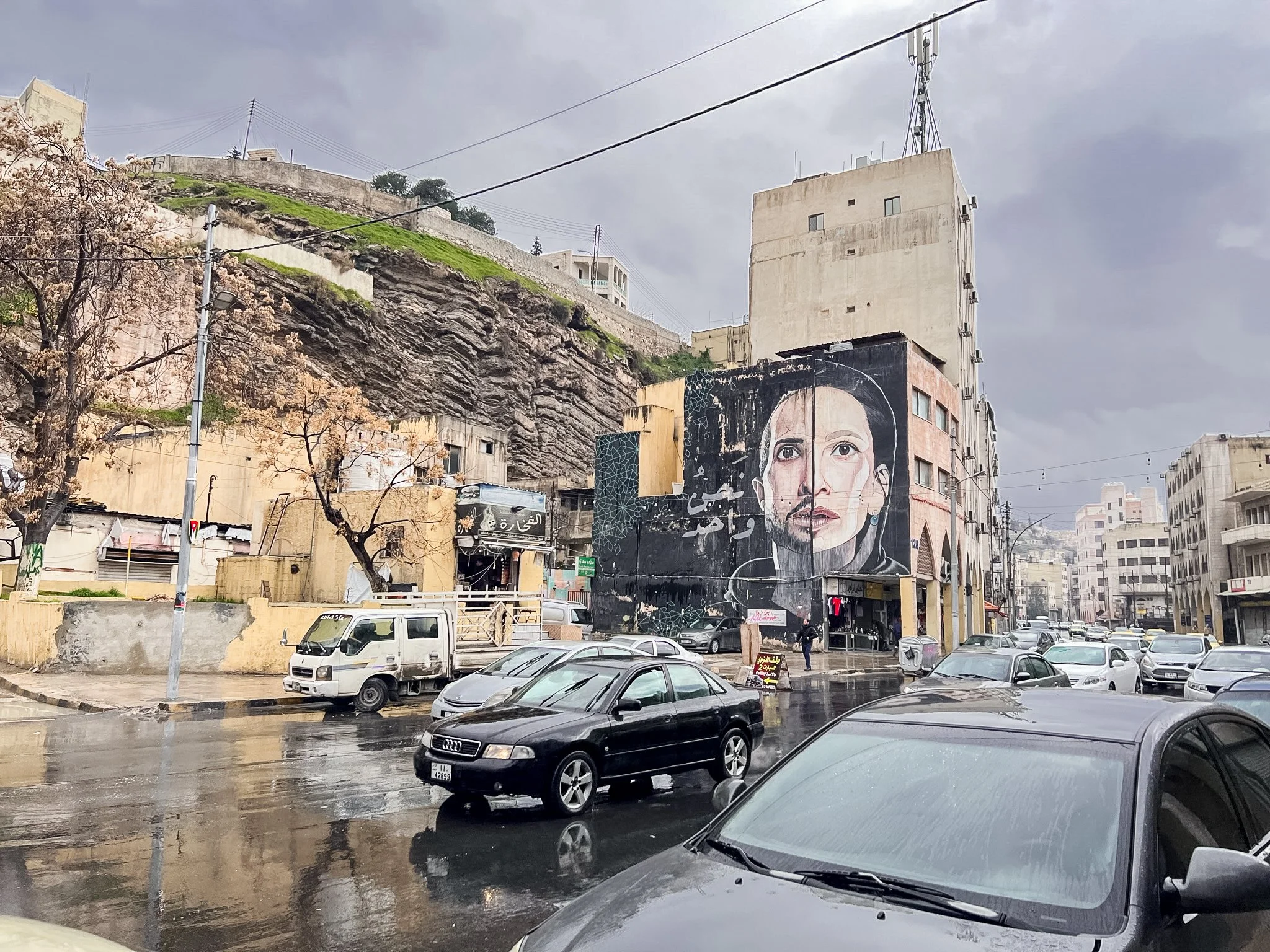
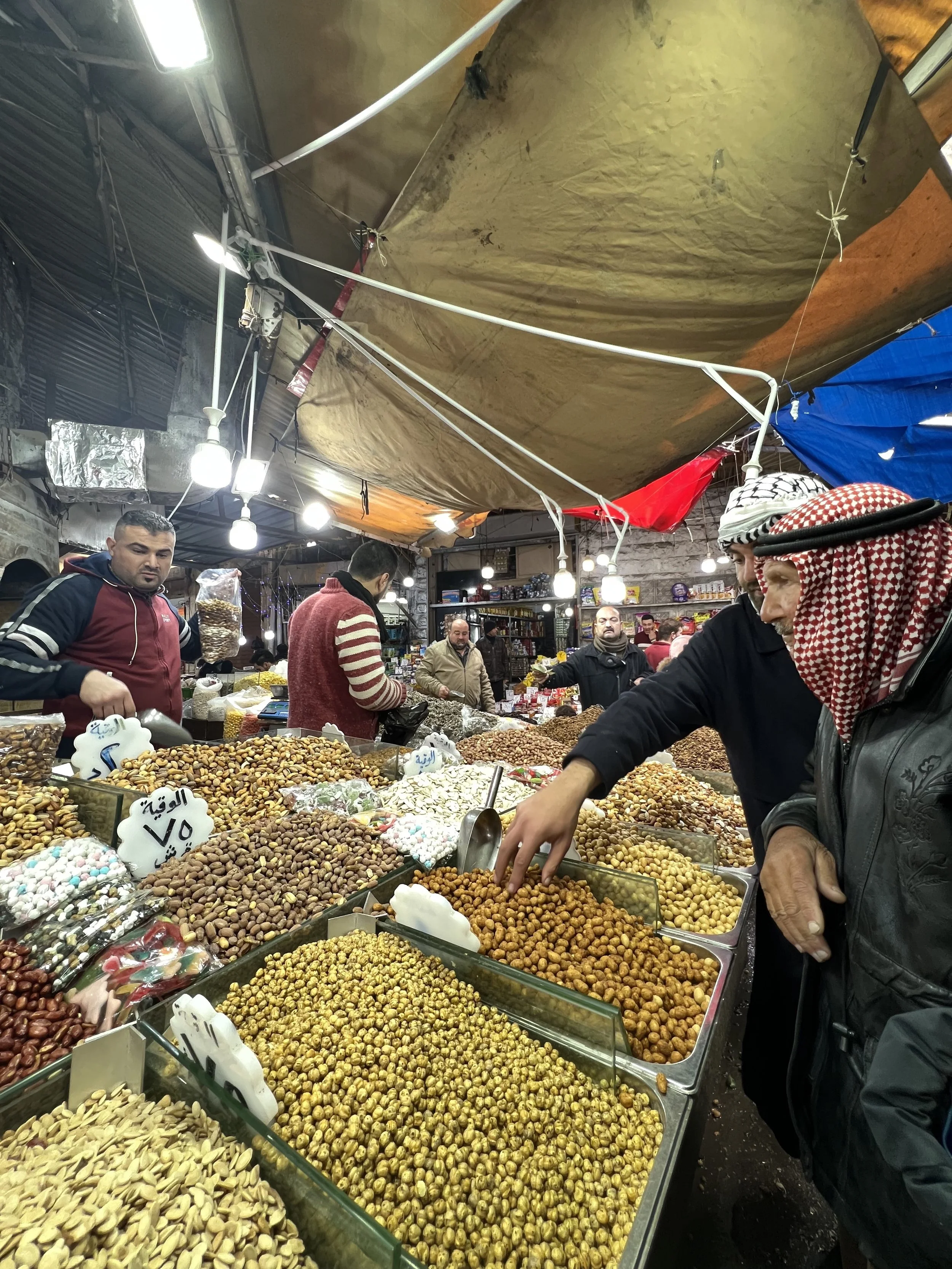
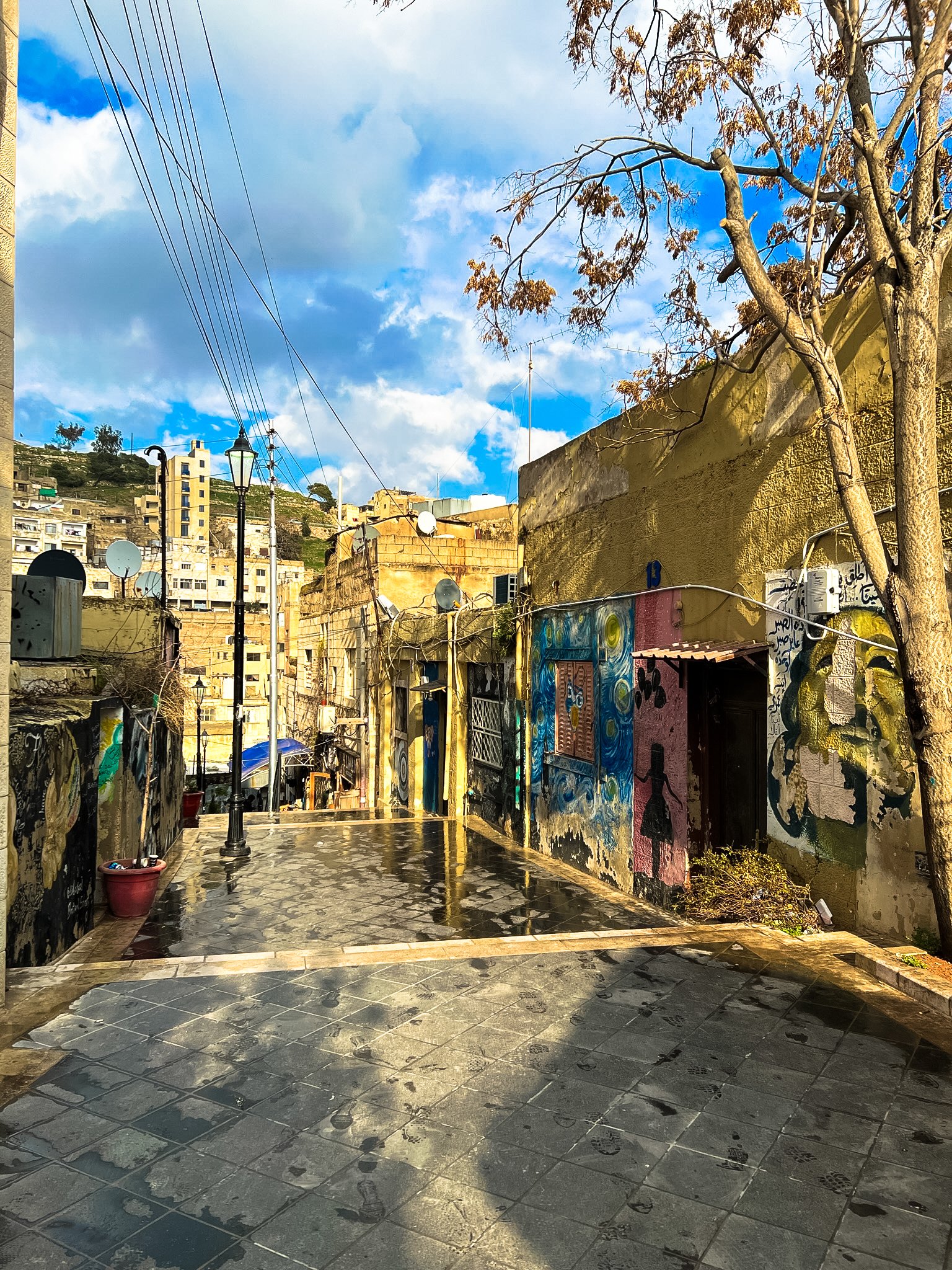
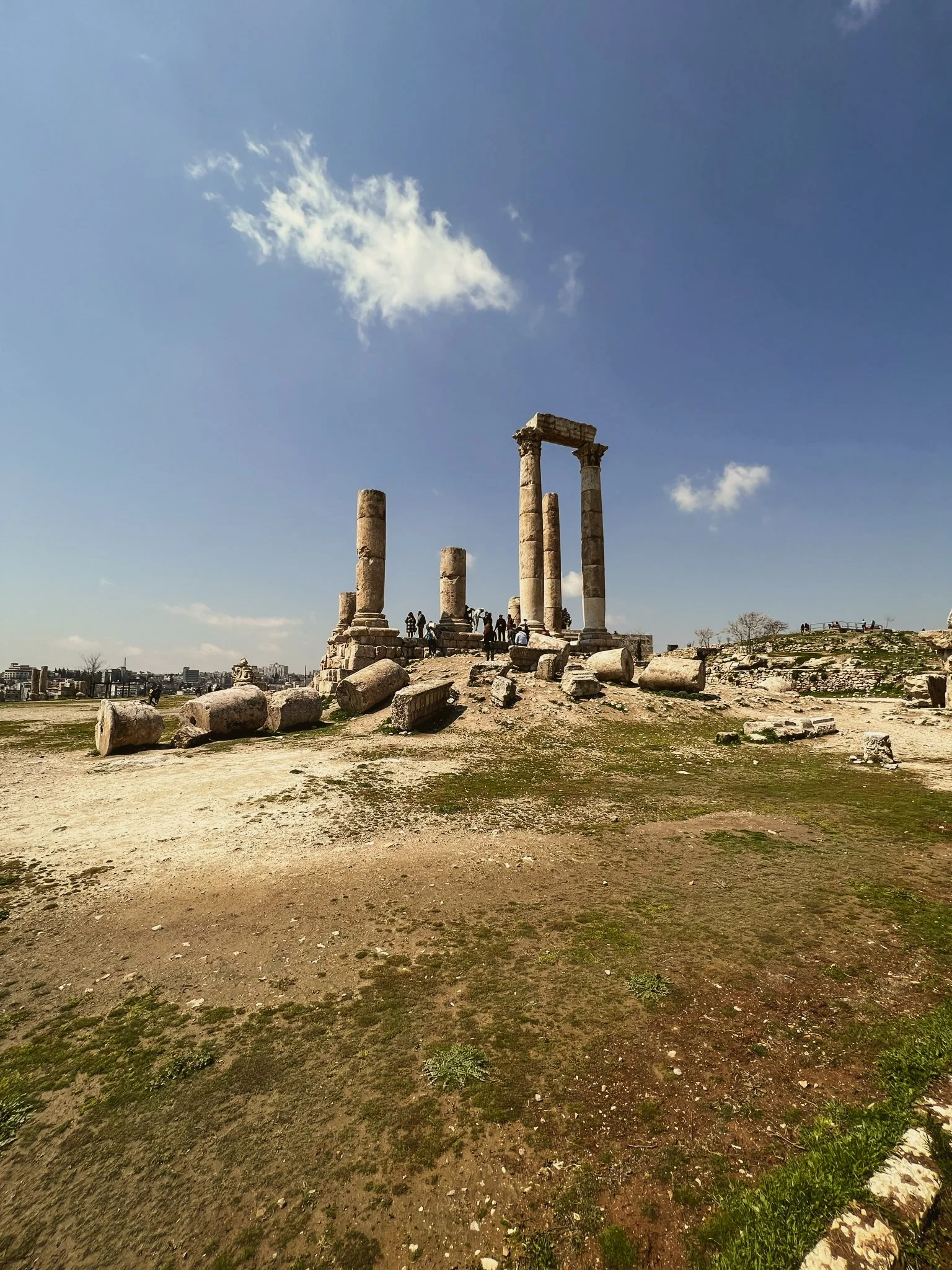
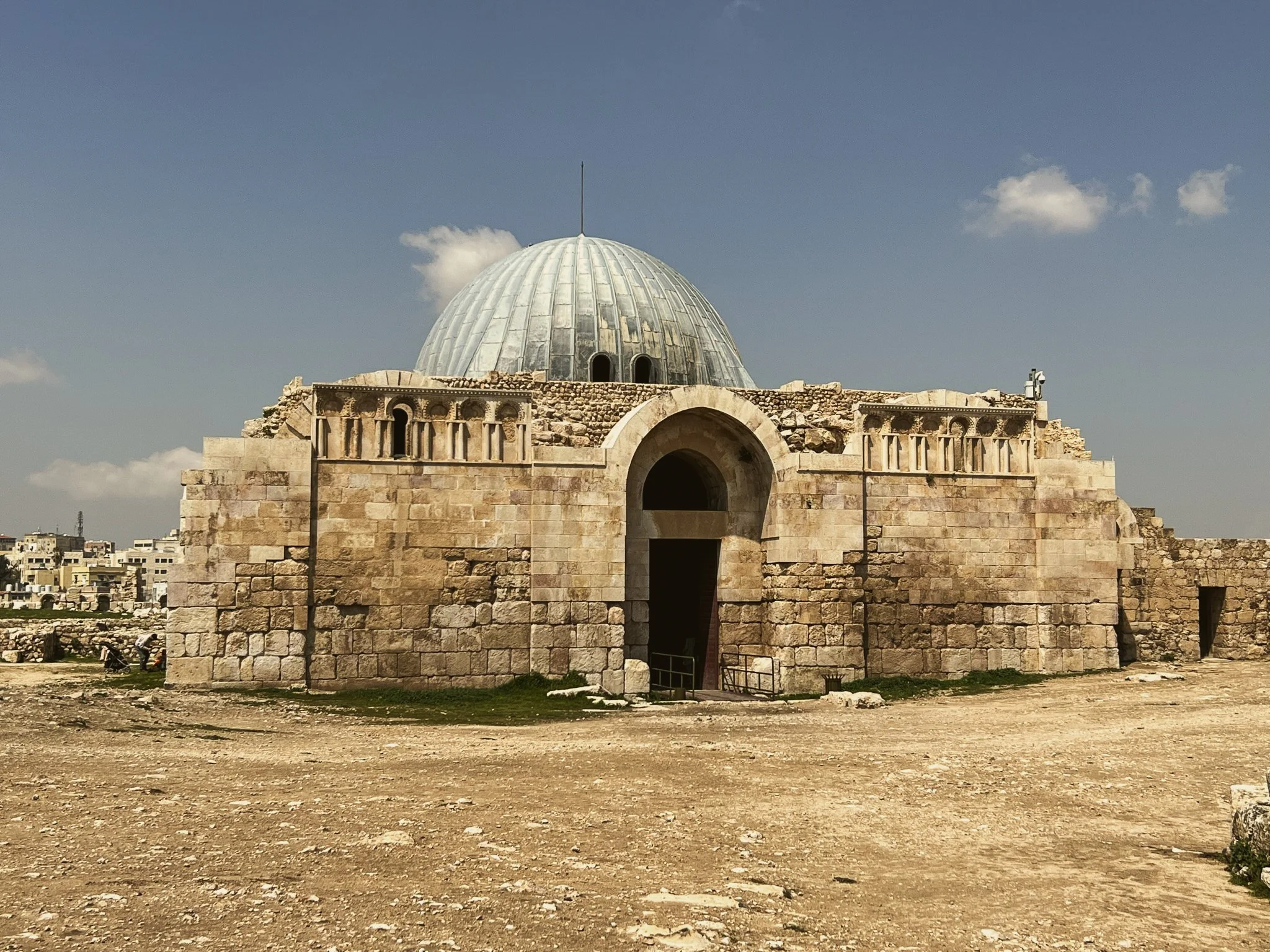
We made it to the capital and started with a free walking tour to get our bearings. Roman ruins, city views, street art, and lots of local insight. We highly recommend it if you want to actually understand what you are looking at. Amman sits on 19 hills, originally seven in ancient times, and has been continuously inhabited since at least around 7250 BCE, making it one of the world’s oldest continuously inhabited cities. The Roman Theatre downtown dates to the 2nd century CE, when the city was known as Philadelphia, one of the cities of the Decapolis, and it seats around 6,000 spectators carved into the hillside.
Next day was freestyle. Explored on our own, tried random cafés, got lost in back alleys, found cute spots, and definitely ate more falafel than necessary. Amman’s not love at first sight, but give it a day and it grows on you.
Day 9: Madaba & Desert Castles
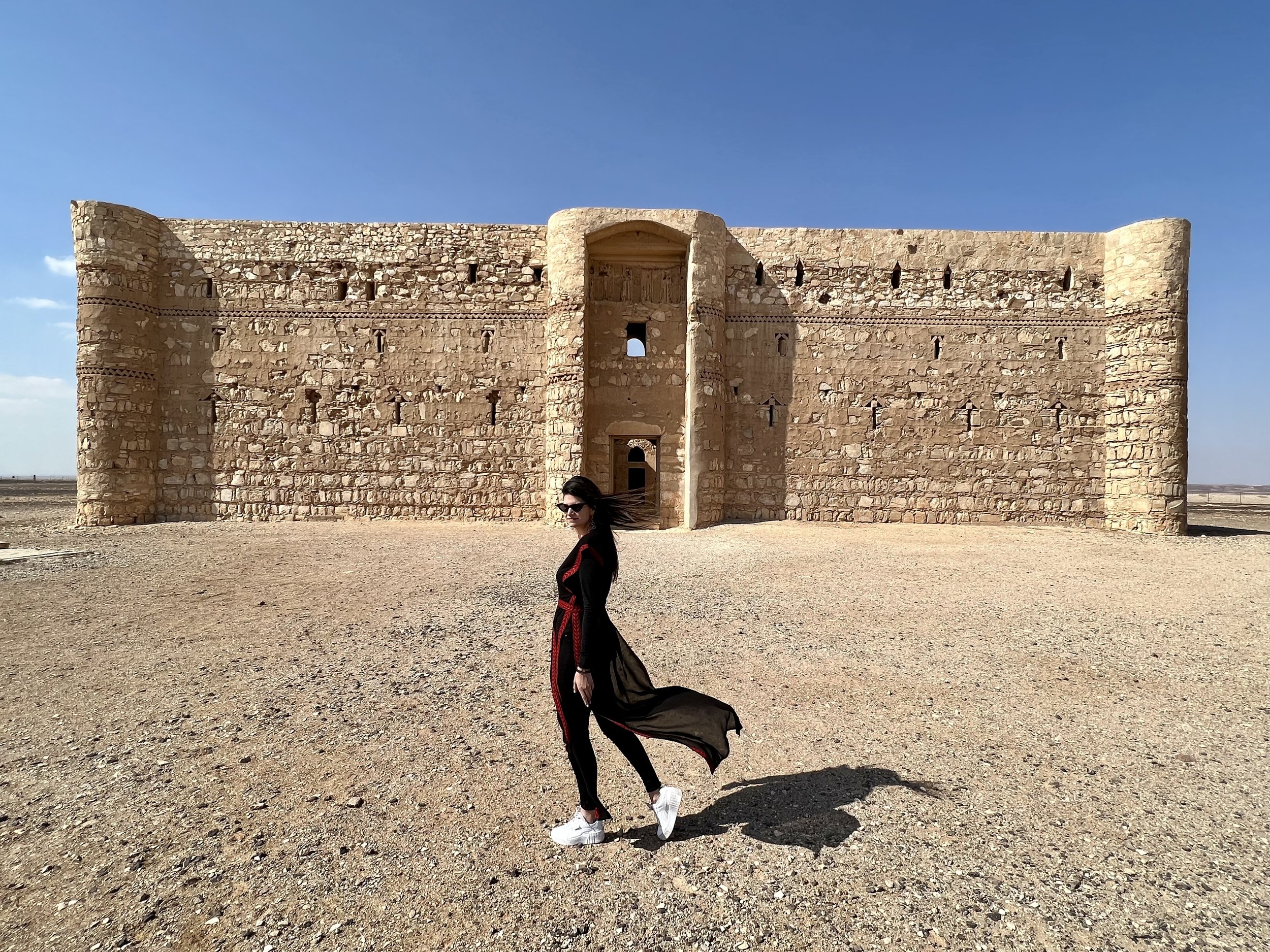
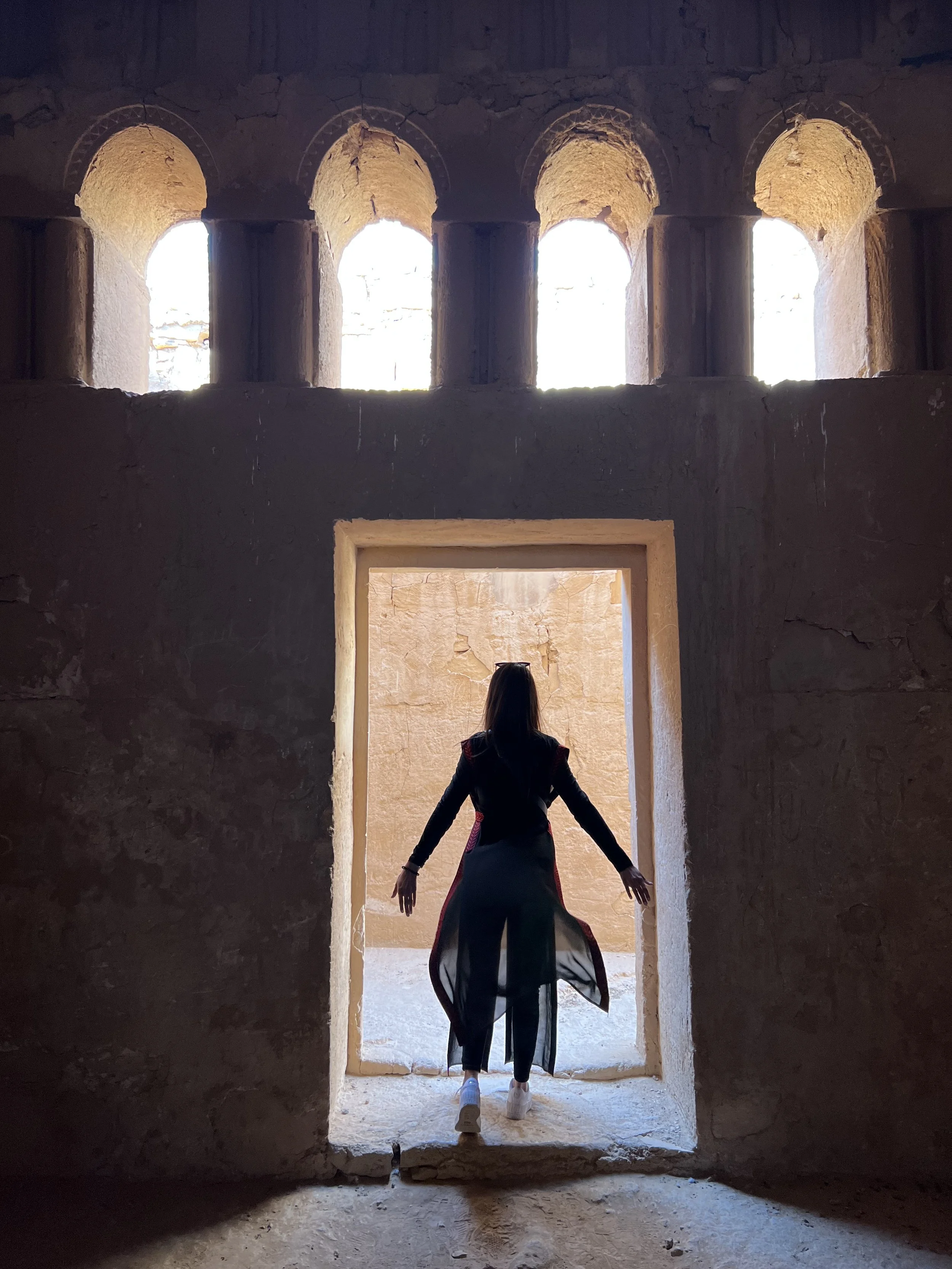
Madaba preserves some of the ancient world’s most exceptional mosaics. We headed out to the desert castles scattered in the middle of nowhere. Qasr Kharana rises alone in the eastern desert, built around 710 CE, with massive limestone and basalt walls reaching roughly 15 to 17 meters high. Inside, about 60 rooms across two floors surround a central courtyard. Despite its fortress like appearance with decorative arrow slits, it likely served as a meeting place for elites rather than a military structure, blending Roman, Byzantine, and early Islamic architectural elements.
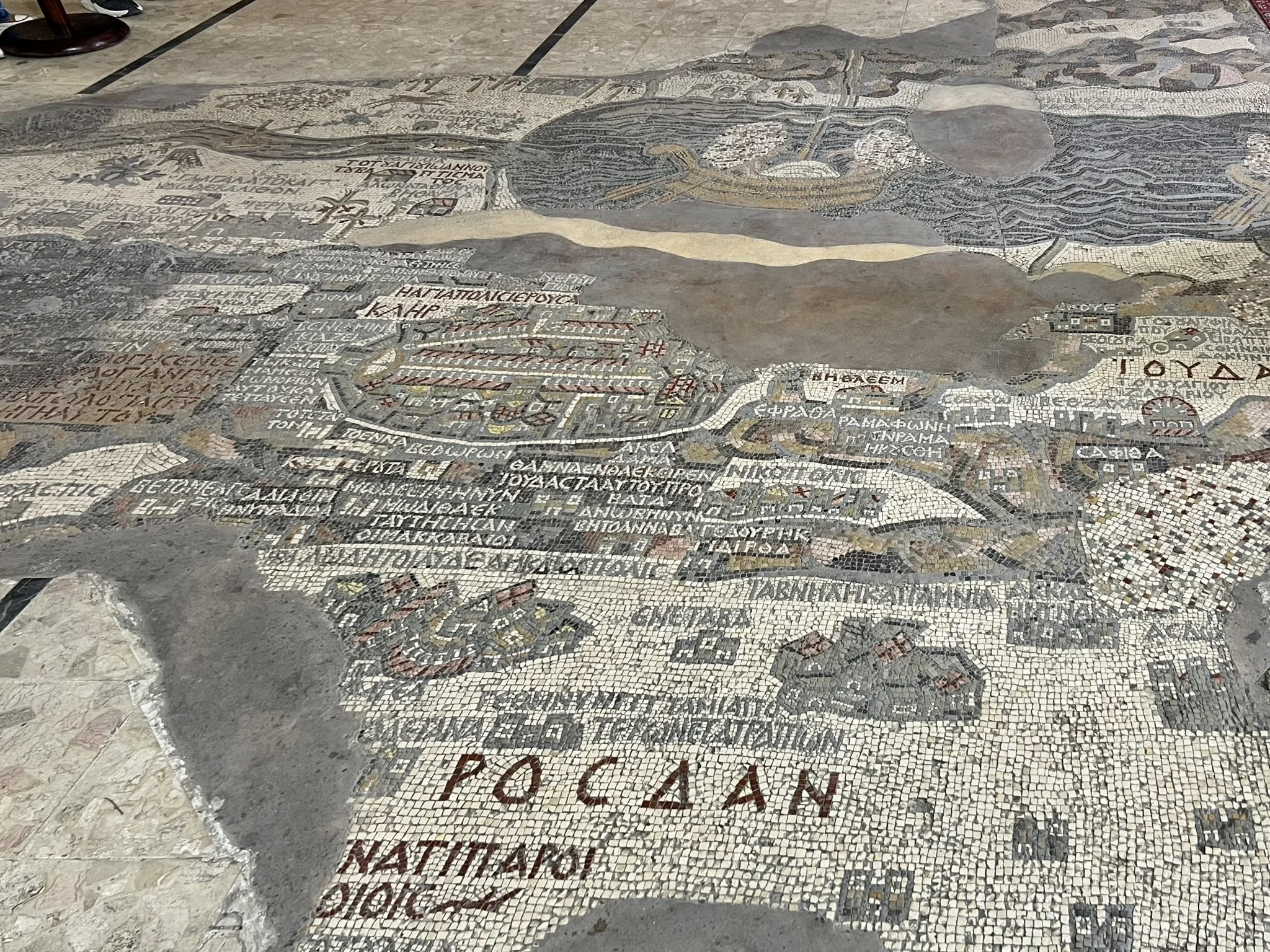
We visited St. George's Church to see the 6th century mosaic map, the oldest surviving cartographic depiction of the Holy Land. Originally composed of over two million tesserae and covering roughly 94 m², it shows Jerusalem, the Dead Sea, and the Nile Delta with remarkable geographic awareness rather than strict modern accuracy.
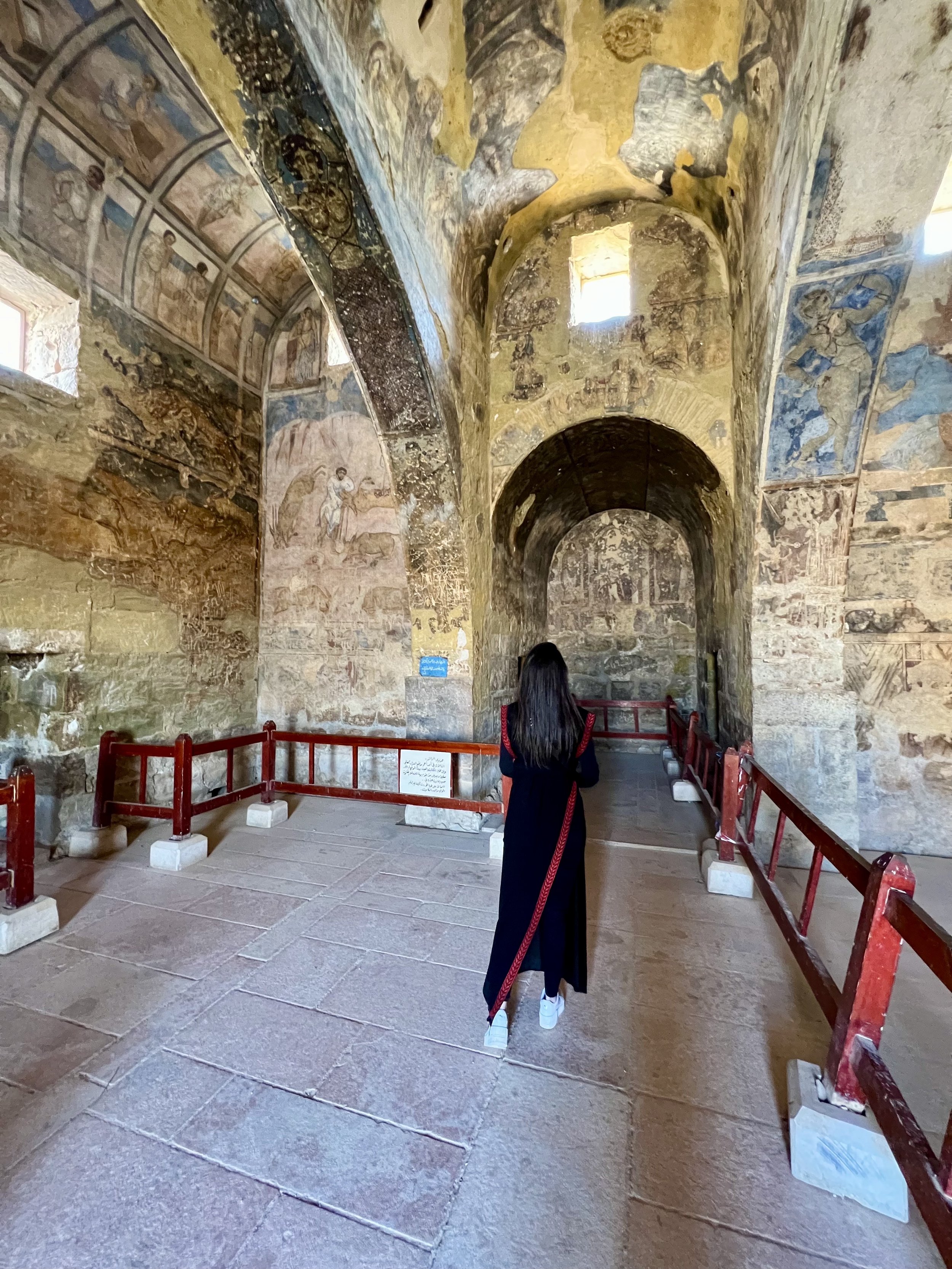
Then Qasr Amra, a UNESCO World Heritage Site that completely surprised us. These desert castles date mainly from the 7th and 8th centuries CE under the Umayyad Caliphate and served as hunting lodges, bath complexes, and leisure or agricultural estates linked to seasonal movement and displays of power, rather than simple caravan stations. Qasr Amra is a small bathhouse complex from the early 8th century containing some of the best preserved early Islamic frescoes. The vaulted ceilings and walls are covered with figurative paintings showing bathing scenes, hunting imagery, zodiac symbols, and portraits of ruling figures. The intimate scale and vivid colors make it feel almost contemporary despite being over 1,300 years old.
Day 10: Dead Sea
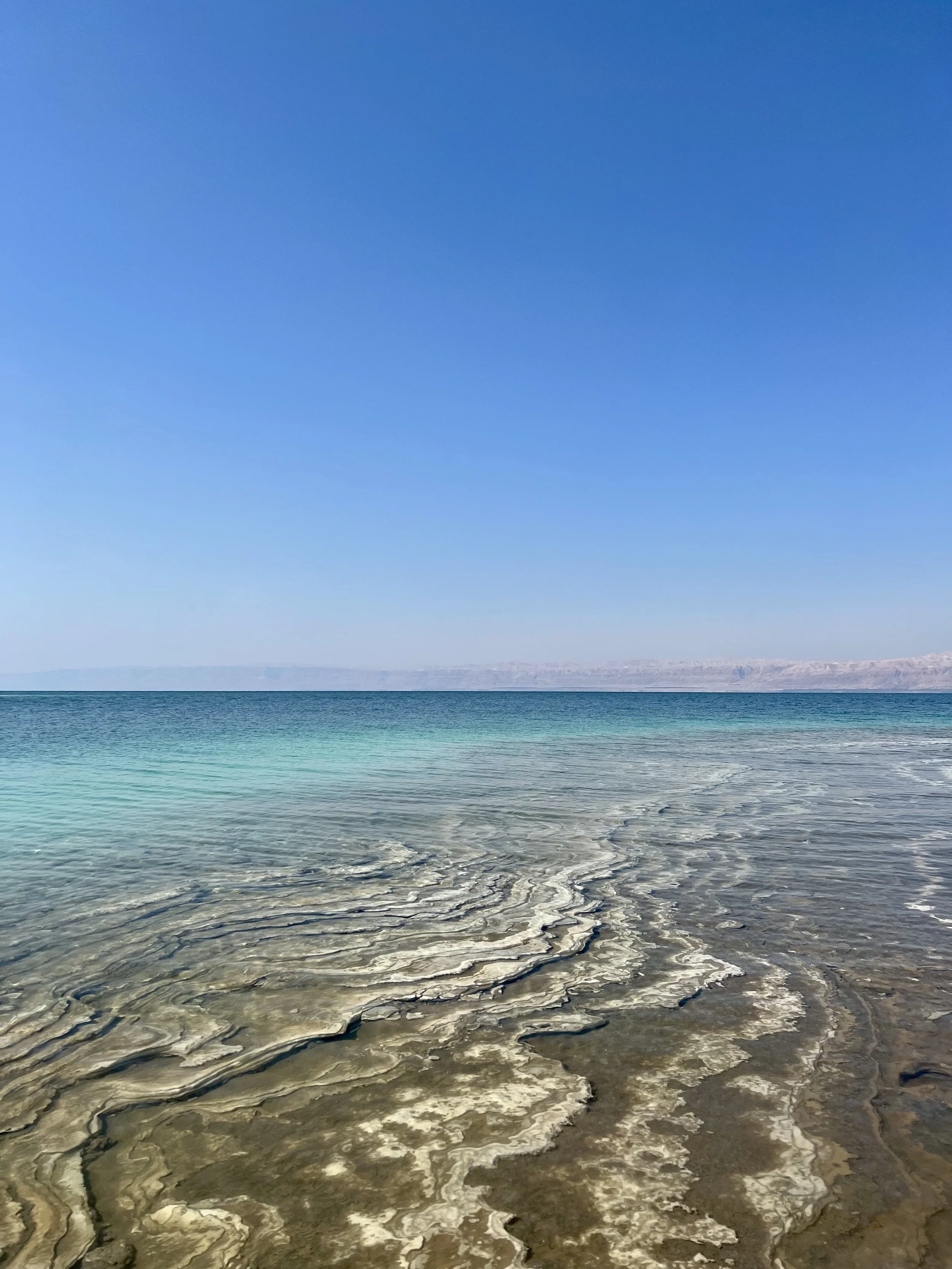
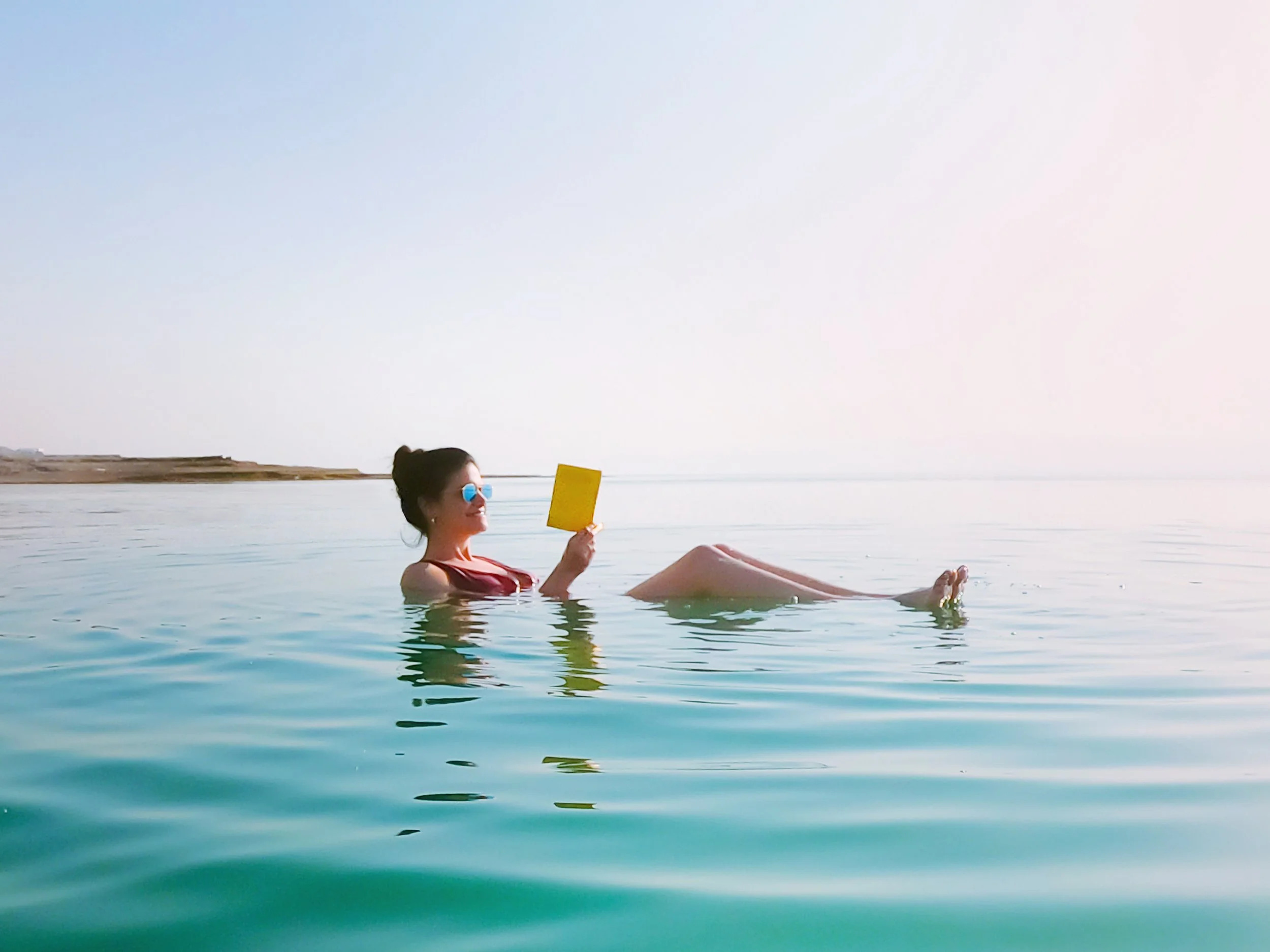
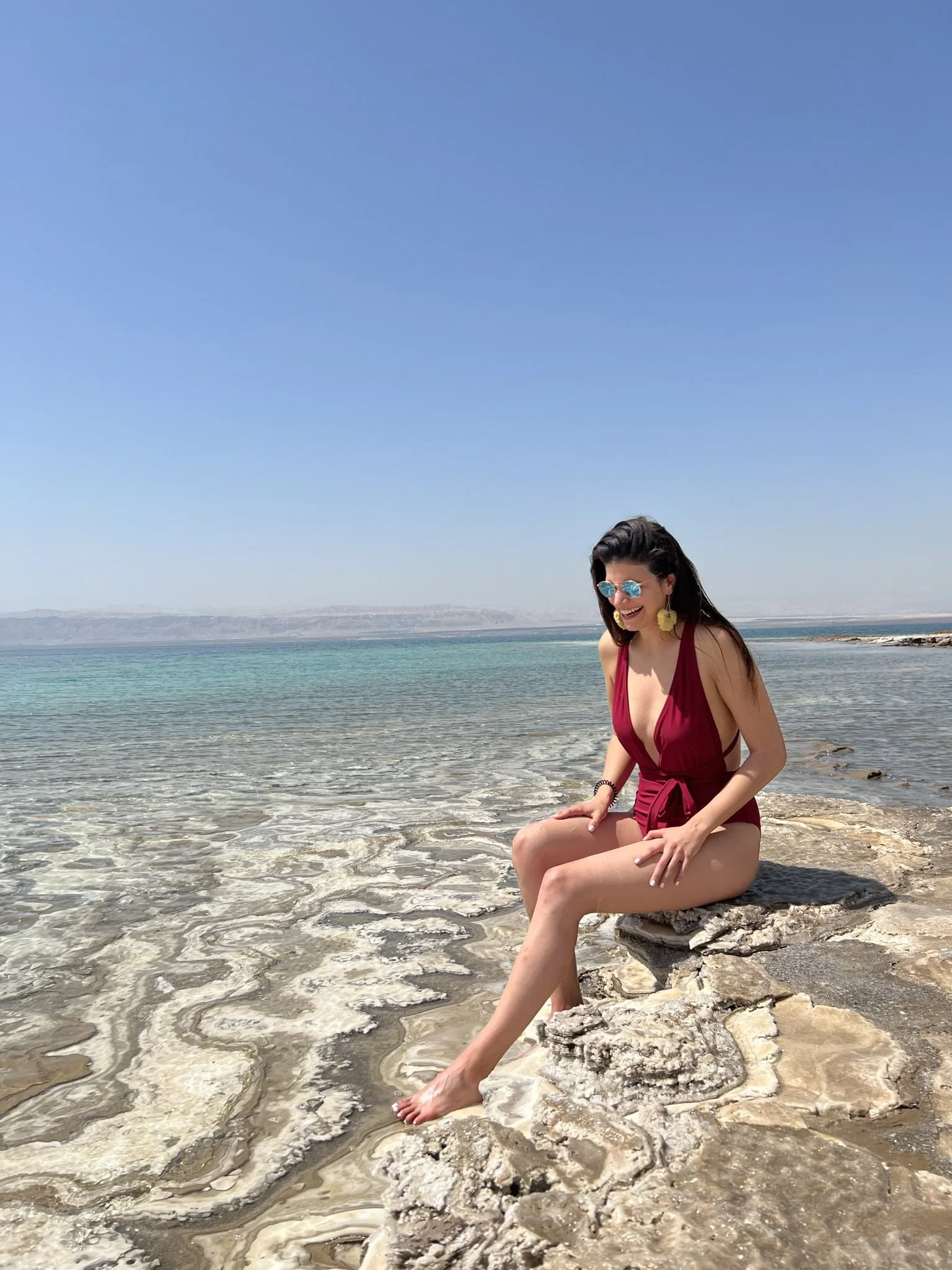
We wrapped it up at the Dead Sea, the lowest point on Earth at around 430 meters below sea level, where you float like a cork whether you want to or not. The water’s salt concentration is about 34%, roughly 9 to 10 times saltier than ocean water, making it nearly impossible to sink. Covered ourselves in black mud rich in minerals like magnesium, calcium, and potassium, took the iconic floating pics, and drifted through our final hours in Jordan. Perfect, salty goodbye.
Editors Note
This trip was a wild mix of Martian deserts, ancient cities, underwater chaos, and salty floats. Here’s what stood out:
🏆 The best? Petra by Night followed by the Dead Sea. One felt like a scene from a dream, the other like floating in space. Both were unreal.
💡 Pro tips?
Don’t trust the Red Sea on a windy day. You’ll spend more time fighting waves than seeing corals. Also, if you’ve got the time, dive instead.
At Petra, skip the hard-sell “Indiana Jones” photo tour for the perfect Treasury shot. Either go early in the morning (it’s quieter, but still intense), or take the free alternative trail to the top. It’ll be longer, all stairs, but totally worth it. Unless you’re out of time, in which case, yeah… you’ll probably end up paying for the shot.