AUGUST 2021
GREECE
-
Language: Greek
Currency: Euro
Capital city: Athens
Population: Around 10.3 million
Driving Side: Right
Best Time to Visit: May to October
Weather: Hot, dry summers and breezy islands
Power Outlets: Type C and F (two-round-pin plug, 230V)
-
✅ 10 Days
✈ Direct flight
Berlin → Athens🗺 Route:
✈ Direct flight
Athens → Santorini
⛴ Ferry: Santorini → Crete
🎒 What to Pack:
Light layers, sunscreen, swimwear, hiking sandals, goggles, and something cute for sunset dinners
-
Staring up at the Parthenon with first year architecture flashbacks
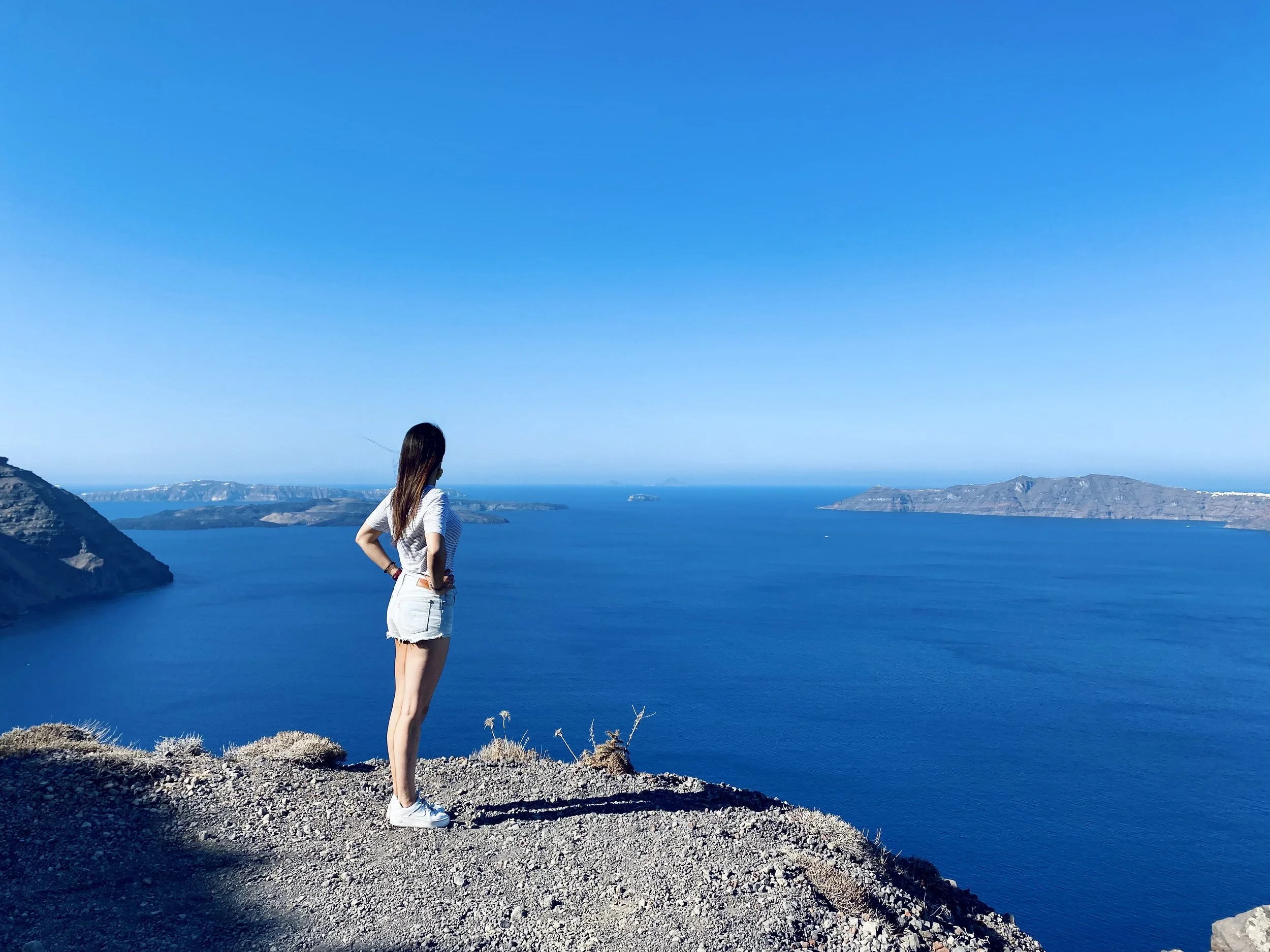
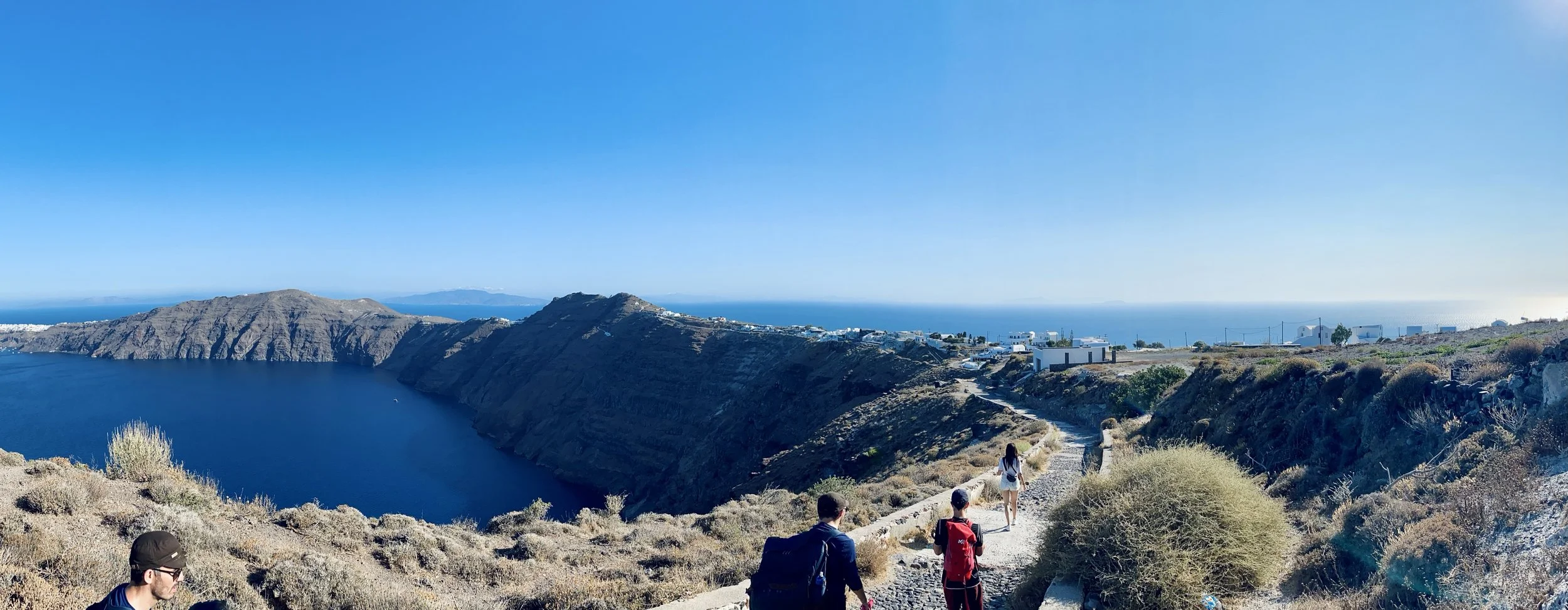
Cliffside hike in Santorini along the Caldera
Sunset in Santorini
Crete’s beaches, blueprints of how to live slowly and eat well
Temples, sunsets, and blue-on-blue views…
Greece gave us ancient ruins, cliffside hikes, Ouzo at golden hour, and beaches so beautiful they didn’t look real. One trip, three moods, and the post lockdown glow-up was real.
Itinerary
Day 1: Arrival in Athens and walking tour
Day 2–3: Athens: Acropolis, Parthenon, Agora, and Museum
Day 4–5: Santorini: hike, wine, Ouzo, and blue domes
Day 6–10: Crete: beaches, Chania, and the slow life
Athens: Living Inside the Lecture Slide
Athens was dense. Layers of history collapsed into a single surface. We started with a walking tour, tracing fragments of history through dense streets. The urban plan was there, but not always legible. Every corner revealed another collision. A Doric column behind a bus stop. A Byzantine chapel squeezed between balconies. A modernist slab facing a neoclassical façade. The layers made sense on paper. But walking through it felt more like navigating memory than space.
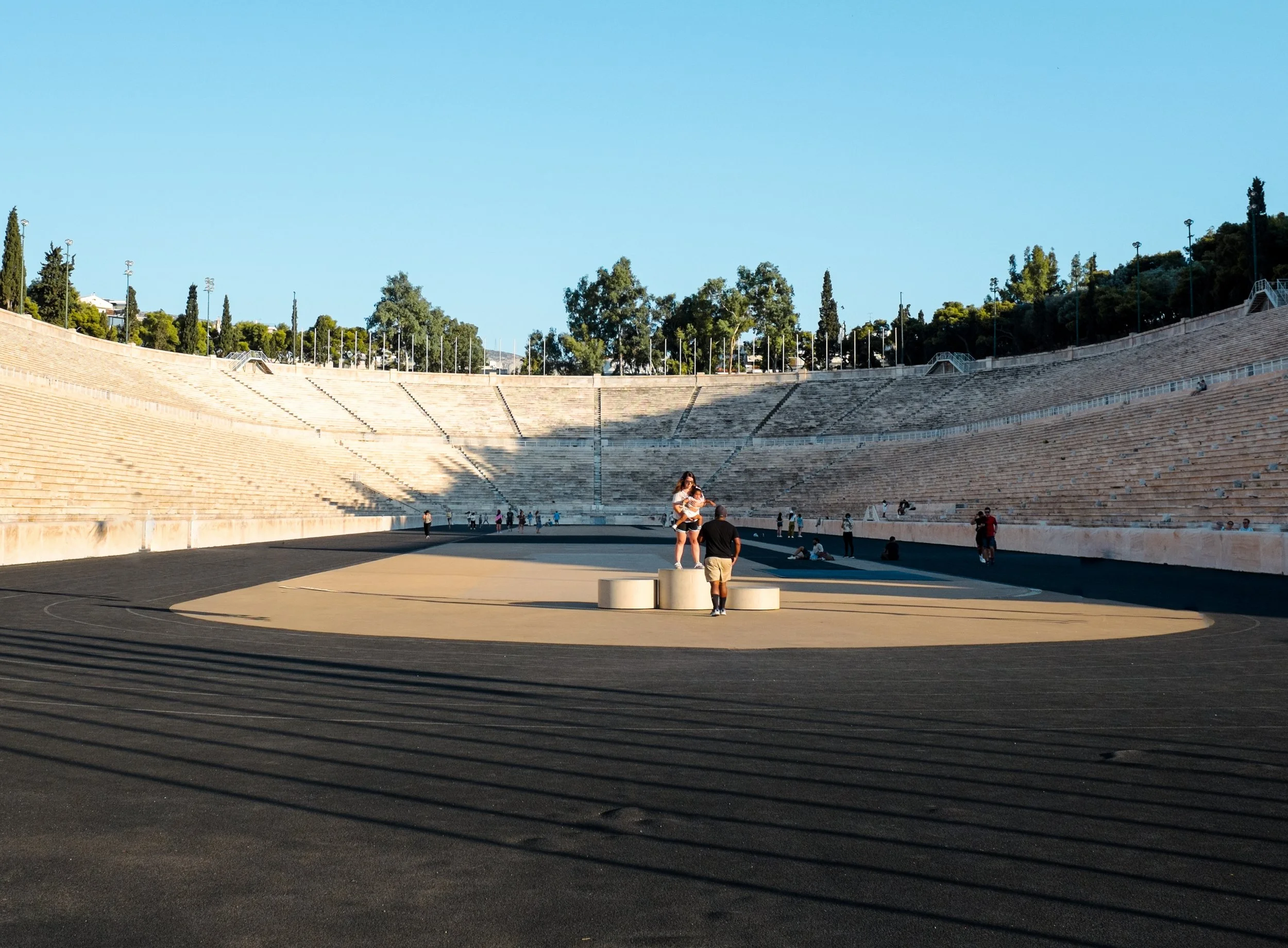
At the Panathenaic Stadium, the atmosphere changed. Full marble. Sharp contours. Absolute spatial control. The symmetry was immediate, but so was the weight. I hadn’t expected it to feel that alive.
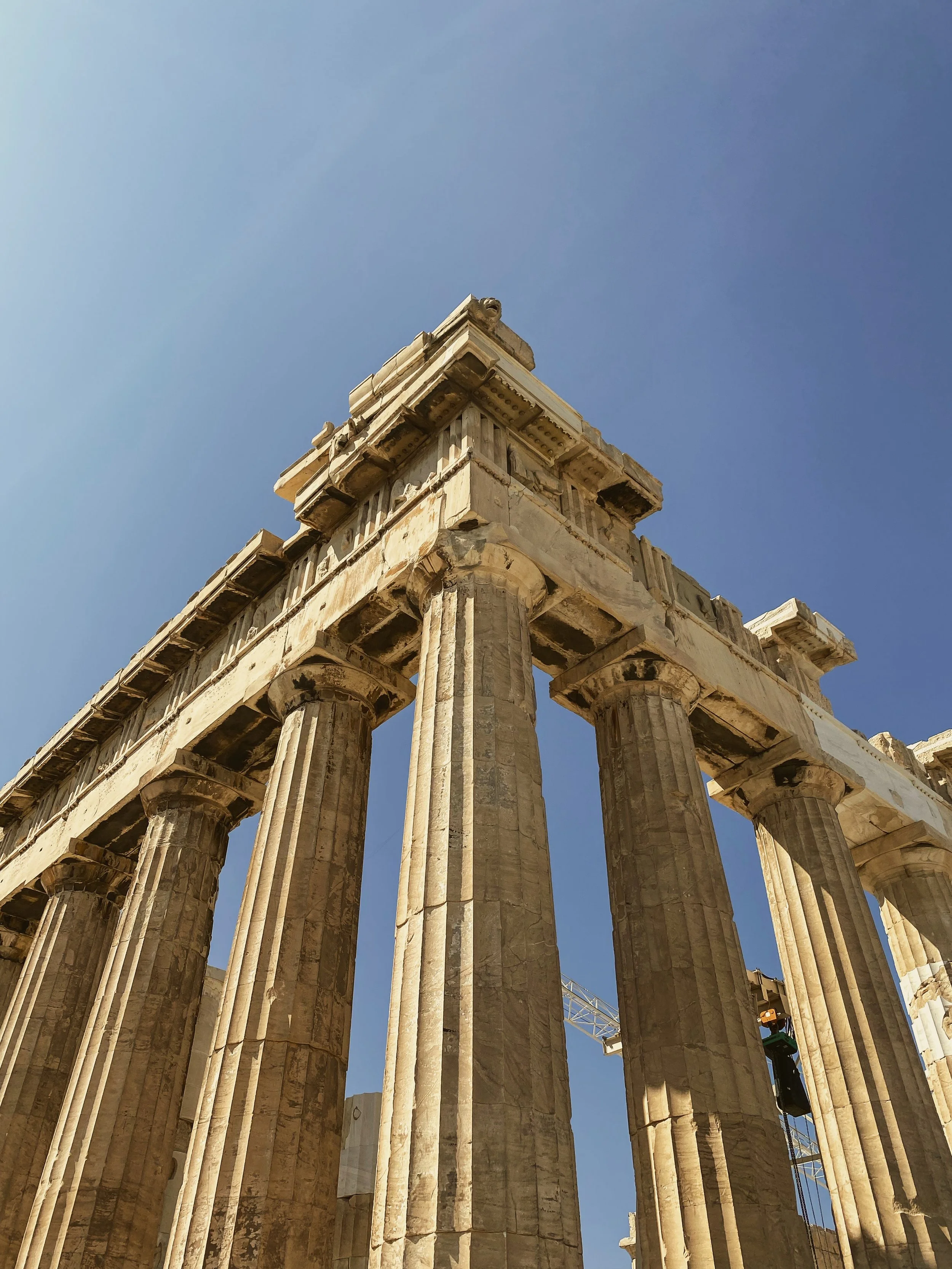
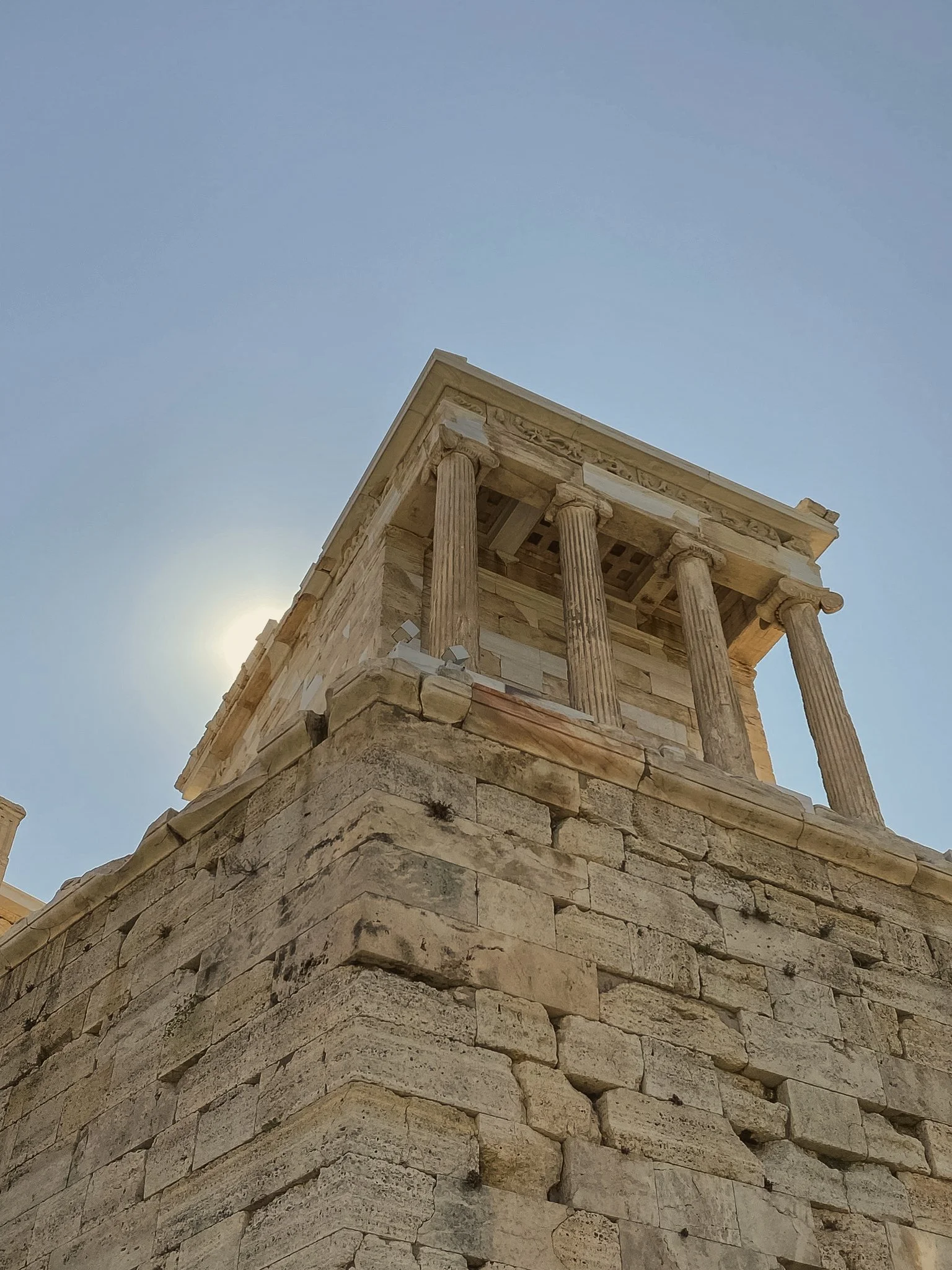
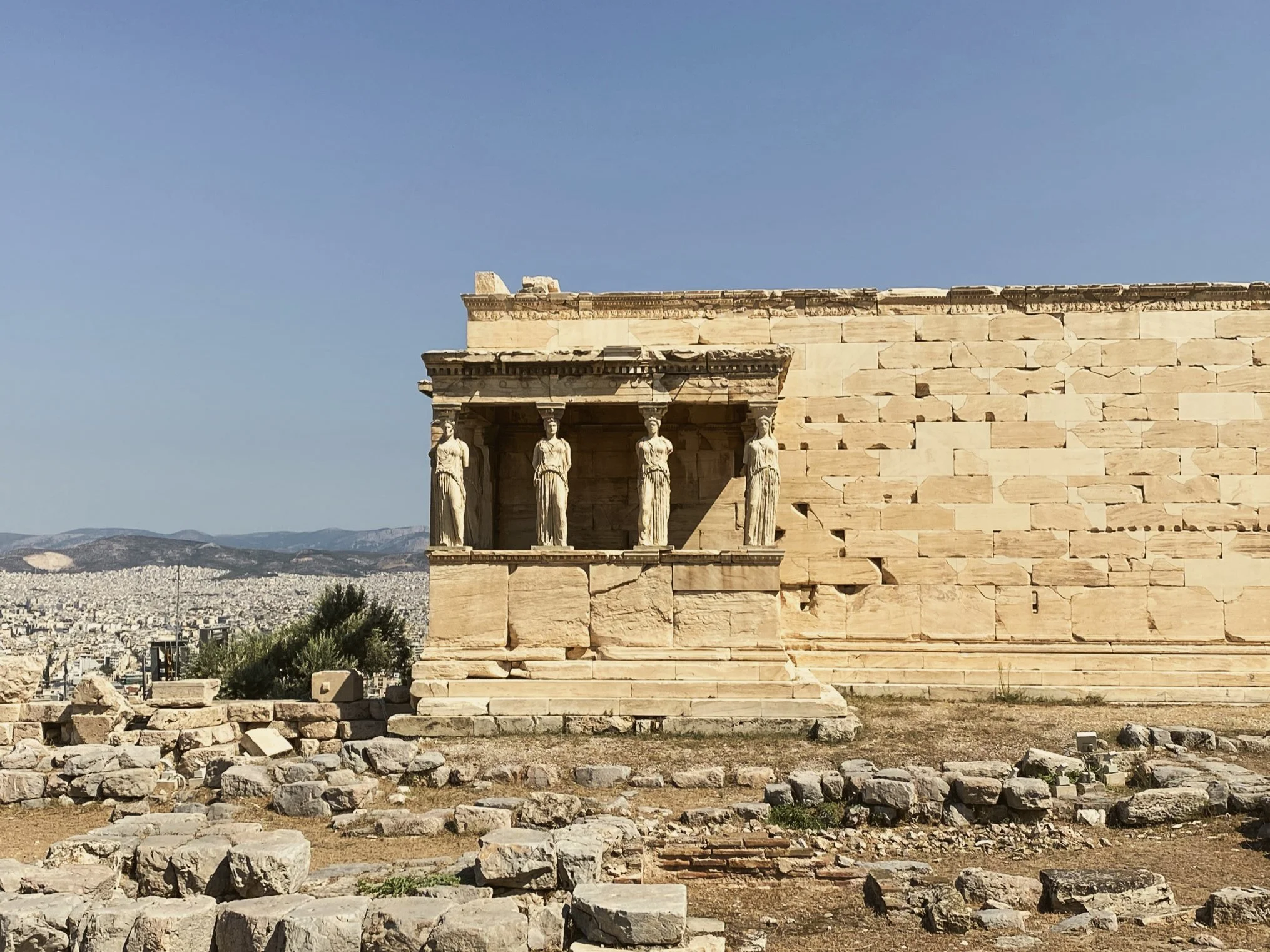
Then came the Acropolis, the high city. A limestone plateau rising above Athens, visible from almost anywhere. In ancient times, this was the sacred center of public life. On its summit stands the Parthenon, a temple built in 5. BCE to honor Athena. Entirely in marble. Mathematically precise. One of the most studied buildings in architectural history. As an architecture student, I had drawn it. Measured it. Analyzed it from every angle. None of that mattered when I stood in front of it. The scale, the light, the silence. It was not a diagram anymore. It was real. Complete and broken at the same time. My reference points disappeared. I just looked up.
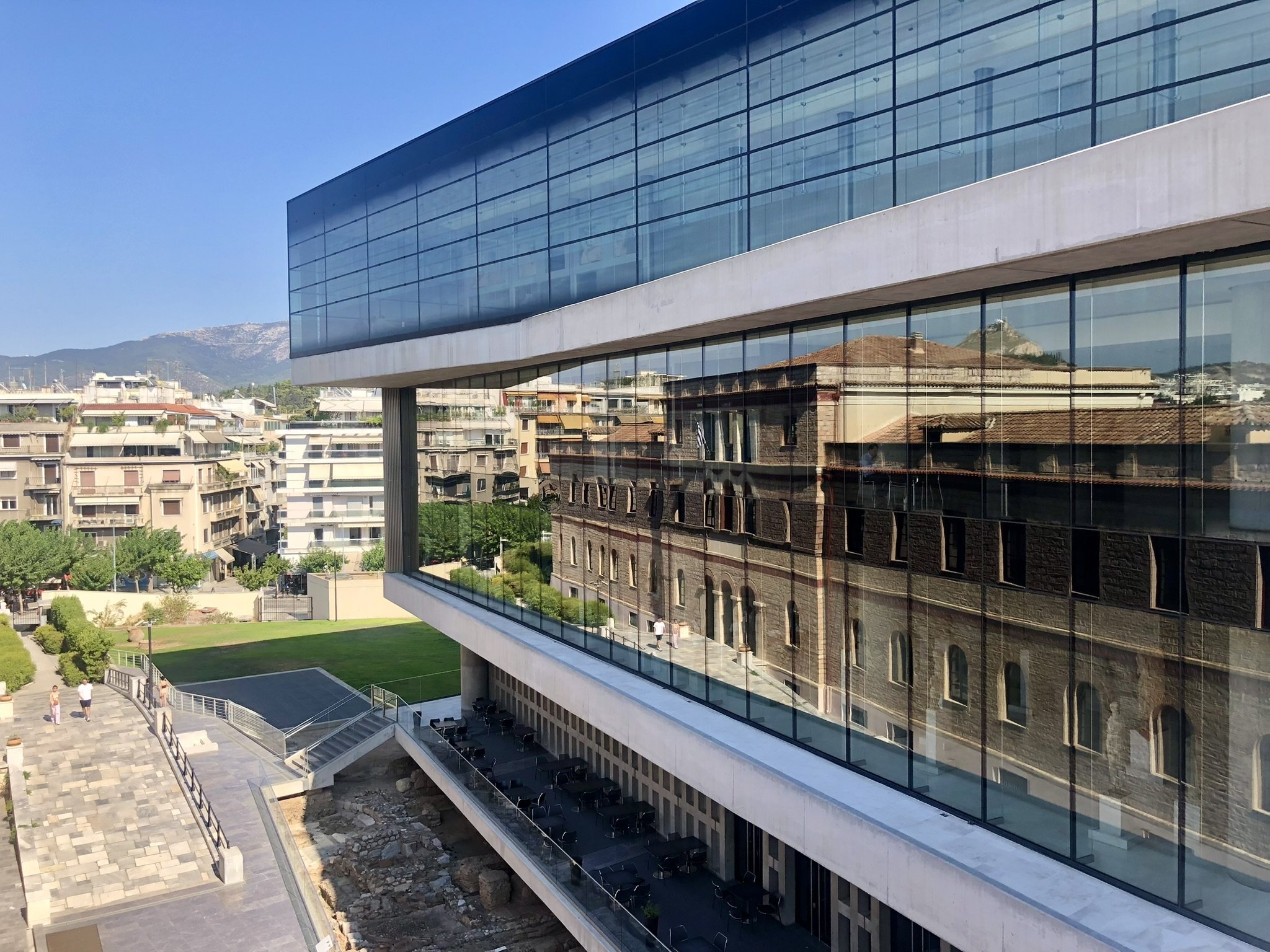
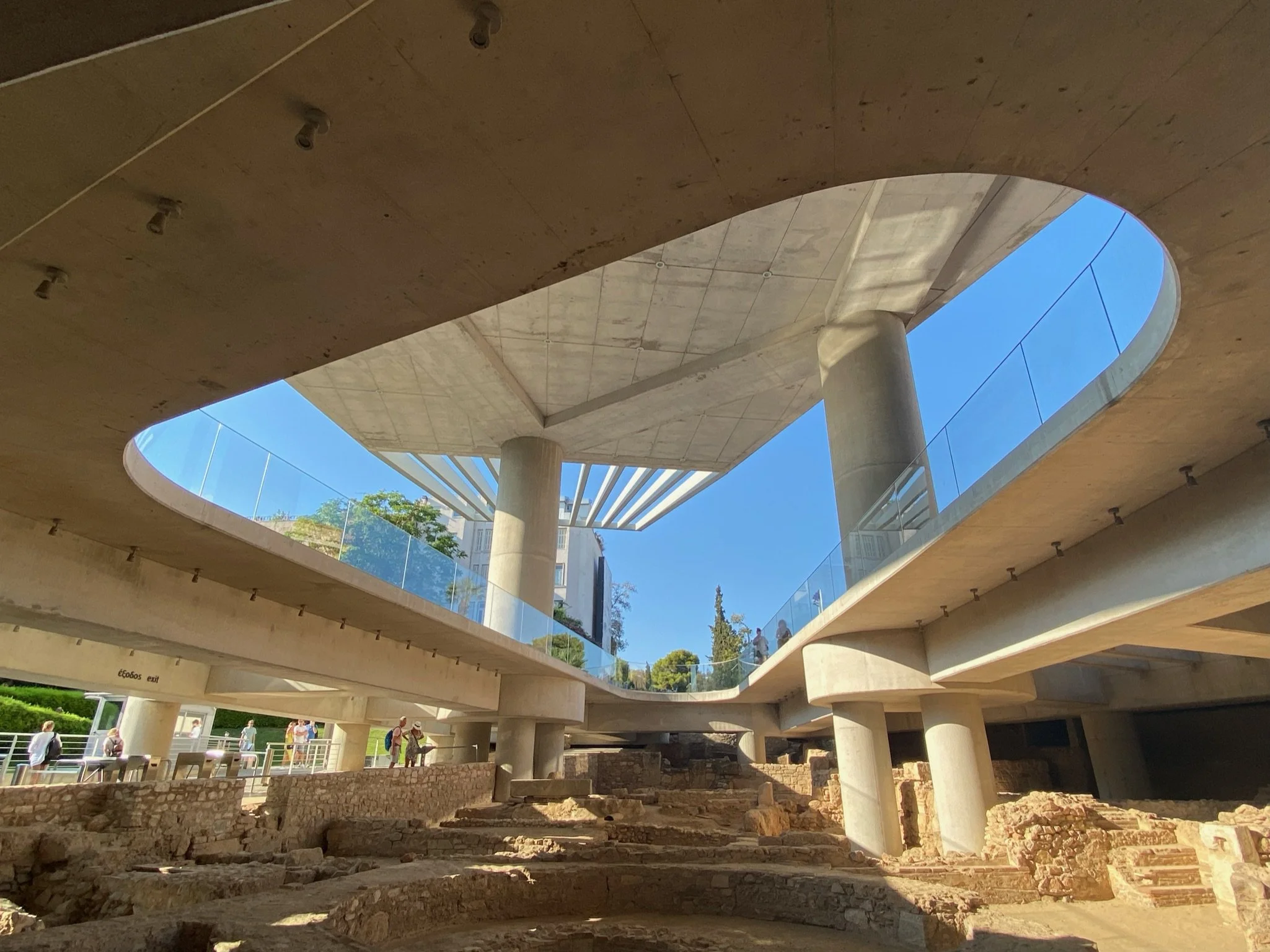
The Acropolis Museum offered a necessary counterpoint. Clean lines, filtered light, and constant views back to the original. Its restraint was its power. Architecture in conversation with history, not in competition.
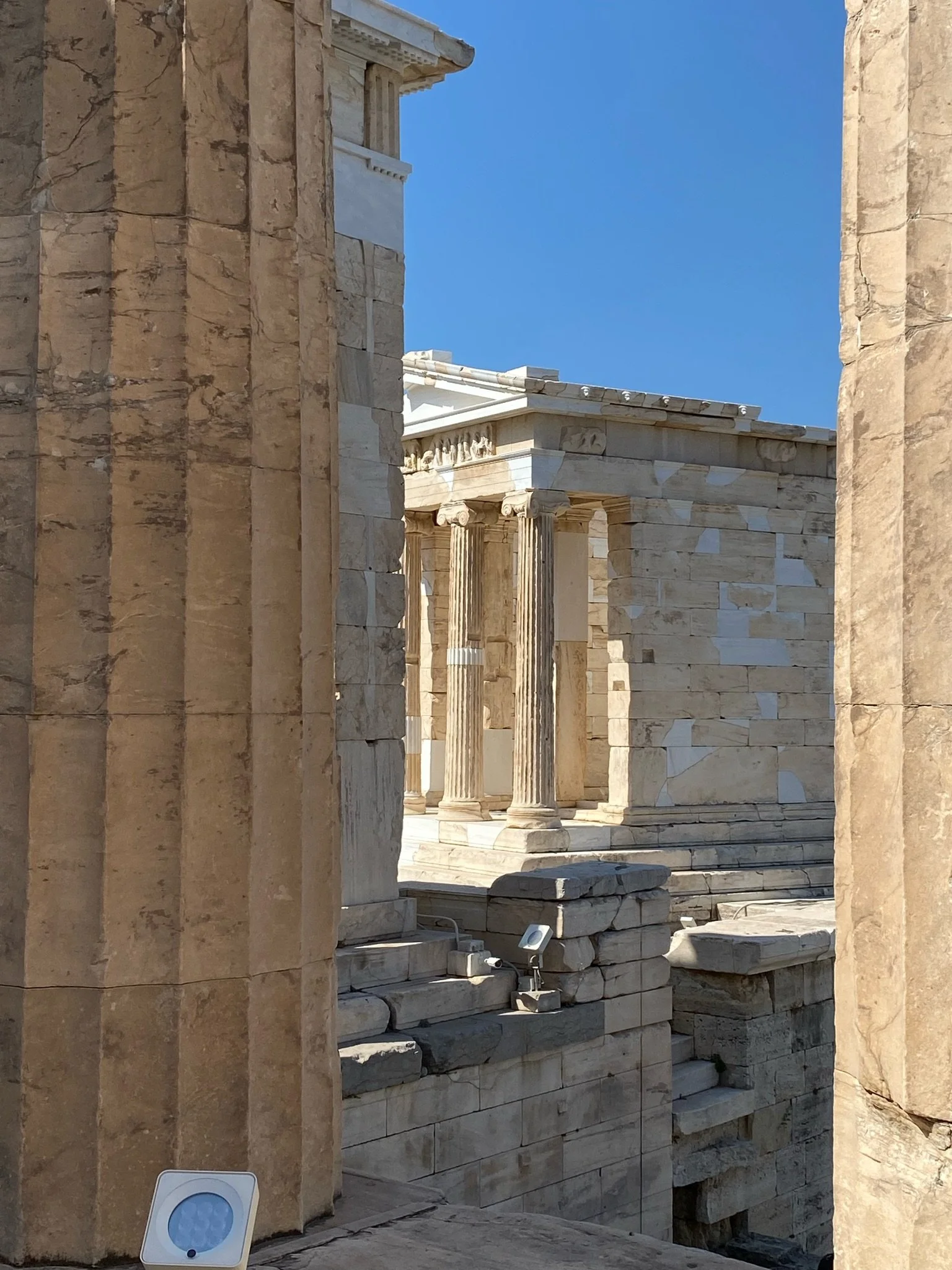
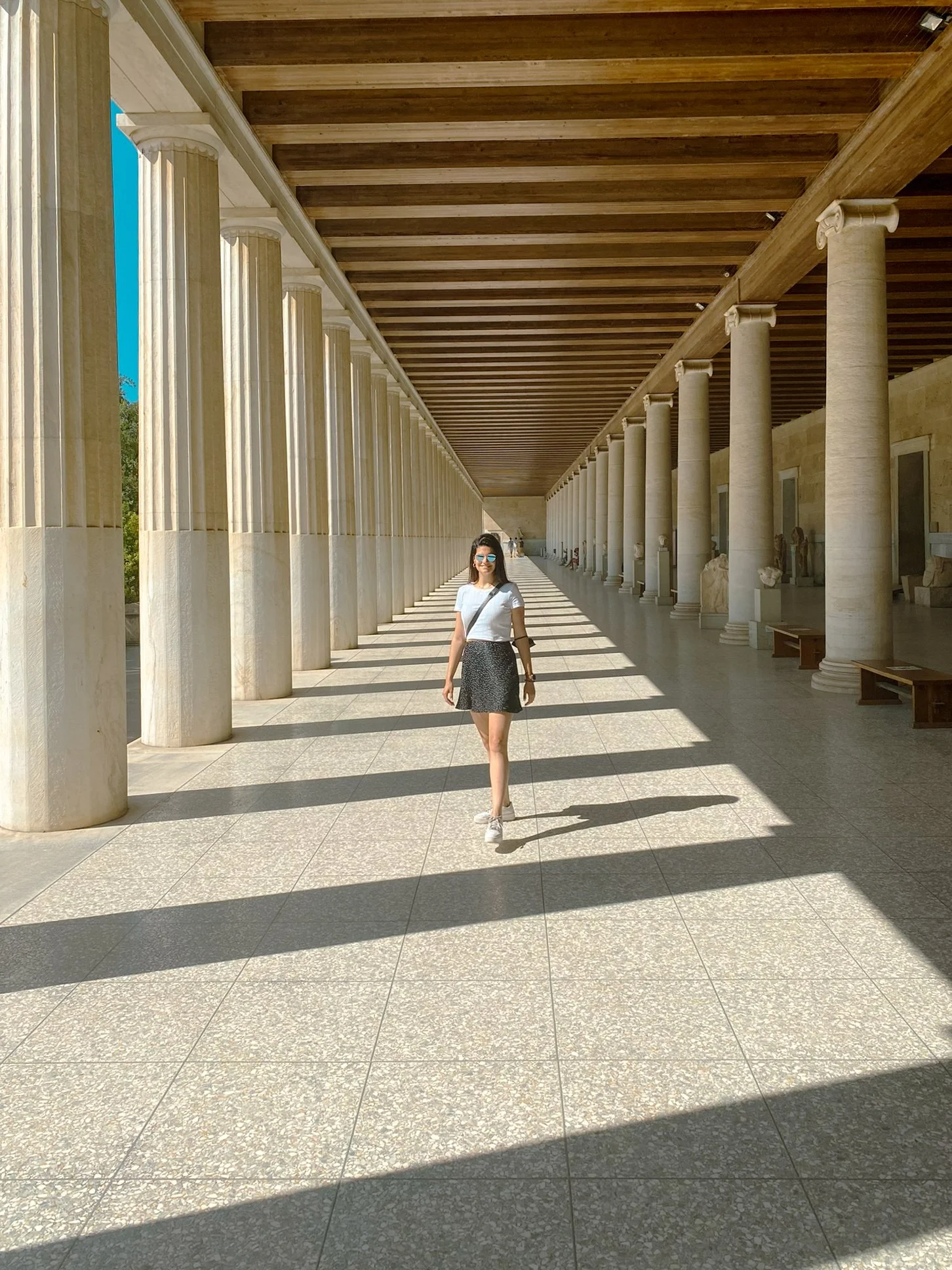
The next day, we hit the Agora. This was the real heart of ancient Athens. Not just temples and statues, but where life happened. Markets. Politics. Philosophy. Democracy in the wild. We wandered through ruins with the Rick Steves audio guide in our ears, which is free, weirdly good, and kind of comforting. It helped us picture the everyday chaos he was describing. And honestly? It worked. The outline was still there. The spirit too. The temple of Hephaestus watched over it all, somehow perfectly intact.
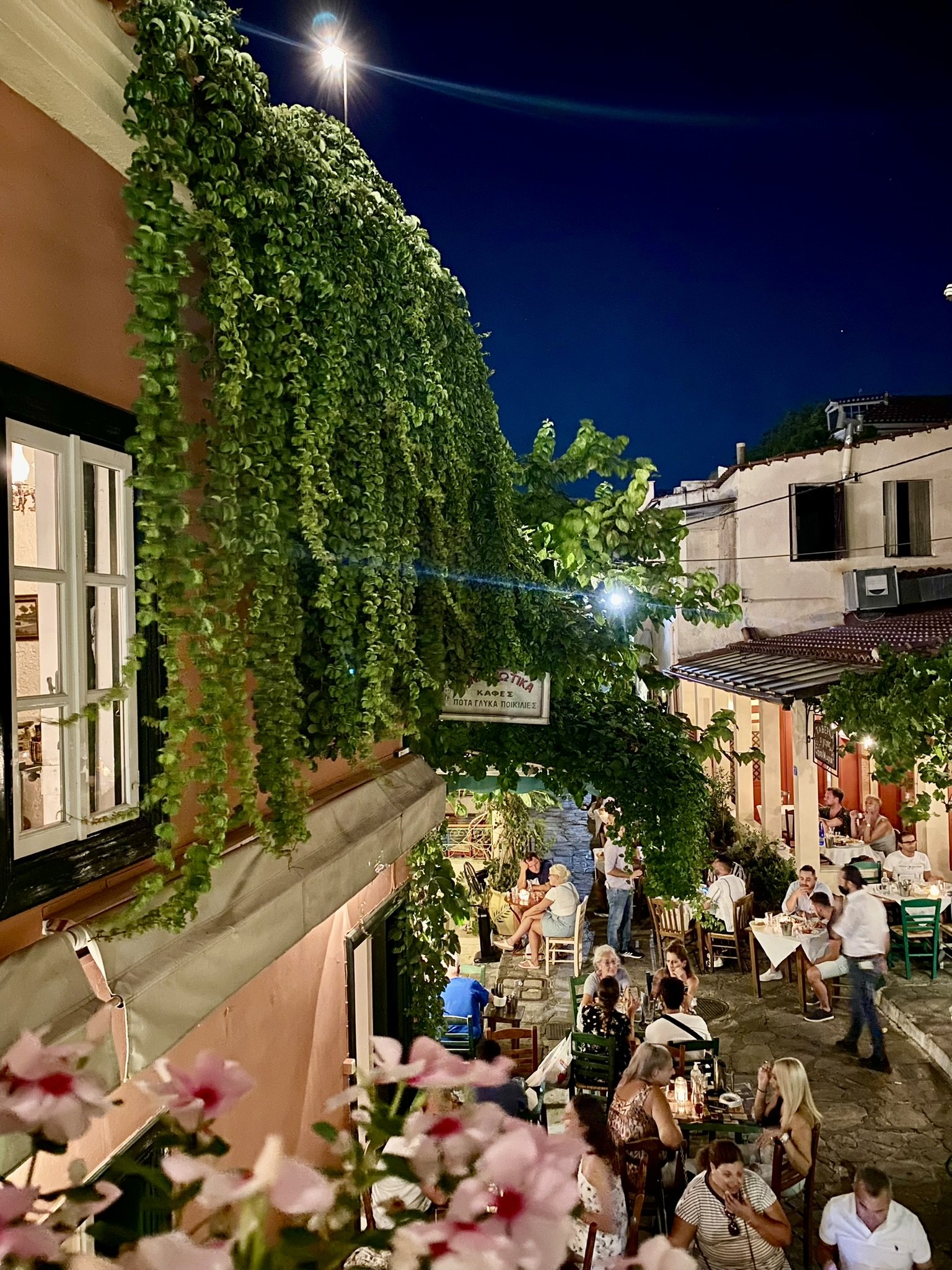
Athens was loud and hot and cracked and brilliant. A place that never stops being ancient, but refuses to stand still.
Santorini: cliffs, curves, and Champagne
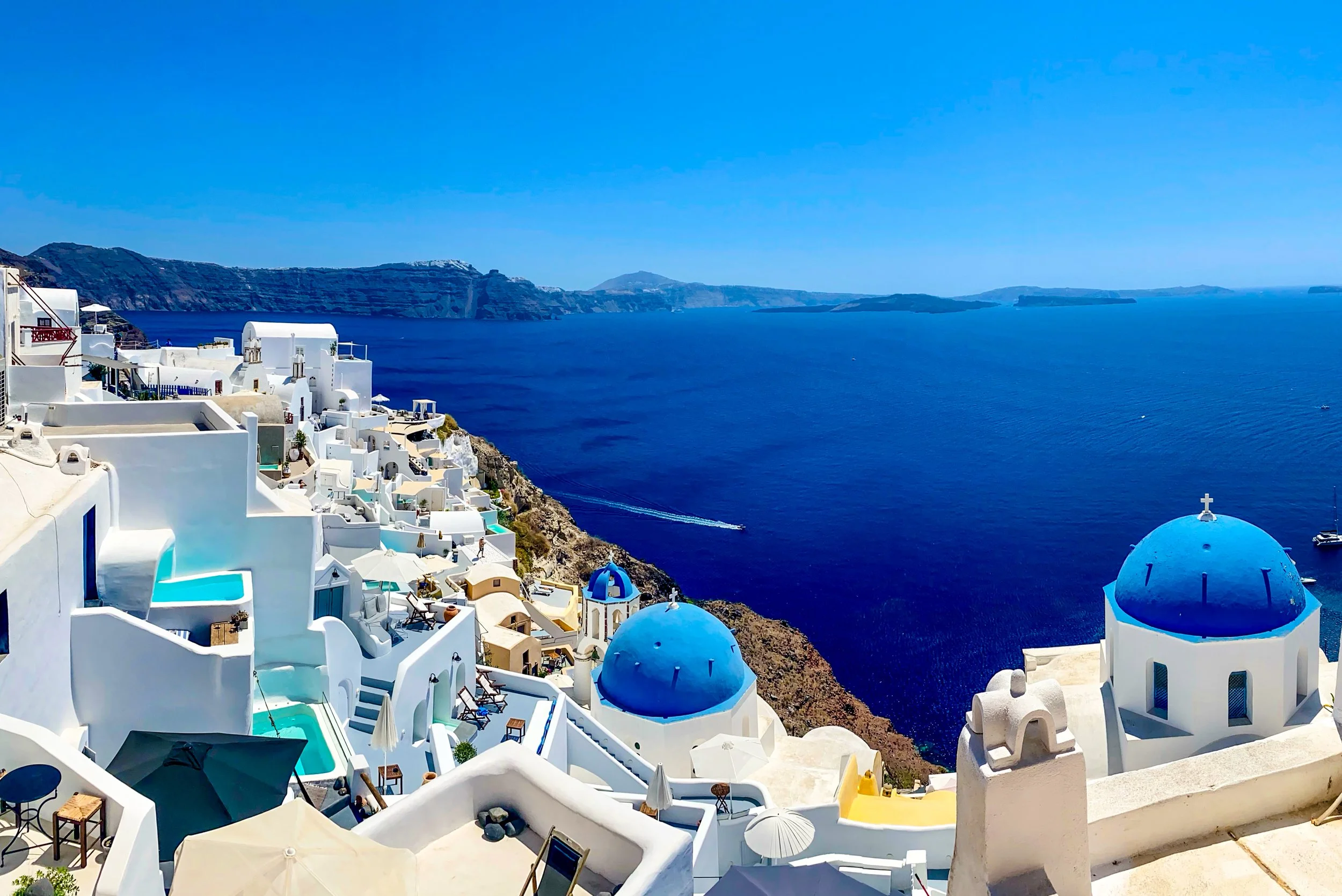
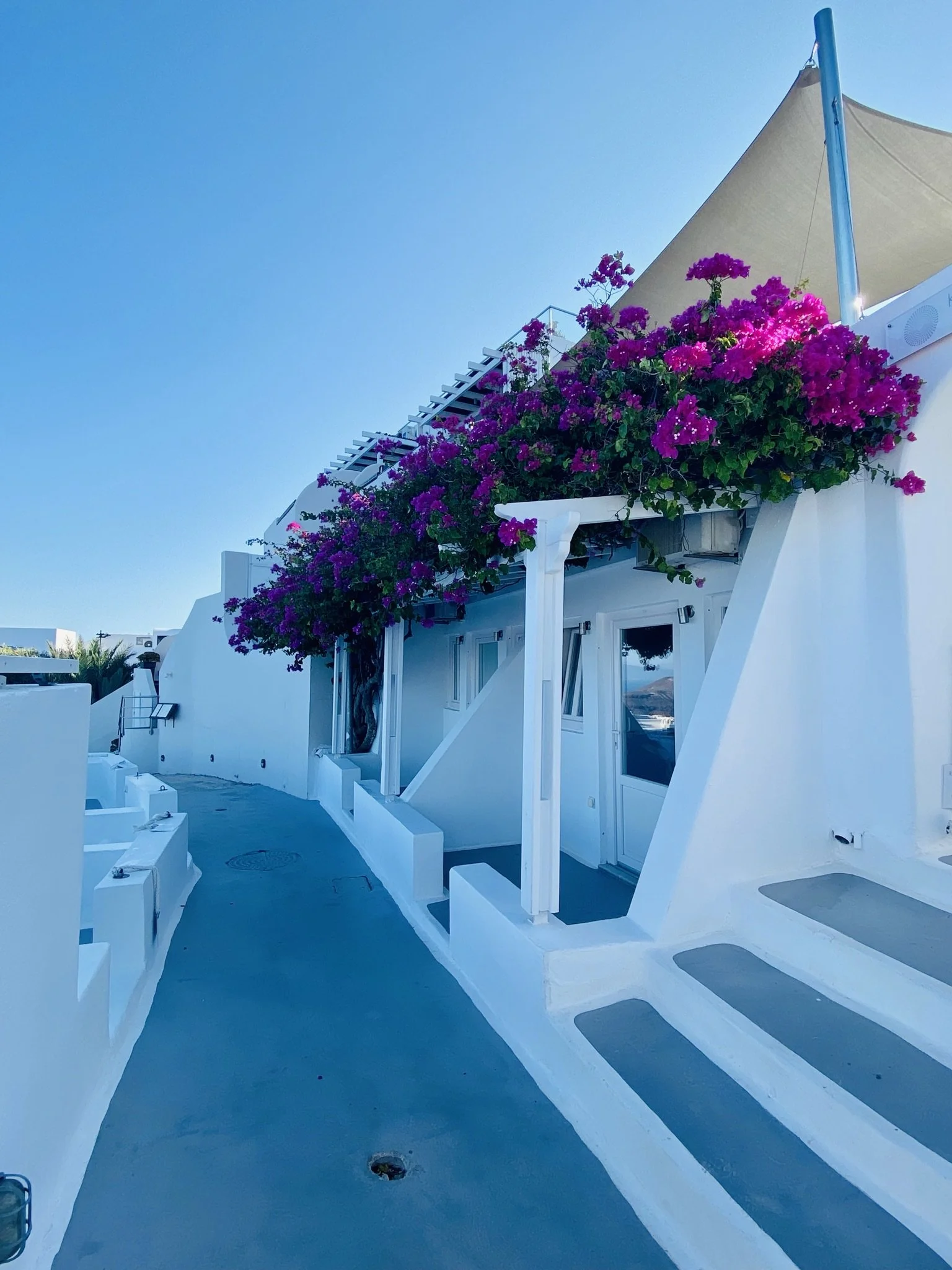
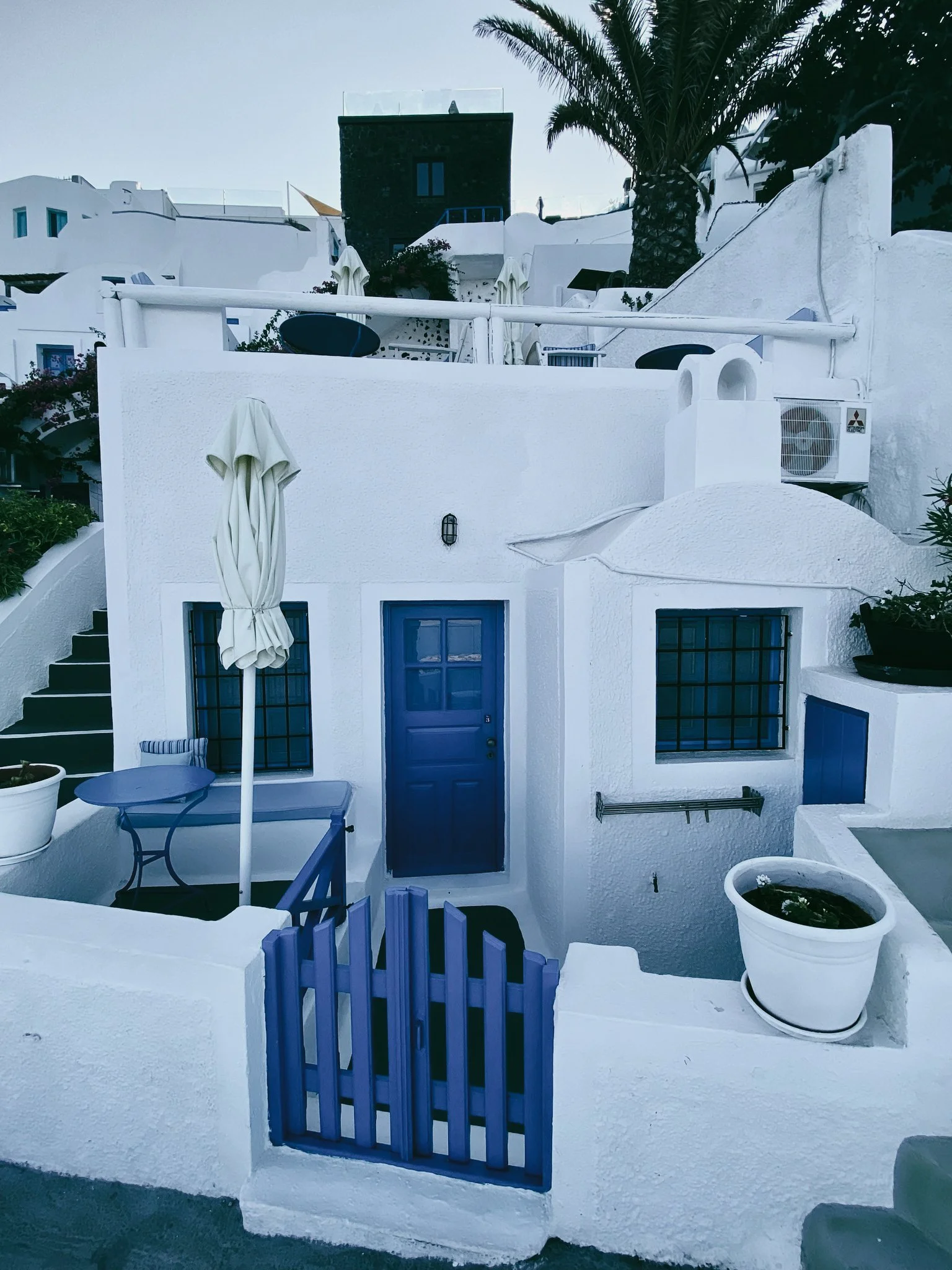
From architectural awe to full-on vacation mode. We flew to Santorini and stayed in Oia. We didn’t rent a car, which limited us, but Oia was so charming we didn’t mind. We swam, explored, and ended the day at Ammoudi Bay for dinner with a sea breeze and no rush.
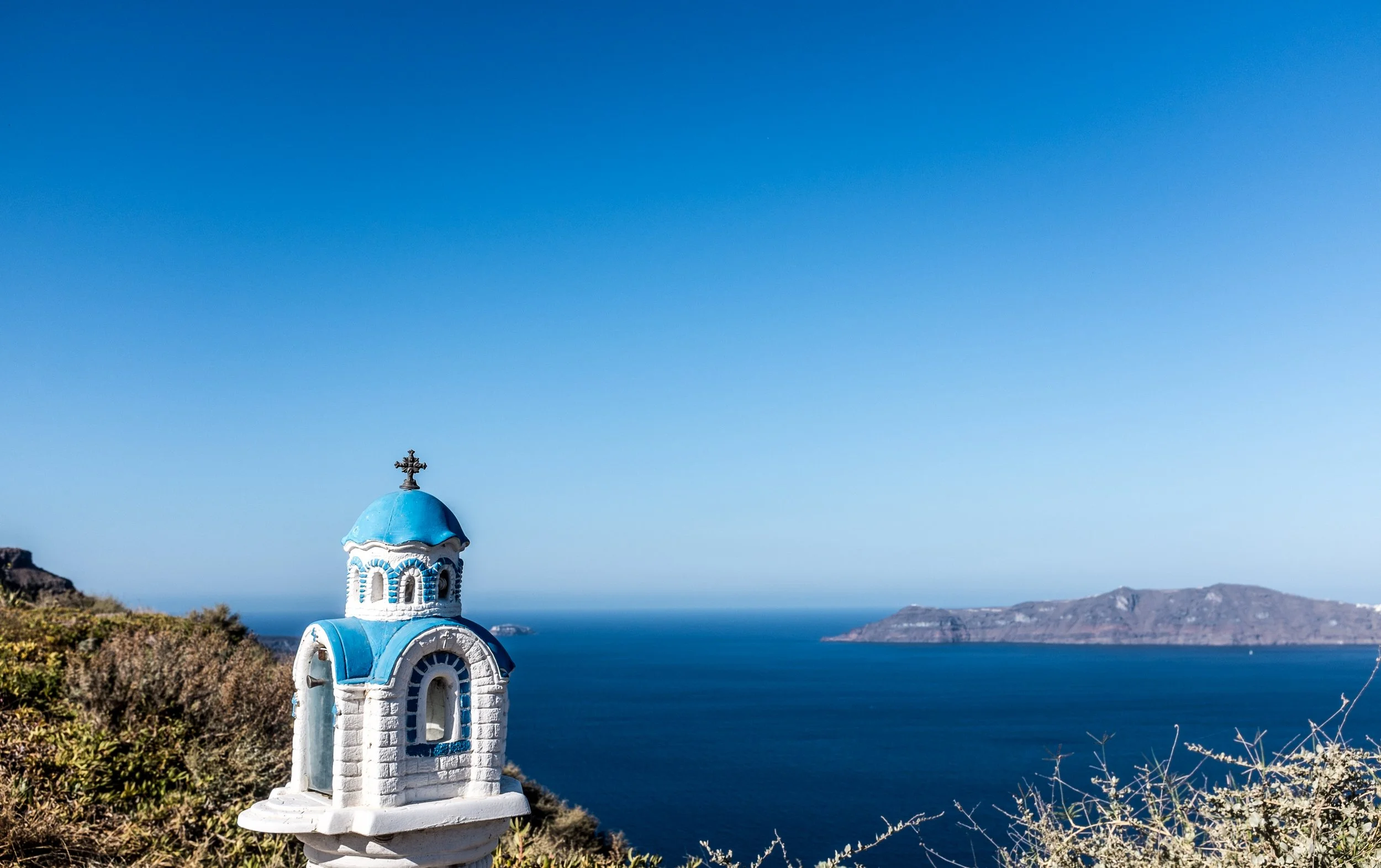
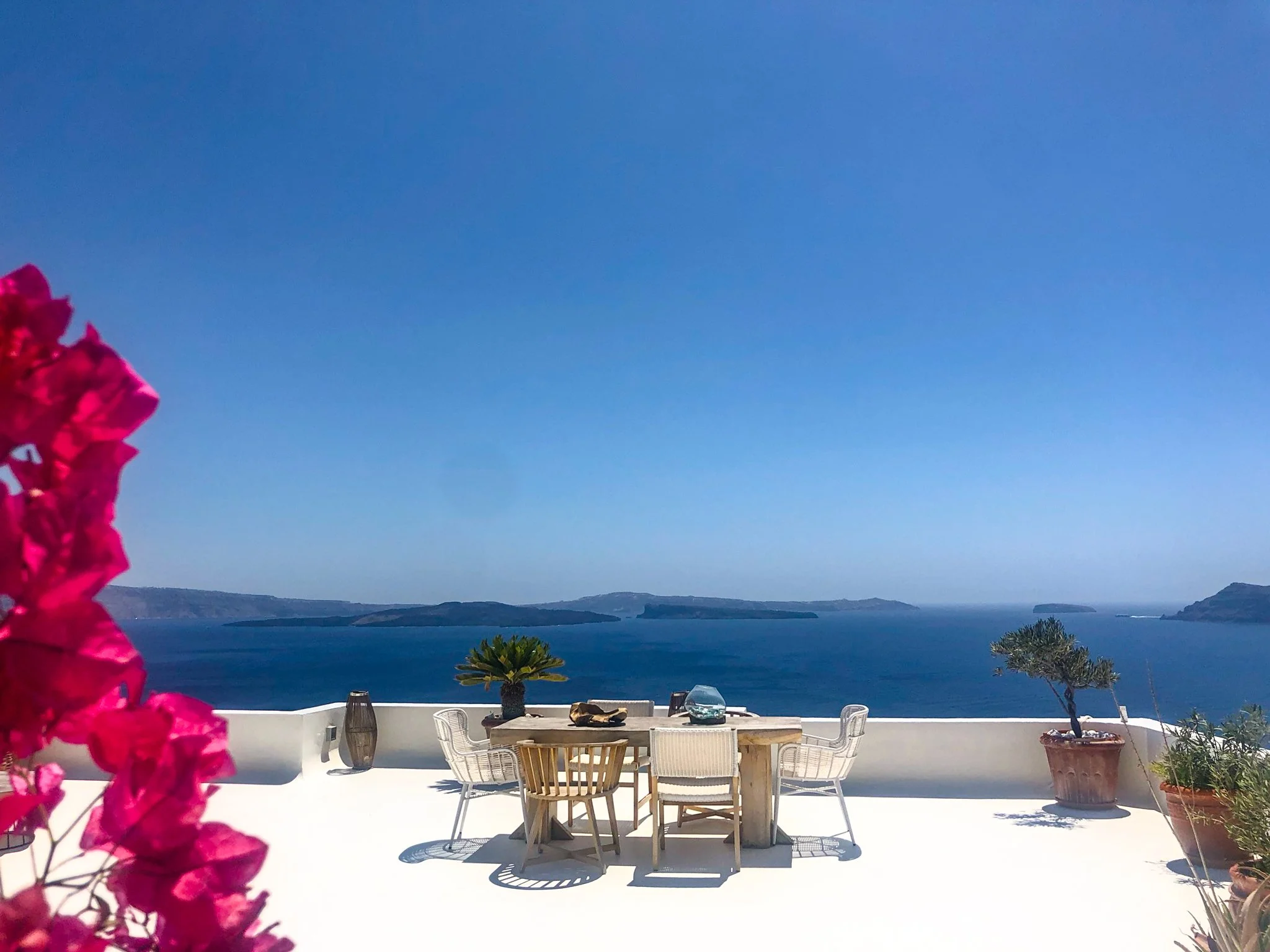
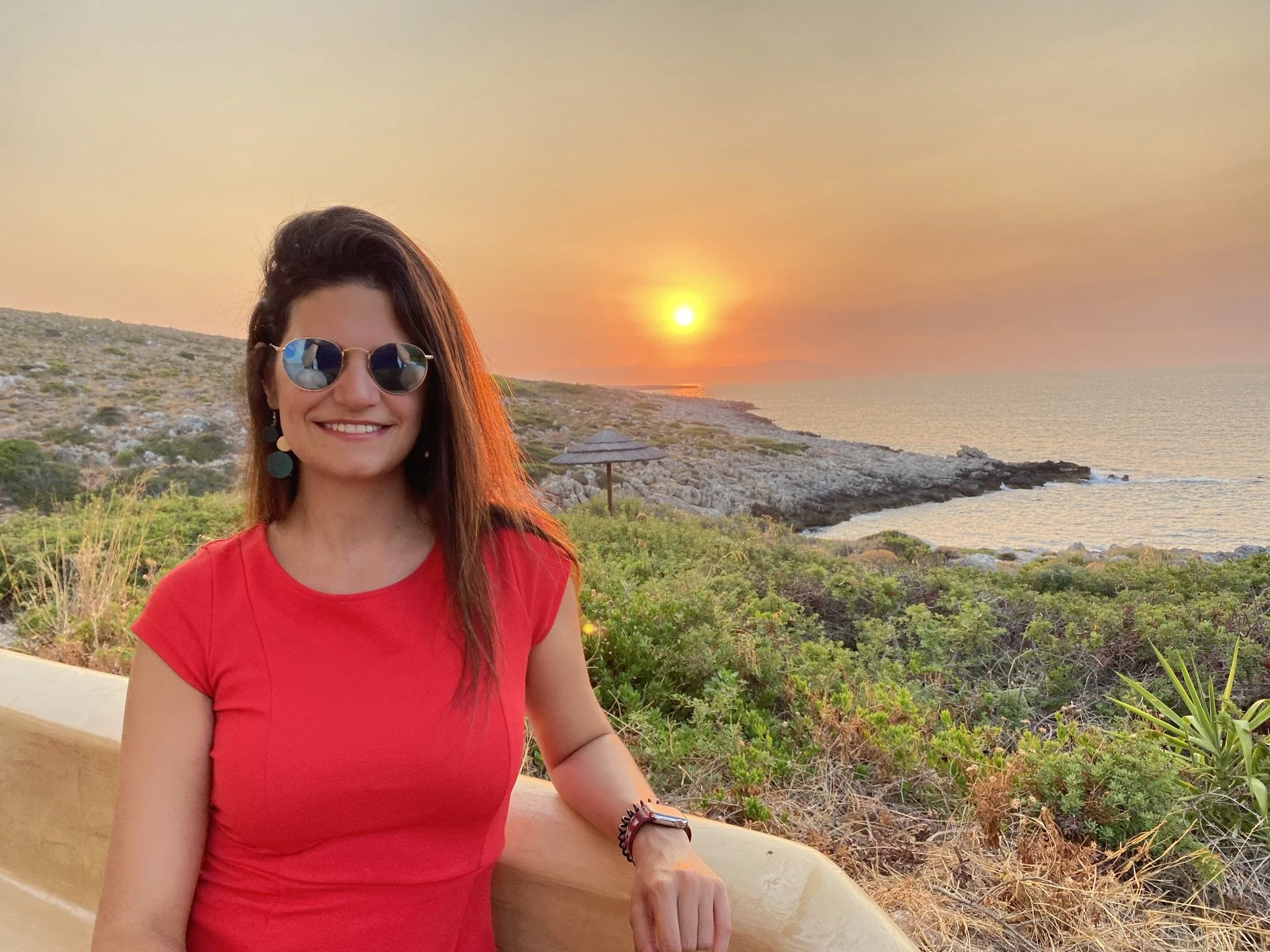
Then came the moment. Champagne, Ouzo, and friends in the hotel jacuzzi. That sunset was gold. The cliffs, the blue domes, the silence between sips. Everything felt like a filtered dream, except we were actually in it.
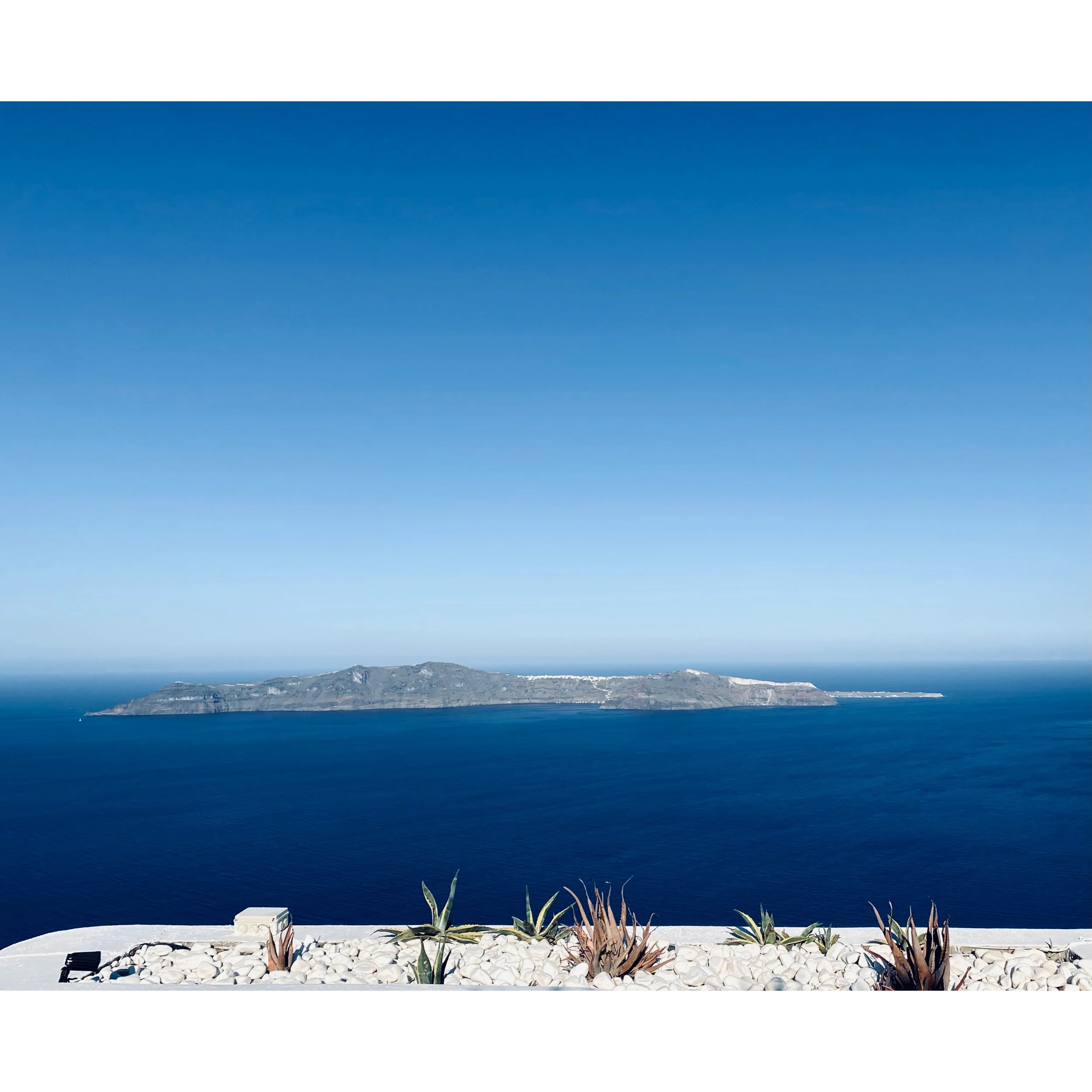
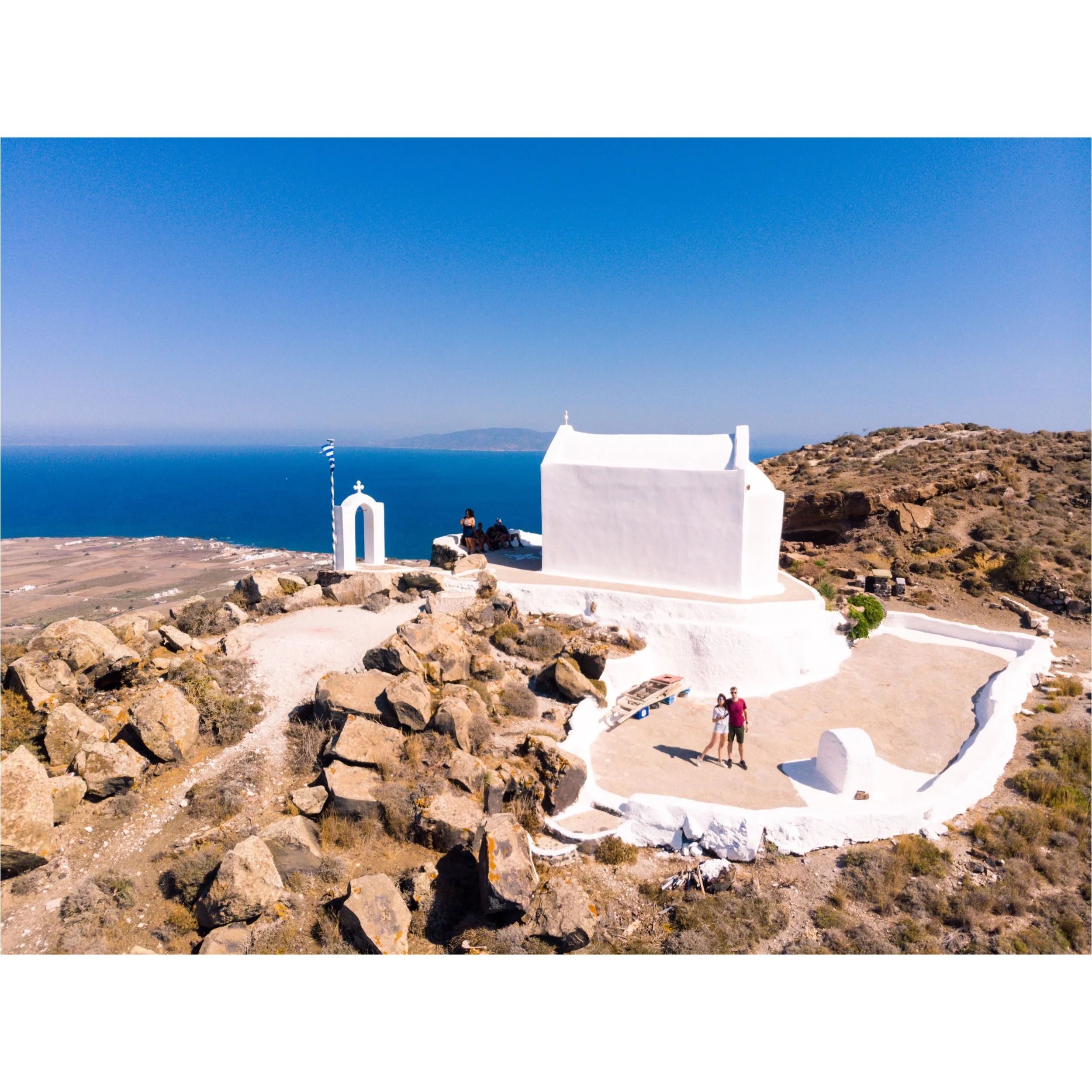
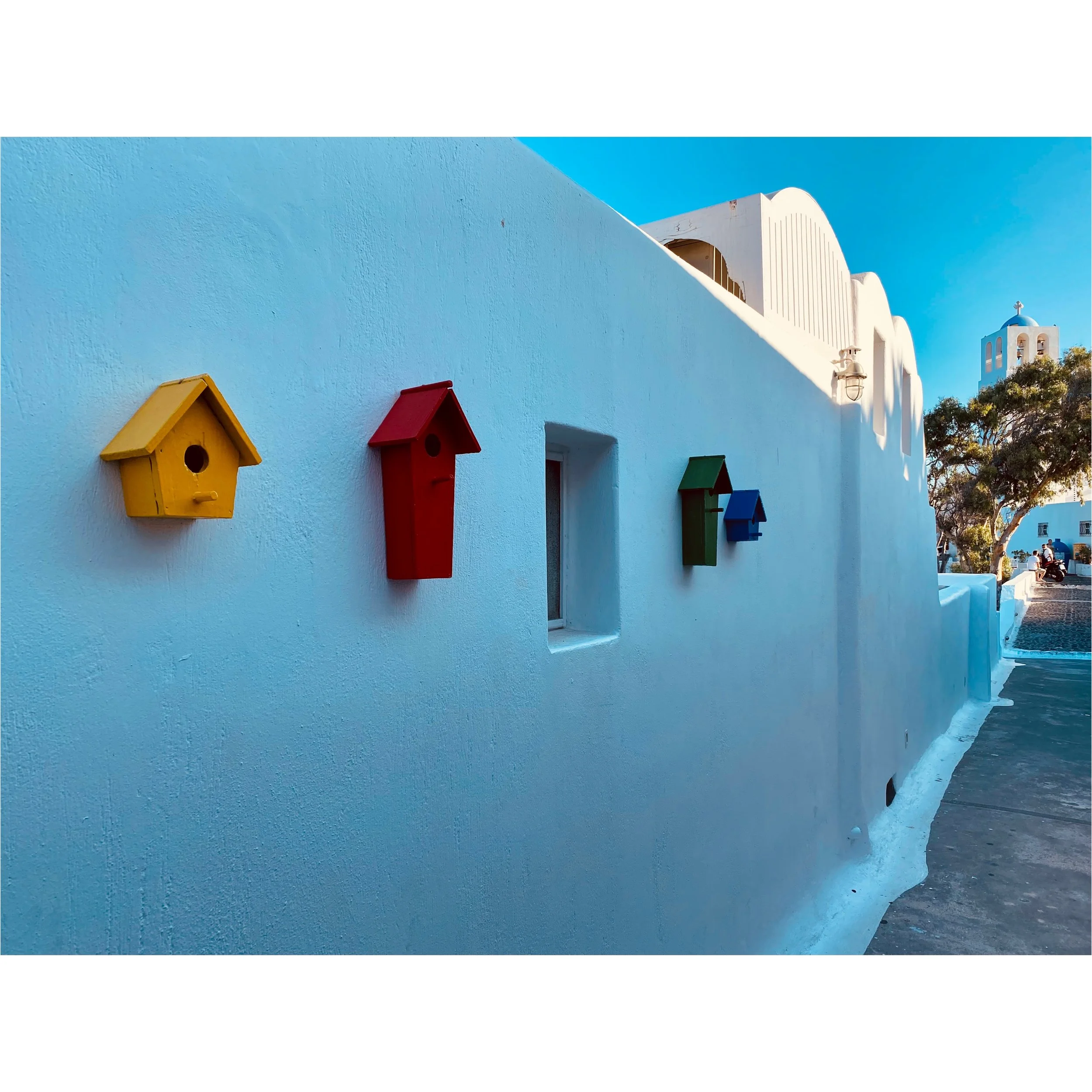
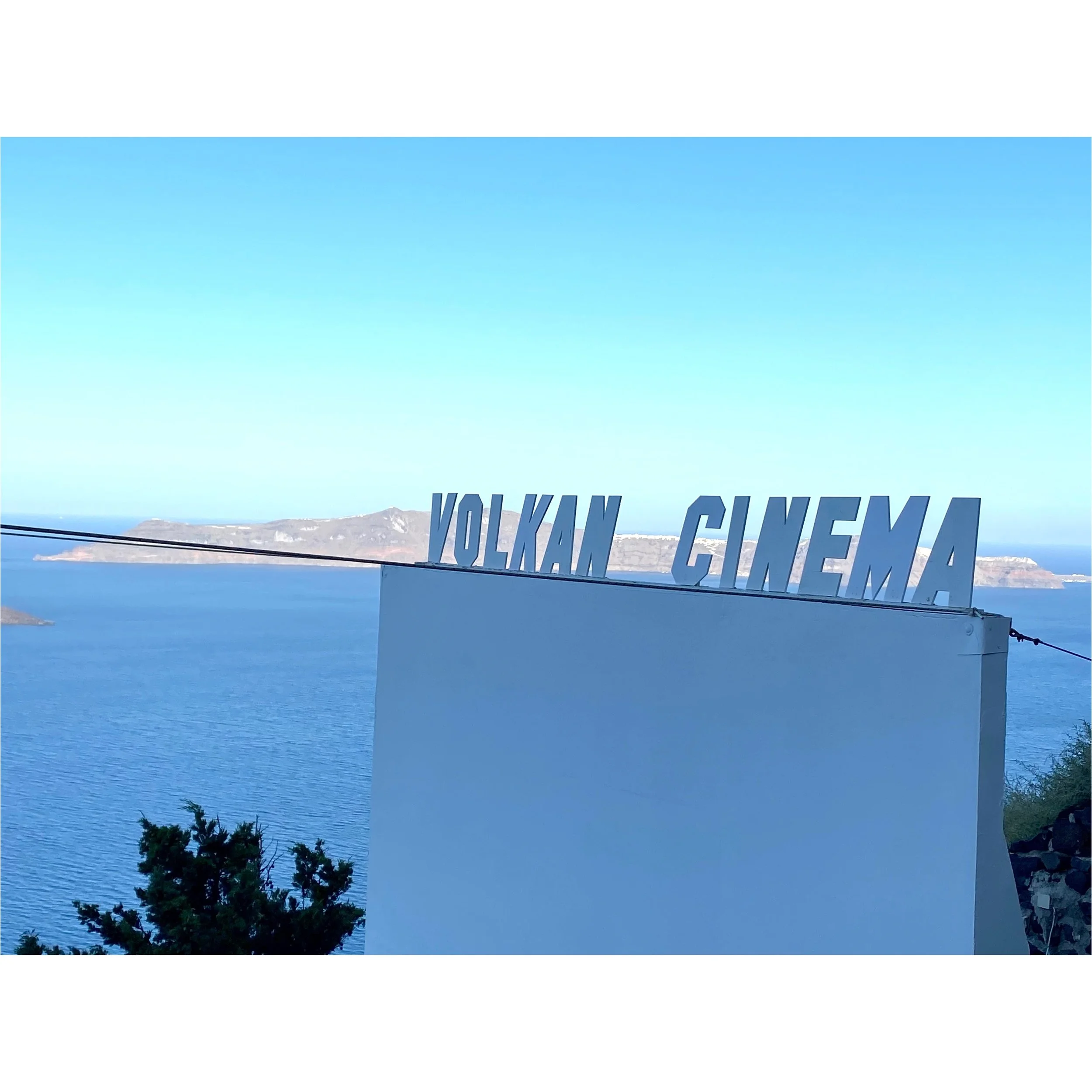
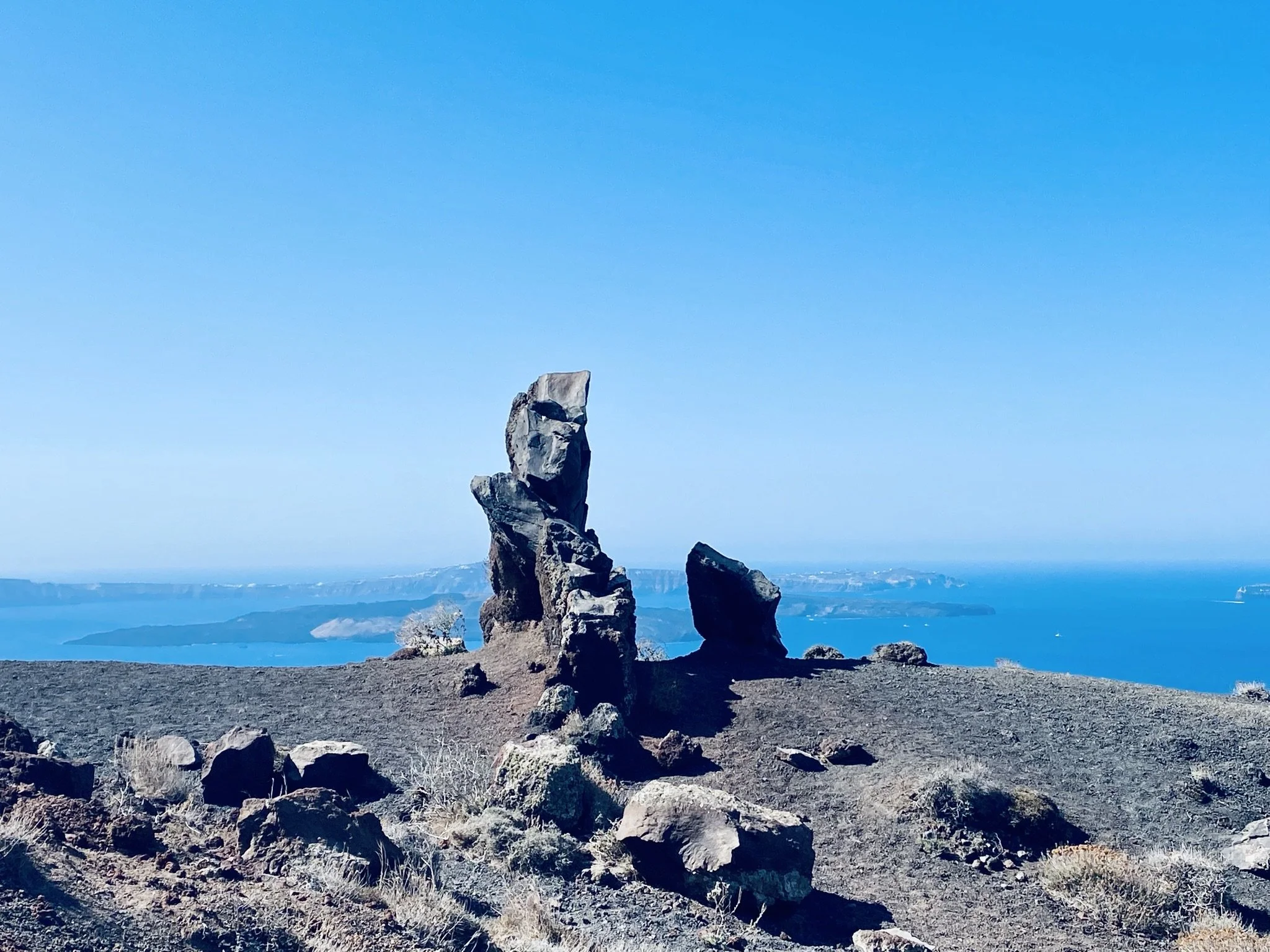
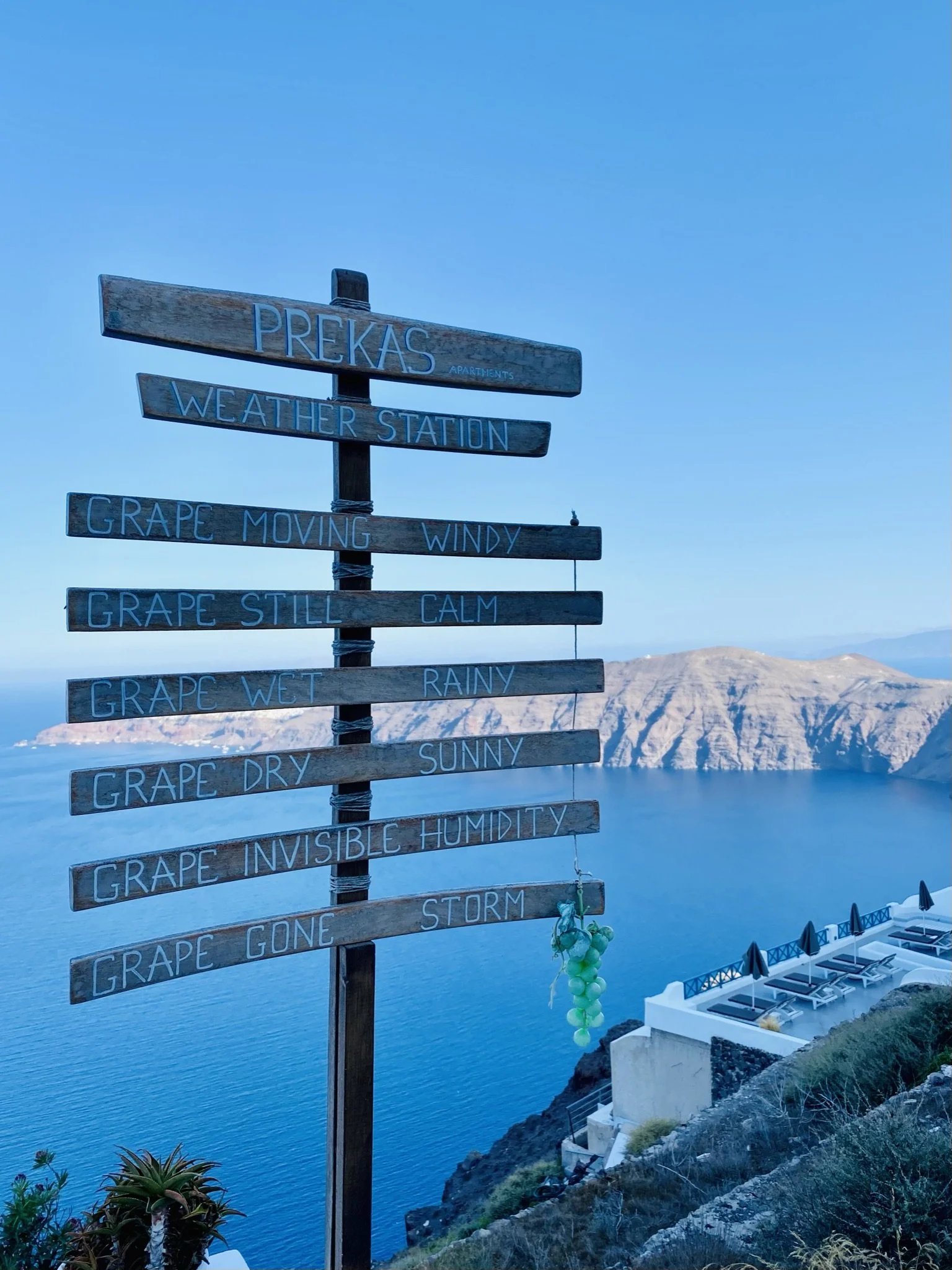
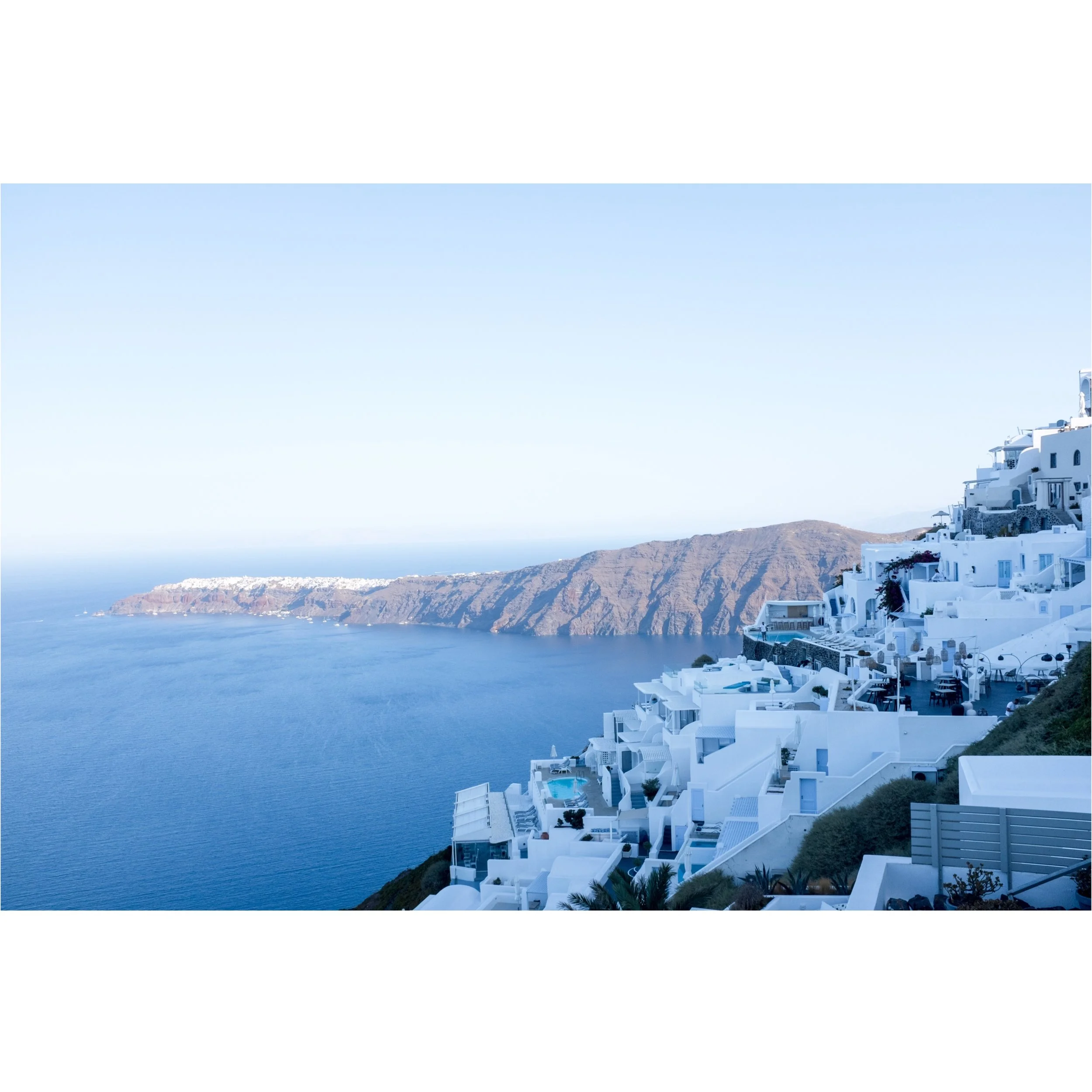
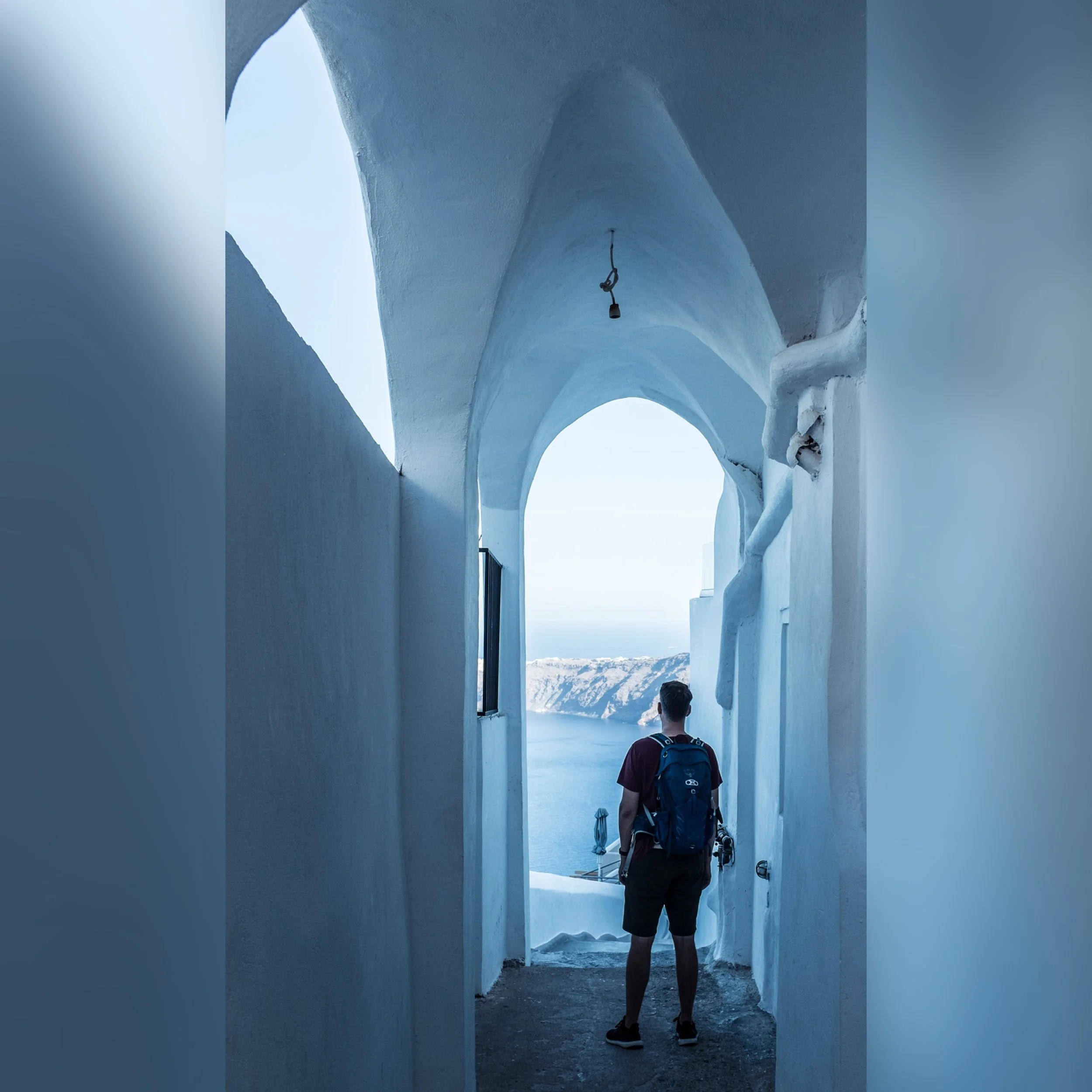
The next morning we got up early to avoid rising temperatures and took a bus to Fira to start the Caldera hike. 10k back to Oia. You pass Firostefani and Imerovigli, with the sea on one side and whitewashed buildings on the other. The trail switches from paved to dusty to stone, but it’s easy and every corner is a photo. We skipped Skaros Rock to avoid full heatstroke, but the views never stopped.
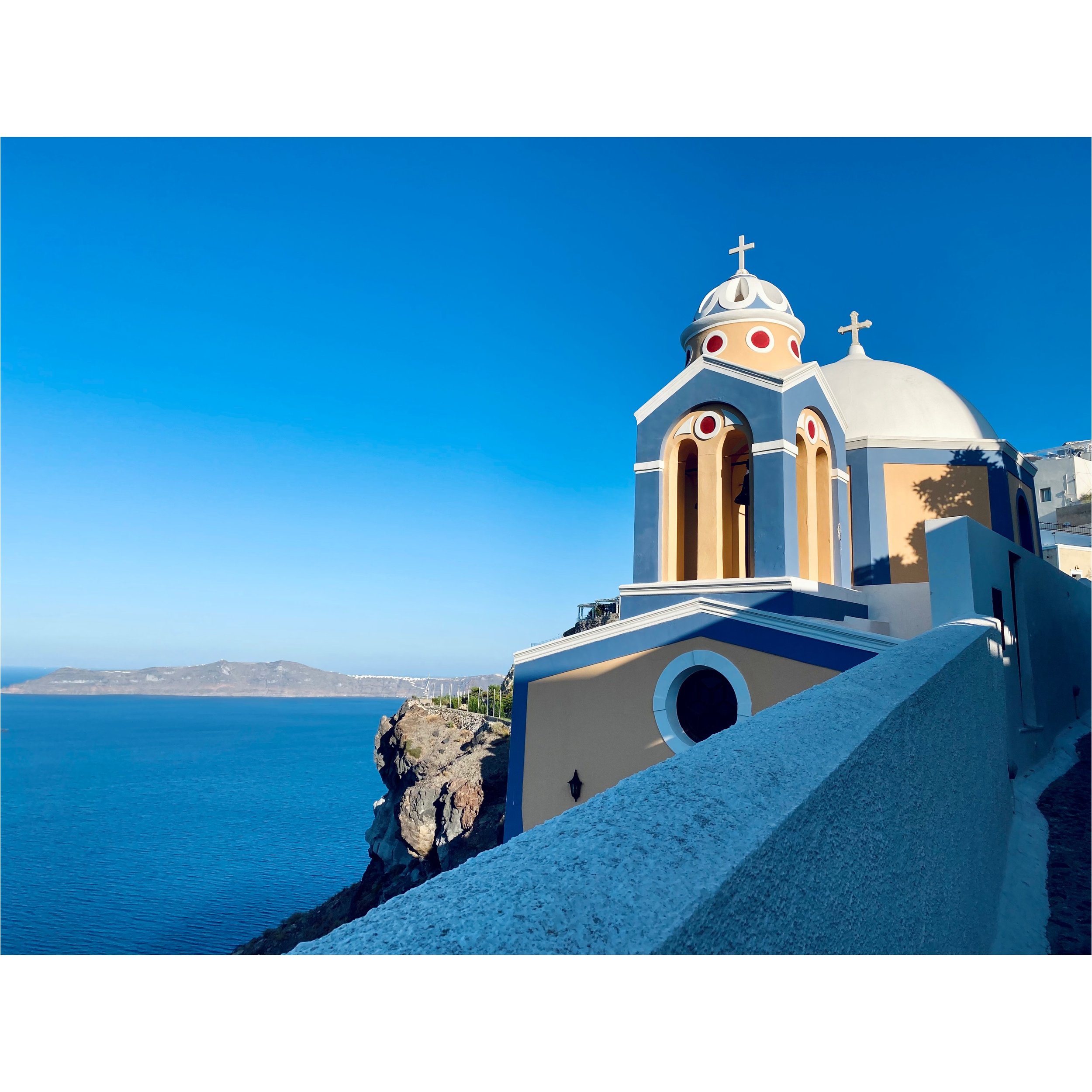
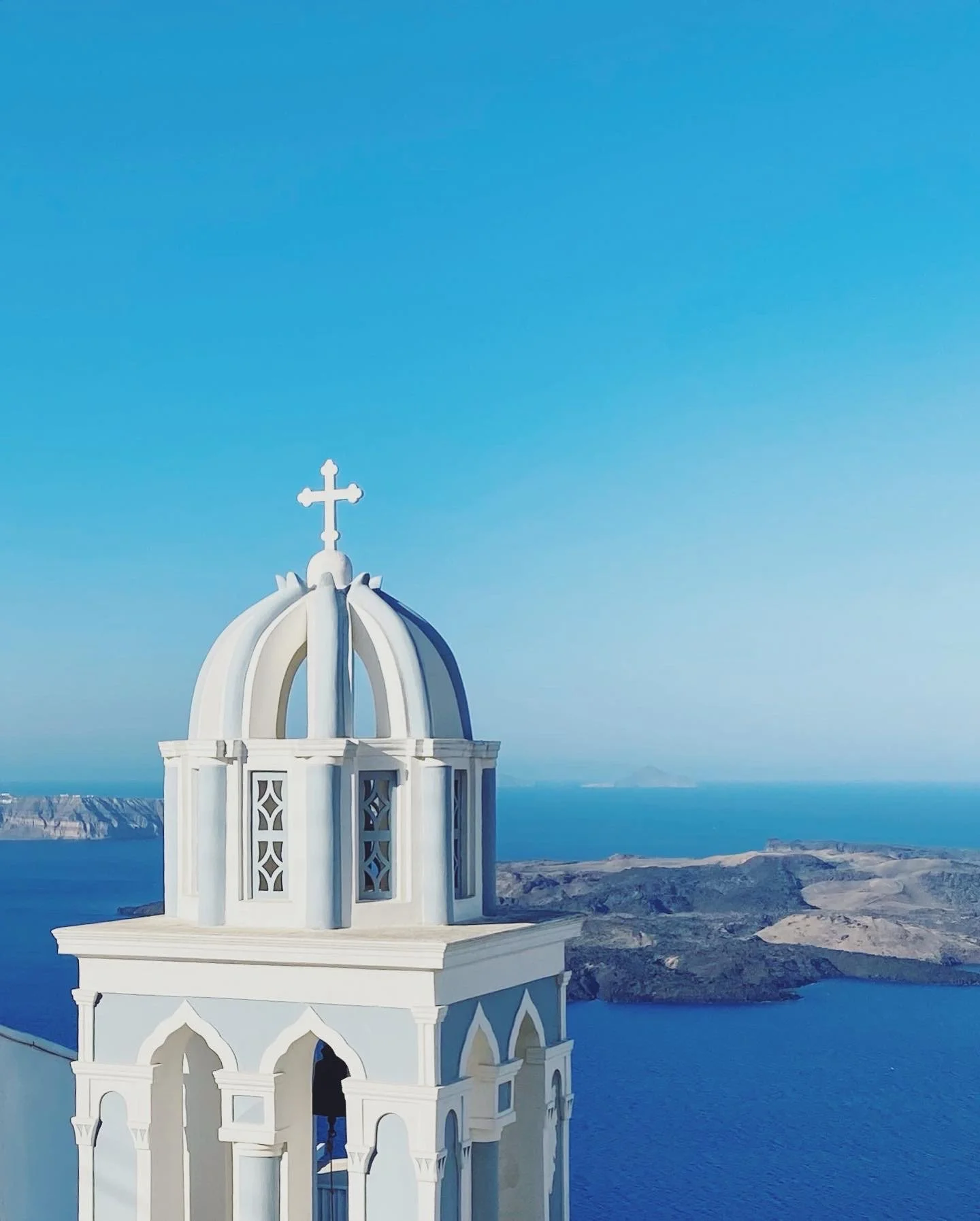
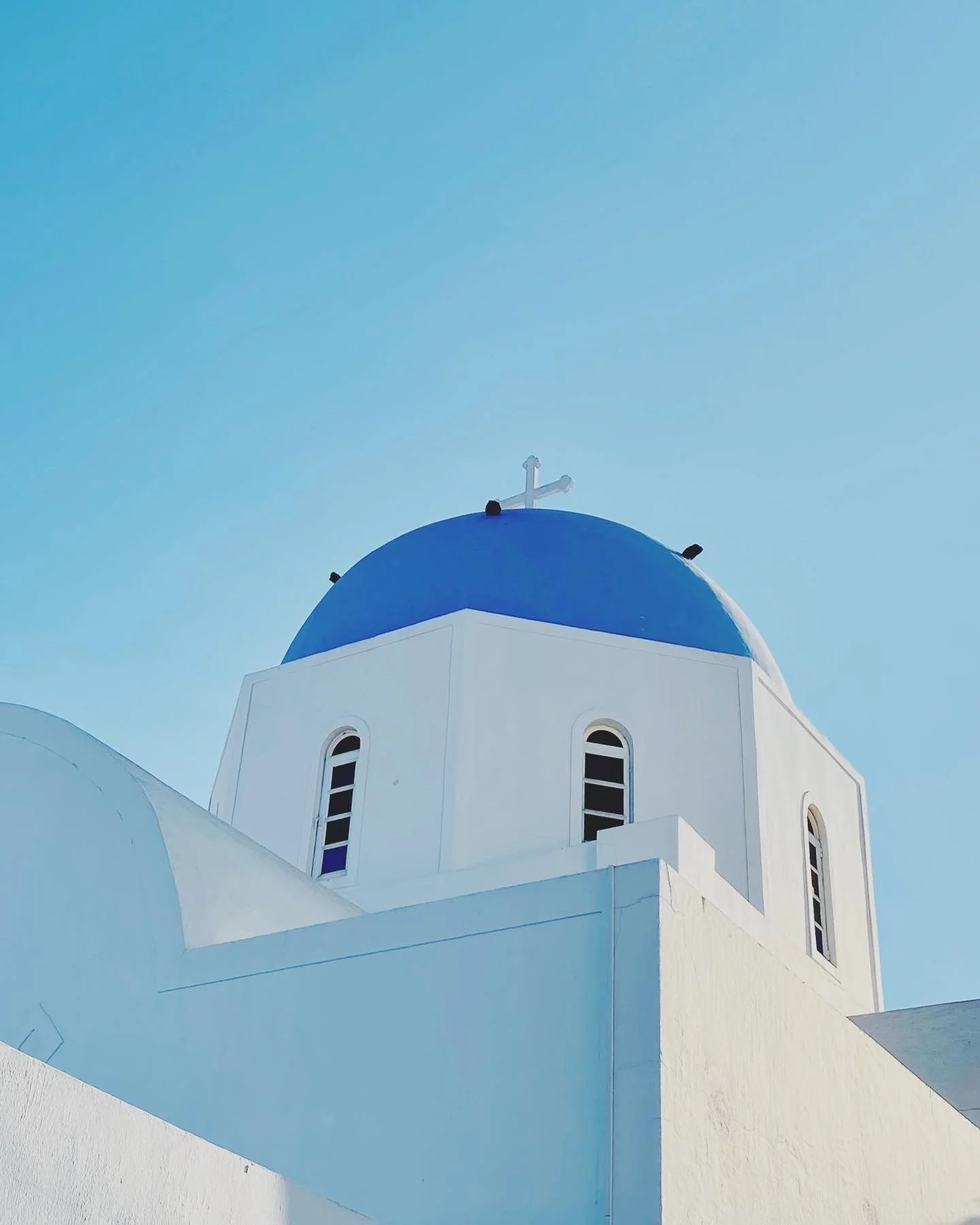
Back in Oia, we wandered to the iconic churches with the blue domes. You know the photo. Everyone does. Still worth it. We had brunch with that view before catching a ferry to Crete.
-
Length: ca. 10 km one way
Elevation change: moderate
Duration:
3 hoursStart point:
Fira, main town and transport hubEnd point:
OiaDifficulty:
Easy
Crete: blueprint of the soft life
Crete slowed us down in the best way. Our hotel had a private beach and zero expectations. We reset.
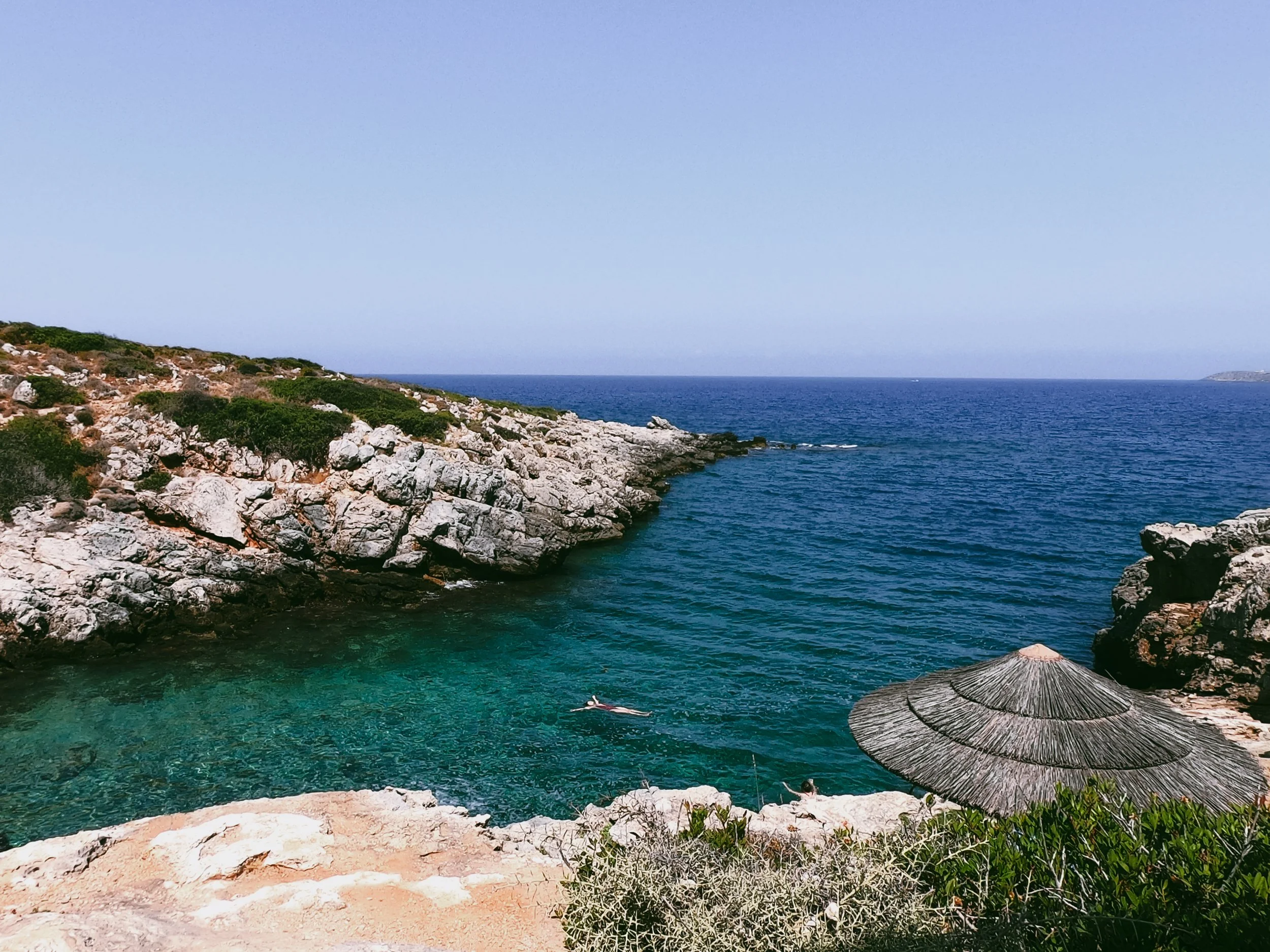
A few of the beaches we went to felt like they belonged to different planets. We picked them on purpose to feel the extremes of Crete’s coastline.
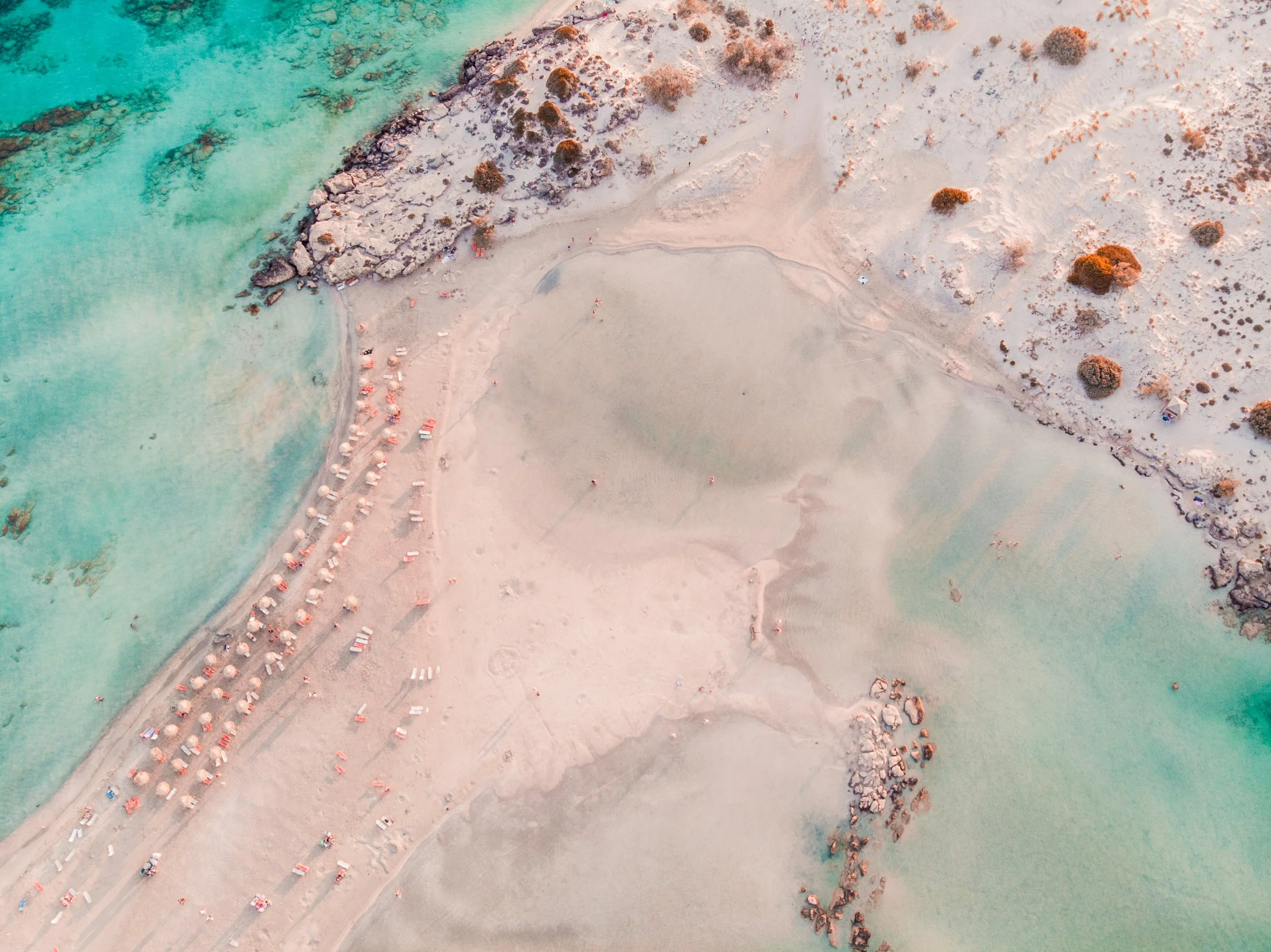
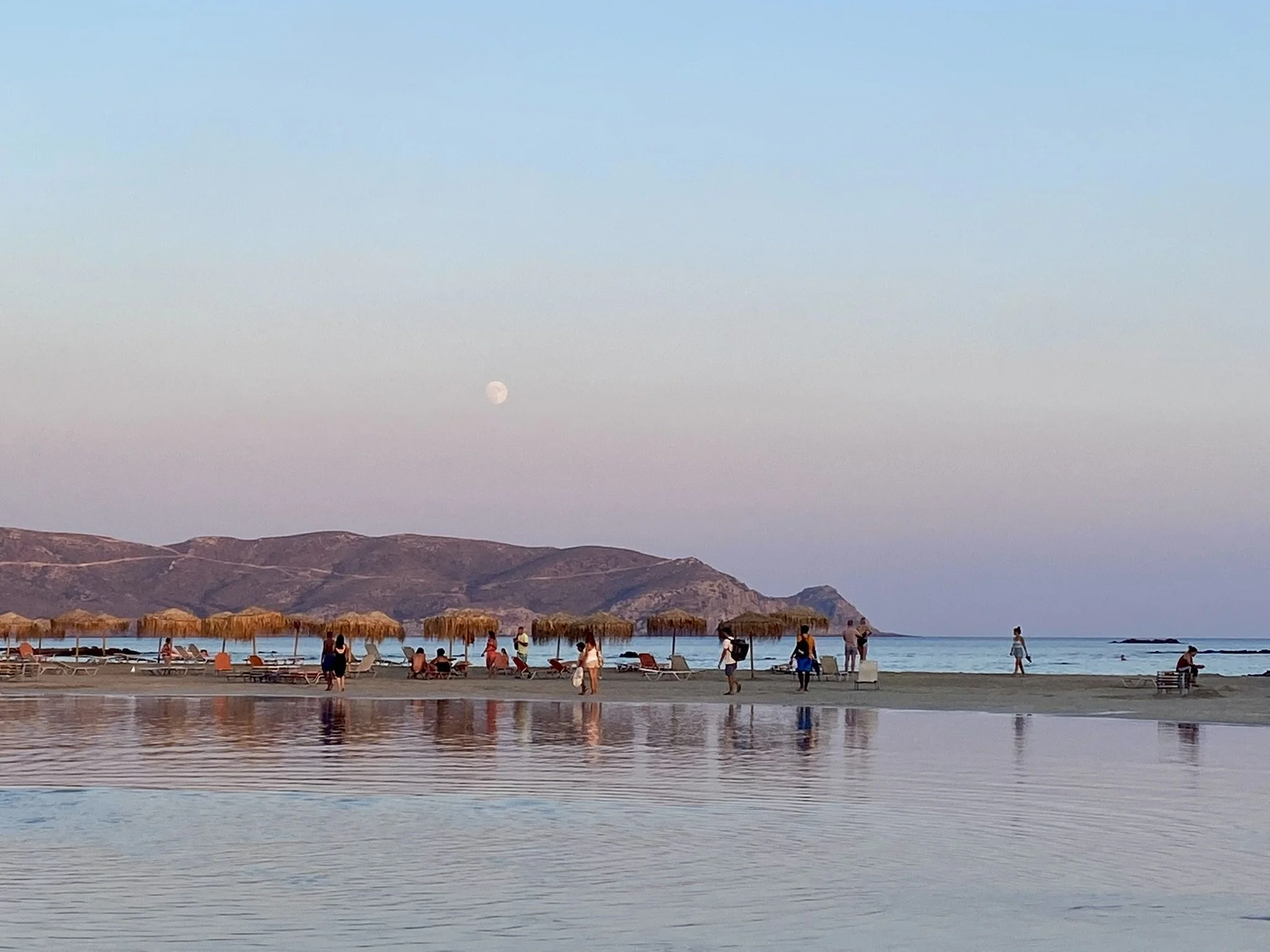
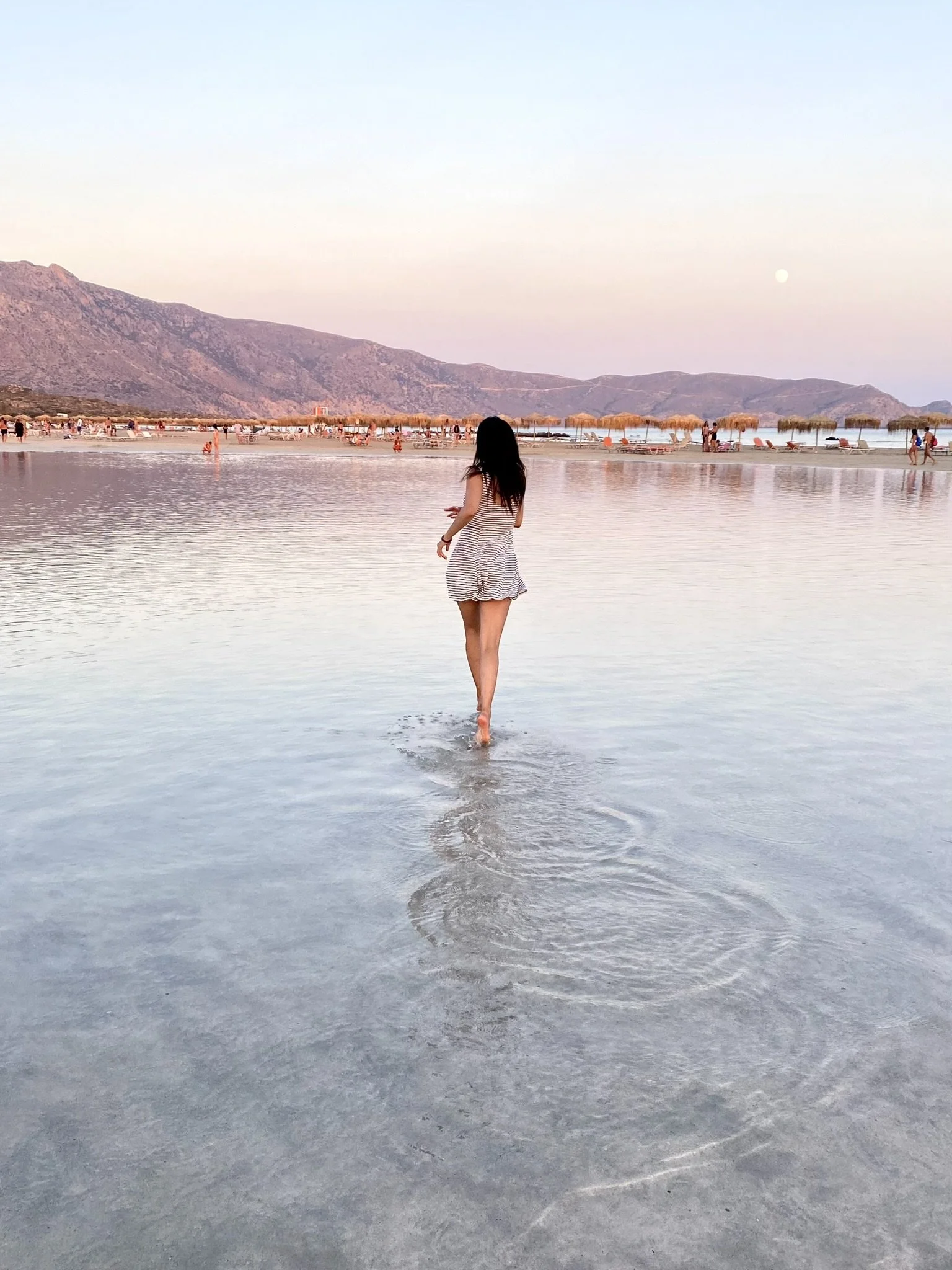
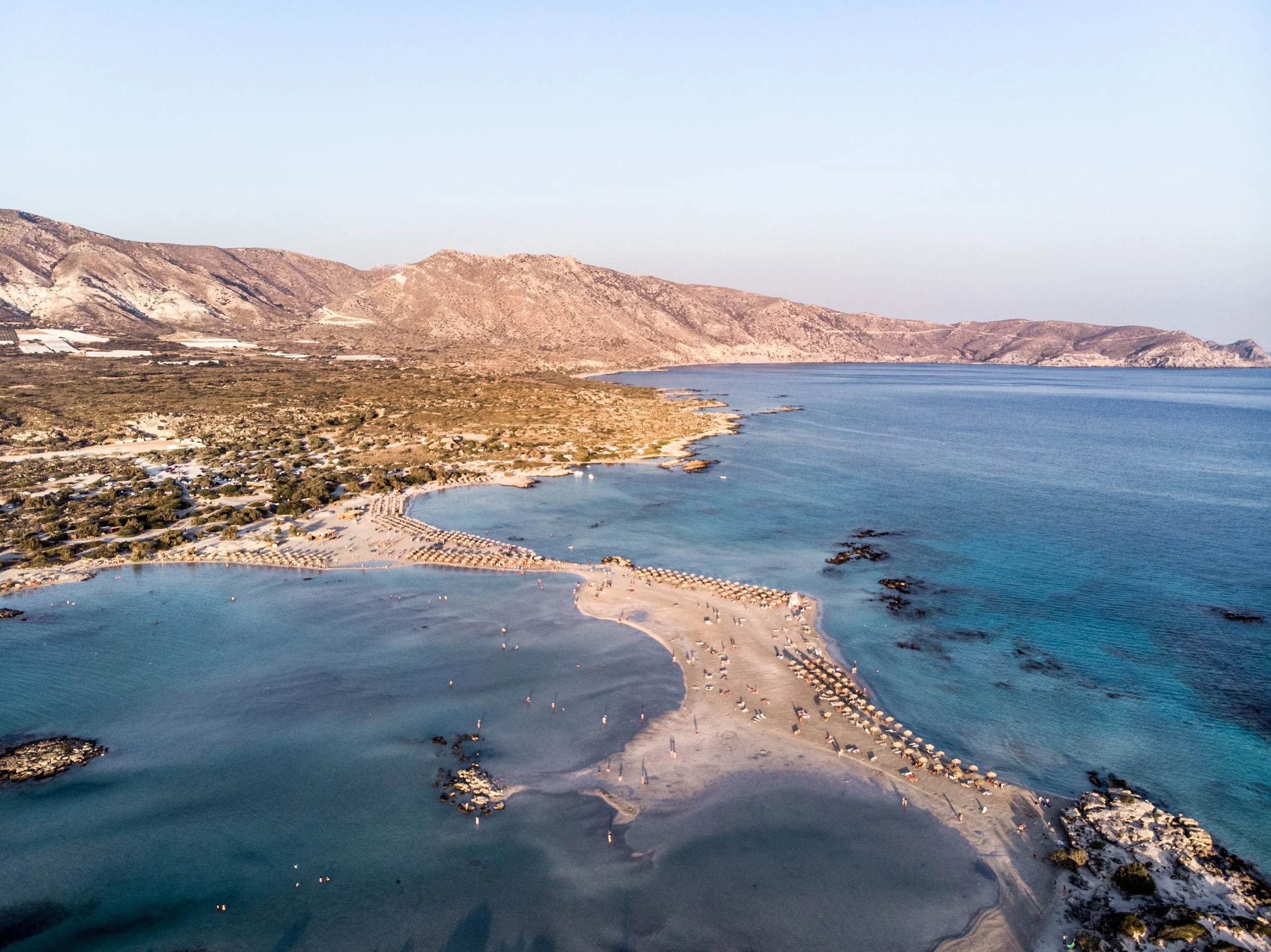
Elafonisi was unreal. Soft pink sand, shallow turquoise water, and a breeze that made you forget time. You walk through a lagoon to get there, and once you do, there’s nothing left to do but float. The color shift between sea and sand looked fake. It wasn’t.
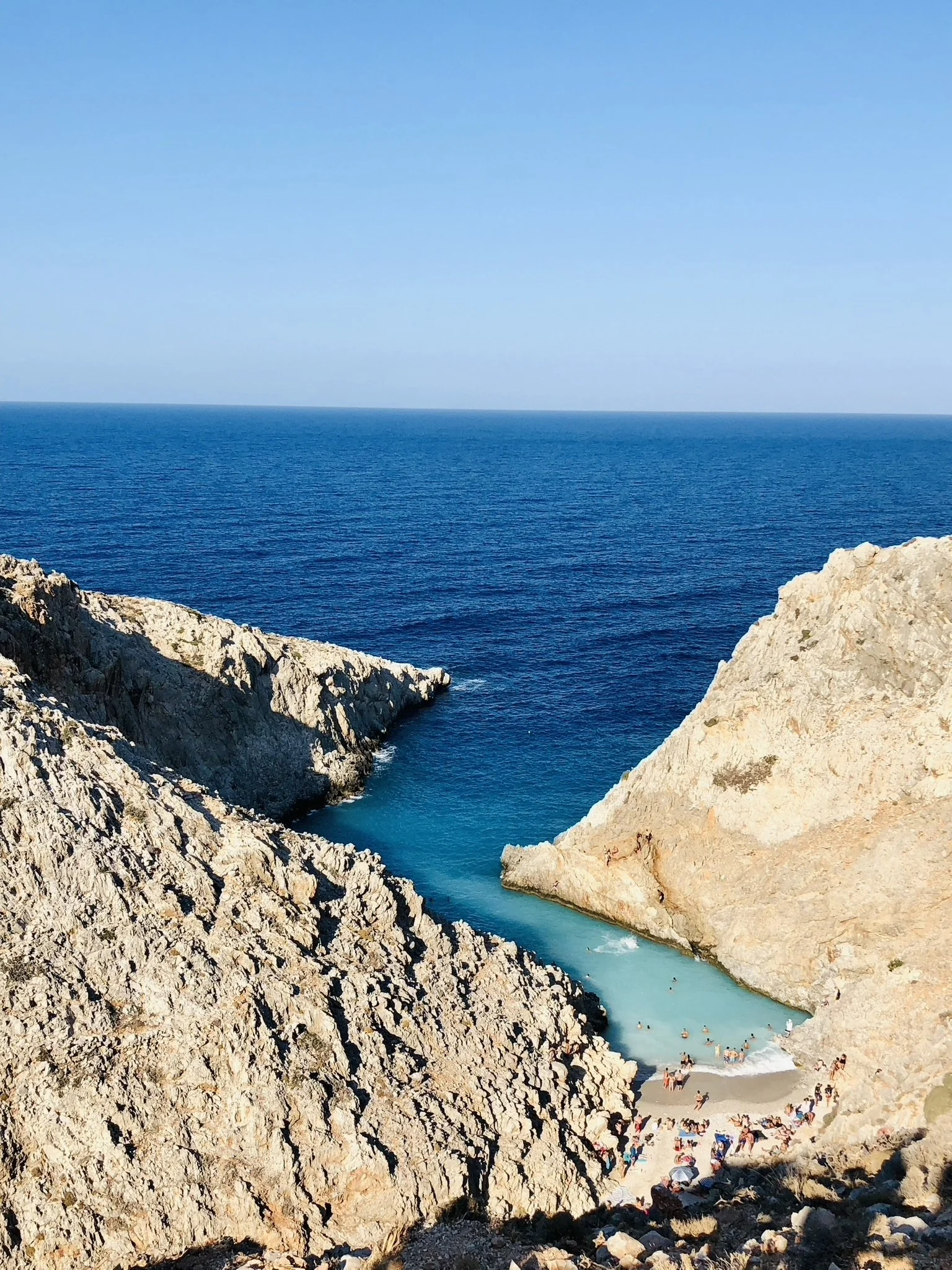
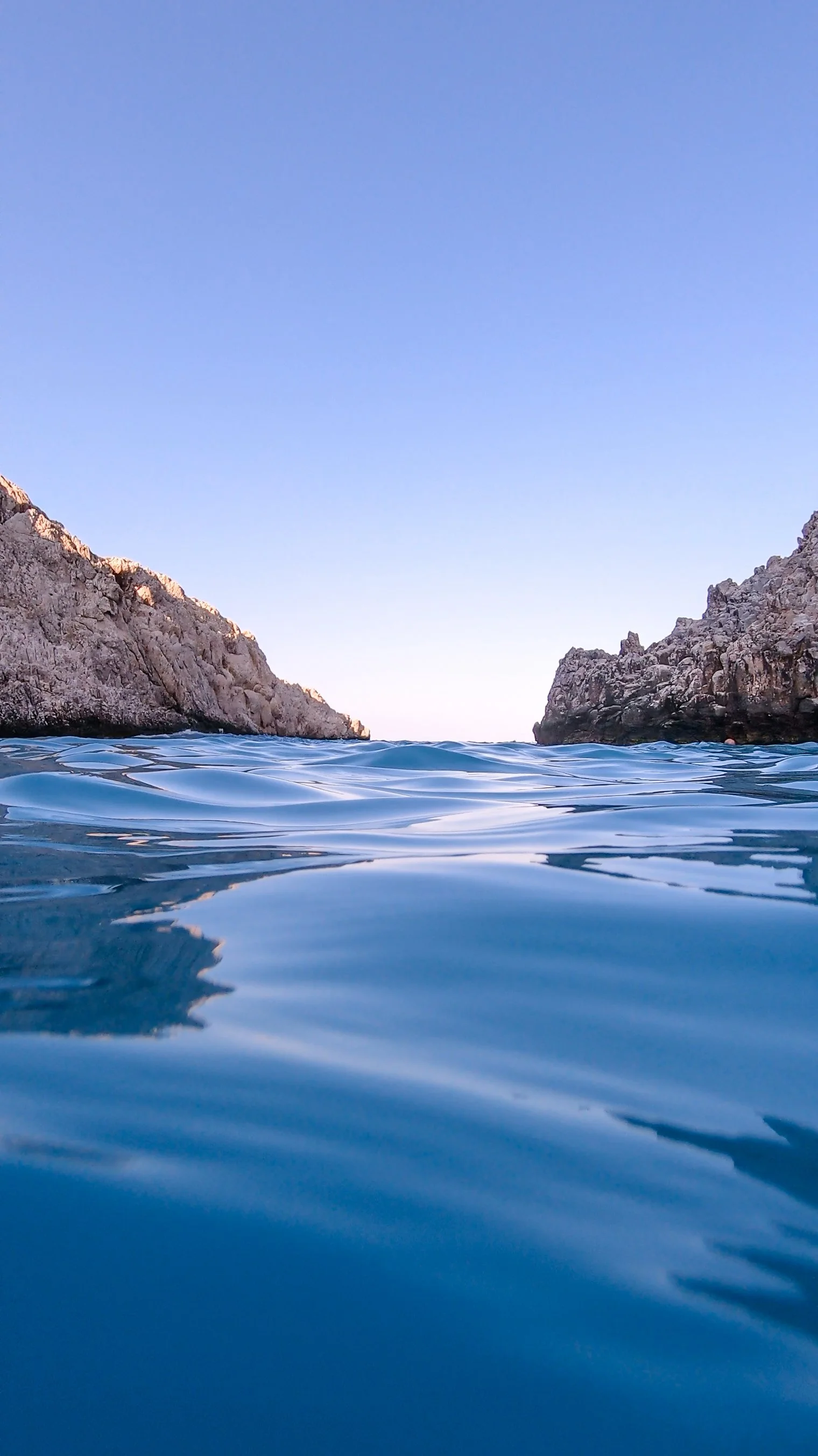
Seitan Limani was a whole different energy. Wild cliffs folding in around a narrow cove, bright blue water crashing into rock. You have to scramble down a steep path to reach it and it’s totally worth it. Brutal on the knees. Good for the soul.
Then there was One Rock Beach. Calm, hidden, almost empty. No signs, no umbrellas, just one giant rock and hours of swimming in silence. It felt like a secret.
Evenings were for tavernas. We never made a reservation. We never needed one. Food arrived endlessly. Wine showed up in jugs. Conversations stretched until the moon came up.
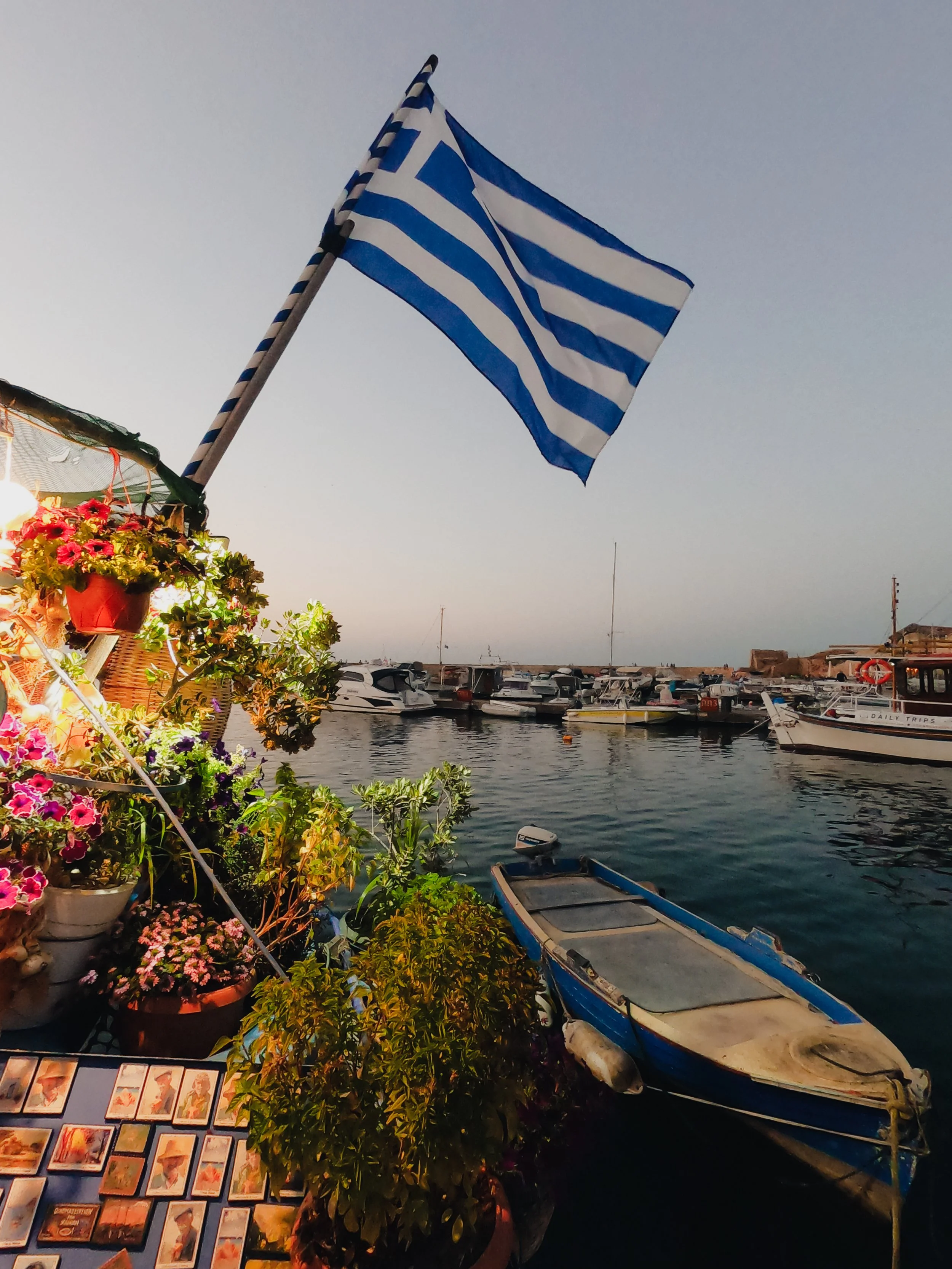
Chania gave us just enough city feel without losing that island pace. We wandered through the old town, took blurry night photos, and leaned into the rhythm of the place.
Design Tales
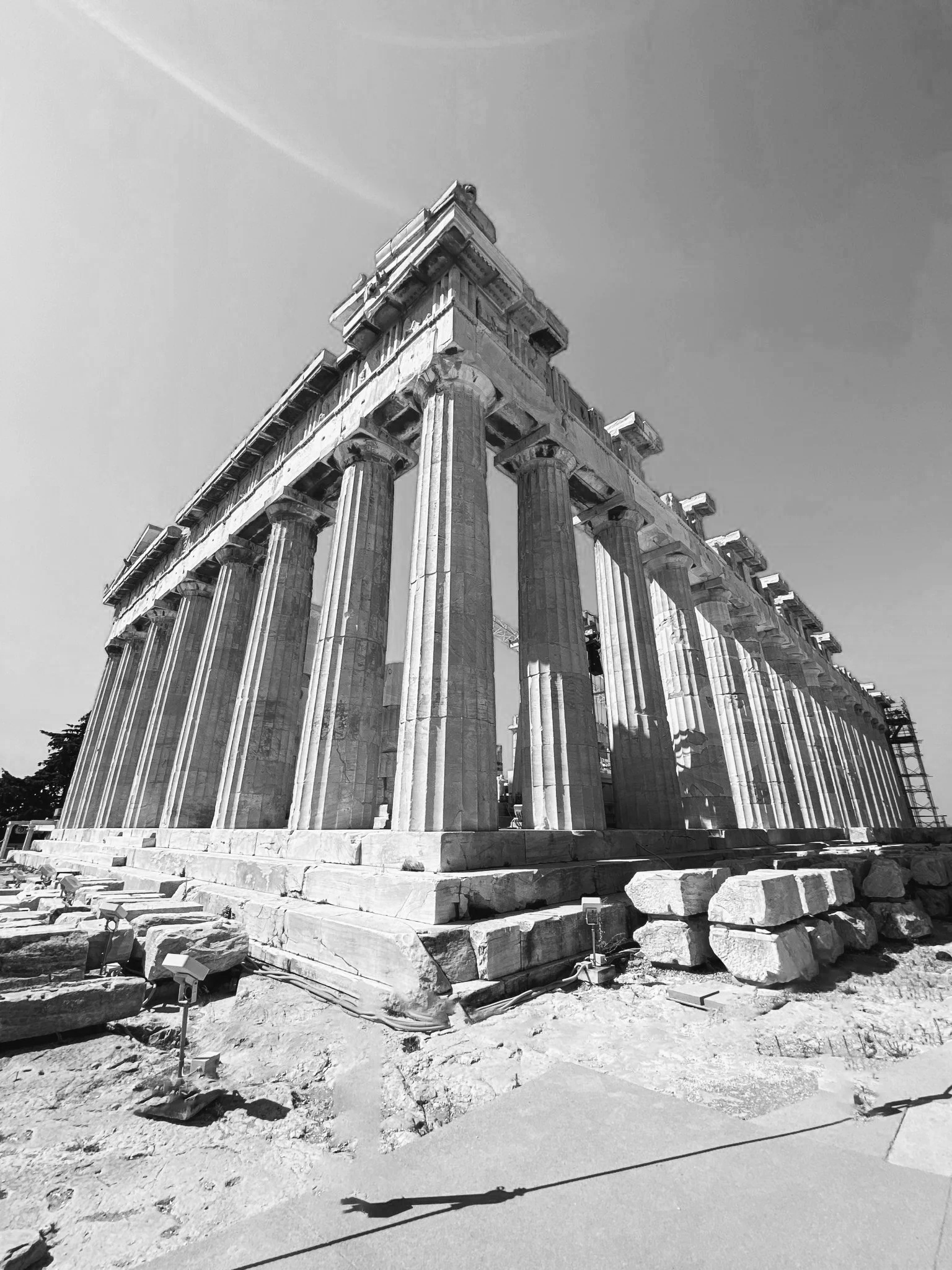
The Parthenon, built between 447 and 432 BCE, is often described as the origin of Western architecture, but standing in front of it, it feels more like the origin of architectural discipline itself. Nothing here is symbolic excess. Everything is a measured response.
Although it appears perfectly regular, almost nothing is truly straight. The stylobate curves slightly upward, the columns lean inward, and their shafts swell subtly through entasis. These deviations were deliberate corrections for human perception. The Parthenon was designed not for abstract geometry, but for the moving eye and the standing body. What feels calm and stable is the result of continuous adjustment.
Its proportions follow a strict but flexible logic. 8 x 17 doric colums frame it. Repeating ratios govern spacing, height, and mass, without relying on a single ideal number. Harmony emerges through tuning rather than formula. Precision replaces ornament.
This logic continues in the Acropolis Museum, where contemporary architecture steps back in restraint. Glass floors reveal layers of history below, while the Parthenon Gallery mirrors the temple’s dimensions and orientation. Original fragments are placed where they once belonged, with absences clearly marked rather than imitated. The museum does not compete. It frames, aligns, and waits.
Together, the Parthenon and its museum read as an architectural lesson in control, patience, and clarity. A reminder that architecture, at its most powerful, is not about dominance or spectacle, but about understanding perception and allowing space, time, and meaning to coexist.
Editors Note
This trip was a wild mix of ancient ruins, caldera hikes, and salty skin from swimming all day. Here’s what stood out:
🏆 The best? Sunset in Santorini, champagne in hand, soaking in a jacuzzi with our friends while the sky turned impossible colors. Absolutely peak vacation core.
💡 Pro tip? Hit the Acropolis early, before 10:30 am and catch the stones golden. After that, you're just a sweaty statue in a crowd of hats.